


Should I open or buy a Pool Scouts franchise in 2027?
Quality
Certified
Open a Pool Scouts franchise if you can staff reliable technicians in a pool-dense, warm-climate market and want low capital entry with recurring route revenue. Total investment runs roughly $100,000–$170,000 with an approximate 8% royalty. Skip it if your market is seasonal, thin on pools, or you want passive ownership.
What a Pool Scouts franchise actually is and why the model matters
Pool Scouts, founded in 2015 under the Buzz Franchise Brands umbrella, franchises residential pool-cleaning and maintenance businesses. The unit is not a storefront and not a construction company. It is a route-based service operation: technicians in branded vehicles drive a fixed weekly circuit, skim and vacuum pools, brush walls and tile lines, empty skimmer and pump baskets, test and balance water chemistry, inspect equipment, and flag repairs. The owner runs it from a home office or a small warehouse bay used for chemical and parts storage. There is no lease negotiation, no build-out, no landlord, and no dining-room labor model. That structural fact drives everything else about the economics.
The reason this shape matters is revenue behavior. A restaurant starts every Monday at zero and has to re-earn its revenue seven days a week. A pool route starts every Monday with a book of accounts that already agreed to pay a monthly service fee. Typical residential pricing in most markets sits in the $150–$200 per month range for weekly service on a standard residential pool, with chemicals included or billed separately depending on the market and package. That is recurring, contractual, and largely automatic. A homeowner who has agreed to weekly service does not re-shop the decision every month; churn is a slow drip of moves, sales, and service failures rather than a weekly competitive battle.
The second structural fact is that pool maintenance is closer to a non-discretionary expense than most home services. An unmaintained pool does not simply look worse — it turns green, grows algae, stains plaster, and can require an expensive drain-and-acid-wash or an even more expensive equipment replacement to recover. The chemistry does not pause because the economy softened. Homeowners under financial pressure cancel landscaping upgrades and postpone remodels long before they let a pool go feral, because letting it go feral costs more than maintaining it. That is the practical meaning of "recession-resilient" here: not immunity, but a demand curve that bends less than most discretionary home services.
The third fact is fragmentation. The residential pool-service market in the United States is dominated by independent operators — often one person with a truck, a phone, and a handwritten route list. Many are excellent technicians and poor businesspeople. They miss visits, they are unreachable in July, they have no backup when they get sick, and they carry thin or no liability coverage. A franchise brand competing on uniforms, background-checked technicians, documented visit reports, online billing, and a real phone number that gets answered is not competing on price — it is competing on reliability. That is a real wedge in a fragmented market, and it is why the brand can defend a price premium over the $100–$140 per month a local operator might quote.
The fourth fact, and the one that decides who succeeds, is route density. Revenue per technician-hour is a function of how many pools sit within a short drive of each other. A technician servicing pools that are four minutes apart can complete far more stops per day than one servicing pools twenty minutes apart, with identical labor cost and worse fuel and vehicle wear on the second route. Density is the entire game. Two franchisees with the same account count and the same pricing can have materially different margins purely because one clustered accounts into tight neighborhood pods and the other took every call that came in across a sprawling territory. Understand that before you sign anything: you are not buying a pool business, you are buying the right to build geographic density under a brand.
The build sequence from inquiry to a running route
The path from first inquiry to a functioning route is measurable in months, not weeks, and the sequence matters because each stage produces the information the next stage needs. Rushing it is the most common source of avoidable loss.
Start with the Franchise Disclosure Document. You get it before you can sign, and you should read the whole thing, but four items carry most of the weight. Item 5 gives the initial franchise fee — roughly $50,000 for Pool Scouts. Item 6 lists ongoing fees, notably the royalty near 8% of gross and a marketing fee on top. Item 7 gives the estimated total initial investment range, roughly $100,000–$170,000 including the fee. Item 19 is the financial performance representation, and it is the single most important page in the document. Read what it actually measures: whether it reports gross revenue or net, which units are included, whether it separates first-year units from mature ones, and how many units are in the sample. An average that blends a 300-account veteran with a six-month-old startup tells you almost nothing about your first year.
Item 20 deserves equal attention and gets ignored constantly. It lists unit counts by year — opened, closed, terminated, transferred, reacquired. The pattern in those columns is a franchise system's honest report card. A brand adding units steadily with near-zero terminations is behaving differently from one where transfers and terminations run high relative to openings. Pull three years of that table and compute the ratios yourself.
Then call franchisees. Item 20 includes contact information for current owners and, critically, for owners who left the system in the past year. Call both. Call at least ten current owners and every reachable former owner. Ask specific questions, not general ones. How many accounts did you have at month six, month twelve, month twenty-four? What is your current monthly price per standard pool and when did you last raise it? What do you pay technicians per hour and how many have you lost in two years? What percentage of revenue comes from repairs versus recurring service? What did you actually take home last year after paying yourself a wage? What did the franchisor do for you in the last ninety days? The owners who have left will tell you what the ones still in the system are diplomatic about.
Territory validation is the step people skip, and it is the one that decides the outcome. Pool Scouts grants protected territories built on postal-code clusters sized around pool density, generally intended to support enough residential pools for a single-truck operation to reach a meaningful revenue level at full route capacity. Do not accept the franchisor's density estimate as your only input. Verify it independently. County property records and building-permit databases often list pool permits by address. Satellite imagery lets you literally count backyard pools in a neighborhood grid. Local supply houses know which subdivisions are pool-heavy. Spend two weeks on this. A territory that looks adequate on a spreadsheet and turns out to be pools scattered across forty square miles is a structurally unprofitable business no amount of hustle fixes.
Understand also that protection is conditional, not absolute. Franchise agreements commonly reserve the franchisor's right to place additional units in or near a territory if the existing franchisee misses development benchmarks. Know exactly what your benchmark is — typically an account-count threshold within a defined window — and treat it as a real deadline, not boilerplate.
Training comes next: a structured initial program at the franchisor's headquarters covering pool chemistry, equipment diagnosis and repair, customer-service protocol, and route construction. Field support follows for the opening window, with a company representative on the ground helping build the first routes and onboard the first technician. Take that support seriously and use every hour of it, because it is front-loaded. Ongoing support shifts to a regional business coach and periodic performance calls, and franchisees consistently report that the quality of that coaching varies by region and that response times stretch during the summer peak when everyone needs help at once.
Capital, timeline, and the numbers that actually decide the outcome
The investment range is real and it is low by franchise standards. Roughly: a franchise fee near $50,000; service vehicles and equipment in the $25,000–$55,000 band depending on whether you buy new or used and how many trucks you launch with; vehicle wrap and branding at $5,000–$15,000; home-office or small-warehouse setup at $5,000–$18,000; initial local marketing at $12,000–$30,000; training and travel at $8,000–$22,000; licensing, certifications, and insurance at $6,000–$20,000; and working capital at $15,000–$45,000. That lands at roughly $100,000–$170,000 all-in, with liquid capital requirements in the $50,000–$80,000 range.

Two of those line items deserve more respect than they usually get. Working capital is the first. You will be paying a technician a full wage while the route is half full, and payroll does not wait for your account count to catch up. If a technician costs $18–$28 per hour in a competitive market before payroll taxes and workers' compensation, a full-time tech is a five-figure quarterly commitment from day one. Budget to the high end of the working-capital range, not the low end, and then add a cushion. The second is initial marketing. Route density is built by concentrated local presence — direct mail into specific subdivisions, door hangers on streets where you already have one account, Google Business Profile work, and neighborhood-level digital targeting. Spreading a thin marketing budget across the whole territory produces exactly the scattered account map you are trying to avoid.
On the revenue side: mature units in the system are described as grossing in the $500,000–$1,500,000+ range, with owner earnings commonly in the $90,000–$300,000 band. Treat that spread as information, not as a forecast. The top of that range is a multi-truck operation with dense routes, a strong repair business, and a stable technician crew — it took years to build. A single-truck operation at full route capacity is a much more modest business, and that is your realistic year-two or year-three picture.
Model your own unit economics from the bottom up rather than trusting a range. Take a plausible mature single-truck gross and work down. Labor is the largest line and typically runs around a third of gross once you count wages, payroll taxes, and workers' compensation. Vehicle and chemical costs — fuel, maintenance, insurance on the vehicles, chlorine, acid, algaecide, testing supplies, replacement parts — run in the high teens as a percentage of gross. Royalty plus marketing fee is roughly 10% off the top. Remaining operating expenses — general liability insurance, software, phone, accounting, licensing, office costs — take another chunk in the mid-teens. What is left is owner earnings, and on a $900,000 gross that math lands somewhere near the $200,000 mark before owner compensation decisions.

The timeline runs roughly like this. Weeks one through three: FDD review and financial modeling. Weeks four through six: franchisee calls, current and former. Weeks seven through nine: independent territory density validation on the ground. Weeks ten through twelve: signing, legal review, financing close. Weeks thirteen through sixteen: headquarters training, vehicle purchase and wrap, insurance and licensing, chemical and equipment stocking, first technician hire. Weeks seventeen onward: launch, field support, and the long grind of account acquisition. Expect account growth to be slow and lumpy in the first two quarters and to compound once you have enough accounts in a neighborhood that referrals start doing work for you.
Financing typically runs through an SBA 7(a) loan, and Pool Scouts' position on the SBA franchise registry makes that path straightforward for qualified borrowers. Expect to put down a meaningful share of the project cost and to personally guarantee the loan. Do not finance so tightly that you have no working-capital buffer left — an undercapitalized route business fails not because the model is bad but because payroll came due in month five.
One more number belongs in your model: annual price increases. Technician wages in high-demand markets have climbed substantially in recent years. If your monthly service price is static while wages rise 5–8% a year, your margin quietly evaporates. Build a systematic annual price adjustment into your operating plan from the first customer, communicate it in the service agreement up front, and execute it. Franchisees who never raise prices are the ones whose margins compress below what mature units report.
Where operators get this wrong
The most common failure is taking every account that calls. It feels like growth. It is not. An account fifteen minutes outside your cluster costs you thirty minutes of round-trip drive time every single week, forever, at full technician wage — and that customer pays the same as the one four minutes away. A handful of those accounts can consume an hour a day of paid labor that produces zero revenue. Discipline here means saying no, or pricing outlying accounts high enough to cover the drive, or refusing them until you have enough neighbors to make a pod. The franchisees who build tight geographic pods and expand pod by pod materially outperform the ones who chase every lead across the territory.

The second failure is treating technician staffing as an afterthought. Pool Scouts does not run a staffing agency or a shared technician pool — recruiting and retention are entirely yours. A pool technician is a skilled trade: water chemistry, pump and filter diagnosis, heater and automation troubleshooting, and customer interaction in someone's backyard, unsupervised, all day. Good ones are in demand and get poached. Losing your lead technician in June is a genuine business emergency, because the route does not pause and you cannot train a replacement in a week. Practical countermeasures: pay above the local median rather than at it, build a small performance bonus tied to route completion and customer retention, cross-train yourself so you can personally run a route in an emergency, and always be recruiting even when fully staffed. Technician tenure is also a direct driver of resale value, so the money you spend keeping people is not just an expense.
The third failure is misreading climate and seasonality. In Florida, Texas, Arizona, and much of California, pools are serviced year-round and revenue is genuinely recurring twelve months a year. In the Mid-Atlantic, Midwest, and Northeast, the season compresses hard — opening in spring, weekly service through summer, closing and winterization in fall, and a long revenue trough in winter. That is a fundamentally different business with a different cash-flow shape, and it needs a different plan: winterization and opening packages priced to carry the off-season, off-season repair and equipment-replacement work, possibly a complementary seasonal service line. Buying a seasonal territory on year-round math is a structural error that no operational excellence corrects. It also directly reduces resale value, since seasonal units trade at lower multiples than year-round ones.
The fourth failure is ignoring the repair line. Recurring cleaning is the base, but repairs and equipment replacement — pumps, filters, heaters, automation controllers, salt cells — carry higher margins and come to you naturally because your technician is standing at the equipment pad every week and sees problems before the homeowner does. Franchisees who train technicians to document and quote repair work convert a meaningful share of routine visits into additional revenue. Franchisees who treat repairs as an interruption to the cleaning route leave that margin for someone else. Decide early which one you are, and build the quoting process, parts inventory, and technician incentive to match.
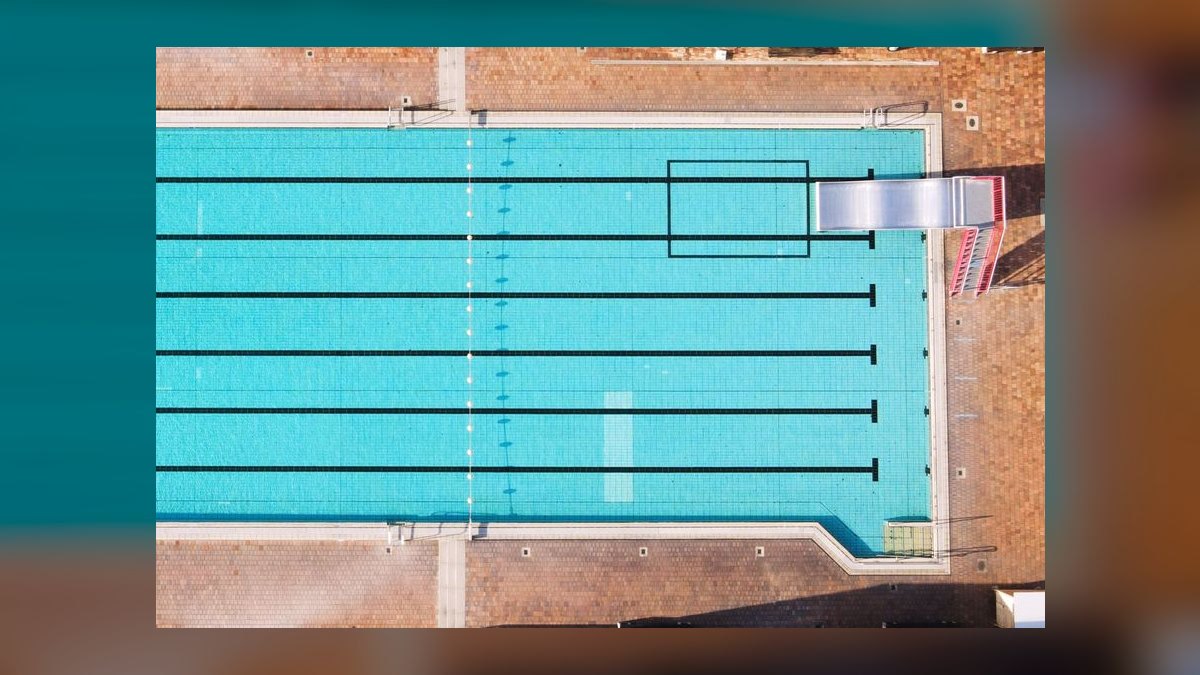
The fifth failure is underestimating competition in saturated markets. In pool-dense parts of Florida and Southern California, a new franchisee may face a dozen or more established local operators within a short radius, many quoting below your price. The brand premium is defensible, but only where homeowners actually value reliability, insurance coverage, background-checked technicians, and documented service over the lowest monthly number. In price-driven neighborhoods you will lose those bids and should not chase them. Segment your target neighborhoods by household income and property value before you spend a marketing dollar.
The sixth failure is assuming passivity. This is a hands-on operation. In year one you will run routes yourself, answer the phone yourself, quote repairs yourself, and drive to a customer's house on a Saturday when a technician missed a stop. Owners who buy expecting to manage from a laptop discover in month three that route businesses run on daily operational attention. It becomes more delegable at three trucks with a strong lead technician — but that is a destination, not a starting condition.
Choosing between opening new, buying an existing unit, and staying independent
The three real options are opening a new franchise, buying an existing Pool Scouts unit on resale, and building an independent pool-service company with no brand. They have genuinely different risk profiles.
Opening new costs less up front and gives you a clean territory and full control over how the route is built. You pay for that with a ramp: months of paying a technician while the account book fills, and a slow first year where you are buying accounts with marketing spend and personal hustle. Choose this if you have working capital to survive the ramp, if the territory you want has no existing unit, and if you would rather build density your way than inherit someone else's account map.
Buying an existing unit costs more but eliminates the ramp. The resale market for Pool Scouts units is thin but active, with established single-truck operations historically trading in a roughly $150,000–$350,000 band and multi-truck units meaningfully higher, plus a transfer fee generally in the $10,000–$15,000 range. Year-round markets command higher multiples of seller's discretionary earnings than seasonal ones. What you are actually buying is the account book and the technician, so diligence should focus there: pull the account list with tenure and monthly price per account, map them to see whether the route is genuinely dense or a scattered mess, check churn over the last twenty-four months, verify how many accounts are on written agreements with automatic renewal versus month-to-month handshakes, confirm the lead technician's tenure and whether they intend to stay through the transition, and inspect vehicle mileage and equipment age. A route with a dense map and a five-year lead technician is worth substantially more than the same revenue scattered across a county with a technician who quits at closing. Note also that the franchisor typically holds a right of first refusal on third-party offers, which can complicate both buying and later selling.

Staying independent means no franchise fee, no 8% royalty, no marketing fee, and total freedom — and also no training system, no routing and billing software, no supplier pricing leverage, no call center, no brand, and no coach. The royalty is real money: on a $900,000 gross, 8% is $72,000 a year, every year. Whether that is worth paying depends honestly on what you bring. An experienced pool professional with existing local reputation and operational discipline may well be better off independent. A capable operator with no industry background, no route-management experience, and no supplier relationships is buying a system that compresses a multi-year learning curve — and the national supplier pricing alone recovers part of the royalty.
The screening questions, in order of severity: Does your target territory have genuine pool density in tight clusters, verified by you rather than asserted by a brochure? Is it a year-round climate, or do you have a specific and credible seasonal plan? Can you recruit and pay technicians in your labor market at prevailing wages and still hold margin at your intended price point? Do you have the liquid capital to cover the ramp with a real cushion, not a thin one? Are you prepared to work in the business daily for at least the first year? If any of those is a no, that is not a detail to solve later — it is the answer.
Related questions
How long until a new Pool Scouts unit is profitable?
Most single-truck units need to build a substantial recurring account book before covering a full technician wage plus overhead, which typically takes several quarters of concentrated local marketing. Plan working capital for at least twelve months of partial-route operation rather than assuming break-even in the first season.
Does prior pool industry experience matter?
Not required — the initial training program covers chemistry, equipment repair, and route construction. What matters more is management ability: hiring and keeping technicians, enforcing route discipline, and handling local marketing. Operators with service-business or trades-management backgrounds tend to adapt faster than those from purely corporate roles.
Is a seasonal northern territory workable?
Workable but structurally different. You need winterization and spring-opening packages priced to bridge the revenue trough, plus an off-season repair and equipment-replacement business. Competition is thinner, but cash-flow planning is harder and resale multiples are lower than year-round Sun Belt territories.
What actually drives resale value?
Recurring accounts on written agreements with automatic renewal, tight geographic route density, technician tenure, equipment condition, and whether the market is year-round or seasonal. A stable lead technician and a clustered account map lift valuation meaningfully over the same revenue scattered across a wide territory.
Should I launch with one truck or two?
One. A second truck before the first route is at capacity doubles your fixed labor cost against an account book that cannot support it. Add the second truck when your first technician's route is genuinely full and you are turning away or delaying qualified accounts in the same cluster.
FAQ
What is the total investment to open a Pool Scouts franchise?
Roughly $100,000 to $170,000 all-in, including a franchise fee near $50,000. That covers service vehicles and equipment, branding and wrap, home-office or warehouse setup, initial local marketing, training and travel, licensing and insurance, and working capital. Liquid capital requirements generally sit in the $50,000–$80,000 range. It is low relative to most food or retail franchises because there is no build-out, no lease, and no storefront — the fixed cost is a truck and a technician rather than a building.
How much can an owner realistically earn?
Mature units are described as grossing $500,000 to $1,500,000+ with owner earnings in the $90,000 to $300,000 band. That spread reflects route density, truck count, repair revenue, and market climate rather than luck. A first-year single-truck operation belongs at the bottom of that range or below it. Model your own numbers from Item 19 and franchisee interviews instead of anchoring on the midpoint of a published range.
What are the ongoing fees?
A royalty near 8% of gross revenue plus a marketing fee, taken off the top before any expenses. On a $900,000 gross that is roughly $90,000 a year combined. Budget local marketing separately — territory-level lead generation is the franchisee's job and is what actually builds route density, so treat the marketing fee as brand infrastructure rather than as your customer-acquisition budget.
What is the single biggest operational risk?
Technician staffing. Pool Scouts does not supply technicians, and losing a trained technician mid-season is a genuine emergency because routes cannot pause. Wages in competitive markets have risen sharply, so plan to pay above the local median, build retention incentives tied to route completion and customer retention, cross-train yourself to cover a route personally, and recruit continuously even when fully staffed.
How protected is a Pool Scouts territory?
Territories are granted on postal-code clusters sized by pool density, but protection is conditional. Franchise agreements typically reserve the franchisor's right to place additional units in or near a territory if development benchmarks — usually an account-count threshold within a defined window — are missed. Confirm your exact benchmark before signing and treat it as a hard operating deadline.
Is buying an existing unit better than opening a new one?
It depends on your capital and risk tolerance. Buying skips the ramp and comes with revenue on day one, at a higher price and with inherited problems. Opening new costs less and gives you a clean territory, but you fund months of payroll against a partial route. Diligence on a resale should center on route density, account tenure and agreement type, churn history, and whether the lead technician is staying.
Sources
- https://www.ftc.gov/business-guidance/resources/franchise-rule-compliance-guide
- https://www.sba.gov/funding-programs/loans/7a-loans
- https://www.entrepreneur.com/franchises/directory
- https://www.franchise.org/
- https://www.bls.gov/ooh/building-and-grounds-cleaning/home.htm
- https://www.phta.org/
- https://www.cdc.gov/healthy-swimming/
- https://www.ibisworld.com/united-states/market-research-reports/pool-cleaning-services-industry/
- https://www.consumer.ftc.gov/articles/buying-franchise-consumer-guide
- https://www.irs.gov/businesses/small-businesses-self-employed
Related on PULSE
This page will be disappearing soon. Save it to your device for $1 — or read it free while it is here.
@Kory-White- · if Venmo asks, the last 4 of my number are 2012
This page is gone.
This one is off the shelf now. $1 keeps it on your phone for good — the whole page, pictures and diagrams included.
 franchiseShould I open or buy a Primrose Schools franchise in 2027?
 franchiseShould I open or buy an Anytime Fitness franchise in 2027?
 franchiseShould I open or buy a Bahama Breeze franchise in 2027?
 franchiseShould I open or buy a Firehouse Subs franchise in 2027?
 franchiseShould I open or buy a Jiffy Lube franchise in 2027?
 franchiseShould I open or buy a Dunkin' franchise in 2027?
 franchiseShould I open or buy a Pizza Hut franchise in 2027?
 franchiseShould I open or buy an Auntie Anne's franchise in 2027?
 franchiseShould I open or buy a Servpro franchise in 2027?
 franchiseShould I open or buy a Valvoline Instant Oil Change franchise in 2027?