


Should I open or buy a Bloomin' Blinds franchise in 2027?
Quality
Certified
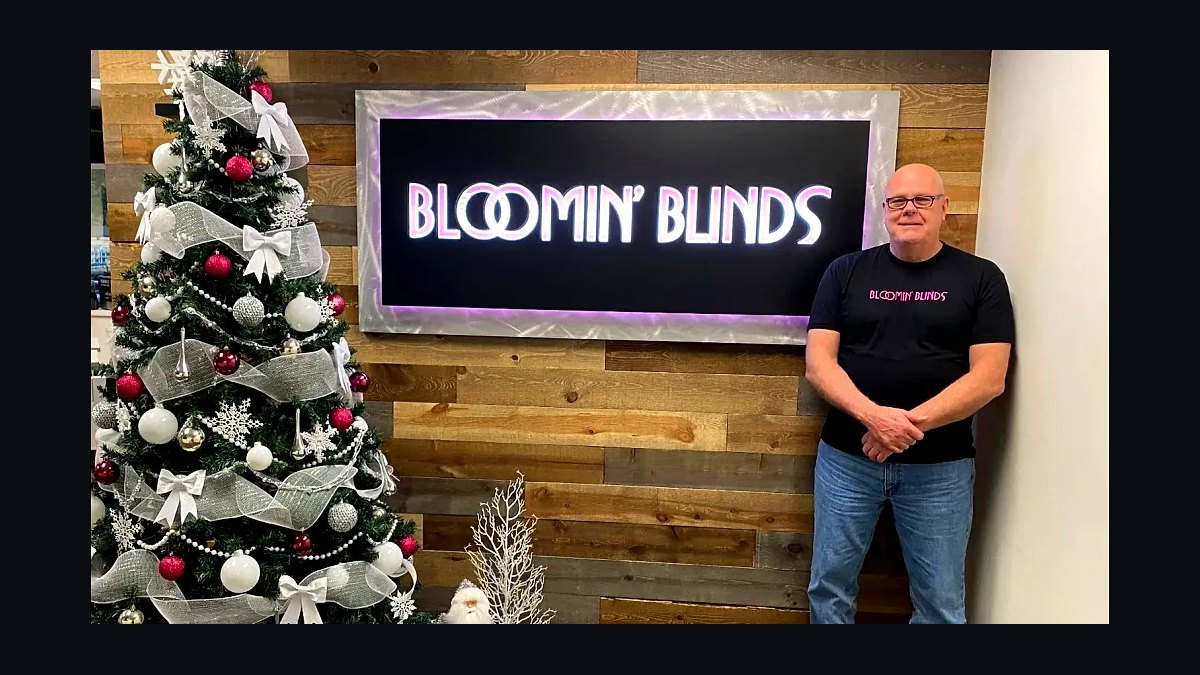
Open a new Bloomin' Blinds territory if you're a sales-driven operator who wants a low-capital ($100K-$160K), home-based franchise with a repair differentiator competitors like Budget Blinds don't offer. Buy an existing resale unit instead if you want established revenue and trained staff immediately, and can afford the higher entry price plus a $15,000-$25,000 transfer fee. Both paths require strong in-home sales and lead-generation skills to succeed.
Opening a new territory vs. buying an existing Bloomin' Blinds unit
The choice between starting a Bloomin' Blinds franchise from scratch and buying an existing resale unit comes down to capital, risk tolerance, and how fast you need cash flow. Both routes put you inside the same brand — home-based, shop-at-home sales, installation, and the repair capability that most window-covering competitors skip — but the economics and the day-one experience differ sharply.
Opening new means signing the 2026 FDD directly with Bloomin' Blinds corporate, paying the roughly $60,000 franchise fee, and building total Item 7 investment of about $100,000 to $160,000. You choose your territory (subject to availability — the brand grants exclusive territories sized around 50,000-100,000 households in metro areas, larger in rural zones), complete the 2-week initial training at corporate headquarters, get a 3-5 day in-market field support visit, and then spend the next 90-plus days generating your first leads from zero. You own the full ramp: no customer base, no reviews, no repeat-repair pipeline yet. The upside is you're the one building brand equity in a specific market, and your entry cost is the lowest way into the system.

Buying an existing unit means acquiring a franchisee's book of business, typically through resale marketplaces like BizBuySell or FranchiseDirect, or through internal franchisee networks. Existing Bloomin' Blinds units sell for roughly 2.5-3.5x annual net profit — a location clearing $150,000 a year might list for $375,000 to $525,000. That's a materially higher entry cost than the ~$100K-$160K for a new territory, but you're buying revenue, an established customer list, referral relationships (especially valuable given that repair work drives 40-50% of repeat customers), possibly a trained installer already on staff, and a market where you already know the seasonal demand pattern. The franchisor holds right of first refusal on any sale and charges a transfer fee, currently $15,000 to $25,000, to approve the new owner — budget for that on top of the purchase price.
There's a third, less common variant worth naming: some territories may be available as under-performing or non-renewing units where the franchisor facilitates a handoff at a discount to a fresh operator willing to rebuild the sales pipeline. This blends elements of both paths — lower purchase price than a healthy resale, but some of the ramp risk of a new build — and it's worth asking your franchise development contact whether anything like it exists in your target market before committing to either the pure-new or pure-resale route.

Whichever path you take, the underlying business mechanics don't change: you're still selling in-home, still executing installation and repair yourself (or through hired technicians), and still competing against Budget Blinds, 3 Day Blinds, The Blind Guy, and local independents for the same homeowner dollars.
How to decide between them
Run the decision through four filters: available liquid capital, risk appetite, timeline to income, and your comfort building a sales pipeline from nothing.
If your liquid capital sits closer to the $50,000-$80,000 minimum the FDD assumes, opening a new territory is likely your only realistic option — a resale purchase price of $375K+ requires either significant savings or financing that a first-time franchisee may struggle to secure. If you have access to $400,000-$600,000 in capital or financing and want to skip the zero-revenue ramp period, a resale unit converts that capital into immediate cash flow, assuming the unit is healthy and the seller's numbers hold up under Item 19 and financial-statement diligence.

Risk tolerance matters as much as capital. A new territory carries lead-generation risk — you don't know yet whether your specific market will produce the 5-15 leads per month the baseline marketing program targets, and actual volume depends heavily on market density and how aggressively you supplement with your own local advertising (typically recommended at 3-5% of revenue on top of the corporate marketing fee). A resale unit carries a different risk: you're trusting the seller's disclosed numbers and inheriting whatever reputation, good or bad, the previous owner built. Interview the seller's customers and read local reviews before closing, not just the seller's P&L.
Timeline to income is the sharpest practical dividing line. A new territory owner typically doesn't see meaningful revenue until 90-120 days in, after training, territory validation, and initial lead generation ramp up. A resale buyer can, in principle, generate revenue from week one, though transition friction (introducing yourself to the existing customer base, retaining the outgoing installer if there is one) usually costs some momentum in the first month or two regardless.
Concrete numbers behind each option

New territory investment (per the 2026 FDD): franchise fee around $60,000; vehicle and samples $15,000-$40,000; tools and equipment $8,000-$25,000; home-office setup $5,000-$18,000; initial marketing $15,000-$40,000; training and travel $8,000-$25,000; licensing and insurance $5,000-$18,000; working capital $15,000-$45,000. Total Item 7 investment lands around $100,000 to $160,000, with roughly $50,000-$80,000 of that needing to be liquid rather than financed. Ongoing costs run a royalty near 5%-6% of gross revenue plus a marketing fee typically in the 1%-2% range, which funds national advertising (Google Ads, home-improvement trade shows) and a local lead-generation program.
Resale acquisition cost: existing units trade at roughly 2.5-3.5x annual net profit. A unit earning $100,000 in owner profit might sell for $250,000-$350,000; one earning $250,000 might command $625,000-$875,000. Add the $15,000-$25,000 transfer fee the franchisor charges to approve the new owner, plus normal acquisition costs (legal, due diligence, possibly a broker fee if sourced through a resale marketplace).
Revenue and earnings, either path once mature: gross revenue ranges $500,000 to $1,800,000-plus, with owner earnings landing between $100,000 and $350,000. In a typical mid-sized metro of 500,000 to 1 million people, a mature unit captures roughly 2%-5% of the local window-covering market — enough to produce $500K-$800K in annual revenue; top performers in high-growth suburbs like Phoenix, Nashville, or Austin can exceed $1.2 million. Repair work typically accounts for 15%-25% of total revenue but drives 40%-50% of repeat customers, which is the retention edge pure install-and-sell competitors don't have.

Competitive landscape numbers: the 2026 FDD shows roughly 180 Bloomin' Blinds units across 30 states, concentrated in Florida, Texas, Ohio, and the Carolinas. Budget Blinds, the dominant competitor, operates 800-plus units nationally with over two decades of national advertising behind it — a brand-recognition gap a new Bloomin' Blinds owner has to close locally through the repair differentiator and direct lead generation rather than national ad spend.
Staffing costs as the business scales: most franchisees hire their first installer by year two, at a salary of roughly $40,000-$55,000 plus benefits, which frees the owner to focus on sales and business development rather than swinging a drill on every job. By year four or five, a successful unit can support two to three employees — an installer, part-time admin, and occasional sales help.
Implementation details and sequencing
Whether you're opening new or closing on a resale, the operational build-out follows a similar sequence, just compressed for a resale buyer who inherits an already-running pipeline.
For a new territory, the 90-day decision-and-launch window looks like this: days 1-20 are for reading the 2026 FDD and Item 19 financial performance representations in full, and beginning outreach to current operators. Days 21-40 go to interviewing at least eight existing franchisees, asking specifically about in-home sales conversion, repair revenue as a share of the business, lead-generation cost and volume, and net profit after royalty and marketing fees. Days 41-60 are for validating that your target market is genuinely a suburban, homeowner-dense area that can support the territory. Days 61-85 cover the required sales, installation, and repair training — the 2-week corporate program covering sales consultation technique, product knowledge across 1,000-plus fabric and material options, measurement and installation best practices, the repair workflow, and the CRM/lead-management software, followed by the 3-5 day field support visit for your first jobs. Days 86-115 are launch: driving leads, taking the first sales appointments, and starting to build the local reputation that eventually feeds the repair-driven referral loop.
A resale buyer telescopes most of that: training is often still required (the franchisor wants every owner certified regardless of entry path), but market validation, initial lead flow, and installer relationships are already in place, so the effective ramp to full productivity is closer to 30-45 days of transition rather than 90-115.

Ongoing support after launch is identical for both paths: a dedicated regional franchise business coach, monthly webinars on seasonal marketing and new product lines, an annual national convention (registration included for one owner, travel not covered), and a private franchisee intranet with operational manuals, vendor contacts, and a peer forum. What the fees don't cover, and what every owner should budget separately for, is local advertising beyond the corporate baseline, vehicle wrap and signage, and tools and equipment beyond the initial kit — often another $5,000-$12,000.
Seasonality shapes the calendar regardless of entry path. Demand peaks March through June and again September through November; winter months (December-February) run 20%-30% lighter on installation revenue, though repair work stays comparatively steady since broken blinds don't wait for spring. Owners who invest in winter-specific marketing — indoor lighting upgrades, motorization add-ons — smooth the seasonal dip better than those who let the business go quiet each winter.
Owner time commitment stays heavy in the early years regardless of path: expect 45-55 hours a week in years one through three, split roughly 40% sales consultations and estimates, 30% installation and repair labor until you hire a technician, 20% marketing and lead follow-up, and 10% admin. Weekend work is standard since Saturdays are prime in-home consultation time. A transition to a manager-run, semi-absentee model is possible but rare before year five, and even then most owners who make that shift report 40-hour weeks rather than true passivity.
Related questions
How much does it cost to open a Budget Blinds franchise for comparison?
Budget Blinds' investment range and fee structure differ from Bloomin' Blinds; check its current FDD directly, but its much larger unit count (800-plus) means stronger brand recognition and typically higher territory competition in most metros.
Is the blind-repair niche recession-resistant?
Repair demand tends to hold up better than new-installation demand in downturns, since fixing an existing blind is cheaper than replacing window coverings — a factor supporting the 15%-25% revenue share and 40%-50% repeat-customer rate repair drives.
How long before a home-based franchise like this turns a profit?
Most new territories don't see meaningful profit until after the 90-115 day launch ramp and several months of lead-generation building; a healthy resale purchase can shorten that to 30-45 days of transition.
What's the difference between the franchise fee and total investment?
The ~$60,000 franchise fee is just the licensing cost to join the system; total Item 7 investment of $100,000-$160,000 also covers your vehicle, tools, home-office setup, initial marketing, training travel, insurance, and working capital.
Should I negotiate the transfer fee on a resale purchase?
The $15,000-$25,000 transfer fee is set by the franchisor to approve any ownership change and is generally non-negotiable, but the purchase price itself (the 2.5-3.5x net profit multiple) often has room to move based on the unit's true financial health.
FAQ
What is the total investment to open a Bloomin' Blinds franchise? The total investment typically ranges from $100,000 to $160,000, including the roughly $60,000 franchise fee. This low startup cost is possible because the business is home-based, eliminating retail storefront overhead.
How much can I expect to earn as a Bloomin' Blinds franchise owner? Mature locations generally report annual gross revenues between $500,000 and $1,800,000, with owner earnings in the $100,000-$350,000 range. Actual income depends on your market, sales skill, and how well you manage installation and repair operations.
What makes Bloomin' Blinds different from other window-covering franchises?

Its dedicated blind repair service is the key differentiator — most competitors, including Budget Blinds, focus on sales and installation only. Repair captures additional revenue and drives 40%-50% of repeat customers.
Is buying an existing unit better than opening a new territory? It depends on capital and risk tolerance. A resale unit costs more upfront (2.5-3.5x net profit plus a $15,000-$25,000 transfer fee) but delivers immediate revenue; a new territory costs less to enter but requires a 90-plus day ramp to build the customer and lead pipeline from scratch.
What are the biggest challenges I should expect either way? Generating consistent leads and sales, executing high-quality installations and repairs, and competing with established brands like Budget Blinds and local operators. Success requires strong sales skills and reliable service delivery regardless of entry path.
How long has Bloomin' Blinds been franchising, and how big is the network? Bloomin' Blinds was founded in 2001 and began franchising in 2014. The 2026 FDD shows roughly 180 units across 30 states, concentrated in Florida, Texas, Ohio, and the Carolinas — verify current counts in the latest FDD before committing.
Sources
- https://www.entrepreneur.com/franchises/directory
- https://www.ibisworld.com/
- https://www.statista.com/
- https://www.franchisebusinessreview.com/
- https://www.franchise.org/
- https://www.bizbuysell.com/
- https://www.census.gov/
- https://bloominblinds.com/
- https://www.budgetblinds.com/
Related on PULSE
This page will be disappearing soon. Save it to your device for $1 — or read it free while it is here.
@Kory-White- · if Venmo asks, the last 4 of my number are 2012
This page is gone.
This one is off the shelf now. $1 keeps it on your phone for good — the whole page, pictures and diagrams included.
 franchiseShould I open or buy a Stanley Steemer franchise in 2027?
 franchiseShould I open or buy a Bojangles franchise in 2027?
 franchiseShould I open or buy a Jimmy John's franchise in 2027?
 franchiseShould I open or buy a Papa John's franchise in 2027?
 franchiseShould I open or buy a Meineke franchise in 2027?
 franchiseShould I open or buy a Dairy Queen franchise in 2027?
 franchiseShould I open or buy a Jeremiah's Italian Ice franchise in 2027?
 franchiseShould I open or buy a Great Clips franchise in 2027?
 franchiseShould I open or buy a Goddard School franchise in 2027?
 franchiseShould I open or buy a KinderCare franchise in 2027?