


Should I open or buy an EcoShield Pest Solutions franchise in 2027?
Quality
Certified
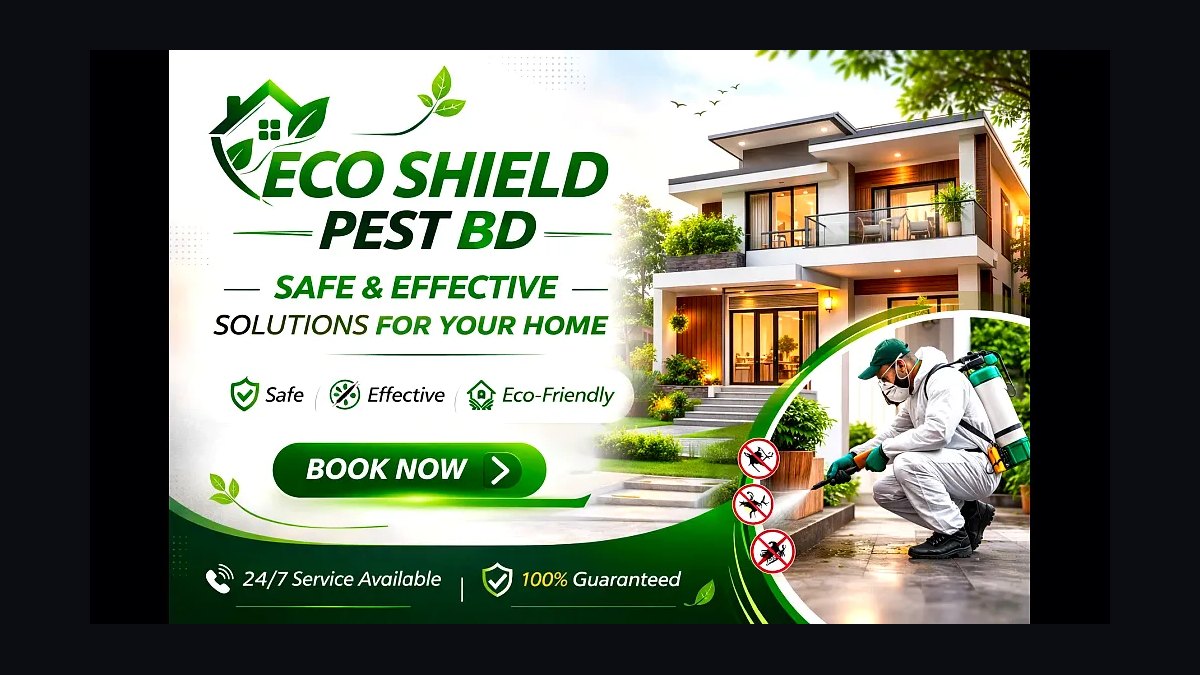
Yes, for a sales-driven operator: an EcoShield Pest Solutions franchise pairs a recession-resilient, recurring-revenue pest-control model with an eco-conscious, family-and-pet-friendly brand at a moderate $100,000–$350,000 investment. It rewards owners who can open new accounts fast, staff licensed technicians, and build dense routes — and it punishes owners who expect a passive, non-sales business.
What it is and why it matters
EcoShield Pest Solutions is a residential- and commercial-pest-control franchise built around recurring quarterly or bimonthly treatment plans, seasonal mosquito programs, and specialty pest work, sold under an eco-conscious, plant-based product positioning. The franchise itself is a legal and operating relationship: you license the EcoShield name, its green-chemistry formulations, its training curriculum, and its national systems in exchange for a franchise fee near $50,000, an ongoing royalty of roughly 7%–8% of gross revenue, and a marketing contribution around 1%–2%. What you're really buying, though, is a demand curve. Pests are not discretionary — homeowners don't defer a termite or rodent problem the way they defer a kitchen remodel — so the category holds up through downturns. During the 2020–2022 stretch, pest-control industry revenue dipped only 2%–4% at the worst of pandemic disruption before rebounding, and EcoShield franchisees reported 5%–10% revenue growth through 2023–2025 despite inflationary pressure on labor and materials.
Why the "open" decision matters beyond the fee schedule is that pest control is fundamentally a route-density and retention business, and EcoShield layers a real differentiator on top of that chassis. Its plant-based, low-toxicity treatments target the roughly 55%–65% of homeowners who told 2025–2026 surveys they prefer a "green" or eco-friendly pest provider, up from about 40% in 2020. That premium positioning lets franchisees hold price 15%–25% above conventional competitors in most markets — a meaningful edge in a category where price wars are common. The trade is that EcoShield carries less than 2% national brand recognition against Orkin's 60%-plus and Terminix's 50%-plus, so a new franchisee is not renting an existing customer base; they're building one from zero, mostly through local sales effort rather than brand pull. Understanding that trade-off — genuine product differentiation, but almost no name recognition — is the single most important thing to internalize before you open.

The step-by-step process
Opening an EcoShield franchise runs on a predictable sequence, and skipping steps (especially validation and licensing) is where most delays originate. The rough arc:
- Days 1–20 — Diligence. Read the current Franchise Disclosure Document in full, with particular attention to Item 19 (financial performance representations), Item 20 (franchisee turnover and litigation history), and Item 7 (initial investment range). Cross-check the figures against what current owners actually report.
- Days 21–40 — Validation calls. Interview existing franchisees, not just the two or three the franchisor hands you. Ask directly about customer-acquisition cost, first-year retention, technician turnover, and net profit after royalty and marketing fees — not just top-line revenue.
- Days 41–60 — Market and territory validation. Confirm your target territory has real pest pressure (warm, humid, or termite-prone climates skew favorably) and enough rooftop density to support route efficiency. A territory with the right demand profile but thin housing density can strand a technician's day in windshield time instead of service calls.
- Days 61–85 — Licensing and hiring. Apply for state pest-control licensing (an 8–12 week process in most states) and begin recruiting technicians in parallel, since licensed labor is often the binding constraint on how fast you can grow.
- Days 86–115 — Launch and acquisition. Open the doors and put the bulk of your energy into customer acquisition — digital marketing, local SEO, door-to-door, and referral programs — because the recurring-revenue engine only starts compounding once the initial customer base exists.
- Ongoing — Route-building and scale. Convert one-time sales into signed recurring agreements, densify routes territory by territory, and reinvest early profit into a second and third technician once route load justifies it.
This sequence generalizes to almost any route-based, recurring-service franchise — lawn care, HVAC maintenance plans, pool service — because the bottleneck is always the same: licensed or trained labor gates how fast you can convert signed customers into serviced routes, and no amount of marketing spend fixes a hiring shortfall.

Costs, timelines, and typical ranges
The 2026 Franchise Disclosure Document puts total Item 7 investment at roughly $100,000 to $350,000, built from several distinct buckets rather than one lump sum. The $50,000 franchise fee is fixed. Vehicles and service equipment run $35,000–$100,000 depending on how many trucks you launch with; branding and vehicle wraps add another $5,000–$18,000. A home- or warehouse-based operation keeps office setup relatively light at $8,000–$28,000, but initial marketing is the largest variable line at $22,000–$65,000, reflecting that EcoShield's low brand recognition forces new owners to buy their own awareness. Training and travel for the operator and early technicians run $10,000–$28,000; pest-control licensing and general-liability insurance add $10,000–$28,000; and working capital — the cushion that carries payroll and overhead until recurring revenue ramps — should be budgeted at $25,000–$80,000. Most franchisors want to see $70,000–$140,000 in liquid capital before approving a candidate, separate from financed equipment.
On the ongoing side, the royalty runs about 7%–8% of gross revenue and the marketing fee roughly 1%–2%, both standard for the category. Mature units report gross revenue anywhere from $900,000 to over $4,000,000, with owner earnings in the $130,000–$500,000 range — a wide spread that tracks almost directly with route density and how long the unit has been building recurring agreements. Recurring revenue itself typically makes up 70%–85% of a mature unit's book, with first-year customer retention around 60%–70% and third-year retention settling to 45%–55%, both roughly in line with pest-control industry norms.

Two cost lines deserve extra scrutiny for a 2027 opening. First, technician wages have climbed 15%–25% since 2022, and first-year technician compensation (including benefits) now runs $45,000–$60,000 per hire — budget for this explicitly rather than assuming the Item 7 working-capital figure absorbs it. Second, state pesticide-licensing fees range from $200 to $1,500 per technician depending on jurisdiction, and the franchisor's licensing assistance does not cover the fees themselves. Layer 8–12 weeks of licensing lead time onto your launch timeline, or your first technicians will be trained and idle while paperwork clears.
Where teams get it wrong
The most common failure mode is treating EcoShield as a passive or semi-passive investment. It isn't. The entire recurring-revenue model depends on aggressive first-year customer acquisition, and owners who underinvest in sales — expecting the eco-positioning or the franchise name to generate leads on its own — consistently underperform. Given EcoShield's sub-2% brand recognition, there is no name-recognition safety net the way there might be with Orkin or Terminix; a franchisee who doesn't personally drive or manage acquisition in year one starts the recurring-revenue flywheel too slowly to hit the $900K+ mature-unit range within a normal ownership horizon.
A second, closely related mistake is underestimating technician staffing and licensing lead time. Because licensed labor gates growth, owners who sign customers faster than they can license and hire technicians end up with a service backlog, which erodes the trust that recurring agreements depend on. Approximately 15%–20% of franchisees in anonymous FDD Item 20 disclosures reported dissatisfaction with franchisor support-response times specifically during peak season (May–August), exactly when technician and sales-support requests spike — a signal that support bandwidth thins when demand is highest, so owners should build their own staffing buffer rather than counting on the franchisor's regional support managers (roughly one per 12–15 franchisees as of 2025–2026) to backstop a shortfall.

Third, some owners misjudge territory. A market with genuine pest pressure but low housing density looks attractive on paper but produces inefficient routes, since technicians spend disproportionate time driving between stops rather than servicing accounts. Fourth, owners frequently underestimate the marketing spend required to overcome low brand awareness; the national marketing fund contributes only roughly $200,000–$400,000 annually across the system, which is thin for national advertising, so local SEO, Google Local Services Ads, and door-knocking remain the franchisee's own responsibility rather than something the fund will carry for them. Finally, some candidates skip real validation — reading only the franchisor-selected reference list instead of independently sourcing conversations with a broader set of current owners — and miss the gap between Item 19's aggregate figures and what a specific territory actually nets after royalty, marketing fee, technician payroll, and vehicle costs.
Decision framework: when to choose what
The clearest way to frame the decision is to separate it from franchise selection generally and ask what kind of operator you are. If you are strong at sales and customer acquisition, comfortable recruiting and managing licensed technicians, and willing to run a full-time, hands-on operation in a pest-prone or growing market, EcoShield's combination of recession resilience, recurring revenue, and a genuine eco differentiator gives you a credible path to the $130,000–$500,000 owner-earnings range at a lower entry cost than several national competitors — EcoShield's $100,000–$350,000 investment runs roughly 30%–50% below Mosquito Joe ($150,000–$400,000) or Terminix ($200,000–$600,000+). If instead you want a low-sales-intensity or largely passive business, or you can't commit to hands-on technician management, EcoShield is likely the wrong fit regardless of the category's tailwinds, and you should look at a lower-touch service model instead.

For candidates who like the pest-control category but want a different trade-off, the comparison set is worth walking through directly. Fox Pest Control offers a similarly fast-growing, sales-driven model without the eco-specific differentiator. Truly Nolen and Pestmaster are more established pest-control brands with longer track records and higher brand recognition, generally at a higher entry cost. Mosquito Joe and Mosquito Squad narrow the model to seasonal mosquito control, a lighter-touch entry point than full pest control. Going independent — building an unbranded pest-control company from scratch — trades away training, the eco-positioning, and system support for full control and no royalty, which only makes sense for an operator who already has industry experience and an existing customer pipeline. The decision tree below lays out how those factors typically sort candidates.
Related questions
How long does it take an EcoShield franchise to become profitable? Most owners see initial breakeven within the first 12–18 months as recurring agreements accumulate, though this depends heavily on how aggressively the owner drives customer acquisition and how quickly technicians clear state licensing.
Can I run an EcoShield franchise part-time? Not realistically in the early years. The model depends on hands-on sales and technician management, and franchisees who treat it as part-time or passive typically underperform the Item 19 ranges.
What territory size does EcoShield typically grant? Territory sizing is set in the franchise agreement and varies by population density and existing franchisee coverage; validate the specific territory's household count and pest-pressure profile before signing rather than assuming it matches system averages.
Is EcoShield's green positioning legally regulated or third-party certified? The FDD and franchisor marketing describe the products as plant-based and low-toxicity; franchisees should confirm current state-specific labeling and certification requirements directly with regulators rather than relying solely on brand messaging.
FAQ
What is the total investment needed to open an EcoShield franchise in 2027?

Total initial investment typically runs $100,000 to $350,000 per the 2026 FDD, including a roughly $50,000 franchise fee, vehicles and equipment, initial marketing, licensing, and working capital. Actual cost depends on territory size, vehicle count at launch, and local licensing fees.
How much can I expect to earn as an EcoShield franchise owner? Mature units report annual gross revenue between $900,000 and $4,000,000, with owner earnings of roughly $130,000 to $500,000. Earnings depend heavily on route density, local competition, and how effectively the owner drives customer acquisition and retention.
What ongoing fees does EcoShield charge franchisees? The royalty is about 7%–8% of gross revenue, plus a marketing fee of roughly 1%–2%. These fund brand systems, training updates, and a national marketing fund that currently totals only about $200,000–$400,000 a year across the system.
Is pest control a recession-resistant business to open in 2027? Yes. Pest problems don't disappear during downturns, and recurring service agreements provide predictable, repeat revenue. Industry revenue fell only 2%–4% during the worst of the 2020–2022 disruption before rebounding, and EcoShield franchisees posted 5%–10% growth through 2023–2025.
Do I need prior pest-control experience to open an EcoShield franchise? No prior pest-control experience is required, but a genuine sales-and-service mindset is essential. The franchisor trains on operations, technician licensing pathways, and acquisition tactics, but the owner still has to execute the sales effort personally in year one.
How does EcoShield's eco-conscious positioning actually help a franchisee's business? The plant-based, family- and pet-friendly formulation differentiates EcoShield from conventional competitors and supports a 15%–25% price premium in most markets. It resonates with the 55%–65% of homeowners who now prefer green pest control, which can improve retention on recurring agreements over time.
Sources
- https://www.entrepreneur.com/franchises
- https://www.ibisworld.com
- https://www.statista.com
- https://www.npmapestworld.org
- https://www.franchisebusinessreview.com
- https://www.franchise.org
- https://www.census.gov
- https://www.sba.gov/business-guide/plan-your-business/franchise-businesses
- https://www.terminix.com
- https://www.orkin.com
Related on PULSE
- Should I open or buy a Fox Pest Control franchise in 2027?
- Should I open or buy a Truly Nolen Pest Control franchise in 2027?
- Should I open or buy an Orkin Pest Control franchise in 2027?
- Should I open a independent pest control business in 2027?
- Should I open or buy a Five Star Bath Solutions franchise in 2027?
- Should I open or buy a Stratus Building Solutions franchise in 2027?
This page will be disappearing soon. Save it to your device for $1 — or read it free while it is here.
@Kory-White- · if Venmo asks, the last 4 of my number are 2012
This page is gone.
This one is off the shelf now. $1 keeps it on your phone for good — the whole page, pictures and diagrams included.
 franchiseShould I open or buy an F45 Training franchise in 2027?
 franchiseShould I open or buy a Take 5 Oil Change franchise in 2027?
 franchiseShould I open or buy a Drybar franchise in 2027?
 franchiseShould I open or buy a Pizza Hut franchise in 2027?
 franchiseShould I open or buy a Jimmy John's franchise in 2027?
 franchiseShould I open or buy a Bruster's Real Ice Cream franchise in 2027?
 franchiseShould I open or buy a Planet Fitness franchise in 2027?
 franchiseShould I open or buy a Servpro franchise in 2027?
 franchiseShould I open or buy a FACE FOUNDRIÉ franchise in 2027?
 franchiseShould I open or buy a Panera Bread franchise in 2027?