


Should I open or buy a Lawn Squad franchise in 2027?
Quality
Certified
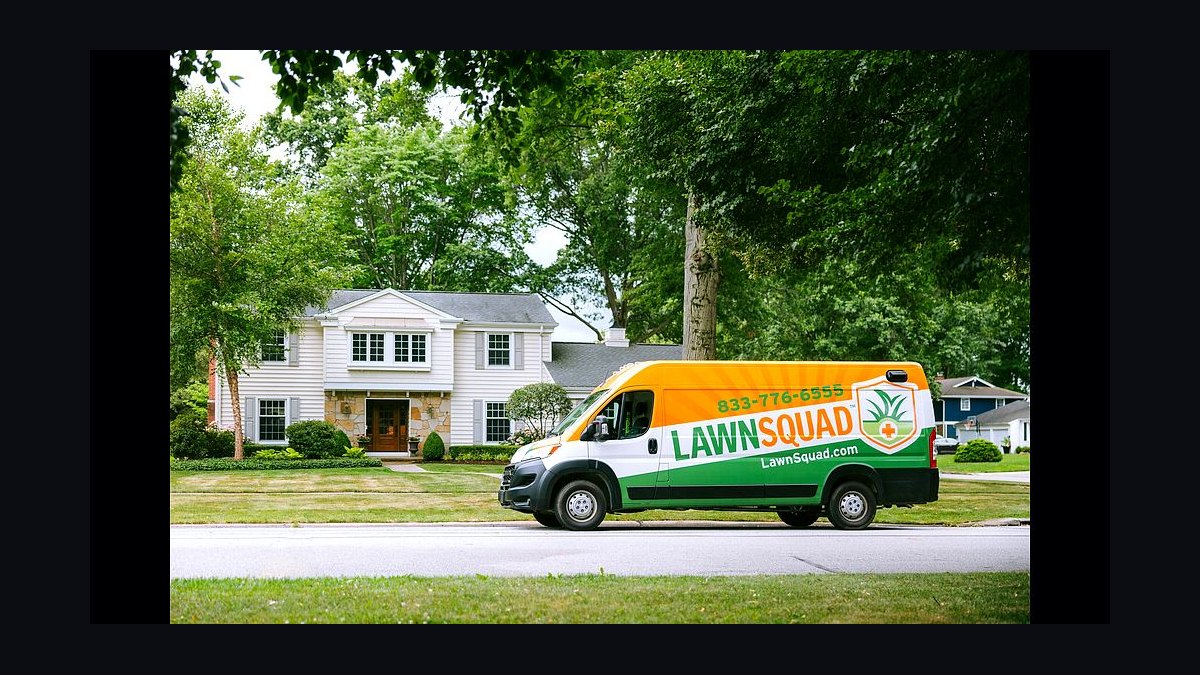
Lawn Squad works if you are a sales-driven operator who can build a recurring treatment base fast. The 2026 FDD shows roughly $60,000–$150,000 total investment, a ~$50,000 franchise fee, and 8–9% royalty. Mature units gross $400,000–$1,800,000. Skip it if customer acquisition or technician staffing scares you.
What a Lawn Squad franchise actually is, and why the model matters
Strip away the brochure language and a Lawn Squad unit is a route-density business wearing a lawn-care costume. You are not selling mowing. You are selling a recurring chemical-application program — fertilization, pre-emergent and post-emergent weed control, grub prevention, sometimes aeration and overseeding as add-ons — delivered on a schedule the customer never has to think about after they sign. That distinction drives every economic decision downstream.
The franchisor sits under Authority Brands, a large home-services platform that also holds plumbing, HVAC, cleaning, and pest-control concepts. That parentage is the single most underrated line in the whole FDD. It means the call center, the CRM, the lead-routing stack, and the national vendor agreements were not built from scratch for a young lawn brand — they were ported from systems already running millions of home-service transactions a year. When you evaluate whether to open a unit, you are partly evaluating Lawn Squad's own maturity and partly evaluating the depth of the platform behind it. Those are two different risk profiles stacked in one deal.
Why the model matters more than the brand: a lawn-treatment route is one of the few small-business structures where revenue compounds without proportional capital. Every customer you add to a street you already service costs you almost nothing in incremental drive time. A technician who services 14 stops a day at $70 average produces roughly $980 in daily revenue; push that to 20 stops through tighter clustering and the same truck, same fuel, same labor hour produces $1,400. You did not buy anything. You just sold better geography. That is the entire game, and it is why route density shows up in every honest conversation with an operating franchisee.

Compare that to the neighboring home-service categories many buyers cross-shop. A restoration franchise carries $200,000+ in equipment and lives on unpredictable emergency calls. A home-remodeling concept has long sales cycles, big receivables, and lumpy revenue. A junk-removal brand needs trucks and constant re-acquisition because nobody hires you twice a month. Lawn treatment sits in the rare quadrant of low capital plus contractual recurrence, which is why private equity has been consolidating the category for a decade. You are buying into a structure institutional money already validated — you are just buying it one territory at a time.
The catch, and it is a real one: recurrence in lawn care is *soft* recurrence. There is no equipment lock-in, no switching cost, no contract with teeth. Annual churn in residential lawn treatment commonly lands in the 15–20% range. That means a book of 800 customers bleeds roughly 120–160 accounts a year before you grow a single dollar. Your acquisition engine is not a launch-phase project. It is a permanent department, forever, and the operators who treat it as a one-time push are the ones who plateau at 400 accounts and wonder why the P&L never improved.
The step-by-step process from inquiry to a filled route
The path from first phone call to a profitable second truck follows a predictable sequence, and most of the failure happens because buyers compress the validation phase and stretch the launch phase. Reverse that.

Discovery and FDD (weeks 1–4). You request information, get routed to a franchise development rep, and receive the Franchise Disclosure Document. Federal rule gives you a mandatory 14-day cooling-off period before you can sign anything. Use every day of it. Read Item 7 for the investment table, Item 19 for financial performance representations, Item 20 for the unit counts and — critically — the transfer, termination, and non-renewal tables. Item 20 is where a young brand tells the truth about itself. A system opening 30 units a year while terminating 6 has a different story than one terminating zero.
Validation calls (weeks 4–8). The FDD includes a list of current and former franchisees with contact information. Call at least a dozen, and make sure at least three are former operators. The questions that produce signal: *What did you actually gross in month 18 versus what you modeled? What's your cost per acquired customer through each channel? How many technicians did you hire to keep two? What percentage of your book renewed this spring? If you were starting again, what would you do differently in the first 90 days?* Vague enthusiasm is not validation. You want numbers with decimal points.
Territory analysis (weeks 6–10). Ask the development team for household counts, competitor mapping, and the demographic overlay. Lawn Squad territories are commonly defined by zip code clusters or household counts in the 10,000–25,000 range. Push for the specifics: percentage of owner-occupied single-family homes, median home value, average lot size, and how many national competitors already run trucks in those zips. A territory with 22,000 households where 60% are apartments and townhomes is functionally a 9,000-household territory.

Licensing and legal setup (weeks 8–14). This is the step buyers underestimate. Applying pesticides and fertilizers commercially requires state applicator certification, and the requirements vary meaningfully by state — exam, supervised hours, business license, pesticide dealer registration, and proof of financial responsibility in some jurisdictions. Some states let a certified applicator supervise uncertified technicians within defined limits; others require every person touching product to hold a card. Find out which regime you are in before you plan your hiring, because it changes your labor cost per truck.
Pre-launch acquisition (weeks 10–16). The operators who ramp fastest start selling before the truck is wrapped. Door-to-door canvassing in target neighborhoods, direct mail to owner-occupied homes with visible lawns, neighborhood social platforms, and early-season promotional pricing all run before day one of service. A launch with 60 pre-sold accounts clustered in four neighborhoods beats a launch with 200 accounts scattered across the whole territory — every time.
Launch and route construction (months 4–12). Service begins. Now the job is clustering. Sell hard into streets you already serve, offer referral credits, and resist the temptation to accept a customer 25 minutes outside your cluster just because they said yes.
Costs, timelines, and the numbers that actually move
The 2026 FDD puts total Item 7 investment at roughly $60,000 to $150,000, with a franchise fee near $50,000, royalty around 8–9% of gross, and a marketing fee near 2%. That headline range is accurate but not useful on its own, because the fee eats most of the low end. Here is where the rest lands.

| Line item | Low | High | What drives the spread |
|---|---|---|---|
| Franchise fee | $50,000 | $50,000 | Fixed per 2026 FDD |
| Vehicle and spray equipment | $15,000 | $55,000 | Used truck with a skid unit vs. new wrapped truck with a purpose-built rig |
| Branding and vehicle wrap | $4,000 | $15,000 | Partial decals vs. full wrap on multiple units |
| Home or warehouse setup | $4,000 | $15,000 | Garage-based vs. leased chemical storage |
| Initial marketing | $12,000 | $35,000 | The single biggest lever on ramp speed |
| Training and travel | $6,000 | $20,000 | Owner alone vs. owner plus two technicians |
| Licensing and insurance | $6,000 | $18,000 | State-dependent; applicator certs, GL, auto, pollution liability |
| Working capital | $12,000 | $40,000 | Seasonal float through the first winter |
| Total Item 7 | ~$60,000 | ~$150,000 | Per 2026 FDD |
Budget to the high end, not the middle. The $60,000 scenario assumes a used truck, minimal marketing, and near-zero working capital — which describes a unit that will be undercapitalized precisely when it needs to spend on acquisition. Plan on $40,000–$70,000 liquid beyond the franchise fee, and treat the marketing line as the last thing you cut rather than the first.
Unit economics at scale. Mature units gross $400,000 to $1,800,000+, with owners clearing $80,000 to $350,000. That spread is not luck. On a $1,000,000 unit, a workable structure looks roughly like: labor at 28–32%, vehicles and materials at 16–20%, royalty plus marketing fee at 10–11%, and remaining operating expense at 14–18%, leaving owner earnings in the low-to-mid $200,000s. Move labor efficiency five points through better routing and you have moved $50,000 into your pocket without selling one more customer.
Timeline to break-even. Most operators reach break-even somewhere in the 12–24 month window. The variance tracks two things: how many accounts you pre-sold before launch, and whether you launched going into the growing season or out of it. Opening in late summer means paying overhead through a winter with almost no application revenue and no accumulated book. Opening in early spring means five or six billable rounds before the first slow month. That single scheduling decision is worth more than any negotiation you will have over the franchise fee.

Seasonality math. In northern markets the treatment calendar runs roughly 6–7 rounds across March through November. In the Southeast, warm-season turf extends the program and some operators run near year-round with lighter winter rounds. Your cash-flow model has to survive the gap. The standard plays: prepay discounts that pull next-season cash into the current quarter, winter add-ons like leaf cleanup or holiday lighting through a sister brand, and shifting technicians to seasonal schedules rather than losing them to a competitor every October.
Customer acquisition cost. This is the number to interrogate hardest during validation calls. Ask what a customer costs through canvassing, direct mail, paid search, and referral separately. Canvassing is labor-cheap and time-expensive; paid search costs more per lead but scales without headcount; referrals are nearly free and convert at multiples of everything else, which is why mature operators run structured referral credits. If a franchisee tells you they don't track CAC by channel, you have learned something important about how the system trains its owners.
Where operators get this wrong
Selling geography instead of buying it. The most common failure is accepting every customer who says yes. A book of 500 accounts spread evenly across a 20,000-household territory requires more drive time than a book of 800 accounts clustered into six neighborhoods — and produces less revenue. Discipline here feels like leaving money on the table for about nine months, then compounds for a decade. Some operators go as far as offering a discount to sign a whole cul-de-sac and declining outliers entirely in year one.
Treating churn as a service problem only. Yes, bad applications lose customers. But a meaningful slice of the 15–20% annual churn is structural: people move, sell the house, or decide to DIY after a good year. You cannot service your way to zero churn. You can only out-acquire it. Model your growth as *net* growth — new accounts minus expected attrition — and you will size your marketing budget correctly instead of being surprised every February.
Underestimating the technician problem. Home-service labor is tight across every trade, and lawn treatment competes for the same pool as pest control, irrigation, and landscaping. The pay is seasonal, the work is outdoors, and the licensing adds friction. Operators who win here do unglamorous things: they pay above the local landscaping rate, they route so technicians finish on time instead of chasing stops at 6pm, they offer winter hours through adjacent work, and they promote from technician to lead to route manager so there is somewhere to go. Losing a licensed applicator in April is a five-figure mistake.
Buying a saturated territory because it was available. Availability is not a signal of quality. In markets where a large national operator already runs dense routes and buys the top of every search result, your acquisition cost can be double what the model assumed. That is survivable if you know it going in and price your differentiation — local ownership, same-tech continuity, faster callbacks — into your pitch. It is fatal if you assumed the national average.
Confusing recession-resilient with recession-proof. Lawn treatment holds up better than most discretionary home services because homeowners protect property value and because a neglected lawn takes two seasons to recover. But "better than most" is not immunity. In a downturn, expect trade-down behavior: customers dropping from a seven-round program to four rounds, skipping the grub application, or pausing the add-ons. Build your model on a base program, not on attachment revenue.
Ignoring the newer-brand discount and premium simultaneously. A young system means fewer peer operators to learn from, playbooks still being refined, and thinner brand recognition at the door. It also means less territory competition and a chance to be an early anchor in a market. Both are true. The mistake is pricing only one of them into your decision.
Decision framework: open, buy, or go independent
Three real paths exist here, and the franchise brochure only discusses one of them.
Open a new Lawn Squad unit when you have a strong territory available, you are genuinely good at customer acquisition, and you can tolerate 12–24 months of building before the economics look like the brochure. You get first-mover position in your market and a clean customer base with no inherited service problems.
Buy an existing unit when you want cash flow on day one and you would rather pay for a book than build one. The catch: because the brand is young, the resale market is thin — there simply are not many mature units changing hands. When one does surface, mature lawn-care operations commonly trade around 2–3x annual EBITDA, so a unit throwing off $150,000 in owner earnings implies roughly $300,000–$450,000. Transfer fees to the franchisor typically run in the 10–15% range of the sale price. Diligence the *retention* rate above everything: a book with 85% renewal is a different asset than a book with 70% renewal at the same revenue.
Go independent when you already have lawn-care operating experience, a local reputation, and the sales ability to build a book without a brand behind you. You keep the 10–11% that would have gone to royalty and marketing fees — on a $1,000,000 unit that is $100,000+ a year — but you build the call center, the CRM, the agronomic program, the vendor relationships, and the hiring pipeline yourself. That trade is excellent for experienced operators and brutal for career-changers.
Adjacent plays worth pricing before you commit. The same route-density logic drives pest control, mosquito treatment, irrigation service, and pool maintenance, and several of those carry longer seasons and higher ticket values. Multi-brand ownership under one platform is a common endgame: run lawn treatment through the growing season, mosquito service through summer, and holiday lighting or pest control through the shoulder months, sharing the same trucks, techs, and customer list. If that end state appeals to you, weigh the franchisor's sister-brand portfolio as heavily as the lawn concept itself — the ability to sell a second service to a customer you already acquired is the highest-margin revenue in the whole category.
Related questions
How long before a new unit is genuinely profitable?
Break-even typically lands between 12 and 24 months. The two biggest accelerants are pre-selling accounts before the truck arrives and launching at the start of the growing season rather than the end of it.
What does a territory realistically need to support a unit?
Look for 10,000–25,000 households with a high share of owner-occupied single-family homes and real lot sizes. Raw household counts inflated by apartments and townhomes overstate the addressable market substantially.
Is the resale market a viable exit?
Eventually, but not soon. A young system has few mature units trading. Asset-light structure means you can sell the book and route flexibly, though early franchisees should plan on a 5–7 year hold to capture brand-recognition gains.
How much does licensing complicate hiring?
Meaningfully. Commercial pesticide application requires state certification, and rules on whether one certified applicator can supervise uncertified techs vary by state. Confirm your state's regime before modeling labor cost per truck.
Can this run as a semi-absentee business?
Not in year one or two. The build phase is a sales job, and sales does not delegate well before there is a manager worth delegating to. Semi-absentee becomes realistic once a route manager and a filled second truck exist.
FAQ
What is the total investment range for a Lawn Squad franchise in 2027?
Total Item 7 investment typically falls between $60,000 and $150,000, including a franchise fee around $50,000. The spread depends on whether you buy a used or new truck, how aggressively you fund initial marketing, and how much working capital you carry through the first winter. Budget toward the high end.
How much can an owner realistically earn?
Mature units report gross revenue from $400,000 to $1,800,000+, with owner earnings ranging from roughly $80,000 to $350,000. The variance is driven almost entirely by route density, season length, and how well the operator controls labor as a percentage of revenue. Verify the range against Item 19 and franchisee calls.
What are the ongoing fees?
Royalty runs roughly 8–9% of gross revenue plus a marketing fee near 2%. Combined, that is about 10–11% off the top, funding brand development, technology, call-center support, and advertising. On a $1,000,000 unit that is $100,000+ annually — the number to weigh against going independent.
Is lawn care actually recession-resilient?
Resilient, not proof. Homeowners tend to protect property value and a neglected lawn takes seasons to recover, so base programs hold up better than most discretionary home services. Expect trade-down behavior in a downturn — customers dropping rounds or skipping add-ons — rather than outright cancellation.
What is the hardest part of the business?
Two things, consistently: acquiring customers fast enough to outrun 15–20% annual churn, and recruiting and retaining licensed technicians in a tight home-service labor market. Neither is solved by the franchisor. Both are permanent operating disciplines rather than launch-phase projects.
How does Authority Brands backing change the risk profile?
It splits the risk. Lawn Squad itself is a young brand with a shorter track record and a smaller peer network, but the platform underneath supplies mature call-center, lead-routing, and vendor infrastructure. You are underwriting a new concept riding proven operational systems — which is a different bet than either a startup franchise or a legacy one.
Sources
- https://www.ftc.gov/business-guidance/resources/franchise-rule-compliance-guide
- https://www.sba.gov/business-guide/plan-your-business/buy-existing-business-or-franchise
- https://www.epa.gov/pesticide-worker-safety/pesticide-applicator-certification-private-and-commercial-applicators
- https://www.bls.gov/ooh/building-and-grounds-cleaning/grounds-maintenance-workers.htm
- https://www.franchise.org/
- https://www.entrepreneur.com/franchises
- https://www.franchisebusinessreview.com/
- https://www.census.gov/programs-surveys/ahs.html
- https://www.ibisworld.com/united-states/industry/landscaping-services/1487/
Related on PULSE
- Should I open or buy a Lawn Doctor franchise in 2027?
- Should I open or buy a Weed Man Lawn Care franchise in 2027?
- Should I open or buy a Spring-Green Lawn Care franchise in 2027?
- Should I open or buy a Mosquito Squad franchise in 2027?
- Should I open a lawn mowing business in 2027?
- Should I open a independent lawn care business in 2027?
This page will be disappearing soon. Save it to your device for $1 — or read it free while it is here.
@Kory-White- · if Venmo asks, the last 4 of my number are 2012
This page is gone.
This one is off the shelf now. $1 keeps it on your phone for good — the whole page, pictures and diagrams included.
 franchiseShould I open or buy a Hand and Stone Massage franchise in 2027?
 franchiseShould I open or buy a Wendy's franchise in 2027?
 franchiseShould I open or buy a Dunkin' franchise in 2027?
 franchiseShould I open or buy a UPS Store franchise in 2027?
 franchiseShould I open or buy a Goddard School franchise in 2027?
 franchiseShould I open or buy a Bojangles franchise in 2027?
 franchiseShould I open or buy a Supercuts franchise in 2027?
 franchiseShould I open or buy an F45 Training franchise in 2027?
 franchiseShould I open or buy a Chipotle franchise in 2027?
 franchiseShould I open or buy a Firehouse Subs franchise in 2027?