


Should I open or buy a RNR Tire Express franchise in 2027?
Quality
Certified
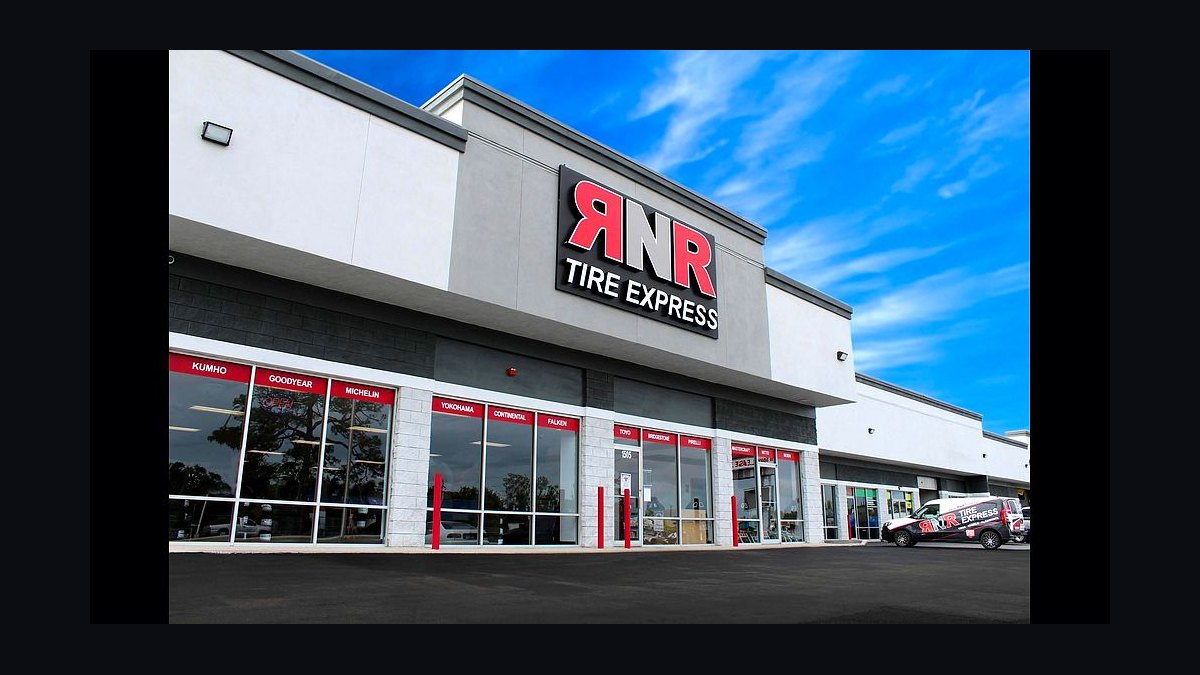
Yes, for an operator with $700,000–$1.6 million in capital who wants a tire-and-wheel franchise built around lease-to-own financing rather than cash sales. RNR Tire Express lets you open in a market of credit-challenged, cash-strapped drivers that Discount Tire and independent shops can't serve, trading higher upfront investment and collections work for recurring payment revenue and recession-resistant demand.
What it is and why it matters
RNR Tire Express is a retail tire-and-custom-wheel franchise built around one structural difference from every competitor on the block: it sells tires and wheels on flexible weekly or monthly payment plans instead of requiring full payment at the register. Founded in Tampa in 2000, the brand has grown from roughly 120 units in 2020 to more than 200 by 2026, and it franchises a specific format — a 4,000-to-6,000-square-foot showroom paired with 8 to 10 service bays — rather than a generic tire-repair box.
The business model matters more than the product. Tires themselves are commoditized; what RNR sells is access. An estimated 40% of U.S. adults are either unbanked or carry subprime credit, and that population needs tires exactly as often as anyone else — arguably more, because older, higher-mileage vehicles wear tires faster. Traditional retailers turn these customers away at the point of sale because they can't pay $600–$900 for a set of tires in one transaction. RNR takes a small down payment, typically $50 to $100, and finances the balance over 6 to 18 months. That single mechanism is the entire competitive moat: it converts a segment of the market that generates zero revenue for Discount Tire or Tire Rack into a paying, repeat customer base for RNR.

For a franchisee, this means the business you're actually running is part tire retailer, part consumer finance operation. You need the operational competence to manage a showroom and service bays — hiring technicians, stocking SKUs, scheduling installs — plus a second skill set entirely: underwriting small consumer credit risk, running a collections process, and pricing installment plans so the finance charge covers your default rate. Franchisees who only think about the tire side of the business, and treat payment plans as an afterthought, are the ones who struggle. The ones who succeed build the collections discipline into daily operations from day one — automated text and email reminders, a dedicated staffer tracking delinquent accounts, and a pricing model (typically a 20%–40% markup over a cash-sale price) that already assumes some percentage of accounts will charge off.
The word "franchise" matters here too: you're not just licensing a name, you're buying into RNR's centralized payment infrastructure, collections software, and brand recognition in lower-income neighborhoods, where the name is already synonymous with "tires with no credit check." That brand equity is difficult and slow for an independent shop to replicate, which is the core argument for buying into the system rather than launching a competing lease-to-own tire shop on your own.
The step-by-step process
Opening an RNR Tire Express store follows a predictable sequence, and the order matters because each stage gates the next — you shouldn't sign a lease before you've validated the local underserved-customer base, and you shouldn't finalize buildout plans before your territory is contractually locked.
The first move is reading the current year's Franchise Disclosure Document closely, especially Item 19 (financial performance representations) and Item 7 (initial investment). Item 19 is where you'll find whatever revenue and profit data RNR is legally permitted to disclose about existing units — treat it as a starting point, not a promise, and cross-reference it against what franchisees tell you directly.

That leads to the second step: calling and, ideally, visiting at least eight current operators. Ask pointed questions about charge-off rates, average weekly collections volume, how many staff hours go into chasing late payments, and what their actual net margin looks like after royalty, marketing fee, and payment-plan float are accounted for. Franchisees who are five-plus years into ownership will give you a far more honest picture than the corporate development team will.
Third, validate the local market before you sign anything. RNR's model depends on population density of credit-challenged households — the brand's own siting logic targets areas with meaningful concentrations of households earning under roughly $60,000 a year within a several-mile radius. A market with a thin underserved population, or one already saturated by an existing RNR location, will starve a new store of the volume the lease-to-own model needs to work.
Only after that validation should you move into territory and lease negotiation, buildout, equipment procurement, inventory stocking, and staff training — with the payment-plan collections process trained into staff before the doors open, not bolted on afterward.
Costs, timelines, and typical ranges

The investment for an RNR Tire Express franchise is significantly higher than for a standard tire-repair shop, because you're funding both physical infrastructure and a lending book. Per the 2026 FDD, total Item 7 investment runs roughly $700,000 to $1,600,000, considerably wider than most single-unit retail franchises, and the spread reflects real variation in market, building condition, and inventory depth.
| Line item | Low | High | Notes |
|---|---|---|---|
| Franchise fee | $35,000 | $45,000 | Per 2026 FDD |
| Buildout / leasehold | $200,000 | $550,000 | Showroom + service bays |
| Equipment & lifts | $120,000 | $300,000 | Tire/wheel equipment |
| Initial inventory | $150,000 | $400,000 | Tires + custom wheels |
| Signage & decor | $25,000 | $70,000 | Brand image |
| Initial marketing | $25,000 | $70,000 | Grand opening |
| Training & travel | $12,000 | $35,000 | Operator + staff |
| Working capital | $80,000 | $250,000 | Payment-plan float |
| Total Item 7 | ~$700,000 | ~$1,600,000 | Per 2026 FDD |
| Royalty | ~5%–6% of gross | Ongoing | |
| Marketing fee | ~2%–5% of gross | Ongoing |
A new-build location typically runs $300,000–$600,000 in buildout and equipment before inventory or working capital, depending on whether you're retrofitting an existing auto-service building or building from the ground up. Buying an existing RNR location as a resale usually costs $500,000–$1,200,000 including inventory and the store's existing lease-to-own receivables, and it skips the 6-to-12-month ramp-up a new store needs to build a payment-plan customer base — but it requires diligence on the resale's charge-off history and payment frequency before you buy.

Ongoing economics run on top of that initial layer: a royalty near 5%–6% of gross revenue and a marketing fee in the 2%–5% range. Mature stores are reported to generate $1.5 million to $4 million or more in gross revenue, with owners clearing $150,000 to $500,000 in net income — but that ceiling assumes the payment-plan book is performing, with charge-offs held in the 3%–6% range the FDD describes as typical. A store with charge-offs running above that band will see owner earnings compress fast, since uncollected balances hit the bottom line directly.
Timeline-wise, budget roughly 130 to 160 days from signed franchise agreement to grand opening for a new build — longer if you're negotiating a resale's receivables or waiting on a competitive lease in a tight retail corridor.
Where teams get it wrong

The single most common failure mode is treating RNR as a tire shop with a financing gimmick bolted on, rather than what it actually is: a consumer-finance business that happens to sell tires. Franchisees who under-invest in collections infrastructure — no dedicated staffer, no automated reminder system, no discipline around late-fee enforcement — watch their charge-off rate drift above the 3%–6% range the model assumes, and that overage comes straight out of owner earnings.
Under-capitalization is the second major trap. Because 60%–75% of a typical RNR store's revenue comes from payment-plan customers rather than cash sales, a franchisee needs enough working capital to float months of inventory and receivables before the weekly collections catch up to cash-flow needs. Buyers who stretch to hit the minimum Item 7 investment and leave themselves with $50,000–$100,000 in liquid reserves, rather than the $200,000–$350,000 more seasoned operators recommend, frequently hit a cash crunch in year one — not because the store isn't selling tires, but because the receivables haven't converted to cash yet.
Site selection mistakes compound both problems. Opening in a market without a sufficient base of credit-challenged, cash-strapped households — RNR's siting logic generally looks for substantial concentrations of lower-income households within a several-mile radius — starves the lease-to-own engine of the volume it needs, even if the location looks fine by ordinary tire-shop traffic-count standards (25,000–50,000 vehicles per day is the typical target). A location with heavy traffic but an affluent demographic profile will underperform an RNR in a lower-traffic corridor with the right customer base.

Territory saturation is a newer risk as of 2027: because RNR has expanded from about 120 units in 2020 to more than 200 by 2026, franchisees in dense metro markets increasingly find one or two other RNR locations within roughly 10 miles, diluting the addressable customer pool per store. Confirming exclusive territory terms — typically a 3-to-5-mile radius or a 50,000-to-100,000-population threshold — before signing is essential, not optional.
Finally, some franchisees underestimate competitive pressure from adjacent models: regional independent shops increasingly offer their own "buy here, pay here" tire financing at lower markups (10%–20% versus RNR's 20%–40%), and online retailers like Tire Rack and SimpleTire now offer installment options through third-party lenders such as Affirm or Klarna. RNR's edge against both is same-day installation and in-person wheel fitting, but that edge only holds if the local store executes on service quality, not just financing availability.
Decision framework: when to choose what
Not every operator profile fits this model, and the decision tree below reflects the two variables that matter most: available capital and appetite for running a collections operation alongside a retail floor.

Franchisees who clear every gate — sufficient capital with a real reserve, a market with genuine underserved demand, willingness to run collections as a core discipline, and clean territory — tend to be the ones generating the $150,000–$500,000 owner earnings the brand's mature stores report. Anyone who fails the capital or collections-appetite gates is better served by a conventional cash-sale tire franchise or an independent shop with simpler unit economics; forcing the RNR model without the finance discipline it requires is the most common path to underperformance in this system.
Related questions
How is RNR Tire Express different from Rent-A-Wheel or Tire Choice?
All three run lease-to-own tire models, but RNR has broader brand recognition and a more centralized collections and payment infrastructure. Compare Item 19 performance data and territory availability across brands before choosing.
Can I convert an existing tire shop into an RNR Tire Express?
Yes, retrofitting an existing auto-service building is common and can lower buildout costs versus ground-up construction, though you'll still need to meet RNR's bay count and showroom-size requirements.
What credit score does RNR require from customers?

RNR doesn't rely on traditional credit scoring the way store-branded credit cards do; approval is based on income and ability to make weekly or monthly payments, which is precisely the gap it fills against chains requiring scores above 620.
Is a resale a safer entry than a new RNR build?
A resale skips the 6-to-12-month ramp-up and comes with an established customer base, but you inherit its charge-off history and receivables quality — diligence there is as important as the price you pay.
FAQ
What is the typical investment range for an RNR Tire Express franchise in 2027? Total initial investment (Item 7) runs roughly $700,000 to $1,600,000, including a franchise fee of about $35,000–$45,000. The range varies with building size, leasehold condition, and how much inventory you stock at opening.
How much can an owner expect to earn annually from a mature RNR Tire Express store? Mature stores are reported to generate $1.5 million to $4 million or more in gross revenue, with owner net income in the $150,000–$500,000 range, contingent on location, management quality, and charge-off rates staying controlled.

What makes RNR Tire Express different from other tire franchises? Its lease-to-own payment model for tires and custom wheels serves customers with limited credit or cash — a segment traditional tire retailers like Discount Tire generally don't serve, giving RNR a distinct, less-contested niche.
Are there ongoing fees beyond the initial investment? Yes — a royalty of roughly 5%–6% of gross sales and a marketing fee typically in the 2%–5% range, both calculated on gross revenue and paid on an ongoing basis to support brand systems and advertising.
Is the business resilient during economic downturns? Tire replacement is a largely non-discretionary safety need, and RNR's payment plans arguably become more attractive, not less, when household budgets tighten — a structural advantage during softer economic periods.
What are the biggest operational challenges of running an RNR Tire Express? Managing payment collections and charge-off rates, maintaining tire and custom-wheel inventory turns, and carrying the working-capital float the lease-to-own model requires are the three recurring challenges franchisees cite most.
Sources
- https://www.rnrtireexpress.com
- https://www.entrepreneur.com/franchises/directory
- https://www.ibisworld.com
- https://www.statista.com
- https://www.tireindustry.org
- https://www.franchisebusinessreview.com
- https://www.franchise.org
- https://www.census.gov
- https://www.discounttire.com
- https://www.tirerack.com
Related on PULSE
This page will be disappearing soon. Save it to your device for $1 — or read it free while it is here.
@Kory-White- · if Venmo asks, the last 4 of my number are 2012
This page is gone.
This one is off the shelf now. $1 keeps it on your phone for good — the whole page, pictures and diagrams included.
 franchiseShould I open or buy a Crumbl Cookies franchise in 2027?
 franchiseShould I open or buy a Planet Fitness franchise in 2027?
 franchiseShould I open or buy a Servpro franchise in 2027?
 franchiseShould I open or buy a Bahama Breeze franchise in 2027?
 franchiseShould I open or buy a Jiffy Lube franchise in 2027?
 franchiseShould I open or buy a Kumon franchise in 2027?
 franchiseShould I open or buy a Jeremiah's Italian Ice franchise in 2027?
 franchiseShould I open or buy a Panera Bread franchise in 2027?
 franchiseShould I open or buy a Great Clips franchise in 2027?
 franchiseShould I open or buy an Ace Hardware franchise in 2027?