


Should I open or buy a Honest-1 Auto Care franchise in 2027?
Quality
Certified
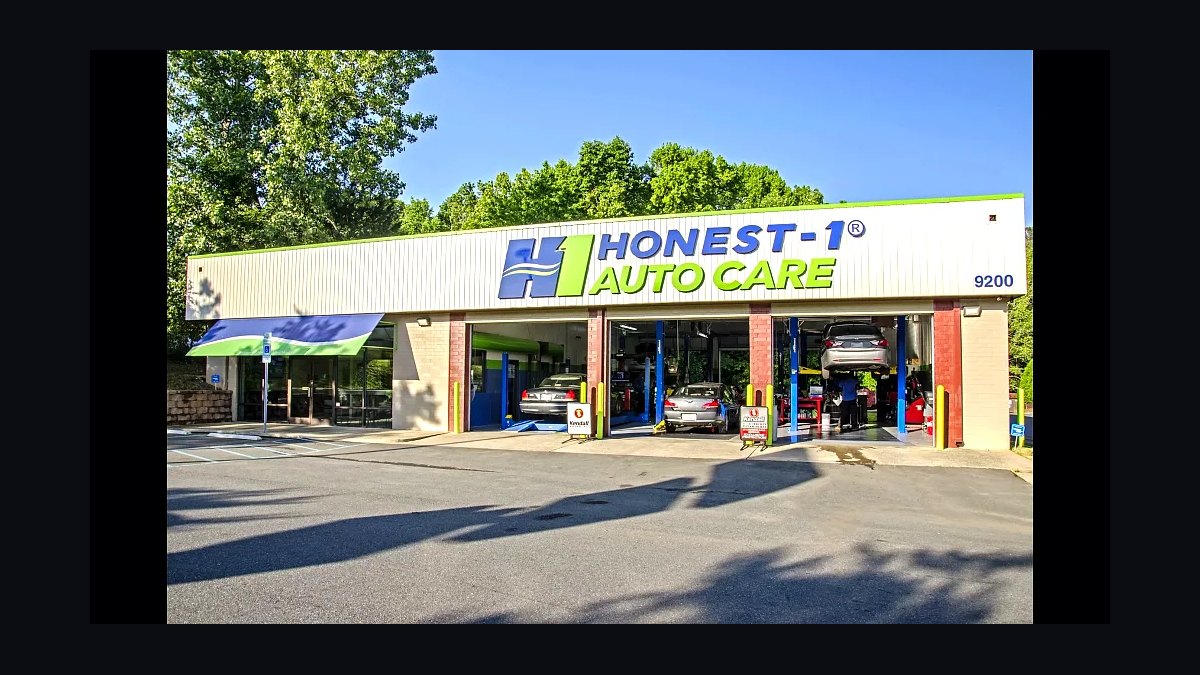
Open a Honest-1 Auto Care franchise in 2027 if you can recruit and retain technicians, have $200,000-$1,500,000 in capital (real estate-dependent), and want a full-service auto-repair business built on trust and eco-friendly positioning in a recession-resilient industry. Skip it if you can't solve technician staffing, can't absorb wide capital variability, or want a passive, non-technical investment.
The two options compared: Honest-1 conversion vs. ground-up build
Anyone evaluating whether to open a Honest-1 Auto Care franchise in 2027 is really choosing between two very different paths into the same brand, and the choice determines almost everything else about the deal — capital needed, timeline, and risk profile. The first path is converting an existing auto-repair building, often a former independent shop, tire store, or even a defunct quick-lube location, into a Honest-1. This path runs $200,000 to $500,000 total investment and typically opens in 4-6 months from lease signing. You inherit some infrastructure — bays, drainage, electrical service rated for lifts — which cuts buildout costs substantially, but you also inherit compromises: bay count that doesn't match Honest-1's ideal layout, ceiling heights that limit lift options, or a footprint too small for the brand's family-friendly waiting area standard. The second path is ground-up construction on raw or repurposed commercial land, which runs $1.2 million to $1.5 million and takes 6-12 months from permitting to grand opening. Ground-up gives you a purpose-built shop matching Honest-1's exact specifications — the right number of bays (typically 6-10 for a shop targeting $1.5M+ revenue), optimal customer-facing design for the trust/eco brand image, and modern equipment placement — but it carries construction risk (permitting delays, contractor overruns, weather) that conversions largely avoid. A third, less common option is acquiring an existing Honest-1 location from a franchisee who is exiting; this sits closer to the conversion cost band but adds the complexity of valuing existing customer relationships, staff, and equipment condition. Franchisees choosing between conversion and ground-up should weigh three factors specific to Honest-1's model: the eco-certification requirements (ESA-Certified practices require specific plumbing for water-based parts cleaners and waste-oil recycling systems, which older buildings may need retrofitted at real expense), the family-friendly waiting-area standard (which needs more square footage than a traditional grease-monkey shop), and local real estate economics (conversion candidates are scarce and getting more expensive in vehicle-dense suburban markets where Honest-1 performs best, sometimes narrowing the cost gap versus ground-up).
How to decide between them
The decision between conversion and ground-up isn't just about which one costs less on paper — it's about matching the investment path to your capital position, your local real estate market, and your timeline tolerance. Franchisees with $80,000-$300,000 in liquid capital and access to SBA or conventional financing for the remainder should start by searching for conversion candidates, since the lower total investment reduces both the loan amount and the risk if the first year underperforms. Franchisees with $300,000+ liquid and a strong site already identified in a high-growth suburban corridor should weight toward ground-up, since a purpose-built shop tends to run more efficiently over a 10-20 year hold and avoids the compromise costs (retrofits, awkward bay counts) that show up years into a conversion's life. The technician-staffing reality should also weigh into this decision: a ground-up shop built with modern, ergonomic bay layouts and better break/training space is a meaningfully easier sell to skilled technicians in a tight labor market than a converted shop with cramped back-of-house space.
Concrete numbers behind each option
The 2026 FDD lays out a franchise fee of $35,000-$40,000 regardless of which path you choose, plus a royalty of roughly 5%-7% of gross revenue and a separate marketing fee near 1%-3%. Beyond the franchise fee, the two paths diverge sharply in Item 7 line items. For a conversion: buildout and real estate typically run $80,000-$250,000 (versus $400,000-$900,000 for ground-up land and construction), while equipment and lifts run $120,000-$250,000 for a conversion versus $200,000-$350,000 for a larger ground-up shop with more bays. Signage and decor to meet the family-friendly brand standard runs $20,000-$70,000 either way, since this cost is driven by brand specification rather than building type. Initial inventory ($15,000-$50,000), initial marketing for grand opening ($20,000-$55,000), and training/travel for the operator and technicians ($12,000-$35,000) are roughly constant across both paths. Working capital — cash held in reserve to cover payroll, rent, and parts inventory during ramp-up — should run $50,000-$150,000 regardless of path, though conversions with a faster path to breakeven can sometimes operate toward the lower end of that range. On the revenue side, mature Honest-1 shops (typically year 3 and beyond) gross $900,000 to $2,500,000+, with owner earnings of $120,000-$400,000 depending on local pricing power, labor cost control, and repeat-customer percentage. A useful reference point: a shop doing $1.2 million in year three with a 15% net margin produces roughly $180,000 in owner earnings before considering debt service on the initial investment. Labor costs typically run 30-35% of revenue (technician pay of $25-$40/hour for experienced staff is now standard in competitive labor markets), parts carry a 40-60% markup over cost, and insurance (general liability, garage liability, workers' comp, property) runs $15,000-$30,000 annually. Franchisor-reported data suggests roughly 80% of shops are profitable by year two, though that figure assumes disciplined labor-cost and parts-markup management from day one — it is not automatic.
Implementation details and sequencing
Once you've chosen a path and validated the numbers, the sequencing from decision to grand opening follows a fairly predictable 130-160 day arc, though ground-up builds extend the front half considerably. The first 25 days should go entirely to reading the 2026 FDD closely, particularly Item 19 (financial performance representations) and Item 20 (franchisee turnover and location data by state), and cross-referencing those figures against what you'll independently verify from operators. Days 26-50 should be spent calling at least 8 current or former Honest-1 franchisees — not the 2-3 the franchisor recommends — asking pointed questions about technician recruitment and retention, actual capital spent versus FDD estimates, and net profit after all fees. Days 51-70 go to validating your specific market: vehicle density, household income in the $60,000-$90,000 band that fits Honest-1's pricing (typically 10-20% above independent shops, below dealership rates), and real estate availability, since this determines which of the two paths (conversion or ground-up) is actually available to you locally. Days 71-130 cover the physical build — permitting and construction for ground-up, or renovation and eco-retrofit for conversion — run in parallel with the single hardest task in the entire process: recruiting your initial technician team before the doors open, not after. Franchisees who wait until the shop is built to start recruiting technicians routinely lose 4-8 weeks of revenue to being short-staffed at launch. Days 131-160 cover opening and the first weeks of building customer trust, where the grand-opening marketing budget ($20,000-$55,000) should be spent driving first visits that convert to the repeat business the model depends on — franchisees report 60-70% repeat-business rates within the first year when execution goes well. After opening, the ongoing operational cadence is what separates $120,000-earners from $400,000-earners: managing a team of 3-6 technicians for a $1M-$1.5M shop, maintaining ESA-certification documentation (approved green parts cleaners, oil and tire recycling, low-VOC materials), and holding labor costs near 30-35% of revenue rather than letting turnover-driven overtime and re-hiring push that percentage up.
Related questions
How long does it take to break even on a Honest-1 Auto Care franchise?
Most franchisees reach monthly operating breakeven by month 6-9 after opening, but recouping the entire initial investment typically takes 3-5 years, depending on which path (conversion or ground-up) and how quickly the technician team stabilizes.
Does Honest-1 Auto Care offer exclusive territories?
Not in the traditional sense. The franchisor grants a protected area based on population and vehicle density — often a 2-3 mile radius or 15,000-25,000 households — rather than an exclusive region, so nearby Honest-1 locations are possible in dense markets.
What's the biggest operational risk after opening a Honest-1 shop?
Technician staffing. The auto-repair industry faces a persistent technician shortage, and franchisees who can't offer competitive pay ($25-$40/hour) and a modern work environment see turnover eat into labor-cost margins and customer wait times.
Is a Honest-1 conversion cheaper than buying an existing independent shop outright?
It depends on the independent shop's condition and price, but a Honest-1 conversion ($200,000-$500,000) includes brand conversion costs (signage, eco-retrofits, training) that a pure independent acquisition wouldn't carry, while adding brand trust and marketing support in return.
FAQ
What is the typical total investment for a Honest-1 Auto Care franchise? Total investment ranges from about $200,000 for a conversion to $1,500,000 for a ground-up build, according to the 2026 FDD. Real estate path and equipment needs are the primary drivers of where you land in that range.
How much can an owner expect to earn from a mature Honest-1 Auto Care shop? Mature locations (typically year three and beyond) gross $900,000 to $2,500,000 annually, with owner earnings of $120,000 to $400,000. Actual results depend heavily on labor-cost discipline, local pricing power, and repeat-customer rate.
What makes Honest-1 Auto Care different from Midas, Meineke, or independent shops? Honest-1 leans on a transparency and trust positioning plus an ESA-Certified eco-friendly operating model — water-based parts cleaners, oil and tire recycling, low-VOC materials — inside a family-friendly facility, aimed at customers wary of traditional repair shops.
What are the ongoing royalty and marketing fees for a Honest-1 franchise? The royalty runs roughly 5%-7% of gross sales, with an additional marketing fee near 1%-3%. On a $1 million shop, that's roughly $60,000-$90,000 annually in fees before owner salary.
Is auto repair a recession-resistant business to open in 2027? Generally yes — vehicles need ongoing repair and maintenance regardless of economic conditions, and consumers tend to hold onto existing cars longer during downturns rather than buying new, which can increase repair demand.
What's the single biggest challenge Honest-1 franchisees report? Recruiting and retaining qualified technicians. It's a national shortage across the auto-repair industry, not unique to Honest-1, and it directly affects labor costs, wait times, and how fast a new location can ramp to profitability.
Sources
- https://www.entrepreneur.com/franchises/directory
- https://www.ibisworld.com
- https://www.statista.com
- https://www.autocare.org
- https://www.franchisebusinessreview.com
- https://www.franchise.org
- https://www.census.gov
- https://www.sba.gov/business-guide/plan-your-business/franchises
- https://www.ftc.gov/business-guidance/resources/franchise-rule-compliance-guide
Related on PULSE
This page will be disappearing soon. Save it to your device for $1 — or read it free while it is here.
@Kory-White- · if Venmo asks, the last 4 of my number are 2012
This page is gone.
This one is off the shelf now. $1 keeps it on your phone for good — the whole page, pictures and diagrams included.
 franchiseShould I open or buy a Servpro franchise in 2027?
 franchiseShould I open or buy an Orangetheory Fitness franchise in 2027?
 franchiseShould I open or buy a Cook Out franchise in 2027?
 franchiseShould I open or buy an Auntie Anne's franchise in 2027?
 franchiseShould I open or buy a Papa John's franchise in 2027?
 franchiseShould I open or buy a Great Clips franchise in 2027?
 franchiseShould I open or buy a UPS Store franchise in 2027?
 franchiseShould I open or buy a Dairy Queen franchise in 2027?
 franchiseShould I open or buy a Subway franchise in 2027?
 franchiseShould I open or buy a Mathnasium franchise in 2027?