


Should I open or buy a Meineke Car Care franchise in 2027?
Quality
Certified
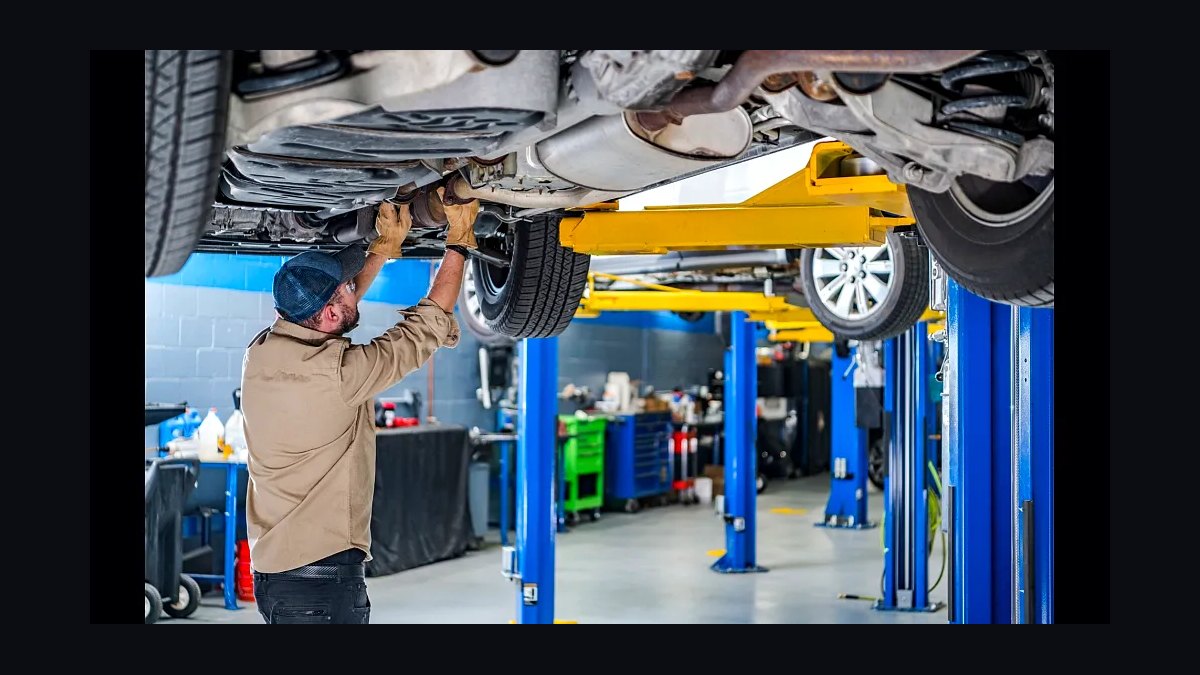
Yes, opening a Meineke Care Center in 2027 is worth pursuing if you can solve technician staffing before you solve financing — Driven Brands' total-car-care franchise offers brand recognition, national parts purchasing, and a recession-resilient repair category. Expect $200,000-$600,000 total investment plus real estate, a 5%-7% royalty, and mature centers clearing $110,000-$350,000 in owner earnings once bays are fully staffed.
A Buyer Walks Into an FDD Meeting
Picture a regional manager at a competing quick-lube chain, fourteen years into the industry, tired of running someone else's numbers instead of her own. She has narrowed her decision to three paths: build an independent shop from nothing, buy a resale from a competing brand, or open a new Meineke Care Center in a growing suburban corridor outside a mid-size metro. The independent route offers full control but zero brand recognition and no supply chain leverage — she would be negotiating parts pricing alone against chains that buy at 10%-20% better rates than a single-location shop ever could. A resale from a competing brand comes with an existing customer list, but also an aging building, unknown deferred maintenance on the lifts, and a lease she did not negotiate. The Meineke option is a ground-up build: a $30,000-$45,000 franchise fee, and a total Item 7 range of roughly $200,000-$600,000 once buildout, equipment, signage, and working capital are stacked together, with real estate layered on top depending on her market.
She has $280,000 liquid and a net worth near $650,000 — comfortably above what Driven Brands' preferred lenders typically want to see before underwriting an SBA-backed buildout loan. So her real question is not "can I afford this." It is whether she can staff it. Every conversation she has had with existing Meineke operators comes back to the same constraint: bays sit empty not because customers stop calling, but because there is no technician available to work them. That gap between demand and labor supply is the scenario every serious Meineke prospect eventually lands in, whether the franchise fee itself feels affordable or not, and it is the filter that should shape every decision that follows — site selection, financing structure, even which market she opens in.

This scenario also illustrates why the "should I open or buy" framing matters. Buying an existing Meineke resale changes the math meaningfully: an established location with trained staff and a customer base in place can shortcut the 12-18 month ramp period that a ground-up build requires, though it usually costs more upfront and inherits whatever staffing or reputation problems the prior owner left behind. A prospective franchisee evaluating both paths should ask the current owner directly about technician turnover and retention before signing anything, because that single metric predicts profitability better than location or even local competition.
How the Franchise Actually Makes Money
A Meineke center's economics run on a simple loop: acquire a customer through brand trust or local marketing, perform a repair or maintenance service, and convert that single visit into a repeat relationship through oil-change intervals, brake wear cycles, and seasonal tire needs. The "total car care" positioning exists specifically to capture more of that repeat cycle than a single-service competitor — a pure brake shop or a pure lube center — could ever manage. Revenue splits roughly across three buckets: routine maintenance such as oil changes, inspections, and fluid services; wear-item replacement such as brakes, tires, and exhaust work; and diagnostic or general repair covering electrical, engine, and drivetrain issues that require a certified technician and diagnostic equipment on hand.

The franchisor's role sits underneath all of it. Driven Brands supplies national parts-purchasing agreements, a shared point-of-sale and scheduling system, pooled brand marketing spent across thousands of locations, and training curricula that move a new hire from apprentice to bay-ready faster than an independent shop could manage on its own. The royalty, typically 5%-7% of gross, and the marketing fee, typically 2%-5%, are the toll the franchisee pays for that infrastructure. What determines whether the toll is worth paying comes down almost entirely to staffing: a fully staffed bay converts marketing spend into booked revenue, while an understaffed one simply burns the marketing fee on leads the shop cannot service in time. The diagram below shows how a mature center's revenue actually breaks down once it reaches steady state.
That mechanism only holds together when parts, labor, occupancy, and franchisor fees stay within those bands. A shop that is chronically short-staffed and paying overtime to cover shifts sees the labor line creep from 28% toward 35% or higher, and that single shift is often the biggest gap between a mature center earning $350,000 for its owner and a stalled one earning closer to $110,000. Location and marketing spend matter, but the mechanism above shows why labor efficiency, not foot traffic, is usually the deciding variable.
Real Numbers, Ranges, and Benchmarks

The current Franchise Disclosure Document lays out the investment range in enough detail to plan around, and it is worth breaking into line items rather than treating "$200,000-$600,000" as a single number. The franchise fee itself runs $30,000-$45,000. Buildout and leasehold improvements — turning a shell space into a working shop with bays, drainage, installed lifts, and code-compliant electrical — run $70,000-$280,000, with real estate itself layered on top as a separate cost depending on whether the operator leases or buys. Equipment, including hydraulic lifts, alignment machines, diagnostic scanners, and tire equipment, runs $90,000-$250,000. Signage and decor that match brand standards run $20,000-$60,000. Initial inventory of parts, fluids, filters, and common wear items kept on-site runs $15,000-$45,000. Initial marketing for the grand-opening push runs $20,000-$55,000. Training and travel for the operator and initial technician hires runs $12,000-$38,000. Working capital to carry the shop through the ramp period before it turns cash-flow positive runs $40,000-$120,000 on paper — though several operators report this line undershoots reality, with actual working capital needs landing closer to $50,000-$100,000 beyond the FDD's stated figure once payroll and inventory carry through a slower-than-expected first six months.
On the real estate side specifically, a 3,000-5,000 square foot facility in a suburban strip center typically leases for $4,000-$12,000 per month depending on the market. Ground-up construction — buying land and building a standalone center — runs $400,000 to $1.2 million depending on region and local construction costs, which is why most new franchisees lease rather than build in their first location.

Revenue at maturity, typically reached in 3-5 years after a 12-18 month ramp to first break-even, runs $700,000-$1,800,000 or more gross, with owner net income landing in the $110,000-$350,000 range. Staffing costs sit inside that figure: a shop typically runs three to six technicians plus a service writer and a manager. Starting wages for experienced technicians in 2027 run $22-$35 per hour, with top performers earning $60,000-$90,000 annually including bonuses. Franchisees who successfully retain their best technicians report spending $10,000-$25,000 annually per location on recruitment and training just to stay staffed — a cost that rarely shows up in a prospect's mental model before they sign, and one that should be budgeted as a recurring operating line rather than treated as a one-time startup expense.
Trade-Offs Against the Alternatives
The case for choosing Meineke over an independent shop is straightforward: national purchasing power on parts and tires, typically 10%-20% cheaper than buying independently, a proven technician training pipeline, pooled marketing spend, and a recognized name that shortens the trust-building period with new customers. The trade-off is the royalty and marketing fee eating 7%-12% combined off the top of gross revenue, along with less flexibility on branding, pricing structure, and vendor choice than a fully independent operator would have.

Against sibling and competing brands, the calculus shifts from pure economics toward positioning. Midas and AAMCO compete directly as total-car-care or specialty-repair brands with similar investment ranges and similar staffing challenges. Honest-1 Auto Care leans on a trust-focused, environmentally conscious positioning that performs well in markets where that messaging resonates with a specific demographic. A full-service brand with a faith-based identity can outperform in certain regions and underperform in others, which makes local demographic fit as important as the underlying unit economics. Within the Driven Brands portfolio itself, a quick-lube concept like Take 5 requires a lower initial investment and a narrower technician skill set per hire but generates lower per-ticket revenue, while a collision-repair brand like CARSTAR runs on an entirely different, insurance-driven revenue cycle. Comparing these adjacent brands is worth doing even for a buyer set on Meineke specifically, because it clarifies whether the capital and staffing model she is choosing actually fits her strengths as an operator — someone strong at high-volume, low-complexity transactions may be better suited to a quick-lube format than to a full diagnostic repair shop.
An independent shop remains the right alternative for an operator who values full control over brand, pricing, and vendor relationships and is willing to forgo the franchisor's supply chain and marketing infrastructure in exchange for keeping 100% of gross revenue without a royalty draw. The timeline below traces what the pre-opening phase should actually look like for someone who has decided to open under the Meineke banner rather than go independent.
That 90-day-plus runway before opening matters because the single biggest predictor of whether a franchisee reaches the $110,000-$350,000 owner-earnings range is not the site or even the initial capital — it is whether the staffing plan was built before the doors opened rather than scrambled together after the grand-opening marketing has already started generating calls the shop cannot answer.
Common Pitfalls and How to Avoid Them

The most common and costly mistake is treating technician staffing as a hiring problem to solve after opening rather than a recruiting pipeline to build during the buildout phase. Projections for the automotive repair labor market point to a shrinking pool of new technicians entering the trade even as vehicle-repair demand continues to rise with the aging national vehicle fleet. Franchisees who succeed start relationships with local trade schools and vocational programs months before the shop opens, rather than posting job listings the week of the grand opening, when competing shops in the same corridor are drawing from the same shallow pool.
A second pitfall is underestimating working capital. The FDD's Item 7 figure is a reasonable planning baseline, but several operators report needing an additional $50,000-$100,000 in working capital beyond that estimate to cover payroll and inventory through a slower-than-projected ramp period. A shop that runs out of working capital in month four, right when it is finally building a loyal customer base, is a common failure pattern that has nothing to do with whether the underlying business model is sound — it is a cash-timing problem that better pre-opening planning would have caught.
A third pitfall is underpricing the real estate line. Prospects often anchor on the Item 7 total without separately budgeting for the lease rate or land cost in their specific market, then discover mid-negotiation that a 4,000 square foot bay-equipped space in their target corridor runs well above what they budgeted, particularly in markets where commercial real estate has tightened over the past several years.

A fourth pitfall is treating the franchisor's support as more comprehensive than it actually is. Driven Brands provides training programs, national supply-chain relationships, and marketing infrastructure, but day-to-day staffing and local customer relationships remain the franchisee's responsibility. Operators who expect the corporate structure to solve local hiring for them are consistently disappointed, while those who treat the franchisor's resources as a supplement to their own local recruiting effort extract the most value from the relationship.
A fifth and more strategic pitfall is opening in a market already saturated with competing chains, independent garages, and other locations from the same parent company, without a clear differentiation plan. Operators who invest in digital marketing — Google Business Profile optimization, local search visibility, targeted social ads — and in customer-experience improvements like online scheduling, transparent upfront pricing, and loaner vehicles consistently outperform operators who rely on brand recognition alone to fill bays in a competitive corridor.
Related questions
How long does it take a Meineke franchise to become profitable?
Most centers ramp to break-even in 12-18 months and reach mature revenue levels in 3-5 years. The pace depends heavily on how quickly the shop reaches full technician staffing, since revenue capacity is capped by bay-hours actually worked, not by customer demand alone.
Is prior auto repair experience required to open a Meineke?
No — strong business management and staffing skills matter more than hands-on repair experience. The franchisor provides technical training, but many successful owners come from operations or customer-service backgrounds rather than from the trade itself.
What's the biggest ongoing cost besides parts and labor?
Occupancy typically runs around 10% of gross revenue, and combined royalty plus marketing fees run roughly 7%-12% of gross. Together with technician recruitment and training spend of $10,000-$25,000 annually, these are the costs new franchisees most often underbudget.
How does Meineke compare financially to a quick-lube or collision-repair concept under the same parent company?
A quick-lube model requires lower initial investment and a narrower skill set per technician but generates lower per-ticket revenue, while a collision-repair model runs on insurance-driven revenue cycles that behave very differently from routine maintenance demand. A total-car-care center sits in between on both investment size and staffing complexity.
Should I buy an existing Meineke instead of building new?
Buying an existing location can shortcut the 12-18 month ramp period since staff and customers are already in place, but it usually costs more upfront and can inherit staffing or reputation problems. Ask directly about technician turnover before signing.
FAQ
What is the total investment needed to open a Meineke franchise in 2027? The total initial investment typically runs $200,000 to $600,000, plus real estate costs, including a $30,000-$45,000 franchise fee, equipment, inventory, and startup expenses. Actual costs vary by location, facility size, and local market conditions, and several operators report needing additional working capital beyond the FDD's stated range.
How much can a Meineke franchise owner expect to earn?

Mature centers generally generate gross annual revenue between $700,000 and $1,800,000 or more, with owner net income typically in the $110,000-$350,000 range depending on location, staffing efficiency, and local competition.
What are the ongoing fees for a Meineke franchise? Franchisees pay a royalty of roughly 5%-7% of gross sales plus a separate marketing fee, typically 2%-5%. These fund brand advertising, operational support, and shared systems; exact percentages should be confirmed in the current franchise disclosure document before signing.
Is prior auto repair experience required to open a Meineke franchise? No, but strong business management and staffing capability are essential. The franchisor provides training and support, though technician recruitment and retention remain the operator's core ongoing responsibility throughout the life of the center.
How long does it take to open a Meineke franchise after signing? Typically 6-12 months from signing to opening, covering site selection, lease negotiation, buildout, and equipment installation. Permitting delays and contractor availability are the most common sources of schedule slippage during this window.
What support does the franchisor provide to Meineke franchisees? Driven Brands offers training programs, ongoing operational support, marketing assistance, and access to a national supply chain and purchasing agreements. Day-to-day staffing and local customer relationships remain the franchisee's responsibility to manage.
Sources
- Federal Trade Commission — Franchise Disclosure Document requirements, ftc.gov
- Driven Brands corporate investor relations, drivenbrands.com
- Meineke Car Care Centers official franchise site, meinekefranchise.com
- Entrepreneur Franchise 500 listings, entrepreneur.com/franchises
- U.S. Bureau of Labor Statistics, Occupational Outlook Handbook — Automotive Service Technicians and Mechanics, bls.gov
- IBISWorld — Auto Mechanics & Repair Services industry reports, ibisworld.com
- Statista — U.S. automotive repair market and vehicle-age statistics, statista.com
- International Franchise Association, franchise.org
- Franchise Business Review, franchisebusinessreview.com
Related on PULSE
- Should I open or buy a Midas franchise in 2027?
- Should I open or buy a Tilden Car Care franchise in 2027?
- Should I open or buy a Take 5 Oil Change franchise in 2027?
- Should I open or buy an Honest-1 Auto Care franchise in 2027?
- Should I open an independent car wash business in 2027?
- Should I open or buy a Club Car Wash franchise in 2027?
This page will be disappearing soon. Save it to your device for $1 — or read it free while it is here.
@Kory-White- · if Venmo asks, the last 4 of my number are 2012
This page is gone.
This one is off the shelf now. $1 keeps it on your phone for good — the whole page, pictures and diagrams included.
 franchiseShould I open or buy a Cold Stone Creamery franchise in 2027?
 franchiseShould I open or buy a Panera Bread franchise in 2027?
 franchiseShould I open or buy a Crumbl Cookies franchise in 2027?
 franchiseShould I open or buy a Jamba franchise in 2027?
 franchiseShould I open or buy a Drybar franchise in 2027?
 franchiseShould I open or buy a Take 5 Oil Change franchise in 2027?
 franchiseShould I open or buy a Bruster's Real Ice Cream franchise in 2027?
 franchiseShould I open or buy a Marco's Pizza franchise in 2027?
 franchiseShould I open or buy a Supercuts franchise in 2027?
 franchiseShould I open or buy a Mac Tools franchise in 2027?