


Should I open or buy a CARSTAR franchise in 2027?
Quality
Certified
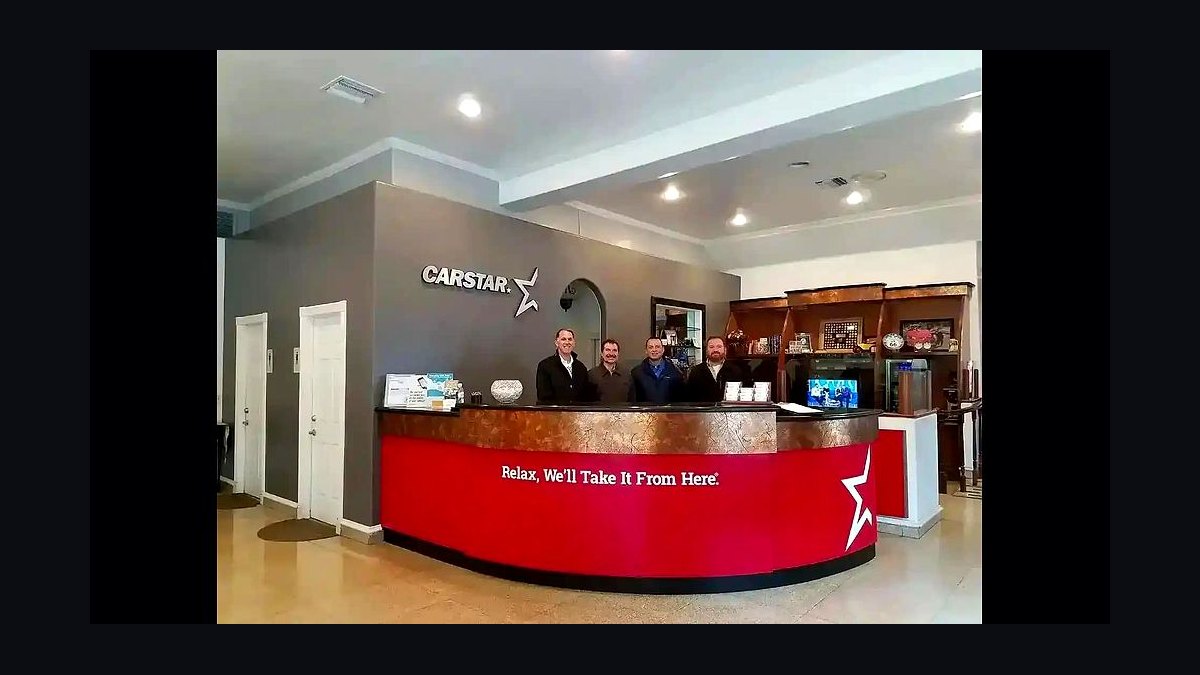
Buy or convert into a CARSTAR franchise only if you can win insurer direct-repair-program placement and staff certified body technicians. The model suits capitalized, hands-on operators — roughly $300,000 to $800,000-plus in Item 7 investment, a $40,000 franchise fee, and 3%–5% royalties — with mature centers grossing $1.5M–$5M. Passive investors should pass.
What a CARSTAR actually is and why the ownership question is different from other franchises
CARSTAR is a collision-repair network, not a quick-service or oil-change concept, and that single fact reshapes every part of the buy-or-open decision. Founded in 1989 and now operating under Driven Brands — the same parent behind Meineke and Take 5 — CARSTAR franchises auto-body centers that fix accident-damaged vehicles. The bays hold frame racks, welders, prep stations, and paint booths. The customers walk in unhappy, unplanned, and usually with a claim number.
That last detail is the whole business. In most franchising, you win by capturing consumer demand: better location, better sign, better marketing spend. In collision, a large share of your work arrives through insurers. Carriers maintain direct-repair programs — DRPs — that steer policyholders to approved shops in exchange for negotiated rates, cycle-time commitments, and audit compliance. The insurer is the demand channel. Your customer satisfaction scores, your average repair days, your supplement documentation quality: those are the metrics that determine whether the referral pipe stays open. A CARSTAR owner who thinks in terms of retail foot traffic has misread the model entirely.
This is precisely why the franchise structure is worth paying for here, and why so many CARSTAR franchisees were already body-shop owners before they signed. Driven Brands negotiates national agreements with major carriers — State Farm, Allstate, GEICO, Progressive, USAA, Liberty Mutual are the names that surface repeatedly in the collision channel — and an independent shop trying to get onto those programs cold, one region at a time, is fighting a much harder battle. Conversions account for the large majority of new CARSTAR openings for exactly this reason: an existing operator with bays, techs, and a book of local business bolts on the brand and the DRP access, and keeps the rest.
The comparison worth drawing is against the adjacent automotive service categories. A Take 5 or a Valvoline-style quick-lube is a throughput business: small ticket, enormous car count, tight process discipline, minimal skilled labor. A mechanical-repair franchise like AAMCO or a Honest-1 sits in the middle — diagnostic complexity, moderate ticket, consumer-paid. Collision sits at the far end: highest ticket, most capital-intense, most technically skilled labor, and a third-party payer. Average repair tickets in the segment have climbed substantially over the last several years as vehicles filled up with ADAS sensors, radar modules, calibration requirements, aluminum panels, and bonded structures. A bumper replacement that used to be paint-and-clip now involves a sensor recalibration procedure with OEM documentation. Ticket size rises; so does the equipment and training bill to capture it.
Recession resilience is the argument you will hear most often, and it is largely fair but frequently oversimplified. Accidents do not track the business cycle the way discretionary spending does, and insurers pay regardless of a policyholder's cash position — that is genuinely different from a business where a customer defers the purchase. The nuance: miles driven falls in downturns, so accident frequency does soften. What offsets it is severity — the cost per repair keeps climbing. So the segment is stable rather than immune, and the shops that suffer in soft periods are the ones with thin DRP relationships competing for a shrinking pool of walk-in and non-preferred work.
The step-by-step process from first inquiry to a running shop
The sequence below is what a disciplined evaluation and build actually looks like. Compress it and you will discover your DRP access problem after you have signed a lease, which is the single most expensive ordering mistake in this category.
Read the FDD before you read the brochure. Request the current Franchise Disclosure Document and go straight to Item 7 (estimated initial investment), Item 19 (financial performance representations, if the franchisor makes them), Item 20 (unit counts, openings, closures, transfers), and Items 5 and 6 (initial and ongoing fees). Item 20 is the most under-read section in franchising: the table of openings, terminations, non-renewals, and transfers over the trailing three years tells you whether the system is growing, churning, or consolidating. In collision specifically, a high transfer count is not automatically alarming — it often reflects multi-unit operators buying out single-shop owners — but you want to know which it is.
Call operators, and call the ones who left. Item 20 includes contact information for franchisees who exited the system in the prior year. Those calls are worth more than the ten happy referrals the development team offers you. Talk to at least eight current owners. Ask about DRP mix as a percentage of revenue, average cycle time, technician turnover, how long receivables actually run, and what net margin looks like after they pay themselves a market salary.
Validate the market before the site. Two things must be true: enough vehicles and enough insurer opportunity. Vehicle density is easy to check. DRP opportunity is harder — you need to know which carriers are already saturated with approved shops in that trade area. A market with three Caliber locations, a Gerber, and two Crash Champions shops inside eight miles is not an open market regardless of how many cars are on the road. Ask the franchisor directly what DRP access they can realistically support in the territory, and get specifics rather than assurances.
Choose conversion or ground-up. Conversion is the dominant path and usually the cheaper one — you inherit bays, booths, a permit history, and often a technician crew. Ground-up means site selection, zoning that permits collision use (paint-booth ventilation and hazardous-materials handling narrow the parcel list considerably), environmental review, and a build cycle measured in quarters, not weeks.
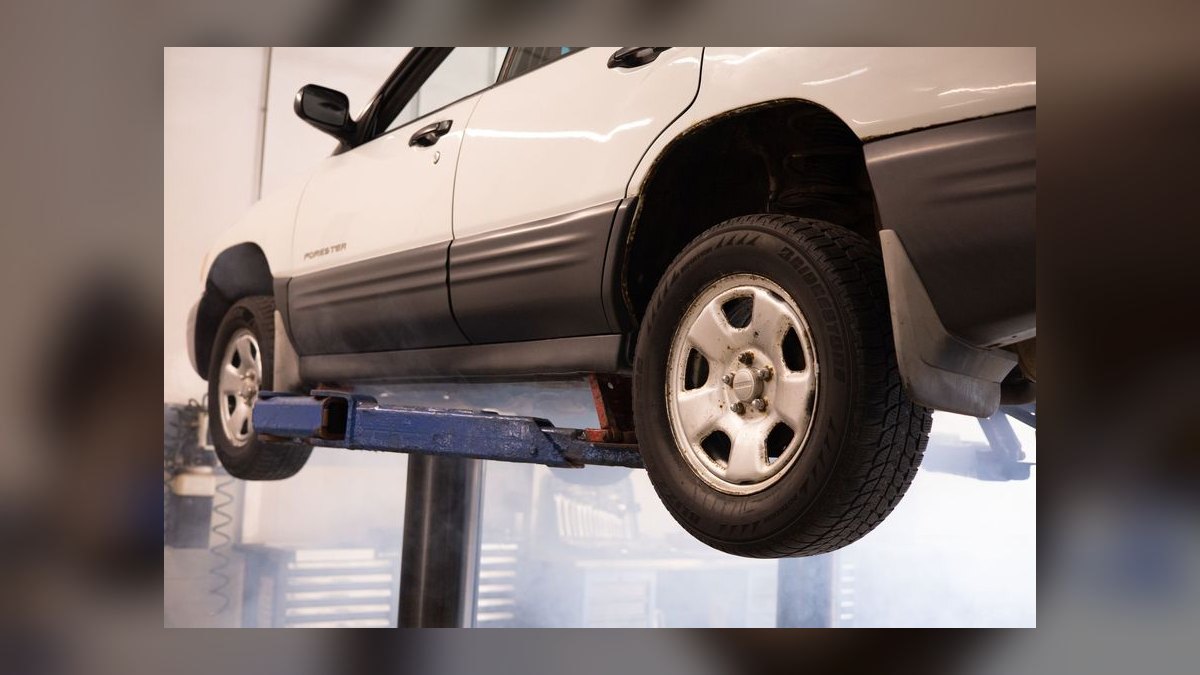
Build, equip, and staff in parallel. Technician recruiting must start before the doors open, not after. A green apprentice takes many months to reach real productivity; a certified body tech or painter may need a notice period and a relocation package.
Open, then earn the DRP. Preferred status is generally earned through demonstrated performance, not granted at signing. Expect a ramp where you take whatever work you can — non-preferred claims, dealer referrals, fleet, local retail — while you build the cycle-time and CSI history that qualifies you.
Costs, timelines, and the ranges that actually matter
The headline number is the initial franchise fee of roughly $40,000 and an Item 7 total investment in the neighborhood of $300,000 to $800,000-plus. Both figures are accurate and both are incomplete, because Item 7 conventionally excludes real estate purchase. If you are buying the parcel rather than leasing it, that is a separate capital stack entirely, and in a metro market it can dwarf everything else on the list.
Inside the Item 7 range, the money concentrates in a few places. Buildout and leasehold improvements run wide — a light conversion of a functioning body shop might need little, while adapting a non-collision building to collision use means ventilation, compressed air, electrical service, drainage, and hazardous-materials compliance. Equipment is the other large block: paint booths, frame and measuring systems, welders, lifts, and increasingly ADAS calibration equipment, which has moved from optional to close to mandatory for shops that want OEM-procedure-compliant repairs. Signage and brand-image conversion, initial paint and parts inventory, opening marketing, training and travel for the operator and technicians, and working capital fill out the rest.
Working capital deserves its own paragraph because it is where new owners get hurt. Collision receivables do not behave like retail. You buy the parts, you pay the technicians, you finish the car — and then you wait on the carrier, on supplement approvals, on documentation cycles. The gap between cash out and cash in is measured in weeks to a couple of months, and it scales with volume. A shop that ramps faster than expected can absolutely run into a liquidity wall while looking profitable on paper. Plan for six to twelve months of runway beyond your buildout budget, and expect the franchisor to underwrite for meaningful unencumbered liquidity before approving you.

On financing: SBA 7(a) is the standard route for a single unit. Franchise brands listed in the SBA Franchise Directory clear the eligibility screen, terms commonly run ten years for working capital and equipment and longer where real estate is included, and pricing floats off prime plus a spread. SBA 504 fits better when real estate or heavy fixed equipment dominates the use of proceeds — lower down payment, fixed-rate portion, longer amortization. Equipment leasing on booths and frame systems is common and preserves cash, typically structured over five years with a nominal buyout. Ask the franchisor what incentives exist in a given year; brands periodically run fee deferrals, conversion incentives, or preferred-vendor equipment programs, and terms vary by market and credit profile rather than being posted publicly.
On the revenue side, mature centers commonly gross in the $1.5M to $5M-plus band, with owner earnings reported in the $150,000 to $600,000 range depending on volume, mix, and how much of the general-manager role the owner personally covers. Those spreads are enormous, and the spread is the point: two shops with identical signage and identical equipment can sit at opposite ends of it based entirely on DRP mix and labor productivity. Underwrite the low end. If the deal only works at the top of the range, it is not a deal.
Timeline expectations, roughly: diligence and FDD review takes a few weeks if you are efficient and a couple of months if you are careful. Conversion to open can run a few months. Ground-up construction with permitting realistically runs six to twelve months and sometimes longer where zoning is contested. Break-even typically lands within the first year for a conversion with inherited volume, and later for a new build starting from zero referral history. Second-unit conversations tend to start eighteen months to three years in — after the first shop has both broken even and produced stable, repeatable cash flow, and after you have a general manager who can run it without you standing in the estimating bay.
Where owners get it wrong
Underestimating the technician problem. This is the operational constraint that binds harder than capital. Skilled body technicians and painters are genuinely scarce, the trade pipeline has thinned for years, and the certification burden keeps rising as vehicle construction changes — I-CAR and manufacturer-specific credentials, aluminum-structure certification, ADAS calibration training. A shop with idle bays because it cannot staff them has converted a capital asset into a fixed cost. Compensation in the trade is production-linked, which means your best techs are portable and know it. Realistic answers: build an apprenticeship relationship with a local trade school and accept a long ramp, pay above the local band rather than at it, and treat scheduling and parts availability as retention tools — a tech on flat-rate loses money when your parts department is disorganized, and they will leave over it.
Treating the DRP as a sales channel you can neglect once won. Preferred status is conditional and audited. Cycle time, repeat-repair rate, customer satisfaction scoring, estimate accuracy, and documentation quality all feed a scorecard. Fall out of tolerance and you can land on probation or lose the program, and because DRP work can represent a very large slice of volume, that loss is not a bad quarter — it is an existential event for a leveraged shop. Owners who survive this treat carrier relationship management as a weekly recurring block of real time: estimator training, portal hygiene, supplement documentation discipline, and an actual relationship with the field appraisers.
Buying a converted shop without diligencing why it is for sale. The conversion path is attractive and it is also where the worst deals hide. If you are acquiring an existing shop, look at its DRP agreements specifically — are they assignable, are they in good standing, when was the last audit? Look at equipment age, especially booth condition and whether frame equipment supports current vehicle platforms. Look at environmental liability on the parcel; body shops handle solvents, and a Phase I is not optional. And look at whether the revenue is owner-relationship-dependent in a way that walks out the door at closing.

Assuming franchise support substitutes for operating knowledge. The brand brings insurer relationships, systems, estimating-platform access, national marketing, and supply-chain leverage. It does not bring judgment about which repair to decline, how to negotiate a supplement, or how to sequence twenty vehicles across four stages of production so the booth never sits empty. Franchisees from outside the trade who hire a strong general manager can succeed; franchisees from outside the trade who intend to learn it while carrying debt service usually struggle.
Ignoring the consolidator dynamic. The competitive set is not a scatter of mom-and-pop shops. Private-equity-backed and corporate consolidators — Caliber, Crash Champions, Gerber among them — have been aggressively rolling up capacity for years, with deeper balance sheets for technology, calibration equipment, and carrier negotiation. Franchised independence gives you local ownership and decision speed, which genuinely matters in customer experience and in community referral. It does not give you their purchasing scale. Compete on cycle time, communication, and technician retention, not on price.
Under-modeling working capital. Repeating this deliberately, because it is the failure that surprises otherwise competent operators. Profitable and solvent are different words.
A decision framework: open, buy, convert, or walk
Work through this in order rather than in parallel, because each gate makes the next question cheaper to answer.
Gate one — do you have the operator profile? Either you have collision-trade experience, or you have a credible plan to hire a general manager who does and the capital to pay them properly. If neither is true, stop. This category punishes absentee ownership harder than almost any other franchise segment, because the daily work is technical judgment under a third-party payer's rules.
Gate two — is there DRP oxygen in the territory? Get concrete about which carriers have open capacity in the trade area and what the franchisor can actually support. If the honest answer is that every major program is saturated locally, then even a perfectly executed shop is competing for the residual pool. Change markets or change plans.
Gate three — conversion or ground-up? If you already own a shop, conversion is almost always the stronger economics: you keep the crew and the equipment and buy the brand and the carrier access. If you do not, acquiring an existing independent and converting it usually beats building — you buy a permitted, ventilated, equipped facility with a trained crew, and you skip the twelve-month permitting adventure. Build new only where the market is genuinely underserved and no acquisition target exists.
Gate four — does the deal survive the low case? Model the shop at the bottom of the revenue range with realistic technician compensation, full royalty and marketing fees, actual receivable timing, and a market salary for whoever runs it. If it only clears debt service at mid-to-high case, walk.
Gate five — what is the exit? Franchised collision shops typically trade on an EBITDA multiple, and the buyer pool includes other franchisees in the system, regional consolidators, and occasionally your own management team. The franchise agreement will govern transfers, commonly including a franchisor right of first refusal and approval rights over the buyer. Know those terms before you sign, not when you are selling.
If you clear all five gates, the multi-unit question becomes the interesting one. Density is the strategy that works in this segment — clustering shops in one metro so you share a general manager across locations, negotiate parts and paint on combined volume, move technicians between locations to balance load, and present carriers with regional coverage rather than a single address. That last point is worth more than it looks: a carrier that can route claims across four of your shops in one metro has a reason to prefer you over a single-location competitor.
Adjacent paths worth pricing before you commit
Do not evaluate CARSTAR in isolation — price the neighbors, because the right answer for a given operator is frequently one door over.
Other collision franchise brands. Fix Auto operates a comparable franchised collision model. Gerber is largely corporate-owned rather than franchised, which changes it from an ownership option into a competitor. Comparing the franchised options directly on royalty rate, DRP portfolio strength in your specific region, and conversion incentives is a short exercise with real dollar consequences.
Staying independent. A well-run independent shop keeps every dollar of the royalty and marketing fee and answers to no brand standards committee. The cost is that you build carrier relationships yourself, market yourself, and buy at your own volume. For an operator with existing deep carrier relationships in a market they already dominate, independence can be the better math. For an operator without them, the franchise fee is buying the hardest thing to build.
Other Driven Brands concepts. If the appeal is the parent company's systems and supply chain rather than collision specifically, the lighter-capital automotive service concepts under the same corporate umbrella deserve a look — smaller ticket, faster ramp, far less technical labor, consumer-paid rather than insurer-paid. Different business entirely, but the same franchisor infrastructure.
Adjacent revenue inside the same four walls. Mature collision operators frequently layer on ADAS calibration as a service sold to other shops, mechanical work, fleet contracts with local municipalities and commercial fleets, and detailing or paint-protection work. Calibration in particular has become a legitimate profit center, because many independent shops cannot justify the equipment and will sublet the work. If you are building the capability anyway, selling it wholesale to competitors is straightforward incremental margin on an asset you already own.
Fleet and dealer relationships as a DRP hedge. Owners overly dependent on carrier referral are exposed to a single-channel risk. Commercial fleet accounts, rental-company relationships, and dealership referral arrangements diversify the mix. They usually pay differently, sometimes faster, and they are not subject to the same audit cycle. Building a meaningful non-DRP book is the most effective structural hedge available to a single-shop operator.
Related questions
How long until a CARSTAR shop breaks even?
A conversion inheriting an existing crew and local book can reach break-even within the first year. A ground-up build starting with no referral history and no DRP placement takes longer, because preferred status must be earned through demonstrated cycle-time and satisfaction performance after opening.
Can I own a CARSTAR without any auto-body background?
Possible, but only with a genuinely capable general manager hired and paid properly from day one. The daily work — estimating, supplement negotiation, production sequencing, technician management — is technical judgment. Owners who plan to learn it while servicing debt tend to struggle.
Is conversion really cheaper than building new?
Usually, and often substantially. You inherit bays, paint booth, permits, ventilation, and frequently the technician crew, and you skip a permitting and construction cycle that can run six to twelve months. Diligence the acquisition carefully — equipment age, environmental liability, and DRP standing.
What kills a collision shop fastest?
Losing DRP status. When a large share of volume arrives through carrier referral, falling out of a program over cycle time or satisfaction scores removes that volume nearly at once. A leveraged shop with no non-DRP book cannot absorb it.
Does multi-unit ownership actually improve the economics?
Yes, through shared management overhead, combined parts and paint purchasing, technician flexibility across locations, and stronger carrier positioning from metro-wide coverage. Franchisors commonly structure incentives for multi-unit development; ask what applies at your unit count.
FAQ
What is the total investment to open a CARSTAR franchise?
The Item 7 estimated initial investment generally runs from roughly $300,000 to $800,000-plus, with a franchise fee near $40,000. That range excludes real estate purchase, which is a separate capital question and can exceed everything else in a metro market. Conversions of existing body shops typically land toward the lower end because bays, booths, and permits already exist.
What are the ongoing fees?
Expect a royalty in the range of roughly 3% to 5% of gross sales plus a marketing or brand-fund contribution. These are within the normal band for the collision segment. Confirm the exact figures, calculation basis, and any multi-unit adjustments in Items 5 and 6 of the current FDD rather than relying on published summaries.
How much do owners actually earn?
Mature centers commonly gross between $1.5M and $5M-plus, with owner earnings reported across a wide $150,000 to $600,000 band. The spread reflects DRP mix, technician productivity, and whether the owner personally covers the general-manager role. Underwrite your model at the low end and treat anything above it as upside.
How important are insurer DRP relationships?
They are the central variable. Carrier direct-repair programs steer a substantial share of collision volume, and preferred status is earned and maintained through measured performance — cycle time, satisfaction scores, estimate and documentation quality. The franchisor's national carrier relationships are a large part of what the franchise fee buys, but you still have to hold the placement locally.
What is the biggest operational risk?
Technician staffing. Certified body technicians and painters are scarce, the trade pipeline is thin, and certification requirements keep expanding as vehicles add sensors, calibration procedures, and mixed-material structures. Idle bays from unfilled roles turn expensive capital into fixed cost. Recruiting must start before opening, not after.
Should I convert my existing body shop or stay independent?
Convert if what you lack is carrier access, brand recognition, and systems — that is exactly what the franchise sells, and conversion preserves your crew and equipment. Stay independent if you already have strong carrier relationships and market position, since you keep the royalty and marketing fee and retain full operational control.
Sources
- SBA Franchise Directory — U.S. Small Business Administration
- FTC Franchise Rule and Buying a Franchise guidance
- FTC Consumer Advice — A Consumer's Guide to Buying a Franchise
- CARSTAR official franchise site
- Driven Brands Holdings — investor relations
- I-CAR — collision repair training and certification
- Auto Care Association
- Bureau of Labor Statistics — Automotive Body and Glass Repairers
- SBA 7(a) loan program overview
- International Franchise Association
Related on PULSE
This page will be disappearing soon. Save it to your device for $1 — or read it free while it is here.
@Kory-White- · if Venmo asks, the last 4 of my number are 2012
This page is gone.
This one is off the shelf now. $1 keeps it on your phone for good — the whole page, pictures and diagrams included.
 franchiseShould I open or buy a Meineke franchise in 2027?
 franchiseShould I open or buy a Bojangles franchise in 2027?
 franchiseShould I open or buy an F45 Training franchise in 2027?
 franchiseShould I open or buy a Jeremiah's Italian Ice franchise in 2027?
 franchiseShould I open or buy a Smoothie King franchise in 2027?
 franchiseShould I open or buy a Primrose Schools franchise in 2027?
 franchiseShould I open or buy a Supercuts franchise in 2027?
 frShould I open or buy a McDonald's franchise in 2027?
 franchiseShould I open or buy a Wendy's franchise in 2027?
 franchiseShould I open or buy an Ace Hardware franchise in 2027?