


Should I open or buy a Spiffy franchise in 2027?
Quality
Certified
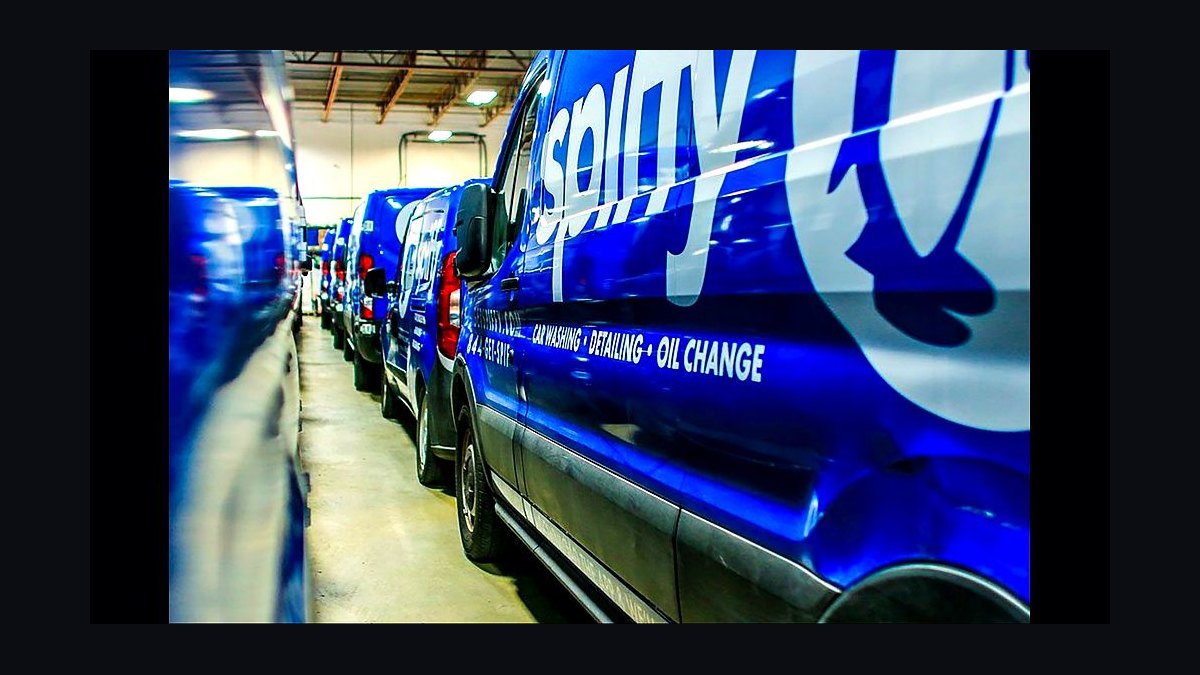
Don't plan around a "Spiffy franchise" — Spiffy has operated as a company-run, technology-and-fleet-focused mobile car-care business, not a traditional franchisor, so no proven franchise economics exist to evaluate. If you want to open a mobile car-care operation in 2027, confirm Spiffy's current franchise status directly, then pursue an actively-franchising mobile-detailing brand or build an independent operation for roughly $30,000-$150,000.
The outcome you should expect
Walk into this decision expecting a redirect, not a franchise packet. Spiffy was founded in 2014 around an app-driven booking system that dispatches technicians in vans to wash, detail, and perform light maintenance — oil changes, filter swaps, basic upkeep — at a customer's home, office, or fleet lot. The company built its growth around two channels: consumer on-demand bookings in the metro markets it operates, and B2B/fleet contracts with dealerships, rental companies, and corporate fleet managers who need recurring vehicle upkeep without sending cars to a shop. Neither channel has historically been sold to franchisees the way a QSR or a home-services brand sells territory rights. That means if you open a web search for "Spiffy franchise cost" or "Spiffy Franchise Disclosure Document," you should expect to come up empty, or to find outdated third-party listicles that assume franchising exists because Spiffy operates like one (branded vans, standardized service menus, a tech platform) without actually offering franchise agreements.
The practical outcome is a fork you need to resolve before you spend another hour modeling returns. First, call Spiffy's corporate line or email their partnerships team and ask a direct, dated question: "As of today, does Spiffy offer a franchise or licensed-territory agreement to independent operators?" Get the answer in writing if you can. Second, while you wait on that answer, treat the entire mobile car-care category as your real opportunity set — because the demand driver you're actually chasing (busy consumers and fleet managers who want vehicles serviced without downtime) is bigger than any single brand. Mobile and on-demand car care has grown steadily because it removes the single biggest friction point in traditional car washing and detailing: the customer's own time. A shop-based wash requires a drop-off and a wait; a mobile unit requires nothing from the customer but a parking spot and payment on an app.

If Spiffy confirms no franchise program exists, your realistic paths narrow to two: buy into an actively-franchising mobile detailing or car-care brand that does publish a Franchise Disclosure Document, or build an independent mobile operation using your own branding, booking software, and business development. Both paths land in the same rough capital band, but they diverge sharply in speed-to-revenue, support, and risk. A franchise buys you a proven service menu, vendor relationships for chemicals and equipment, training, and usually some help with your first B2B/fleet pitches. An independent build costs less up front in fees but requires you to originate every fleet relationship and every consumer booking channel yourself, usually taking 6-12 months longer to reach the daily van utilization that makes the unit economics work.
What drives that outcome
Three forces determine whether a mobile car-care launch — under any brand or none — turns a profit in year one: fleet/B2B contract density, technician retention, and route efficiency. Fleet contracts matter most because they convert a mobile operator's biggest cost (drive time between jobs) into a controllable variable — a single corporate lot with twenty vehicles produces more billable hours per mile driven than twenty scattered residential bookings across a metro area. Technician retention matters because training a new hire on chemical safety, equipment handling, and customer-facing service standards costs real weeks of ramp time, and mobile detailing has historically carried high seasonal and hourly-wage-driven turnover. Route efficiency matters because a van sitting in traffic or circling for parking is a van not generating revenue — software that clusters same-day bookings by geography is not a luxury in this model, it's the margin.

These three drivers also explain why Spiffy's own model leaned toward company-run operations and B2B relationships rather than franchising: a fleet contract with a rental company or a dealer group is a relationship-intensive sale that benefits from centralized, consistent account management, not from dozens of independently-motivated franchisees each negotiating separately with the same national accounts. That structural logic is worth internalizing even if you never interact with Spiffy directly, because it tells you where the real money sits in this category — not in the walk-up consumer wash, but in the recurring fleet contract that fills a van's schedule every week without new marketing spend.
Benchmarks and realistic ranges
Whether you franchise with an actively-franchising mobile brand or build independently, budget within these ranges, understanding that a franchise adds fees on top of the same core equipment costs an independent operator carries.

| Line item | Low | High | Notes |
|---|---|---|---|
| Franchise fee (if applicable) | $15,000 | $50,000 | Only if you join a franchising brand |
| Vehicle and mobile water/power systems | $20,000 | $70,000 | Used van/trailer at the low end, custom-built rig at the high end |
| Detailing and wash equipment | $8,000 | $30,000 | Extractors, pressure systems, eco-friendly chemical inventory |
| Branding and vehicle wrap | $3,000 | $12,000 | Full wrap vs. decals |
| Initial marketing and app/booking setup | $5,000 | $20,000 | Includes software like Jobber, Housecall Pro, or GoHighLevel at $50-$200/month |
| Training and travel (franchise) | $3,000 | $12,000 | Not applicable to independent builds |
| Insurance setup (general liability, commercial auto) | $3,000 | $8,000 | Annual premium, paid up front in year one |
| Working capital | $5,000 | $25,000 | Covers ramp before fleet contracts stabilize |
| Total initial investment | ~$30,000 | ~$150,000 | Franchise brands trend toward the higher end |
| Ongoing royalty (franchise only) | 6% | 10% | Of gross revenue, plus 1%-3% marketing fee |
On the revenue side, a single-van operation realistically services 8-15 vehicles per day once it has a stable route, at $80-$200 per full detail or $30-$60 for a basic wash, which puts a well-run single unit in the $80,000-$180,000 annual revenue range after fuel, insurance, and supply costs. Add fleet or dealership contracts and total gross revenue for a multi-van operation can reach $150,000-$1,000,000+, though fleet work typically comes at a volume discount that compresses per-vehicle margin in exchange for guaranteed weekly hours. Franchisors qualifying candidates for this category generally look for $50,000-$120,000 in liquid capital and $80,000-$200,000 in net worth — numbers to have verified with your own accountant before you open any conversation with a franchisor's development team, since these thresholds are used to screen out under-capitalized applicants before territory is even discussed.
Labor costs run $15-$25 per hour plus tips for technicians, and this category has historically seen elevated annual turnover, meaning your first-year financial model should assume you are also the primary technician, both to control cost and to build the reputation that generates repeat and referral bookings.
Risks, edge cases, and failure modes
The single most avoidable failure mode is spending weeks modeling "Spiffy franchise" unit economics that don't exist, then discovering — after building a pitch deck or approaching a lender — that there was never an FDD to request. Confirm the franchise question first, in writing, before any other planning step. A second common failure mode is treating mobile car care as a low-effort side hustle because the equipment list looks approachable; in reality, route density and fleet-contract acquisition are sales-intensive skills, and operators who are strong technicians but weak at B2B relationship-building tend to plateau at low van utilization and never clear the revenue thresholds above.
Weather dependence is a structural risk specific to this category: rain and freezing temperatures shut down exterior washing and can delay full details, so a market with a long wet or cold season needs a revenue plan that accounts for slower weeks, not a model that assumes 300 working days a year. Environmental compliance is a second edge case many first-time operators underweight — wastewater runoff from mobile washing often falls under local water-reclamation rules, and jurisdictions increasingly require portable containment systems (typically $1,000-$5,000) rather than allowing soap and degreaser runoff into storm drains; a citation here can shut down operations in a given city with little warning.
If you do find and pursue an actively-franchising mobile brand, read Item 8 of its FDD (restrictions on approved suppliers) and Item 12 (territory rights) closely — a franchise that locks you into a single chemical or equipment vendor at above-market pricing, or that grants you a non-exclusive territory another franchisee can also service, changes the unit economics materially from the headline numbers in Item 19. Independent builders face the mirror-image risk: no franchise support network means every fleet pitch, every technician hiring mistake, and every insurance claim is yours alone to absorb, with no franchisor call center or regional developer to lean on. Finally, don't underestimate customer-acquisition cost for the consumer side of the business — app-based on-demand booking only works once you have booking volume, and building that from zero in a new market typically takes longer and costs more in local marketing than first-time operators budget for.
A practical rollout plan

Work this as a sequential 90-day path rather than trying to parallelize every step, since fleet contracts and technician hiring both depend on having confirmed your operating structure first.
Start by getting Spiffy's franchise answer in writing within the first two weeks — this single step determines whether every subsequent step is "join a brand" or "build independent," and doing it last wastes the time you spend evaluating equipment and territory under the wrong assumption. While you wait, begin your licensing and insurance groundwork in parallel: apply for your EIN, check local zoning for commercial-vehicle parking at your home or storage address, and get quotes for general liability, commercial auto, and workers' compensation coverage, since insurance underwriting can take longer than expected and shouldn't be the last item before launch.
Once you've chosen a path, acquire your van and equipment — a used van or trailer with basic pressure-washing and extraction equipment on the low end, or a custom-built water-reclamation rig on the high end if your target jurisdiction requires it. Simultaneously, start conversations with two or three potential fleet or B2B anchor accounts (dealerships, property managers, small rental fleets, corporate offices) before you've even finished outfitting the van — these relationships take weeks to close and having even one signed before launch gives your first month of operations a revenue floor instead of relying entirely on unpredictable consumer bookings. Hire your first technician only once you have enough committed or highly likely volume to keep them busy; in the earliest weeks, plan to be your own primary technician to control quality and cost while you learn your market's actual demand pattern. Launch your booking software and local marketing in the final weeks before go-live, and once your first van is running near daily capacity, use that track record — not projections — to justify adding a second van and a second technician.
Related questions
Does Spiffy offer any licensing or partnership model short of a full franchise?
No public evidence confirms a formal licensing tier as of 2027; treat any such claim as unverified until Spiffy's corporate team confirms it directly in writing.
How is mobile detailing different from a fixed-location car wash for a first-time owner?
Mobile detailing needs less real estate capital but more route logistics and B2B sales skill; a fixed-location wash needs a lease or land but generates more predictable walk-up volume.
What software replaces Spiffy's proprietary booking app for an independent operator?
Off-the-shelf tools like Jobber, Housecall Pro, or GoHighLevel handle booking, payment, and basic fleet scheduling for roughly $50-$200 per month.
How long does it typically take a mobile car-care van to reach full daily utilization?
Most single-van operations need 4-8 months to build a stable route through a mix of consumer repeat bookings and at least one anchor fleet contract.
Is a mobile car-care business a good fit for someone who wants a passive investment?
No — this model requires hands-on route management, technician oversight, and ongoing B2B sales, making it a poor fit for an owner seeking a passive, absentee-run business.
FAQ
Is Spiffy currently offering franchises to the public in 2027? There is no confirmed public franchise program for Spiffy; the company has historically run its own fleet and technology platform rather than licensing the brand to independent owners. Contact Spiffy directly and ask for written confirmation before assuming a franchise opportunity exists.

What should I budget if I decide to open an independent mobile car-care business instead? Plan for roughly $30,000 on the low end for basic equipment and a used van, up to $150,000 if you're building a fully custom rig with water reclamation and a premium wrap. You avoid franchise fees and royalties, but you also take on all marketing and account-acquisition work yourself.
What is the typical investment range if I join an actively-franchising mobile car-care brand instead? Total investment generally runs $30,000-$150,000, including a $15,000-$50,000 franchise fee, equipment, and initial working capital, plus ongoing royalties of roughly 6%-10% of gross revenue and 1%-3% marketing fees.
How does Spiffy's business model differ from a typical franchise structure? Spiffy has run its own fleet and app-based platform directly, serving both consumers and B2B/fleet clients, rather than selling territory and licensing rights to independent owners the way a conventional franchisor does.
What are the best alternatives if Spiffy doesn't have a franchise program available? Look at actively-franchising mobile detailing brands that publish a Franchise Disclosure Document, or build an independent mobile car-care business using your own booking software and direct fleet outreach — both land in a similar $30,000-$150,000 investment range.
What's the single most important step before spending money on this idea? Get Spiffy's franchise status confirmed in writing first; every other planning step, from equipment budgets to territory research, depends on knowing whether a real franchise agreement exists to evaluate.
Sources
- https://www.spiffy.co
- https://www.ftc.gov/business-guidance/resources/franchise-rule-compliance-guide
- https://www.ibisworld.com
- https://www.statista.com
- https://www.autocare.org
- https://www.franchisebusinessreview.com
- https://www.franchise.org
- https://www.jobber.com
- https://www.housecallpro.com
Related on PULSE
This page will be disappearing soon. Save it to your device for $1 — or read it free while it is here.
@Kory-White- · if Venmo asks, the last 4 of my number are 2012
This page is gone.
This one is off the shelf now. $1 keeps it on your phone for good — the whole page, pictures and diagrams included.
 franchiseShould I open or buy a Big O Tires franchise in 2027?
 franchiseShould I open or buy an Anytime Fitness franchise in 2027?
 franchiseShould I open or buy a Primrose Schools franchise in 2027?
 franchiseShould I open or buy a Cook Out franchise in 2027?
 franchiseShould I open or buy a Smoothie King franchise in 2027?
 franchiseShould I open or buy a Rita's Italian Ice franchise in 2027?
 franchiseShould I open or buy a Culver's franchise in 2027?
 franchiseShould I open or buy a McAlister's Deli franchise in 2027?
 franchiseShould I open or buy a UPS Store franchise in 2027?
 franchiseShould I open or buy an Ace Hardware franchise in 2027?