


Should I open or buy a The Coder School franchise in 2027?
Quality
Certified
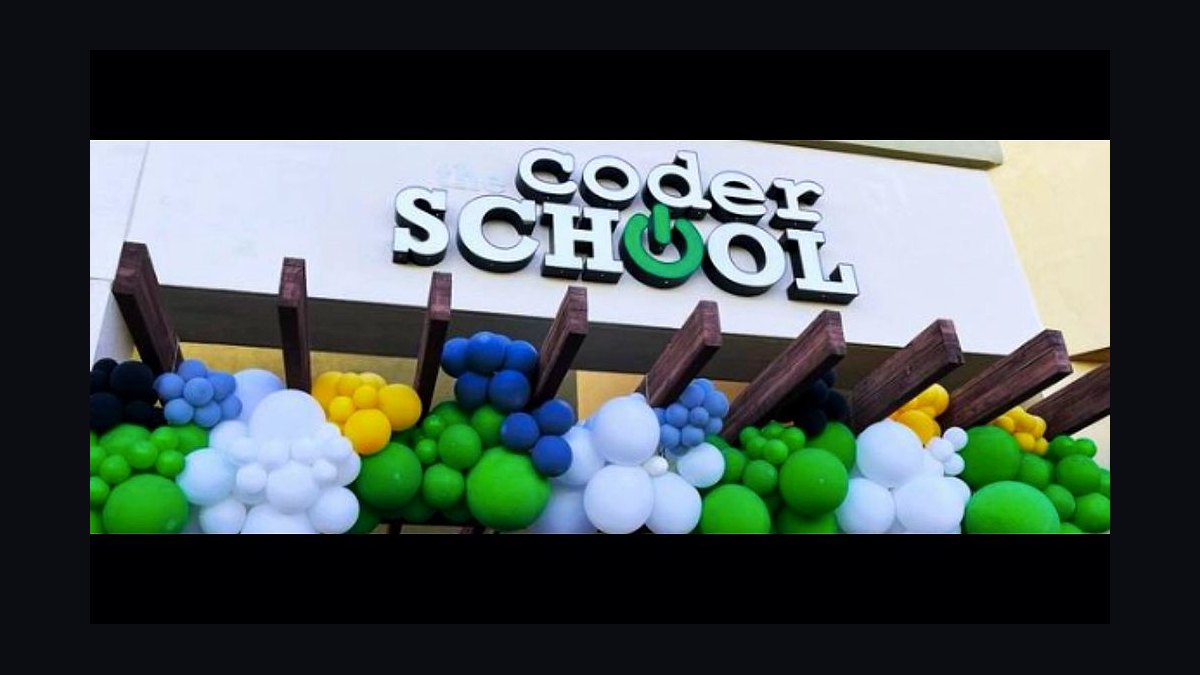
Opening a theCoderSchool in 2027 makes sense for an education-minded operator who can recruit and retain coding coaches and who sits in an affluent, tech-oriented market with real demand for kids' STEM enrichment. The franchise costs roughly $80,000–$200,000 to open, carries an 8%–10% royalty, and mature centers net $70,000–$200,000 a year once enrollment stabilizes. Skip it without a strong coach pipeline or the right demographics.
A Franchisee's First Year, Walked Through
Picture a prospective owner — call her a former software engineer who wants out of corporate life and into something mission-driven. She signs a theCoderSchool franchise agreement in January 2027, pays the roughly $50,000 franchise fee, and spends February and March finding a 1,500–2,500 square foot suite in a retail strip near a cluster of elementary and middle schools in a suburb where median household income clears $90,000. Build-out runs $25,000–$80,000 depending on how much electrical and network wiring the space needs for a dozen workstations. She budgets $15,000–$45,000 for computers and peripherals, another $10,000–$28,000 for signage and interior branding, and sets aside $20,000–$55,000 in working capital to survive the first four to six months before enrollment covers payroll.
By April, she's hiring her first Code Coaches — usually college students studying computer science or recent grads — and running training on theCoderSchool's proprietary curriculum, which teaches through one-on-one or very small-group "Code Coaching" sessions rather than lecture-style classes. This is the brand's core differentiator: instead of a teacher addressing twenty kids at once, a coach works directly with two or three students at a time, each progressing through Scratch, Python, or web development at their own pace. That low ratio is expensive to staff but commands a premium price point that families in the right zip codes are willing to pay.

May and June go to local marketing: school partnerships, a booth at a spring STEM fair, referral incentives for early families, and a $1,000–$2,500 monthly ad spend targeting parents on Facebook and via local SEO. She opens in July with twenty enrolled students — nowhere near capacity, but enough to start building word of mouth. By the following summer, camp season brings a revenue spike, and by month eighteen she's crossed 80 enrolled students at $200–$400 a month each, finally hitting break-even. This is the realistic arc: a slow ramp, heavy dependence on staffing quality, and a payoff that shows up in year two, not year one. Franchisees who expect immediate profitability are almost always disappointed; the ones who succeed treat the first twelve to eighteen months as a deliberate enrollment-building phase, not a failure signal.
How the Coaching Model Actually Drives the Economics
The reason theCoderSchool's unit economics work the way they do comes down to a simple structural choice: low student-to-coach ratios instead of classroom-style teaching. Understanding this mechanism is the difference between correctly forecasting a location's profitability and guessing.

Because each coach handles only two or three students in a session block, the school can charge $200–$400 per student per month — meaningfully more than a typical after-school program — while still delivering a personalized experience that parents perceive as worth the premium. That premium is what makes the recurring-enrollment model viable: 60%–70% of a mature center's gross revenue comes from ongoing monthly tuition rather than one-off camps or parties, so the business behaves more like a subscription service than a seasonal activity provider. Coaches are typically paid $25–$45 an hour, and because each session serves a small group, coach labor tends to consume roughly 30%–35% of gross revenue — the single largest cost line in the business.
That flow also explains why staffing is the operational fulcrum of the entire business. If a coach quits mid-session block, the school either has to shuffle groups (eroding the ratio the premium price is based on) or pause enrollment for that slot. Owners who build a deep bench of coaches — usually by cultivating a pipeline through nearby universities, offering flexible 2–3 hour shifts, and paying referral bonuses when one coach brings in another — keep the mechanism intact. Owners who under-invest in recruiting watch their effective ratio drift upward, quality perception drop, and cancellations follow within a quarter or two.
The Numbers: Investment, Fees, and Realistic Returns
The 2026 Franchise Disclosure Document lays out the following ranges, and they're worth treating as planning inputs rather than promises.
Total Item 7 investment runs $80,000 to $200,000, broken down roughly as: franchise fee $50,000 (fixed), buildout/leasehold $25,000–$80,000, computers and equipment $15,000–$45,000, signage and decor $10,000–$28,000, initial marketing $12,000–$35,000, training and travel $8,000–$25,000, curriculum/technology licensing $5,000–$18,000, and working capital $20,000–$55,000. Most franchisors expect $50,000–$100,000 in liquid capital from the franchisee, with the remainder financed — commonly through an SBA loan with 10%–25% down and a 7–10 year term at 8%–12% interest.
Ongoing fees are a royalty of roughly 8%–10% of gross revenue plus a marketing fee of about 2%–3%, meaning an owner keeps approximately 87%–90% of top-line revenue before paying rent, payroll, insurance, and supplies. For a center grossing $400,000 annually, that's roughly $348,000–$360,000 left to cover operating costs — rent typically $3,000–$6,000 a month, plus coach payroll that scales with enrollment.
Mature, stabilized centers (generally two-plus years old with an established base of 80–100+ students) gross $300,000–$800,000 a year, with owner earnings landing between $70,000 and $200,000. Net profit margins in year two and beyond typically fall in the 15%–25% range once enrollment saturates peak after-school hours (3–7 PM weekdays, where mature centers often run at 85%–95% capacity). Break-even timing depends heavily on location type: a strip-mall center in a mid-sized metro often reaches break-even in 12–18 months, while a standalone location in a high-rent urban core can take 18–24 months because fixed costs are higher relative to the same enrollment pace. Coach turnover — commonly cited at 20%–30% annually — is a recurring cost that shows up as constant recruiting and retraining expense, and it should be modeled into labor costs rather than treated as an occasional surprise.
Trade-Offs Against Other Kids' STEM Franchises

theCoderSchool isn't the only option for an operator drawn to children's technology education, and the right choice depends on how much staffing intensity and capital you want to take on versus how differentiated you want your offering to be.
Code Ninjas typically operates with a game-based, belt-progression curriculum in a more classroom-like setting, which can mean lower per-coach staffing intensity but also a less premium price point than theCoderSchool's one-on-one model. Code Wiz and Snapology lean into broader STEM (robotics, engineering kits) rather than coding specifically, which can widen your addressable demographic beyond families specifically seeking coding instruction, but dilutes the coaching differentiation that lets theCoderSchool charge a premium. Engineering For Kids and Bricks 4 Kidz sit even further from pure coding, often running as enrichment add-ons through schools and community centers rather than standalone retail locations, which usually means lower buildout costs but also less control over the brand experience and lower per-student revenue.
An independent, non-franchised coding school is the alternative worth naming honestly: you avoid the franchise fee and royalty entirely, keep full control over pricing and curriculum, and can adapt faster to your specific market — but you give up theCoderSchool's proprietary curriculum, national brand recognition, training systems, and the operational playbook that took the franchisor years to refine. For a first-time education-business owner, that playbook (structured onboarding, marketing templates, a known enrollment funnel) is often worth the royalty; for someone who has already run a tutoring or enrichment business, going independent can preserve more margin. The decision point isn't which model is "better" in the abstract — it's whether you value a validated system enough to pay 10%–13% of gross revenue for it every year.
Common Pitfalls and How Experienced Owners Avoid Them
The single most common failure mode is underestimating the coach-recruiting burden before signing. Prospective franchisees often assume that because the curriculum is proprietary and well-documented, any competent hire can run a session — but the job requires someone who can both code and manage a room of distracted eight-to-fourteen-year-olds, and that combination is scarcer than either skill alone. The fix is to start building a coach pipeline before opening day: reach out to computer science departments at nearby colleges, set up a referral bonus structure from day one, and interview more candidates than you think you'll need, because early turnover is nearly guaranteed.

A second pitfall is opening in a market that looks tech-adjacent on paper but doesn't have the density of families willing to pay premium tuition for enrichment. A neighborhood with a strong tech employer base but modest household incomes, or a market that's tech-heavy but culturally oriented toward free/public enrichment options, will underperform demographic assumptions. Before signing a lease, franchisees should independently verify median household income, the concentration of dual-income or tech/engineering-employed households, and — critically — call three to five existing franchisees in comparable markets and ask directly about their enrollment ramp, coach turnover, and actual net profit, not just gross revenue.
A third pitfall is underfunding the ramp period. Because 60%–70% of revenue depends on recurring enrollment that takes twelve to eighteen months to build, owners who capitalize only to the minimum end of the $80,000–$200,000 range frequently run out of working capital before the center reaches its break-even enrollment threshold. Planning for an additional $30,000–$50,000 in reserve beyond the FDD's stated range — specifically to cover six to nine months of operating shortfall — is what separates owners who make it through year one from those who don't. Finally, some franchisees over-leverage with aggressive SBA terms assuming fast profitability; given the realistic 12–24 month break-even window, conservative financing with a longer runway is safer than a loan structure that assumes month-six profitability.
Related Questions
How long does it take a theCoderSchool location to become profitable?
Most centers reach break-even in 12–18 months in a mid-sized metro strip-mall location, or 18–24 months in a higher-rent standalone urban location, driven primarily by how quickly recurring enrollment builds toward the 80+ student threshold.
What's the biggest ongoing cost in running a theCoderSchool?

Coach labor, typically 30%–35% of gross revenue, driven by the low 1:2–1:3 student-to-coach ratio that underpins the brand's premium pricing and differentiation.
Can a theCoderSchool franchise be resold?
Yes — centers with 100+ enrolled students and clean financials typically sell for 2.5x–3.5x annual net profit, though buyer pools are limited mostly to other franchisees or education entrepreneurs, and the franchisor's right of first refusal applies.
Is theCoderSchool better than Code Ninjas for a first-time franchisee?
Neither is universally better — theCoderSchool's one-on-one coaching commands a higher price point but demands more intensive staffing, while Code Ninjas' classroom model is less staffing-intensive but typically prices lower per student.
FAQ
What is the total investment needed to open a theCoderSchool franchise in 2027? The franchise fee is around $50,000, and total Item 7 startup costs range from roughly $80,000 to $200,000, covering buildout, equipment, marketing, training, and working capital — moderate compared to many other education franchise concepts.
How much revenue and profit can I expect from a mature location?

Mature centers typically gross $300,000–$800,000 annually, with owner earnings between $70,000 and $200,000, though results vary significantly based on local demographics, enrollment pace, and coach retention.
What ongoing fees does the franchisor charge? A royalty of approximately 8%–10% of gross revenue plus a marketing fee of roughly 2%–3%, which is standard for the children's education franchise category.
What makes theCoderSchool different from other kids' coding programs? Its "Code Coaching" model uses low 1:2–1:3 student-to-coach ratios for near one-on-one instruction, rather than the larger classes or video-based instruction many competitors use, which supports its premium pricing.
Who is the ideal franchisee for this brand? Someone with an education-first mindset, business operating discipline, and the ability to recruit and retain coding coaches, ideally located in an affluent, tech-oriented community where families already prioritize STEM enrichment spending.
What are the biggest risks I should plan for before signing? Coach recruitment and retention, a slow 12–24 month enrollment ramp before profitability, and demographic mismatch — opening in a market without sufficient affluent, tech-engaged households will suppress enrollment regardless of how well the center is run.
Sources
- https://www.franchise.org
- https://www.entrepreneur.com/franchises
- https://www.ibisworld.com
- https://www.statista.com
- https://nces.ed.gov
- https://franchisebusinessreview.com
- https://www.census.gov
- https://www.sba.gov/business-guide/plan-your-business/franchises
- https://www.thecoderschool.com
Related on PULSE
- Should I open or buy a School of Rock franchise in 2027?
- Should I open or buy a Celebree School franchise in 2027?
- Should I open or buy a Parisi Speed School franchise in 2027?
- Should I open or buy a Big Blue Swim School franchise in 2027?
- Should I open or buy a SafeSplash Swim School franchise in 2027?
- Should I open or buy a Goldfish Swim School (re-do) franchise in 2027?
This page will be disappearing soon. Save it to your device for $1 — or read it free while it is here.
@Kory-White- · if Venmo asks, the last 4 of my number are 2012
This page is gone.
This one is off the shelf now. $1 keeps it on your phone for good — the whole page, pictures and diagrams included.
 franchiseShould I open or buy a KinderCare franchise in 2027?
 franchiseShould I open or buy a Bruster's Real Ice Cream franchise in 2027?
 franchiseShould I open or buy a Domino's franchise in 2027?
 franchiseShould I open or buy a Dairy Queen franchise in 2027?
 franchiseShould I open or buy a Cinnabon franchise in 2027?
 franchiseShould I open or buy a Supercuts franchise in 2027?
 franchiseShould I open or buy a Goddard School franchise in 2027?
 franchiseShould I open or buy a Cook Out franchise in 2027?
 franchiseShould I open or buy an Orangetheory Fitness franchise in 2027?
 franchiseShould I open or buy a Take 5 Oil Change franchise in 2027?