


Should I open or buy a GradePower Learning franchise in 2027?
Quality
Certified
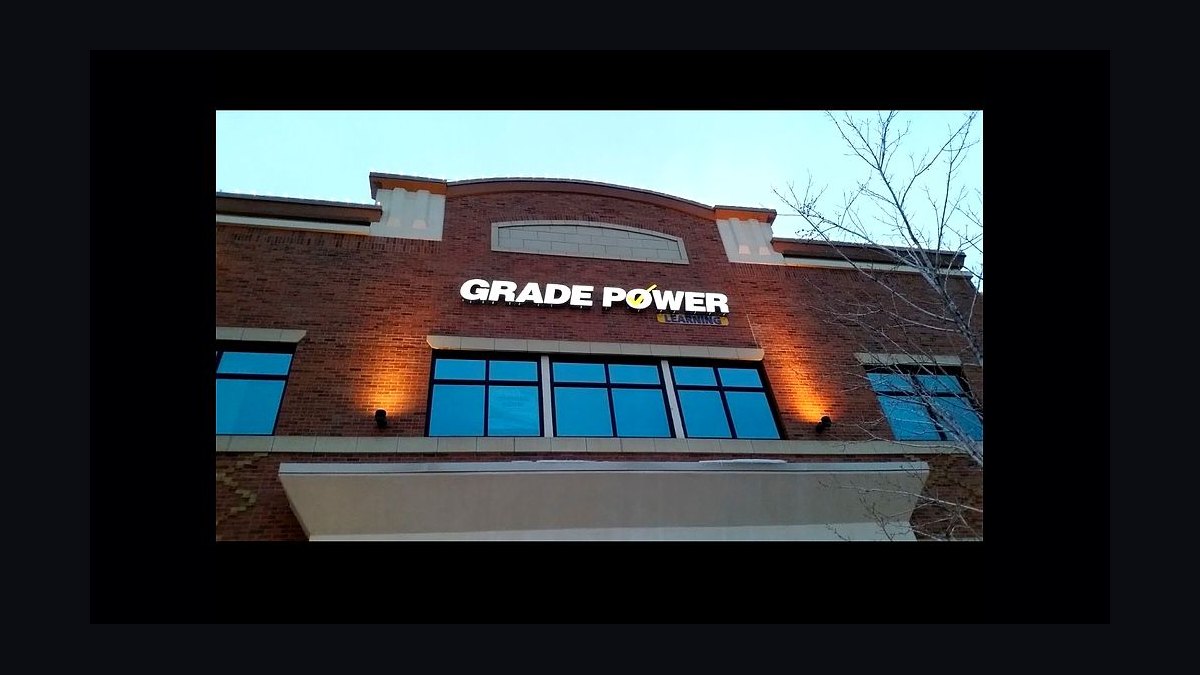
Open a GradePower Learning franchise only if you can staff certified-caliber instructors and market to education-prioritizing families. The 2026 FDD shows roughly $90,000–$170,000 total investment with a $48,000 franchise fee. Mature centers gross $300,000–$700,000; owners clear $70,000–$190,000. The cognitive-learning differentiator earns premium recurring tuition — but only after an 6–18 month enrollment ramp.
A suburban operator runs the math before signing
Picture a former middle-school teacher with $120,000 in liquid capital, sitting in a suburb of about 90,000 residents where the median household income runs north of $85,000 and the elementary schools post above-average state test scores. She has been offered a GradePower Learning territory covering roughly a 3–5 mile radius. On paper it looks clean: a 1,500–2,500 square foot storefront in a retail strip, $3,000–$6,000 a month in rent, six part-time instructors, and a recurring-enrollment model where each family pays $250–$350 monthly for four to eight sessions.
The math that matters is not the top-line revenue. It is the gap between signing and breakeven. To clear $300,000 in annual gross she needs somewhere in the neighborhood of 80–100 active students at $300 a month. She will not have 80 students in month three. She will have twelve. Realistically she reaches breakeven — call it 40–60 enrolled students — somewhere between month six and month eighteen, and the entire working-capital line of $18,000–$50,000 in the Item 7 table exists to cover that gap. If her buildout runs long, or if the local school year starts before her signage is up and she misses the September enrollment window, that working capital evaporates and she is funding payroll out of savings.

This is the scenario worth sitting with, because it reframes the buying decision. The question is not "is $90,000–$170,000 a reasonable price for a supplemental-education brand?" It probably is, relative to the category. The question is whether you personally can survive twelve months of underfilled classrooms while paying instructors $15–$25 an hour, and whether your specific three-mile radius contains enough families who believe that building reasoning skills is worth $3,600 a year per child. Those two variables — your cash runway and your demographic — decide the outcome far more than the brand's fee structure does.
There is a second version of this scenario worth pricing: buying an existing center rather than opening a new one. A resale eliminates the ramp entirely. You inherit an enrolled roster, a trained instructor bench, and a lease with known economics. You pay for that in the multiple — typically some multiple of seller's discretionary earnings — and you inherit the previous owner's reputation, including any families who left unhappy. For a first-time franchisee without deep reserves, a resale at 60–80 students is frequently the lower-risk purchase even at a higher headline price, because it converts an 18-month cash-burn problem into a straightforward earnings-based valuation problem.
How the cognitive-learning model actually generates revenue

The mechanism that separates GradePower from a generic tutoring shop is worth understanding precisely, because it drives both the pricing power and the staffing constraint. Standard tutoring is transactional: a student arrives with tonight's homework, an instructor helps finish it, the family pays for the session, and the relationship ends when the grade recovers. Retention is inherently short. The cognitive-learning approach targets the underlying skills — reasoning, attention, comprehension strategy, working through a problem structurally — which means the engagement is developmental rather than remedial. A family enrolls in September for the school year, not for a bad chemistry unit.
That structural difference produces the recurring-enrollment economics. Instead of forecasting session-by-session demand, you are forecasting roster churn against a monthly tuition base. Eighty students at $300 a month is $24,000 of largely predictable monthly revenue, and your instructor scheduling can be built around it rather than reactive to it. Predictability is the actual product improvement here: it lets you commit shifts to good instructors, which is what keeps good instructors.
The constraint the same mechanism creates is on the hiring side. A homework-help center can hire a strong college sophomore. A center whose promise is skill development needs instructors who can run interactive, Socratic-style sessions — asking rather than telling, holding a student in productive difficulty without rescuing them. That is a genuinely different skill, and it narrows the pool to certified teachers, education majors, and retired educators. It is also why the training investment line in the Item 7 range ($8,000–$25,000) is not padding. It is the cost of converting a competent adult into someone who can deliver the differentiator you are charging a premium for.

Notice the feedback loop at the bottom. Churn does not just cost you tuition; it costs you the ability to guarantee hours, which costs you instructors, which degrades the delivery quality that prevents churn. Operators who lose control of retention rarely lose it in one quarter. They lose it over two years as the instructor bench quietly hollows out and every parent conversation gets a little harder.
Real numbers, ranges, and where they bend
Start with the disclosed capital. The 2026 FDD puts the franchise fee near $48,000 and total Item 7 investment at roughly $90,000–$170,000. The internal components break out approximately as: buildout and leasehold $25,000–$65,000; furniture, equipment and instructional technology $12,000–$32,000; signage and interior brand decor $10,000–$28,000; initial enrollment-driving marketing $12,000–$32,000; training and travel $8,000–$25,000; curriculum licensing $5,000–$15,000; and working capital $18,000–$50,000. Ongoing, expect royalty plus associated fees in the 8%–12% band and a marketing fee around 2% of gross. Lenders will generally want $50,000–$90,000 genuinely liquid on top of whatever you finance.
Now the operating picture at scale. A center grossing $500,000 typically runs instructor labor around 30–34% of revenue — call it $160,000 — because delivery is human and cannot be automated away. Rent and instructional materials land near 18%, or roughly $90,000, driven mostly by your lease rate. Royalty and marketing fees together take approximately 13%, about $65,000. Remaining operating expenses — insurance, utilities, software, local advertising above the fee, recruitment, professional services — absorb something like 17%, or $85,000. What is left is owner earnings in the neighborhood of $100,000, which sits squarely inside the disclosed $70,000–$190,000 range and explains why that range is so wide: a $700,000 center with 20% labor discipline and cheap rent is a genuinely different business from a $320,000 center paying $6,000 a month for a premium retail endcap.

Enrollment is the variable that moves everything. At $250–$350 per student per month, hitting $300,000 requires roughly 80–90 students; hitting $700,000 requires roughly 170–190. Those upper-end centers usually are not one heroic location — they are locations that added summer camp programming, standardized-test preparation packages, and small-group enrichment to smooth the seasonal troughs. Summer and the winter holidays are structurally soft in supplemental education. If your only product is school-year enrichment, you are running a nine-month business with twelve months of rent.
Customer acquisition deserves its own line. Plan on $1,500–$4,000 monthly in digital spend — search, social, local SEO — producing roughly 20–40 qualified leads, of which perhaps 15–25% convert to enrolled students. Do that arithmetic honestly: at 30 leads and a 20% close rate you add six students a month, gross, before accounting for the ones who leave. If monthly churn is running 4–5% on a roster of 80, you are losing three or four students a month, so six gross adds is really two or three net. That is how an operator ends up at month fourteen with 55 students and a marketing budget they cannot explain to their spouse.
The non-cash line nobody prices correctly is the owner's own hours. This is a full-time, center-based, evenings-and-weekends operation. Students come after school. Parent conversations happen at pickup. Instructor interviews happen when candidates are free, which is also after school. Anyone modeling this as semi-absentee ownership is modeling a different business.
Trade-offs against the alternatives

The supplemental-education category is crowded, and the honest way to evaluate GradePower is against the specific alternative you would otherwise buy. Sylvan Learning and Huntington Learning Center are the closest structural comparisons — center-based, established, broad K-12 scope — and both carry heavier brand recognition in most U.S. markets, which cuts both ways: easier lead generation, more saturated territories. Kumon and Mathnasium are narrower by design, worksheet-driven or math-specific, generally lighter on buildout and instructor credentialing, and they compete for the same parent dollar with a much simpler pitch. Tutor Doctor and similar in-home models strip out the lease entirely, which dramatically lowers capital risk but eliminates the physical presence that drives walk-in credibility and community events.
Against that field, GradePower's specific claim is the cognitive-learning positioning: you are selling durable thinking skills rather than tonight's homework. When a parent believes that framing, it justifies premium pricing and extends the enrollment horizon from weeks to school years. When a parent does not believe it — when they walked in because their kid is failing algebra and they want the algebra fixed by Thanksgiving — the differentiator is a liability, because you are explaining a philosophy while a competitor down the street is promising a grade.
That is the real trade-off. A narrower, more legible promise converts faster. A broader, developmental promise converts slower but retains longer. Which one wins depends almost entirely on the market you picked, which is why territory validation is not a formality.

There is also the independent option. Nothing prevents an experienced educator from opening an unbranded learning center, keeping the 10%–14% that royalty and marketing fees consume, and building a local reputation. What you give up is the curriculum system, the assessment framework, the training infrastructure, and the site-selection support — which is to say, you give up the parts that are hardest to build from nothing while simultaneously trying to enroll your first forty families. The franchise fee buys a working method. Whether that method is worth roughly $50,000–$70,000 a year in ongoing fees at a $500,000 revenue level is the question to answer with your eyes open, and the answer is genuinely different for a career educator with an existing local network than for a career-changer from an unrelated field.
Pitfalls that sink centers, and how to sidestep them
Underestimating instructor churn. Expect 30–50% annual instructor turnover in the first two years. Part-time afternoon work in education is inherently transient — education majors graduate, retired teachers travel, second-income earners take full-time roles. The fix is structural, not motivational: recruit continuously rather than reactively, maintain a bench of two to three trained backups, cross-train staff across elementary, middle, and high school levels so a single departure does not orphan a cohort, and budget $5,000–$10,000 annually for ongoing recruitment advertising through college education departments and job boards. Performance bonuses in the range of $1–$3 per student per session cost little and meaningfully shift retention among your best people.
Signing a territory you validated on brochure data. Franchisor site-selection support is real, but their incentives and yours diverge on exactly one dimension: they benefit from more locations sold, you benefit from one location that works. Independently pull the numbers — school-age population within the radius, household income distribution, published state test performance for the feeder schools, and a physical count of competing tutoring storefronts within two miles. Three or more established competitors inside that radius does not disqualify a market, but it does mean you need a visibly better location and a sharper differentiator pitch, and you should model a longer ramp.

Opening off-cycle. Supplemental education runs on the academic calendar. A center that opens in late October has missed the enrollment surge and is paying rent through the winter on a half-empty roster. Back-solve your buildout timeline from an August open, and pad it — permitting and contractor delays are the norm, not the exception. If you slip past September, seriously consider a soft-open with summer or test-prep programming to build a list rather than burning marketing spend into a dead window.
Treating marketing as the franchisor's job. The national marketing fee funds brand infrastructure and a website. It does not fill your specific center. Local enrollment comes from owner-driven work: relationships with school counselors and teachers who make referrals, PTA presentations, library and community-center workshops, back-to-school fair presence, and targeted digital spend. Owners who add a dedicated part-time marketing coordinator — $15,000–$25,000 annually — commonly see meaningfully faster enrollment growth in competitive markets, and in a contested territory that hire pays for itself well before it looks like it should.
Letting the differentiator erode under pressure. This is the quiet one. When enrollment is soft and a parent demands homework help, the path of least resistance is to give it to them. Do that a dozen times and you are a homework-help center charging cognitive-learning prices, which is the worst position in the category — premium cost structure, commodity promise. Hold the line on the assessment-to-plan process even when it costs you an enrollment, because the families who stay three years are the ones who bought the actual method.

Confusing gross revenue with owner income. A $500,000 center is not a $500,000 outcome. After labor, occupancy, fees, and operating expenses, the owner-earnings figure lands closer to $100,000 — and that assumes disciplined scheduling. Validate this directly: Item 19 tells you what the system discloses, but franchisee interviews tell you what actually happens. Call at least eight to ten current owners and two former ones, and ask specifically about instructor turnover, months to breakeven, seasonal cash flow, and what they actually took home last year.
Related questions
How long until a new center breaks even?
Typically 6–18 months, at roughly 40–60 enrolled students. Centers that open aligned to the August–September enrollment window and run active school-referral outreach cluster toward the short end; off-cycle openings in competitive territories drift toward eighteen months or beyond.
Is buying an existing center better than opening new?
Often, for first-time owners. A resale delivers an existing roster, trained instructors, and known lease economics, converting an 18-month cash-burn risk into a valuation question. You pay a multiple of earnings and inherit the prior owner's local reputation — diligence the churn history carefully.
How many instructors does one center need?
Generally three to six part-time instructors plus a center director, at $15–$25 hourly depending on local labor markets. Labor runs roughly 30–34% of revenue. Maintain two to three trained backups, because 30–50% annual turnover in the first two years is normal.
What kills enrollment growth fastest?

Seasonal troughs without counter-programming. Summer and holiday periods are structurally soft; centers without summer camps or test-prep packages run nine months of revenue against twelve months of rent. The second killer is churn quietly outpacing new enrollments while marketing spend looks fine on paper.
Does the cognitive-learning angle actually sell?
It sells to families who frame education as long-term investment — typically higher-income, education-prioritizing households. It converts more slowly than "we'll fix the algebra grade," but retains far longer. In markets driven by acute remedial demand, the positioning works against you.
FAQ
What is the total investment range for a GradePower Learning franchise in 2027?
The 2026 FDD puts total Item 7 investment at roughly $90,000 to $170,000, including a franchise fee near $48,000, buildout, equipment, signage, initial marketing, training, curriculum licensing, and working capital. Lenders typically want $50,000 to $90,000 liquid. Actual figures vary by market, lease rate, and buildout condition, so confirm against the current FDD.
How much can an owner realistically earn?
Mature centers gross roughly $300,000 to $700,000, with owner earnings in the $70,000 to $190,000 range. At a $500,000 gross with instructor labor near 32%, occupancy and materials near 18%, royalty and marketing near 13%, and other operating expenses near 17%, owner earnings land around $100,000. Enrollment volume and lease economics drive most of the variance.

What are the ongoing fees?
Royalty plus associated fees run approximately 8% to 12% of gross revenue, with a marketing fee around 2%. At $500,000 in revenue that is roughly $50,000 to $70,000 annually. Weigh that against what the system provides — curriculum, assessment framework, instructor training, and site-selection support — versus building those from scratch independently.
How does GradePower differ from Sylvan, Kumon, or Mathnasium?
GradePower's positioning is cognitive learning — developing reasoning, comprehension, and learning skills rather than delivering homework help or a single subject. That supports premium tuition and longer enrollment horizons, but converts more slowly than a competitor promising a specific grade fix. Kumon and Mathnasium are narrower and generally lighter on capital and instructor credentialing.
What is the hardest part of operating one?
Instructor recruiting and retention. The Socratic, interactive delivery model requires certified teachers, education majors, or retired educators rather than general tutors, and first-two-year turnover of 30% to 50% is common. Budget $5,000 to $10,000 annually for ongoing recruitment, keep two to three trained backups on the bench, and cross-train across grade bands.
Can this be run semi-absentee?
Not realistically in the first two or three years. Sessions run after school and on weekends, parent relationships are built at pickup, and enrollment growth depends on owner-driven school and community outreach. Multi-unit owners eventually delegate to strong center directors, but the first location requires full-time, hands-on presence to reach and hold breakeven.
Sources
- https://www.ftc.gov/business-guidance/resources/franchise-rule-compliance-guide
- https://www.sba.gov/funding-programs/loans
- https://nces.ed.gov/
- https://www.bls.gov/ooh/education-training-and-library/tutors.htm
- https://www.census.gov/topics/education.html
- https://www.franchise.org/
- https://www.entrepreneur.com/franchises
- https://www.franchisebusinessreview.com/
- https://www.ibisworld.com/united-states/market-research-reports/tutoring-test-preparation-industry/
- https://www.consumer.ftc.gov/articles/buying-franchise-consumer-guide
Related on PULSE
- Should I open or buy a The Learning Experience franchise in 2027?
- Should I open or buy a Sylvan Learning (re-do) franchise in 2027?
- Should I open or buy an Eye Level Learning franchise in 2027?
- Should I open or buy a Huntington Learning Center franchise in 2027?
- Should I open or buy a Tutor Doctor franchise in 2027?
- Should I open or buy a Club Z Tutoring franchise in 2027?
This page will be disappearing soon. Save it to your device for $1 — or read it free while it is here.
@Kory-White- · if Venmo asks, the last 4 of my number are 2012
This page is gone.
This one is off the shelf now. $1 keeps it on your phone for good — the whole page, pictures and diagrams included.
 franchiseShould I open or buy a Meineke franchise in 2027?
 franchiseShould I open or buy a Massage Envy franchise in 2027?
 franchiseShould I open or buy a Little Caesars franchise in 2027?
 franchiseShould I open or buy a FACE FOUNDRIÉ franchise in 2027?
 franchiseShould I open or buy a Take 5 Oil Change franchise in 2027?
 franchiseShould I open or buy a Merry Maids franchise in 2027?
 franchiseShould I open or buy a Cold Stone Creamery franchise in 2027?
 franchiseShould I open or buy a Subway franchise in 2027?
 franchiseShould I open or buy a Mac Tools franchise in 2027?
 franchiseShould I open or buy a Jamba franchise in 2027?