


Should I open or buy a Kiddie Academy franchise in 2027?
Quality
Certified
Open a Kiddie Academy only if you can fund a $500,000–$6,000,000+ real-estate-driven build, survive a 12–24 month enrollment ramp, and recruit licensed teachers in a shortage market. Mature academies gross $1.5M–$4M with $200K–$700K owner earnings. Under-capitalized or licensing-averse buyers should pick a smaller-footprint concept instead.
The outcome you should expect if you sign in 2027
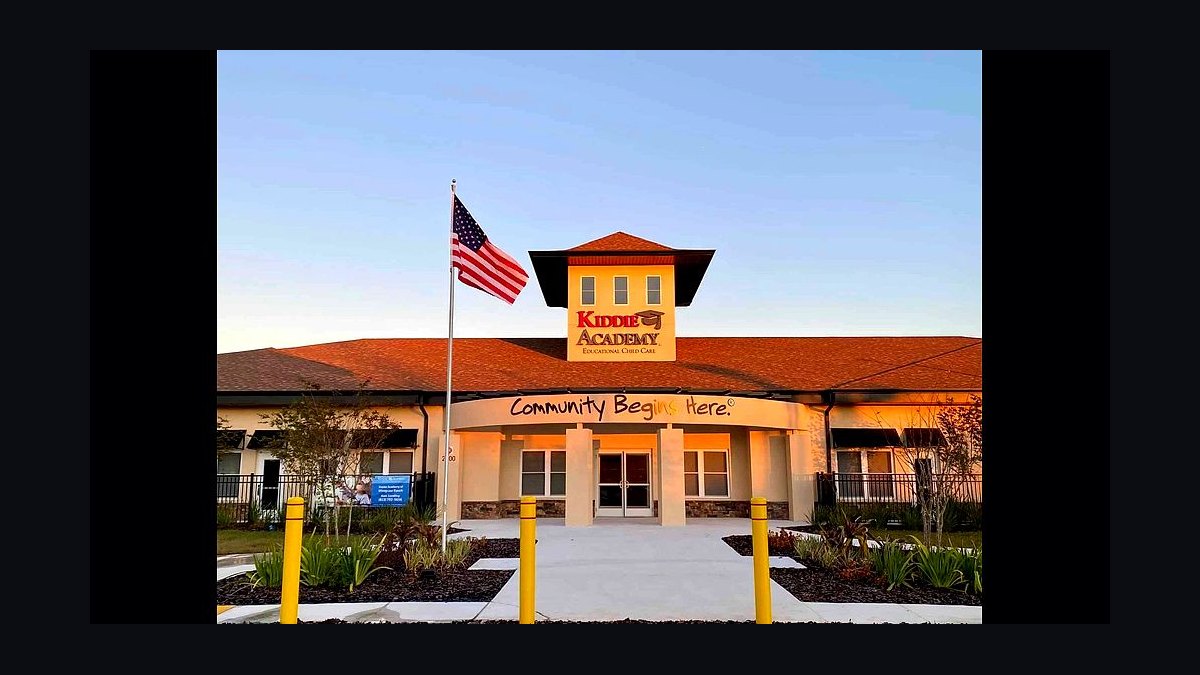
Set your expectations against the actual shape of this business, not the brochure. Kiddie Academy, founded in 1981, franchises full-service educational childcare academies serving infants through school-age children under its proprietary Life Essentials curriculum. The physical unit is large — typically 8,000 to 12,000+ square feet, licensed for roughly 100 to 200+ children, with a fenced outdoor playground and separate classrooms segmented by age band. That footprint is the single fact that drives every number downstream.
If you sign a franchise agreement in early 2027, a realistic timeline looks like this: 60–120 days to complete site selection and get a letter of intent signed; 90–180 days for entitlements, zoning approval, and state childcare licensing pre-application; 6–12 months for construction or leasehold buildout; 60–90 days for hiring, staff certification, and the state licensing inspection; then you open. From signature to first day of enrollment, a ground-up build commonly runs 18–24 months. A conversion of an existing licensed childcare center can compress that to 9–12 months because the zoning, egress, plumbing fixture counts, and playground already exist.
Post-opening, expect a slow revenue curve. Childcare enrollment does not spike — it accretes family by family, largely by word of mouth and local search. A common pattern is 25–35% of licensed capacity at month three, 50–60% by month twelve, and 75–85% by month twenty-four. Breakeven typically arrives somewhere between month 12 and month 24, because your teacher payroll is largely fixed by ratio requirements the moment you open a classroom, while tuition revenue arrives one child at a time.

The steady state is genuinely attractive. A mature, well-located academy running at 80–90% of a 130-child license, at market tuition, will land in the $1.5M–$4.0M gross revenue band. Owner earnings before debt service commonly fall between $200,000 and $700,000. That is a strong absolute return — but it is a return on $500K to $6M of invested capital plus two years of your life, and it is not a passive one. Semi-absentee operation becomes plausible only after you have a tenured director you trust, which realistically means year three or later.
Recession resilience is the honest strategic case for the category. Working parents need childcare to hold their jobs, so tuition demand is far stickier than discretionary retail or restaurant spend. What actually moves enrollment is local employment: if a major employer in your trade area lays off 800 people, some of those families pull their children. But the recovery is fast, because a parent returning to work needs a slot immediately.
What drives that outcome
Four variables control whether your academy prints $200K or $700K in owner earnings — and three of the four are set before you ever enroll a child.

Real estate cost per child slot. This is the master variable. Divide your all-in occupancy cost (rent or debt service plus taxes, insurance, and CAM) by your licensed capacity. Healthy academies keep total occupancy at roughly 10–14% of gross revenue. If you build ground-up on land that cost $1.2M in a market where tuition tops out at $310/week for preschool, the math will not close no matter how well you operate. Run that ratio before you sign the LOI, not after.
Staff cost as a percent of revenue. Payroll and payroll taxes run 45–60% of gross revenue and are effectively floored by state ratio law. You cannot cut your way below the ratio; you can only raise tuition or improve utilization within the ratio bands.
Age mix. Infant rooms carry the tightest ratios (commonly 1:4) and therefore the worst labor economics despite the highest tuition. Preschool and pre-K rooms (1:10 or looser) are where margin actually comes from. A license weighted heavily toward infants looks great on a revenue line and terrible on a contribution line. Model each age band separately.
Utilization. Every empty slot in a staffed classroom is pure lost contribution, because the teacher is already on the clock. Moving from 70% to 85% utilization on a 130-child license can swing owner earnings by six figures without adding a single square foot.
Read that flow as a diagnostic, not a forecast. When an academy underperforms, the cause is almost never royalty or supplies — it is one of two things: occupancy signed too rich for the local tuition ceiling, or a classroom staffed for children who never enrolled. Both are decisions made in the first eighteen months.
Benchmarks and realistic ranges

Here is the capital stack as disclosed in the 2026 FDD and reflected in operator experience. Treat the low column as a lease conversion in a secondary market and the high column as a ground-up build on purchased land in a high-cost metro.
| Line item | Low | High | Notes |
|---|---|---|---|
| Initial franchise fee | $135,000 | $135,000 | Per the 2026 FDD |
| Real estate / buildout | $300,000 | $5,000,000+ | Leasehold improvement vs. land plus construction |
| Equipment, furnishings, playground | $150,000 | $500,000 | Classroom furniture, age-segmented playground |
| Signage and interior decor | $30,000 | $120,000 | Brand image package |
| Initial supplies and curriculum materials | $25,000 | $80,000 | Life Essentials materials, consumables |
| Grand-opening and pre-enrollment marketing | $30,000 | $80,000 | Waitlist building before doors open |
| Training and travel | $15,000 | $45,000 | Owner plus academy director |
| Working capital / operating reserve | $150,000 | $400,000 | Covers the ramp |
| Total Item 7 range | ~$500,000 | ~$6,000,000+ | Almost entirely real-estate-driven |
| Royalty | ~7% of gross | Ongoing | |
| Brand marketing fee | ~2% of gross | Ongoing |
Liquidity and net worth: plan on $300,000–$700,000 in liquid capital beyond financed amounts. Lenders in this category — most commonly SBA 7(a) for leasehold deals and SBA 504 or conventional commercial mortgages for owned real estate — typically want 20–30% equity in the real estate portion and will underwrite against the FDD's Item 19 rather than your projections.
Wage benchmarks for 2026–2027 planning: lead teachers $35,000–$50,000 depending on market and credential level, assistant teachers $28,000–$38,000, and an academy director $65,000–$90,000. Layer 15–20% on top for payroll taxes and benefits. A 120-child academy needs roughly 20–25 full-time staff plus a substitute float, which is how a $2.5M revenue academy ends up carrying $1.3M–$1.5M in fully loaded payroll.
Construction benchmarks: ground-up childcare construction commonly runs $250–$400 per square foot before land, which on a 10,000 square-foot building is $2.5M–$4.0M in hard costs alone. Land in a family-dense suburban trade area — the exact geography this concept wants — runs $300,000–$1,500,000 for a usable pad with adequate parking and playground area. Leasehold improvements on an existing childcare shell land at $150,000–$400,000, which is why conversions cluster in the $500,000–$1.2M total investment band.
Resale benchmarks matter even at the buy decision. Kiddie Academy academies have traded in a 3.0x–5.5x EBITDA range, with the top of that band reserved for units that own their real estate, have a tenured director, and carry a waitlist. A $300,000 EBITDA academy prices around $900,000–$1.65M for the operating business; owned real estate is valued separately, roughly 10–15x annual net rent. That separation is the reason many experienced operators buy the dirt: the operating business is a 4x asset, the building is a 12x asset.
Risks, edge cases, and failure modes
Staffing is the failure mode that actually closes classrooms. Ratio law is binary — if you are one teacher short in the infant room, you do not run the infant room. Turnover across childcare franchising commonly runs 30–50% annually, and the first two years are the worst because you are assembling a team from scratch with no internal bench. The specific defenses that work: pay above the local market rather than at it, carry 2–3 substitutes on standing call, cross-train your administrative staff to hold ratio in an emergency, offer meaningful tuition discounts for staff children, and build a standing pipeline with local community college early-childhood-education programs. Budget $10,000–$20,000 a year for recruiting and credential training and treat it as a fixed cost, not a discretionary one.

Licensing and entitlement risk is front-loaded and can kill a deal after you have spent money. Childcare is one of the most heavily regulated small-business categories: state ratios, square-footage-per-child minimums, fixture counts, fencing and playground specs, fire and egress requirements, background checks, and often a conditional-use permit from the municipality. The edge case that burns first-time franchisees is signing a lease or land contract before securing the conditional-use permit. Make every real estate commitment contingent on both zoning approval and a state licensing pre-inspection sign-off. If a landlord will not accept that contingency, that is information about the site, not about your negotiating position.
Over-leveraging the ramp. If you finance the maximum and open with three months of reserve, a slow first year becomes an existential problem rather than an inconvenience. Twelve months of operating reserve — $150,000–$300,000 depending on unit size — is the number that separates operators who ride out a slow ramp from operators who sell distressed in year two.
Trade-area misreads. This concept needs dual-income households with young children and enough density to fill 100+ slots inside a reasonable drive. The failure pattern is a beautiful facility in a market with an aging population, a declining birth cohort, or three established competitors already holding the waitlists. Pull actual under-five population counts and household income for a 3–5 mile radius, and count competitor capacity, not competitor locations — a single 200-child competitor absorbs more demand than four 60-child home centers.

Buying an existing academy carries its own set. A resale gets you enrollment, staff, and reputation on day one, at a 3–5x EBITDA premium. The risks are deferred maintenance, a staff that is loyal to the departing owner, and enrollment that was propped up by discounting. Diligence items: pull the last three years of state licensing inspection reports, get a month-by-month enrollment and tuition-rate history, verify staff tenure and credential status individually, and inspect HVAC, roof, and playground surfacing with a contractor. Negotiate a 60–90 day transition, a non-compete, and hold back a portion of the price against post-close enrollment retention.
Ownership-dependence risk shows up at exit. If enrollment depends on the owner personally greeting families at drop-off, the buyer discounts the multiple. Build documented hiring processes, a strong assistant director, and consistent curriculum delivery early — those are the same systems that let you go semi-absentee and the same ones that hold the 5.5x multiple.
Competitive set. You will be underwriting against The Learning Experience, Primrose Schools, The Goddard School, Kids R Kids, Lightbridge Academy, Celebree School, and independent centers. Independents often compete on price; the branded concepts compete on curriculum and facility. Know which fight you are picking in your specific trade area before you commit capital.
A practical rollout plan

Work the sequence below and resist the urge to skip ahead — every step exists to kill the deal cheaply before the next one gets expensive.
Days 1–30 — Read the documents, not the pitch. Get the current FDD and read Items 5, 6, 7, 19, and 20 in full. Item 19 tells you what units actually produce; Item 20 tells you the opening, closing, and transfer counts over the last three years, which is where you spot churn. Build a simple model with your own tuition assumptions by age band.
Days 31–60 — Call operators, not the franchise sales team. Pull the franchisee list from Item 20 and interview at least eight, weighted toward units that opened three to five years ago — they remember the ramp clearly and are past the honeymoon. Ask specifically: how many months to 80% enrollment, what your teacher turnover ran in year one, what the licensing process cost in time and dollars, and what you cleared last year after debt service.
Days 61–100 — Underwrite the trade area and the site. Demographics first, site second. Then get the LOI signed with zoning and licensing contingencies intact and a contractor's rough order of magnitude on buildout.
Days 101–300 — Build, license, and hire. Construction and licensing run in parallel. Hire the academy director early — 90 days before opening at minimum — and let them recruit the teaching team. Start pre-enrollment marketing the day the sign goes up.
Day 301+ — Open and fill. Enrollment is a local marketing job: tours, referral incentives, local search, and community presence. Track weekly enrollment against your ramp model and adjust classroom openings to match actual bodies, not hoped-for ones.

On exit timing: the cleanest window is seven to twelve years after opening, once debt is substantially paid down, enrollment is at capacity, and you can show three-plus consecutive years of rising EBITDA. Selling in years three to five is harder — the unit may still be ramping and lenders discount the short financial history. Note that any transfer requires franchisor approval, including a buyer net-worth and liquidity test and completion of the training program, so budget a 6–9 month sale process and expect to stay on as a consultant if your buyer is a first-time franchisee.
Related questions
How much liquid cash do I actually need, separate from financing?
Plan on $300,000–$700,000 liquid. Lenders typically want 20–30% equity in the real estate portion, and you still need the $135,000 franchise fee, training costs, and a 6–12 month operating reserve of $150,000–$300,000 that no lender will fund for you.
Is buying an existing academy better than building new?
For most first-time owners, yes. A resale delivers enrollment, licensed staff, and cash flow on day one at a 3–5x EBITDA premium, versus 18–24 months of pre-revenue build risk. Building wins only when you want owned real estate and a purpose-built facility.
What percentage of revenue should payroll be?
Target 45–55% of gross revenue for fully loaded payroll including taxes and benefits. Above 60% and the unit will struggle to clear meaningful owner earnings, which usually signals under-enrollment in staffed classrooms rather than overpaying teachers.
How long until the academy is cash-flow positive?

Typically 12–24 months. Enrollment accretes family by family while ratio-driven payroll is largely fixed from opening day, so breakeven arrives when utilization crosses roughly 60–70% of licensed capacity, not on a calendar date.
Can I run this semi-absentee while keeping another job?
Not in the first two years. Site selection, licensing, hiring, and the enrollment ramp are full-time work. Semi-absentee becomes realistic in year three once a tenured academy director is running daily operations against documented systems.
FAQ
How much does it cost to open a Kiddie Academy franchise?
Total investment runs roughly $500,000 to over $6,000,000, driven almost entirely by whether you convert an existing leased space or build ground-up on purchased land. The initial franchise fee is around $135,000, with ongoing royalty near 7% of gross plus an approximately 2% brand marketing fee.
What revenue and owner earnings should I expect at maturity?
Mature academies commonly gross $1.5M–$4.0M annually, with owner earnings before debt service in the $200,000–$700,000 range. Results depend heavily on licensed capacity, utilization rate, local tuition levels, age mix, and occupancy cost. Validate against Item 19 and direct franchisee conversations rather than any single published figure.
Why does the investment range span more than $5 million?

Because real estate is the variable, not the franchise. A leasehold conversion of an already-licensed childcare center needs $150,000–$400,000 in improvements. A ground-up build needs land at $300,000–$1,500,000 plus construction at $250–$400 per square foot on an 8,000–12,000 square-foot building. Same brand, completely different capital stack.
What is the hardest part of operating one?
Staffing. State ratio requirements are binary — short a teacher, and you close a classroom and lose that revenue immediately. Sector-wide turnover of 30–50% annually means recruiting is a permanent function, not a startup task. The operators who win pay above market, keep a substitute float, and build a community-college hiring pipeline.
Is childcare genuinely recession-resistant?
Largely yes. Working parents need care to keep their jobs, so tuition demand holds up far better than discretionary categories. The real exposure is local: a large employer laying off in your trade area pulls families out. Recovery tends to be quick, because a parent returning to work needs a slot immediately.
What do these academies sell for when I exit?
Roughly 3.0x–5.5x EBITDA for the operating business, with owned real estate valued separately at approximately 10–15x annual net rent. Top multiples go to units with owned real estate, tenured staff, a waitlist, and three-plus years of rising EBITDA. Transfers require franchisor approval and a buyer net-worth test, so plan a 6–9 month process.
Sources
- https://www.kiddieacademy.com/franchising/
- https://www.entrepreneur.com/franchises/directory/kiddie-academy-3376
- https://www.franchise.org/
- https://www.sba.gov/funding-programs/loans/7a-loans
- https://www.ftc.gov/business-guidance/resources/franchise-rule-compliance-guide
- https://www.childcareaware.org/
- https://www.bls.gov/ooh/personal-care-and-service/childcare-workers.htm
- https://www.census.gov/topics/families/child-care.html
- https://nces.ed.gov/
- https://www.franchisebusinessreview.com/
Related on PULSE
This page will be disappearing soon. Save it to your device for $1 — or read it free while it is here.
@Kory-White- · if Venmo asks, the last 4 of my number are 2012
This page is gone.
This one is off the shelf now. $1 keeps it on your phone for good — the whole page, pictures and diagrams included.
 franchiseShould I open or buy a Dunkin' franchise in 2027?
 franchiseShould I open or buy a Big O Tires franchise in 2027?
 franchiseShould I open or buy a Dairy Queen franchise in 2027?
 franchiseShould I open or buy a Little Caesars franchise in 2027?
 franchiseShould I open or buy an Orangetheory Fitness franchise in 2027?
 franchiseShould I open or buy an Auntie Anne's franchise in 2027?
 franchiseShould I open or buy a Roto-Rooter franchise in 2027?
 franchiseShould I open or buy a Great Clips franchise in 2027?
 franchiseShould I open or buy a Panera Bread franchise in 2027?
 franchiseShould I open or buy a Subway franchise in 2027?