


Should I open or buy a Main Squeeze Juice Co franchise in 2027?
Quality
Certified
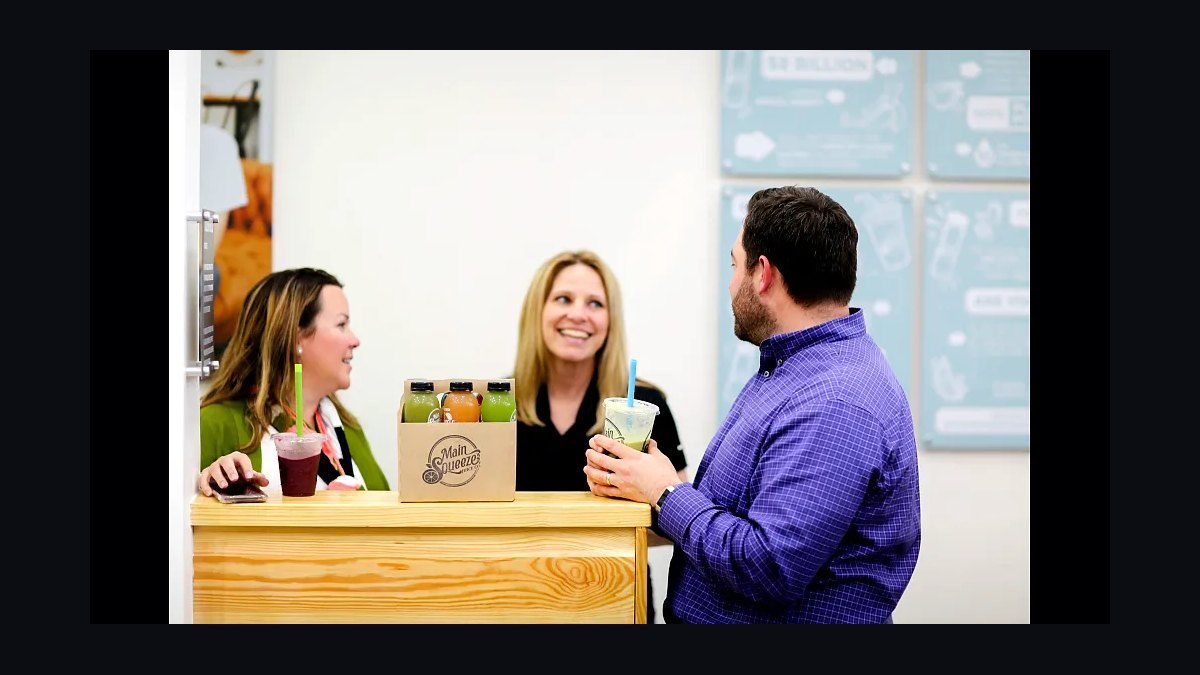
Open a Main Squeeze Juice Co franchise in 2027 only if you have $300,000–$600,000 to invest, at least $120,000 liquid, and a health-conscious, high-traffic site already scouted. The cold-pressed positioning is genuinely differentiated, but this is a young system with real produce-cost volatility. Validate Item 19 and call ten operators first.
The operator who almost signed in Nashville
Picture a 41-year-old former restaurant district manager — call her the prospective franchisee — sitting with a 2026 Main Squeeze Juice Co Franchise Disclosure Document in front of her, a lease letter of intent for 1,450 square feet in a Nashville suburb, and $215,000 in liquid capital from a home equity line plus a 401(k) rollover. The site is in a lifestyle center anchored by a boutique grocery, with a barre studio two doors down and a pediatric dental practice above. Rent is quoted at $38 per square foot triple-net, which pencils to roughly $55,000 a year before CAM and taxes, or about $68,000 all-in. She has an SBA 7(a) pre-qualification for $400,000 at prime plus 2.5%.
On paper this is close to the ideal profile the brand recruits for. She understands food cost, she has managed hourly teams through turnover, and she lives eleven minutes from the site. And yet the decision is not obvious, because three variables sit outside her control and every one of them can swing owner earnings by $40,000 or more in either direction.
The first is buildout. The Item 7 range in the FDD spans roughly $300,000 to $600,000 in total initial investment, and the gap between those two numbers is almost entirely leasehold improvements and equipment. A second-generation restaurant space with an existing grease interceptor, three-compartment sink, floor drains, and adequate electrical service might come in at $180,000 in construction. A raw vanilla shell in a new development — no plumbing stub-outs, no HVAC drop, no grease line — can run $380,000 once you add the mechanical, electrical, and plumbing work the landlord will not fund. Her Nashville space is second-generation but was previously a dry retail tenant, meaning no floor drains and no grease line. That single fact is worth an estimated $90,000 in her build.

The second is the ramp. The brand tends to reach mature revenue in the twelve-to-eighteen-month window, and in a market where cold-pressed juice is still an unfamiliar category, closer to eighteen. She budgeted $60,000 of working capital. If the store opens at $9,000 a week and climbs to $14,000 a week over fourteen months, the cumulative shortfall against fixed costs during that climb is larger than her cushion. She would be funding payroll out of personal savings in month nine — the single most common way a fundamentally sound unit fails.
The third is the category question itself. Cold-pressed juice sells at $8 to $12 a bottle. Three doors down, a national smoothie chain sells a 20-ounce blended drink for $6.50. Those are not the same product and they do not serve the same occasion, but the customer standing on the sidewalk with $10 does not know that yet. Teaching them costs money, and the teaching budget is local marketing spend — 2% to 4% of revenue for the first two to three years, on top of the system marketing fee.
What she does next matters more than the FDD numbers. She should not sign until she has spoken with at least ten current franchisees, including at least three who opened in markets demographically similar to hers and at least two who have exited or are trying to. That last group is the hardest to reach and the most informative, because the franchisor's validation list will not include them. Item 20 of the FDD lists transfers, terminations, and non-renewals along with contact information for former franchisees; that list is the most underused page in the entire document.
How the unit economics actually work
A juice bar is a produce-conversion machine with a retail counter attached. Understanding where the money goes requires separating four cost buckets that behave very differently from one another, because the levers you can pull on each are not the same.
Cost of goods sold runs roughly 30% to 35% of revenue in a cold-pressed model, meaningfully higher than the 26% to 30% a blended-smoothie concept can achieve. The reason is yield. Cold-pressing kale, celery, cucumber, and ginger throws away the fiber; you might convert seven pounds of raw produce into a single 16-ounce bottle depending on the recipe. Frozen fruit in a blender converts nearly one-to-one. This is a structural difference, not an execution problem, and no amount of operator discipline erases it. What discipline does control is the spread — a sloppy operator will land at 38% and a tight one at 30%, and that eight-point gap on $750,000 in revenue is $60,000 of owner earnings.
Labor lands in the 25% to 30% band. The distribution is what hurts. A juice bar's demand is front-loaded: the 7 AM to 10 AM window and the 11 AM to 1 PM window together often carry the majority of daily transactions, with a soft afternoon and a very soft evening. You cannot staff a peak with one person and you cannot pay someone to stand still at 3 PM. The practical answer is cross-training — the same employee preps produce, runs press cycles, cleans equipment, and works the counter — plus deliberately short shifts. Operators who schedule five-hour shifts around the two peaks rather than eight-hour blocks routinely pull two to three points out of labor.
Occupancy should be held under 10% to 12% of revenue. This is the number people negotiate worst. A $68,000 all-in occupancy cost requires roughly $600,000 in annual revenue to stay inside 11%. If the store is going to do $520,000, that same lease is 13% and the unit is structurally impaired from day one, regardless of how good the operator is. Rent is not an operating decision you fix later; it is a ten-year underwriting decision you make once.

Royalty, system marketing, and other operating expenses absorb another 15% to 18% collectively. Royalty near 6% of gross plus a marketing fee around 2% is the disclosed structure. Add credit card processing at roughly 2.5% to 3% of sales, utilities that run high because refrigeration and presses draw hard, insurance, repair and maintenance, and third-party delivery commissions that can reach 20% to 30% of each delivery ticket. Delivery is worth watching carefully: it looks like incremental revenue, but at a 25% commission on a product with a 32% food cost, the contribution margin is thin enough that heavy delivery mix can quietly lower blended profitability while raising the top line.
The diagram makes the asymmetry visible. Two of the three levers are operational and recoverable. The third — rent — is signed before you open and cannot be operated around. This is why site selection consumes more of a good franchisee's attention than any other pre-opening task, and why the franchisor's site approval should be treated as a floor, not a recommendation.
The numbers, line by line, and what moves them
Working from the 2026 FDD framework, the initial investment breaks down roughly as follows. The franchise fee sits around $35,000. Buildout and leasehold improvements span $180,000 to $380,000, which as discussed is the single widest variable and depends almost entirely on the prior use of the space. Equipment, including cold-press units, blenders, refrigeration, and point-of-sale, runs $70,000 to $150,000. Commercial cold-press equipment is genuinely expensive — individual press units in the $8,000 to $15,000 range are normal — and unlike a blender, a press failure during morning peak stops production entirely rather than slowing it.
Signage and decor add $15,000 to $45,000. Initial inventory runs $8,000 to $22,000, which sounds small until you remember that perishable inventory turns constantly and the initial buy is only the first of many. Grand-opening marketing is $12,000 to $35,000, training and travel $8,000 to $25,000, and working capital $30,000 to $80,000 for the first three months.
That working capital line deserves scrutiny. Three months of cushion assumes a store that reaches breakeven quickly. If the realistic ramp to mature volume is twelve to eighteen months, three months of working capital is not a cushion — it is a countdown. A prospective franchisee should independently model a slow ramp: open at 60% of projected mature volume, add three to five points of that gap per month, and calculate cumulative cash burn against fixed costs across eighteen months. In most models that exercise produces a required cushion closer to $100,000 to $130,000 than $60,000. Fund it before you open, because the moment you are behind, the bank conversation gets much harder.
On the revenue side, mature stores gross roughly $500,000 to $1,100,000, with owners clearing $70,000 to $200,000. That is a wide band and the width itself is the signal. A $500,000 store paying an 11% royalty-plus-marketing load and $68,000 in rent is producing owner earnings in the low five figures — effectively buying yourself a job at below-market wages after debt service. A $1,000,000 store with the same fixed cost base produces a genuinely attractive return on the $450,000 invested. The distribution of outcomes is not tight, and Item 19 is where you find out how tight it actually is.
Read Item 19 the way an analyst reads it, not the way a hopeful buyer reads it. Three questions matter. First, how many units are in the reported set and how many total units exist? If the system has 40 to 50 open units and Item 19 reports on 22 of them, ask which 22 and why. Second, is the disclosure a mean or a median, and is there a distribution — quartiles, high, low? A mean with no distribution in a system with wide outcomes is close to uninformative. Third, does the reported set include stores in their first eighteen months, or only mature units? Excluding ramp-stage stores makes the average look better and tells you nothing about the period when you will be most vulnerable.
Then do the arithmetic that the FDD will never do for you. Take the Item 19 median, apply your actual quoted rent, your actual local wage rates, and your actual debt service on the loan you will really take. An SBA 7(a) of $400,000 at prime plus 2.5% over ten years carries roughly $55,000 to $60,000 in annual debt service depending on the rate environment. Subtract it. What remains is what you actually take home, and it is often 40% smaller than the number in the brochure.

Two adjacent benchmarks are worth holding in your head. Fast-casual restaurant franchises broadly target a two-to-four-year simple payback on invested capital; anything past five years should prompt a hard look at whether the capital is better deployed elsewhere. And in beverage-forward concepts, revenue per square foot is usually a more honest comparison than absolute revenue — a 1,200-square-foot unit doing $700,000 is a materially better business than an 1,800-square-foot unit doing $800,000, because the smaller box costs less to build, less to heat, and less to lease.
Trade-offs, and the alternatives worth pricing
The honest case for Main Squeeze rests on four things: a differentiated product in cold-pressed juice and wellness shots rather than a me-too blended smoothie, recurring daily-habit traffic from a health-conscious base, moderate capital relative to a full-service restaurant, and a young system where good territories in the growth path are still available. The honest case against rests on four others: a shorter operating history and thinner benchmark data, direct competition from far larger smoothie chains with better real estate and drive-thrus, structurally high and volatile produce cost, and dependence on site quality to a degree that punishes a mediocre location severely.
Which set dominates depends almost entirely on your market. In an affluent suburb with median household income comfortably into six figures, a dense cluster of fitness studios, and a customer base that already knows what cold-pressed means, the differentiation works and the price point holds. In a market where the health-beverage category is still nascent, you are paying to educate consumers on behalf of the entire category, and the larger chains will happily convert the demand you created at a lower price point.
Before signing, price the realistic alternatives against the same capital.
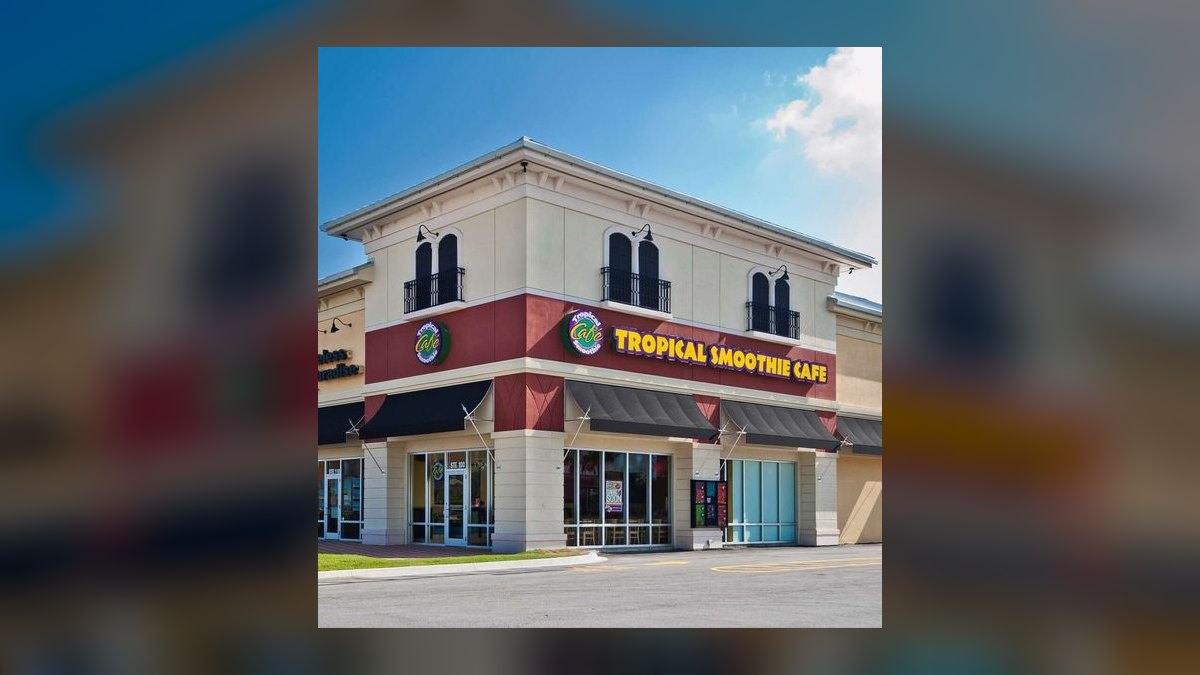
A larger smoothie franchise system. More units, more benchmark data, more brand recognition, often drive-thru-capable real estate, and typically a lower food cost structure. The trade is a saturated map, less territory choice, and no differentiation to defend price. If your primary goal is predictable cash flow with low variance, this is usually the safer allocation.
A competing health-forward juice or bowl concept. Several operate in the same category with similar capital requirements. Comparing their FDDs side by side is genuinely informative: identical Item 7 ranges with very different Item 19 medians tells you something real about which system converts capital into revenue more reliably.
An independent juice bar. You keep the roughly 8% that would go to royalty and system marketing — about $60,000 a year on a $750,000 store — and you own the brand. You also build every system yourself: recipes, supply chain, training, marketing, and the equipment vendor relationships. For an operator with real category experience and a strong local following, the math can favor independence. For a first-time operator, the 8% is buying playbooks that would take three years and several expensive mistakes to develop.
Buying an existing unit rather than opening one. This is the most underrated option. A resale trades at a multiple of seller's discretionary earnings and comes with an operating history, a trained team, and an existing customer base — which eliminates the ramp risk that kills most new units. You will pay more up front than the franchise fee and you inherit whatever the previous operator did to the equipment and the local reputation. But you also see twenty-four months of actual profit and loss statements before you commit, which is infinitely more information than any FDD provides.
Multi-unit development. If the numbers work at one unit, they usually work better at three, because a second and third store share a commissary-style prep operation, a district-level manager, and marketing spend. The catch is that development agreements commit you to a schedule. Signing for three units before proving one is how competent operators end up over-leveraged in markets they have not tested.
The decision path is deliberately conservative at the top. The market question comes first because no operator skill compensates for a market that will not pay $10 for juice. The resale question comes second because eliminating ramp risk is worth more to a first-time operator than almost anything else on the list.
Where these deals go wrong
Underfunding the ramp. Already flagged, and it deserves repeating because it is the number one cause of failure in otherwise viable units. The fix is arithmetic done before you sign: model eighteen months at conservative volume, identify the maximum cumulative cash deficit, and fund 125% of it. If you cannot, the deal is too big for your balance sheet — not a bad deal, just the wrong size.
Signing a lease the volume cannot carry. Negotiate the occupancy cost against a conservative revenue projection, not the optimistic one. Push hard for a tenant improvement allowance; in a second-generation space a landlord contribution of $20 to $40 per square foot is a normal ask and directly reduces the capital you must raise. Get free rent during construction and a ramp period afterward. Cap CAM increases. And read the co-tenancy and exclusivity clauses — if the landlord can lease the adjacent suite to a competing beverage concept, that is a material risk in a category this price-sensitive.
Treating produce cost as fixed. It is not, and it moves. Produce pricing swings seasonally and with weather events, sometimes sharply. Operators who lock supplier agreements with price collars, build seasonal recipe flexibility so a spike in one input can be engineered around, and run weekly rather than monthly inventory counts hold their food cost. Operators who order by habit and count monthly discover a five-point margin problem ninety days after it started. Weekly counts on a perishable inventory are not optional bookkeeping — they are the primary control on the largest cost line.

Ignoring spoilage as a distinct metric. Cold-pressed juice has a short shelf life, on the order of days rather than weeks. That means production planning is a daily forecasting exercise. Track spoilage as its own line item, separate from food cost, and target it aggressively. Two points of revenue lost to spoilage on a $750,000 store is $15,000 straight off owner earnings, and it is entirely a planning failure rather than a market condition.
Under-planning equipment redundancy. A press failure at 7:30 AM is not an inconvenience; it is a lost day of production plus spoilage of the prepped inputs. Establish a service relationship with a local repair provider before you need one, keep critical wear parts on hand, and if the volume justifies it, run enough press capacity that a single unit failure degrades throughput rather than stopping it.
Skipping the former-franchisee calls. Item 20 gives you the list. Call it. Ask three questions: what did the store actually gross in year one versus year three, what did the franchisor do when you were struggling, and what would you need to know that the FDD does not say. Ten conversations here are worth more than any amount of market research.
Confusing the wellness trend with a specific brand's execution. The category tailwind is real, and it will lift well-run units in the right markets. It will not rescue a poorly sited store, a thin balance sheet, or an absentee owner. A trend is a condition, not a business plan.
Buying a job and calling it an investment. Be explicit about which one you are doing. If the store produces $85,000 in owner earnings and requires fifty-five hours a week of your time, you have bought a job that pays reasonably and builds an asset. That is a legitimate choice. It is not the same as a passive return on $450,000, and conflating the two leads to disappointment eighteen months in.
Related questions
How long until a new Main Squeeze unit reaches mature revenue?
Typically twelve to eighteen months, and longer in markets where cold-pressed juice is an unfamiliar category. Budget working capital against the eighteen-month case, not the twelve-month one, and treat any faster ramp as upside rather than the plan.
Is buying an existing unit better than opening a new one?

Often yes for a first-time operator. A resale eliminates ramp risk and gives you twenty-four months of actual profit and loss statements before you commit. You pay more up front and inherit the prior owner's equipment condition and local reputation — verify both.
What liquid capital do I actually need?
The system typically looks for around $100,000 to $150,000 liquid against a $300,000 net worth. Realistically, budget $150,000 to $200,000 liquid so the ramp period does not force you to fund payroll from personal savings.
How does a juice bar's cost structure differ from a smoothie shop?
Cold-pressing discards fiber, so yield is far worse — food cost typically runs 30% to 35% versus 26% to 30% for blended concepts. The offset is a higher price point and a differentiated product that does not compete purely on price.
Should I sign a multi-unit development agreement upfront?
Not before one unit is open and performing. Development agreements commit you to a build schedule regardless of what the first store teaches you. Prove the model in your market, then negotiate development rights from a position of demonstrated performance.
FAQ
What is the total investment range for a Main Squeeze Juice Co franchise?
The 2026 FDD lists total initial investment of roughly $300,000 to $600,000, including a franchise fee near $35,000. The spread is driven mainly by buildout — a second-generation restaurant space with existing plumbing and grease infrastructure can land near the bottom of the range, while a raw shell requiring full mechanical, electrical, and plumbing work pushes toward the top. Get contractor bids on your specific space before you rely on any range.
How much can a franchise owner actually earn?
Mature units gross roughly $500,000 to $1,100,000, with owners clearing $70,000 to $200,000. Those are not guarantees and the band is wide for a reason — the difference between the low and high end is mostly site quality, rent as a percentage of revenue, and produce-cost discipline. Model your own unit using Item 19 medians against your real lease, real wages, and real debt service.
What are the ongoing fees?
Royalty runs about 6% of gross sales with a marketing fee on top, commonly around 2%. Budget separately for local marketing at 2% to 4% of revenue during the first two to three years, credit card processing near 3%, and delivery platform commissions if you run third-party delivery. The disclosed royalty is the floor of your ongoing cost, not the total.
How established is the system?
The brand was founded in 2016 in New Orleans and remains a young system relative to national smoothie chains, with unit counts in the dozens rather than the hundreds and a footprint concentrated in the Southeast and Texas. That means less benchmark data and thinner regional support, but also better territory availability. Verify current unit counts, openings, closures, and transfers in Items 1, 20, and 21 of the current FDD.
Who are the real competitors?
Smoothie King, Tropical Smoothie Cafe, and Jamba are the large established players, and independents matter locally. Main Squeeze differentiates on cold-pressed juice, wellness shots, and clean-ingredient positioning rather than blended meal-replacement drinks. That differentiation defends a higher price point in markets that already understand the category and costs you marketing dollars in markets that do not.
What is the single biggest risk?
Signing a lease your realistic volume cannot carry. Occupancy above 12% of revenue is a structural drag no amount of operating skill fixes, and unlike food cost or labor, it is locked for the full lease term. Negotiate rent, tenant improvement allowance, and free-rent periods against a conservative revenue case before anything else.
Sources
- https://www.ftc.gov/business-guidance/resources/consumers-guide-buying-franchise
- https://www.sba.gov/funding-programs/loans/7a-loans
- https://www.franchise.org/
- https://www.ibisworld.com/united-states/market-research-reports/juice-smoothie-bars-industry/
- https://www.ers.usda.gov/data-products/food-price-outlook/
- https://www.bls.gov/oes/current/oes350000.htm
- https://www.nrn.com/
- https://www.qsrmagazine.com/
- https://www.entrepreneur.com/franchises
- https://www.franchisebusinessreview.com/
Related on PULSE
This page will be disappearing soon. Save it to your device for $1 — or read it free while it is here.
@Kory-White- · if Venmo asks, the last 4 of my number are 2012
This page is gone.
This one is off the shelf now. $1 keeps it on your phone for good — the whole page, pictures and diagrams included.
 franchiseShould I open or buy a Jimmy John's franchise in 2027?
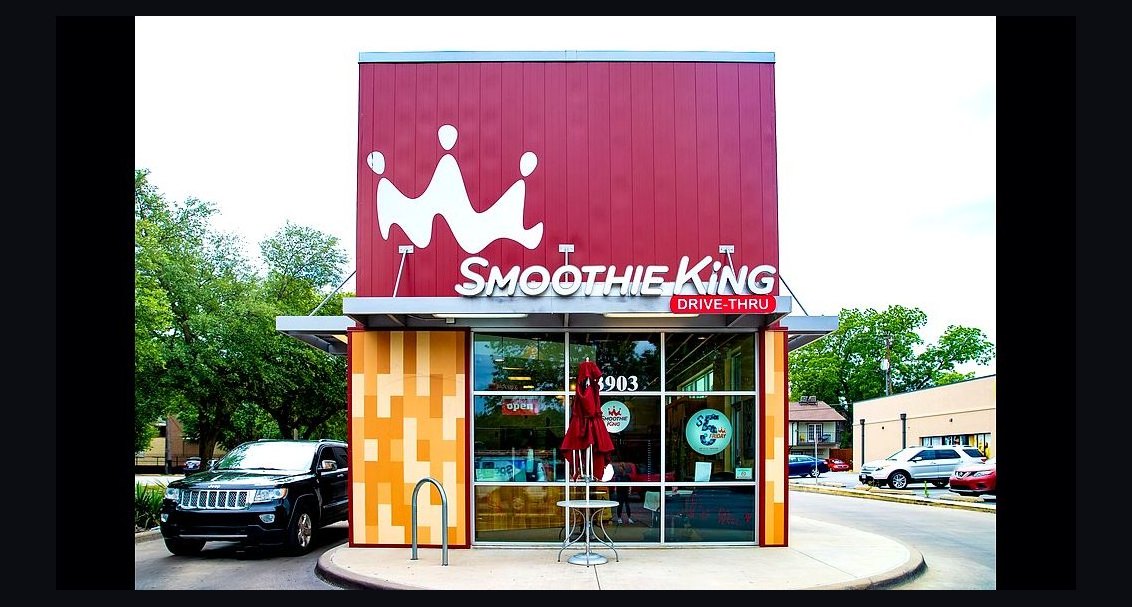 franchiseShould I open or buy a Smoothie King franchise in 2027?
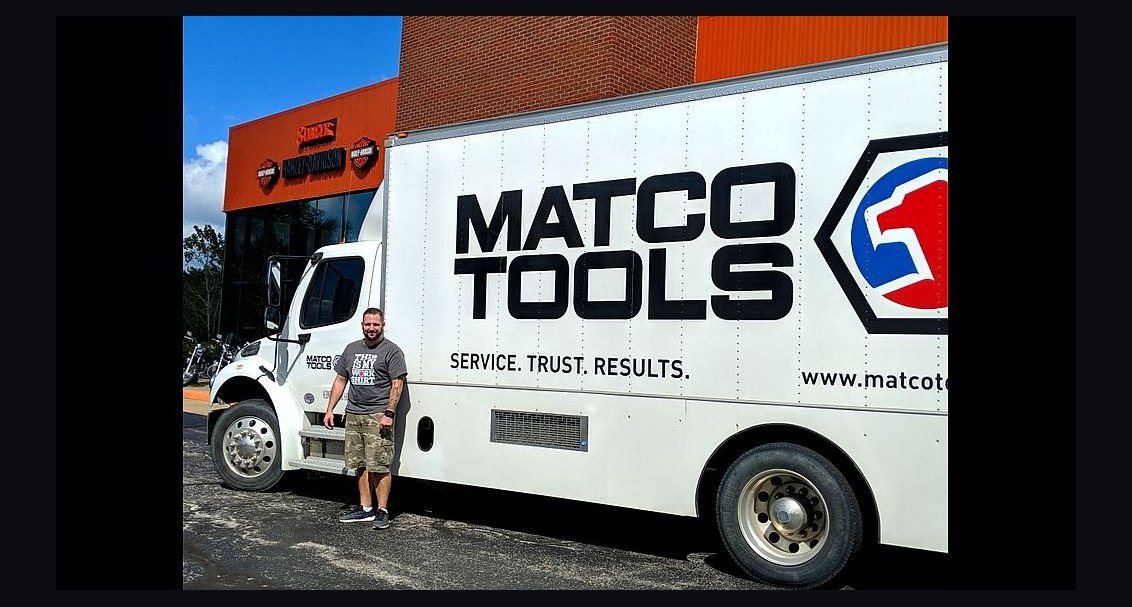 franchiseShould I open or buy a Matco Tools franchise in 2027?
 franchiseShould I open or buy a Stanley Steemer franchise in 2027?
 franchiseShould I open or buy a Cinnabon franchise in 2027?
 franchiseShould I open or buy a Domino's franchise in 2027?
 franchiseShould I open or buy a Dairy Queen franchise in 2027?
 franchiseShould I open or buy a Subway franchise in 2027?
 franchiseShould I open or buy a Cold Stone Creamery franchise in 2027?
 franchiseShould I open or buy a Great Clips franchise in 2027?