


Should I open or buy a Doc Popcorn franchise in 2027?
Quality
Certified
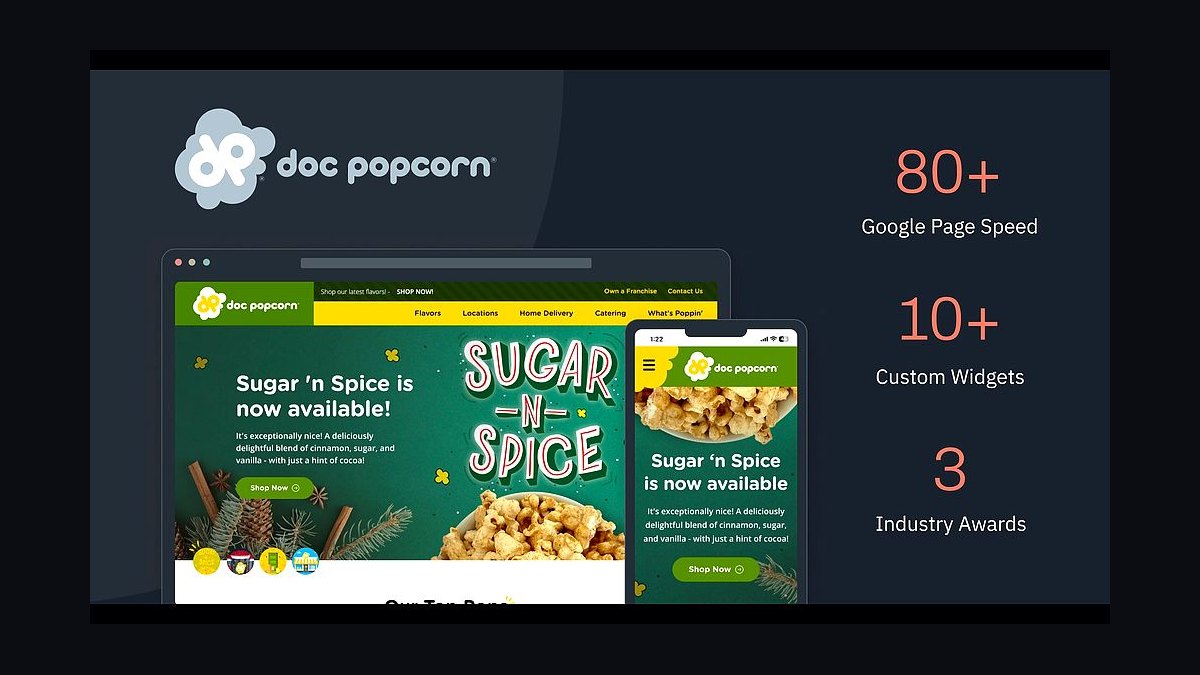
Buy or open a Doc Popcorn franchise only if you can secure a genuinely high-traffic venue — mall, airport, arena, or entertainment complex — and ideally co-brand with Dippin' Dots. Total investment runs roughly $80,000 to $250,000. Foot traffic decides everything; popcorn is a pure impulse purchase with no destination pull.
The kiosk that looked identical to the one making money
Two operators sign Doc Popcorn agreements in the same quarter. Both buy the kiosk format. Both spend somewhere in the neighborhood of $110,000 all-in — franchise fee, popper package, kiosk build, signage, opening inventory, a modest working-capital cushion. On paper their Item 7 line items are close to interchangeable. Eighteen months later one is grossing enough to pay the owner a real salary and is scouting a second venue; the other is negotiating an early lease exit.
The difference is not operations. Neither one is a better popper of corn. The difference is that operator A landed a kiosk in the main concourse of a regional mall, twenty feet from the entrance to a sixteen-screen theater, on the path families walk between the food court and the movies. Operator B landed a kiosk in a mall wing anchored by a department store that had already announced a closure, on a corridor that gets real traffic on Saturday afternoons and something close to nothing on Tuesday mornings.
That is the entire business in one comparison, and it is why this decision has to be made backwards. Most prospective franchisees evaluate the brand first — the fee, the royalty, the training, the support materials — and then go looking for a location once they have signed. With a snack kiosk that sequence is inverted risk. You should identify the specific venue, get a hard read on its traffic, understand what the landlord will charge, and only then decide whether the franchise math works at that spot. A Doc Popcorn unit does not create demand. It intercepts demand that is already walking past. No amount of local marketing meaningfully changes how many people traverse a mall corridor on a Wednesday.

This is a different failure mode than the one that kills most restaurant franchises. A struggling quick-service restaurant usually has a fixable problem: throughput, labor scheduling, food cost, a bad manager, a menu that does not match the trade area. A struggling popcorn kiosk in a dead corridor has an unfixable problem. You cannot manage your way out of insufficient bodies. That asymmetry — very low downside capital, but a binary location dependency — is the honest frame for the whole decision.
The upside of that same asymmetry is that the entry cost is genuinely low for a franchised retail concept. You are not building a 2,400-square-foot restaurant with a hood system, grease trap, and $400,000 of leasehold improvements. A kiosk is a fabricated cart or counter, a set of poppers, a POS, a display case, and inventory that fits in a closet. If it does not work, the capital at risk is on the order of a nice car rather than a house. For a first-time franchisee testing whether they actually like owning a small retail operation, that is a rational amount to put down on the question.
How the unit economics actually work at a popcorn kiosk
Start with the transaction, because at this scale everything else is derived from it. Average ticket at a gourmet popcorn kiosk sits somewhere in the $6 to $10 band depending on bag size mix, whether you sell tins and gift packs, and whether you are attached to a venue where people buy for a group rather than for themselves. A movie-adjacent kiosk sells more multi-bag orders than a strip-center location. A tourist attraction sells more large sizes and more branded tins.

Now multiply. At 500 transactions a week and an $8 average ticket you are at roughly $4,000 a week, or about $208,000 annually. At 1,000 weekly transactions you approach $416,000. At 300 weekly transactions you are near $125,000 — and that is where the model breaks, because your fixed costs do not scale down with your traffic. Rent is rent. The royalty percentage is the same. Your minimum staffing to keep the kiosk open during mall hours is the same whether four people or forty walk up in a given hour.
Cost structure on a healthy unit, expressed as a share of gross sales: product cost in the high twenties to low thirties, labor in the mid-twenties to mid-thirties, occupancy anywhere from the low teens to high teens depending on venue prestige, royalty around six to seven percent, plus a marketing fee typically in the one to two percent range, plus the ordinary drip of insurance, POS fees, card processing, supplies, and repairs. Stack those and you are frequently looking at owner earnings in the range of ten to twenty percent of gross on a well-run unit — which is why the same brand can produce a $40,000 owner outcome and a $160,000 owner outcome depending almost entirely on which end of the revenue range the venue supports.
The margin on the product itself is excellent, and that is the seductive part. Kernels, oil, and seasoning are cheap; a bag of finished caramel corn carries a gross margin most food businesses would envy. But high product margin is not the same as high profitability. The gap between them is occupancy and labor, and both of those are set by decisions you make before you ever pop a kernel.
Read that chain in one direction only. Traffic drives tickets, tickets drive sales, and every cost below that line is largely fixed by contracts you signed at the start. There is no lever in the middle of the chain that rescues a bad first node. This is why experienced kiosk operators walk away from lease negotiations more often than first-timers expect — a landlord asking for percentage rent on top of a high base in a venue with soft traffic is offering you a business that cannot mathematically work, and the only correct response is no.
What you actually spend, and where the numbers hide

The published Item 7 range of roughly $80,000 to $250,000 is real, but it is a range across formats, and the formats are genuinely different businesses. Understand which one you are buying.
A cart or small kiosk sits at the low end. Franchise fee in the twenty-to-thirty-thousand band, a popper and equipment package, a fabricated kiosk structure, signage, POS, opening inventory, initial marketing, training and travel, and working capital. That is where the $80,000-to-$130,000 outcomes live. An in-line store — actual leased square footage with a storefront, typically a few hundred square feet up to around 800 — pushes you toward the top of the range because you are now paying for buildout, permits, HVAC modifications in some spaces, more equipment, more signage, and a larger working-capital reserve because your monthly nut is bigger. A co-branded Doc Popcorn and Dippin' Dots unit lands near the upper end too, since you are adding freezer capacity, a second product line's equipment, and additional display.
Three costs consistently surprise first-time franchisees, and none of them are hidden — they are just easy to under-budget.
Lease legal and deposits. Mall and venue leases are not simple documents. Budget for a franchise-experienced attorney to read the lease and the FDD, plus security deposits that landlords in desirable venues will ask for. Several thousand dollars, sometimes low five figures, before you have sold a single bag.
Working capital that survives the ramp. A kiosk does not open at mature volume. Give yourself enough cushion to fund four to six months of shortfall without touching a credit card. Undercapitalization is the second most common killer after bad location, and it is entirely self-inflicted.
Percentage rent. Many venue leases include a clause where you pay base rent plus a percentage of gross sales above a breakpoint. In a strong location that is tolerable — you are paying more because you are earning more. In a weak location combined with a high base, it is a trap that caps your upside precisely when you finally start performing.
On the revenue side, mature units are commonly described in the $150,000 to $600,000 gross range, which is enormous variance and should be read as exactly what it is: a statement that the brand does not determine your outcome. Do not model the midpoint. Model the specific venue. If you cannot get a defensible traffic estimate for the exact spot you are considering, you do not have enough information to sign.
The way to get that estimate is unglamorous and effective. Sit at the location. Count people. Do it on a weekday morning, a weekday evening, a Saturday afternoon, and a Sunday. Count the people who pass within impulse-buy distance, not the people in the building. Apply a capture rate — a small single-digit percentage of passersby is a realistic conversion assumption for an impulse snack, and if your model only works at a double-digit capture rate, your model is wrong. Then call the franchisor and ask for Item 19 detail broken out by format and venue type, and call existing franchisees in comparable venues and ask them the only question that matters: what did you gross last year and what did you personally take home.
Running the thing day to day, and what that actually feels like
Operationally this is one of the simpler food concepts you can buy. There is no fryer, no raw protein, no complex prep, no line cooks. You pop batches through the day, season, bag, display, sell. The skill ceiling is low enough that a new hire is productive inside a shift and competent inside a week. Cleanup at close runs well under an hour. Health department scope is narrow compared to a full kitchen.

What that simplicity does not eliminate is the discipline problem. Popcorn goes stale fast — hours, not days — and the temptation to keep yesterday's product in the display bin is the single most reliable way to lose repeat customers in a venue where reputation travels by word of mouth among mall employees and regulars. You will throw product away. Budget waste in the mid-single-digit percentage range in normal periods and higher during slow stretches, and treat rotation discipline as non-negotiable. Consistency in oil temperature and seasoning ratio is the other quiet variable; the caramel batch that comes out slightly burnt is the one the customer remembers.
Staffing at a kiosk is one or two people per shift; an in-line store during peak hours might need three or four. Labor as a percentage of sales is manageable at the low end of the range and punishing at the high end, and it moves with your local wage floor. In a high-wage market, the same unit volume that produces a comfortable owner income in a lower-wage state produces a marginal one. Run your labor model against your actual state and municipal wage reality, not against a national average.
There is also a lifestyle question that prospectuses never address honestly. Mall hours are mall hours. You are open when the venue is open, including nights, weekends, and the holiday stretch that produces a disproportionate share of your annual revenue. Semi-absentee operation is genuinely possible here — the work is simple enough to delegate — but semi-absentee means you employ a reliable shift lead and you pay for that reliability out of the same margin you were hoping to keep. The owner-operators who clear the top of the earnings range are usually the ones standing at the counter for a meaningful number of hours a week.
Seasonality deserves its own line. Popcorn sells year-round, which is a real advantage over pure frozen-treat concepts, but venue traffic is not flat. Mall-based units skew heavily toward the fourth quarter. Attraction and amusement-park units skew to summer. Campus units die in June and July entirely. Know the shape of your venue's year before you sign a twelve-month lease against it, and hold enough cash through the trough to reach the peak.
Co-branding, and the adjacent formats worth comparing
The Dippin' Dots relationship is the most interesting structural feature of this franchise and the one that most changes the arithmetic. Operating both concepts from one footprint gives you two impulse categories with partially offsetting seasonality — a savory snack that sells in cold months and a frozen treat that sells in warm ones — sharing one lease, one POS, one staff schedule, and one set of counter workflows. The incremental capital is real: additional freezer capacity, additional display, a higher total build. But you are buying a second revenue stream against the same fixed occupancy cost, which is precisely the lever that a single-category kiosk lacks.
Think of it as diversifying the one risk you cannot otherwise hedge. Your traffic risk stays exactly where it was — a dead corridor kills both concepts equally. Your category risk, though, drops meaningfully. If gourmet popcorn cools off as a trend, or if a competing snack kiosk opens forty feet away, the frozen side keeps the lease covered.
Now widen the frame, because Doc Popcorn is one option in a category of low-capital, venue-dependent impulse retail, and the comparison set is where the real decision lives.
Independent popcorn shop. No franchise fee, no royalty, no marketing fee, total control over product and pricing. You also get no brand recognition, no supply chain, no proven kiosk design, no site-selection help, and no operations manual. In a mall, the landlord's leasing office may prefer a recognized brand. The royalty you save is real money — six to seven percent of gross compounds — but you are buying yourself a harder first two years.

Other confection and treat franchises. Chocolate, cookie, ice cream, and pretzel concepts occupy adjacent economic territory: similar footprints, similar impulse dynamics, similar venue dependence, generally higher build costs and higher average tickets. The relevant question is which category the specific venue is underserved in. A mall with three ice cream options and no savory snack is a different opportunity than the reverse.
Non-mall venue plays. Airports, arenas, and amusement parks have their own economics — often higher tickets, often captive audiences, but concession agreements rather than ordinary retail leases, higher percentage rents, and a procurement process that can take a year. These are usually second or third units, not a first one.
Mobile and event formats. Carts at fairs, festivals, and corporate events trade lease risk for logistics risk and revenue volatility. Some operators run a fixed unit as a base and a cart for the event calendar, which uses the same equipment and staff across more revenue days.
The mistakes that actually sink these units
Signing the franchise agreement before securing the venue. This is the cardinal error and it is common because the sales process encourages it. Once you have signed, you are motivated to accept a mediocre location rather than sit on a dead agreement. Reverse the order or at minimum negotiate a development window long enough that you can genuinely walk away from a bad site.
Trusting the landlord's traffic number. Leasing offices quote annual visitor counts for the whole property. That number is not your number. Your number is people passing your specific spot during hours you are open, and it can be an order of magnitude smaller than the headline. Count it yourself.
Ignoring the anchor risk. A mall's traffic is downstream of its anchors and its entertainment tenants. If a major anchor is dark, or a theater lease is expiring, or the property has been trading hands among owners who are not investing in it, you are underwriting a declining asset with a multi-year lease. Ask what the property's occupancy rate is and which leases are up in the next twenty-four months.
Under-modeling percentage rent. Run your pro forma with the percentage rent clause active at your target revenue, not just at your break-even revenue. Some operators discover their success is largely captured by the landlord.
Assuming semi-absentee from day one. Delegating a business you have never run is how quality drifts, waste climbs, and the unit slowly declines while the owner reads flat P&Ls and cannot explain them. Work the counter for the first several months. Learn what normal looks like before you hand it off.
Skipping the operator calls. Franchisees will tell you things no disclosure document contains — how responsive support actually is, whether the supply chain holds during peak, what their landlord relationship is like, what they wish they had asked. Call at least eight, including at least two who left the system. The exits are more informative than the successes.
Treating the FDD as a formality. Item 7 gives you investment ranges, Item 19 gives you whatever financial performance representation the franchisor chooses to make, and Item 20 gives you unit counts and — critically — closures and transfers over the past three years. A system with heavy closures relative to openings is telling you something. Have a franchise attorney read all of it.
Under-capitalizing the ramp. Nearly every operator who fails on adequate traffic failed because they ran out of cash before the unit matured. Hold reserves you never intend to touch.
Related questions
How long before a Doc Popcorn kiosk breaks even?

Kiosks typically open three to six months after signing, and cash-flow break-even commonly lands somewhere in the first year in a strong venue. Weak venues may never reach it. Model your specific location's traffic rather than a system average.
Is a co-branded Dippin' Dots unit worth the extra investment?
Usually yes if the venue supports both. You add freezer and display cost against the same lease and staff, gaining a second impulse category with offsetting seasonality. In a marginal venue it just increases capital at risk.
Can I run this semi-absentee?
Eventually. The work is simple enough to delegate to a competent shift lead. But run it yourself first so you know what normal looks like, and price the manager's wage into your model before assuming an absentee income.
What kills a popcorn kiosk fastest?
Insufficient foot traffic, followed closely by under-capitalization during the ramp. Product quality and staleness discipline are third. Nothing on that list is fixed by better marketing.
Should I buy an existing unit instead of opening new?
An existing unit with real books removes your biggest unknown — actual traffic and actual sales at that exact spot. Pay for the certainty if the numbers verify. Just confirm why the seller is exiting.
FAQ
What is the total investment range for a Doc Popcorn franchise?
Roughly $80,000 to $250,000 depending on format. A cart or kiosk sits near the bottom; an in-line store or a co-branded Dippin' Dots location sits near the top. The range covers franchise fee, equipment, buildout, signage, opening inventory, training, and working capital. Confirm current figures in the FDD's Item 7 rather than any secondhand summary.

What are the ongoing fees?
Expect a royalty in the range of six to seven percent of gross sales plus a marketing or brand fund contribution typically in the one to two percent range. Item 6 of the current FDD is the authoritative source, and percentages can change between filings, so verify rather than assume.
How much can an owner realistically earn?
Mature units are commonly described in a $150,000 to $600,000 gross range with owner earnings between roughly $40,000 and $160,000. That spread is not about operator skill — it is mostly venue traffic. A high-traffic co-branded unit and a slow-corridor kiosk are the same brand running very different businesses.
Do I need food service experience?
No. The operation is deliberately simple — no fryers, no raw protein, no complex prep, and training runs about a week. What you actually need is retail discipline, comfort negotiating a venue lease, and the patience to scout locations for months before committing.
How important is the specific location, really?
It is the decision. Popcorn is a pure impulse purchase with no destination pull — nobody drives across town for it. Your revenue is a function of how many people walk past your counter. If you cannot verify strong, consistent traffic at the exact spot, do not sign, regardless of how good the brand terms look.
What should I ask existing franchisees?
Gross sales and personal take-home for the last full year, weekly transaction counts, their base rent and whether percentage rent applies, how long site selection took, what waste runs, how support responded when something broke, and whether they would sign again. Also find franchisees who exited and ask why.
Sources
- https://www.ftc.gov/business-guidance/resources/franchise-rule-compliance-guide
- https://www.franchise.org/
- https://www.entrepreneur.com/franchises
- https://www.dippindots.com/
- https://www.jjsnack.com/
- https://www.sba.gov/business-guide/plan-your-business/calculate-your-startup-costs
- https://www.icsc.com/
- https://www.bls.gov/oes/current/oes353023.htm
Related on PULSE
This page will be disappearing soon. Save it to your device for $1 — or read it free while it is here.
@Kory-White- · if Venmo asks, the last 4 of my number are 2012
This page is gone.
This one is off the shelf now. $1 keeps it on your phone for good — the whole page, pictures and diagrams included.
 franchiseShould I open or buy a Massage Envy franchise in 2027?
 franchiseShould I open or buy a Meineke franchise in 2027?
 franchiseShould I open or buy a Sonic Drive-In franchise in 2027?
 franchiseShould I open or buy a Kumon franchise in 2027?
 franchiseShould I open or buy a Subway franchise in 2027?
 franchiseShould I open or buy a Wendy's franchise in 2027?
 franchiseShould I open or buy a Cold Stone Creamery franchise in 2027?
 franchiseShould I open or buy a McAlister's Deli franchise in 2027?
 franchiseShould I open or buy a Servpro franchise in 2027?
 franchiseShould I open or buy a Jiffy Lube franchise in 2027?