


Should I open or buy a Parlor Doughnuts franchise in 2027?
Quality
Certified
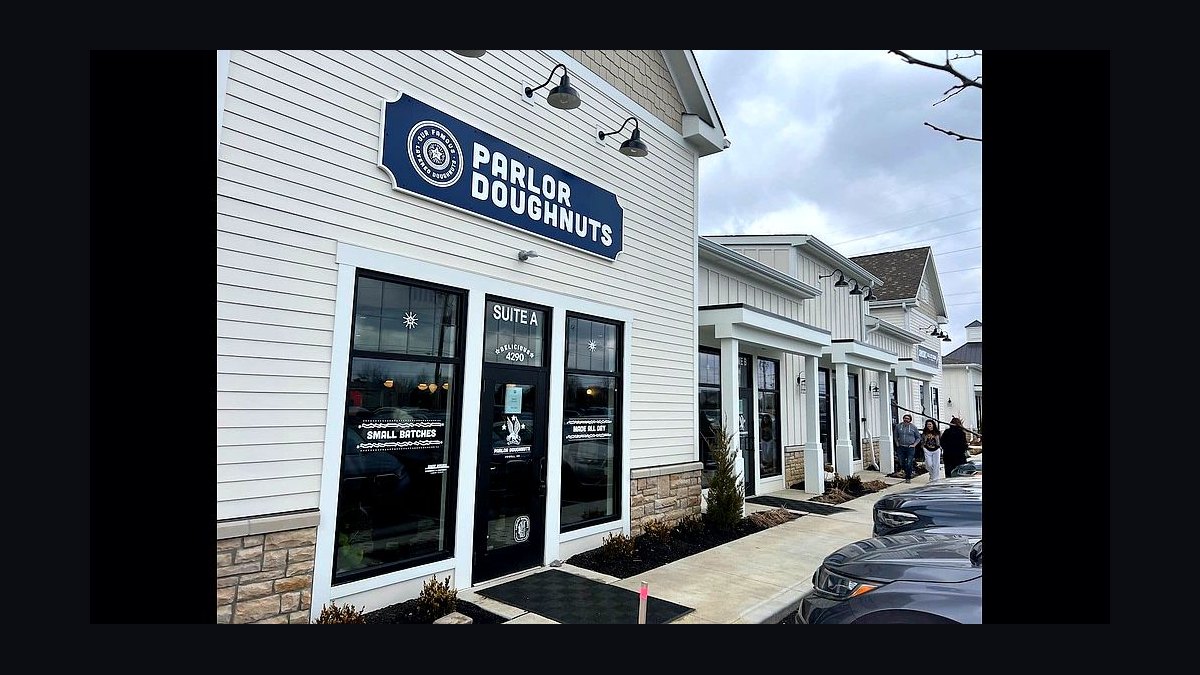
Opening a new Parlor Doughnuts is usually the stronger 2027 move over buying an existing unit, because so few resales exist yet that pricing is unproven — but either path only makes sense for an operator with $400,000–$900,000 in capital who can execute a labor-intensive layered-doughnut-and-coffee program, secure a high-traffic site, and tolerate the risks of a franchise system still building out its support infrastructure.
Buy an existing Parlor Doughnuts vs. open a new one
Anyone evaluating this franchise in 2027 is really choosing between two very different transactions, and the fact that Parlor Doughnuts only launched franchising in 2021 changes the math on both sides more than it would for an older brand like Dunkin or Krispy Kreme.
Opening a new unit means signing the franchise agreement, paying the $35,000–$50,000 franchise fee, and building a cafe from a bare shell or a previous restaurant space. You control the site selection (subject to the franchisor's approval), you build to the newest prototype specifications, and you start with fresh equipment under full warranty — proofing cabinets, doughnut fryers, and an espresso program that hasn't absorbed years of wear. The downside is you're also absorbing 100% of the ramp-up curve: no existing customer base, no trained staff, no historical sales data to validate your pro forma against, and a 6–12 month period where franchisees candidly report that operations "don't feel smooth." You're also exposed to the full Item 7 range — $400,000 to $900,000 — with no negotiating leverage on a discounted purchase price, since you're paying retail for a new build.

Buying an existing Parlor Doughnuts is the theoretical alternative, but as of 2027 it's a thin market. With roughly 30–45 units open system-wide as of the most recent count, only a small handful have changed hands, and most of those resales happened within the first three years of operation — frequently because the original owner underestimated the operational intensity of scratch-baking layered doughnuts alongside running a full coffee bar, not because the concept failed. That's actually useful signal: a resale in this system is disproportionately likely to be a distressed or burned-out seller rather than someone cashing out a mature, proven asset. If you can find a unit with two or more years of clean, positive cash flow, you inherit a trained crew, an established local following, and a real P&L to underwrite your loan against — which meaningfully de-risks the "can I actually run this" question. But you'll also inherit whatever site, lease terms, and equipment condition the previous owner chose, and you'll pay a transfer fee (typically around 10% of the sale price, or $10,000–$25,000) plus whatever premium the seller and franchisor negotiate on top of tangible asset value.
The practical reality for most prospective operators in 2027 is that buying isn't really available as a first choice — the resale inventory is too sparse, concentrated in a few regional pockets (primarily the Midwest and Southeast, where the brand has its deepest footprint), and inconsistent in quality. Opening new is the default path simply because it's the only one reliably on the table, which is why the rest of this analysis weights toward new-unit development while still flagging what to look for if a resale does surface in your target market.
How to decide between opening and buying

The decision isn't really "which is cheaper" — both land in the same $400K–$900K band once you account for a resale premium versus a new build's Item 7 costs. It's a decision about which risk you'd rather carry: execution risk (new unit, no track record) or diligence risk (existing unit, unproven resale market and a seller who may be motivated by burnout rather than opportunity).
Run this test with real numbers before signing anything. Pull the seller's last two years of P&Ls (not just their verbal claim of revenue), and compare owner earnings against the $90,000–$260,000 range mature cafes report. If a resale candidate is clearing meaningfully less than that band on comparable volume, that's a red flag on either the site or the operations — not necessarily a reason to walk, but a reason to discount your offer accordingly. Conversely, if you're leaning toward opening new, the equivalent test is whether you can identify a site in a dessert-and-coffee-conscious trade area with the traffic counts and demographics comparable to the top-performing units you hear about when you call existing franchisees (and you should call at least 8–10 of them, sourced from the FDD's required franchisee list, regardless of which path you choose).

The younger-system factor cuts against both paths similarly: because Parlor Doughnuts has been franchising only since 2021, neither an existing unit nor a new build benefits from decades of refined operations manuals, deep bench strength in field support, or a large pool of qualified multi-unit buyers waiting to acquire units at exit. That's a structural characteristic of the brand right now, not something that changes based on which transaction type you choose — it just means your own operational discipline has to compensate for what an older, more mature franchisor would otherwise provide.
The numbers behind each path
Whichever path you choose, the same underlying unit economics govern whether the investment pencils out, so it's worth walking through the full cost stack once in detail.
The 2026 FDD lists a franchise fee of $35,000–$50,000, and total Item 7 investment — everything needed to get the doors open — of roughly $400,000 to $900,000. That range is wide because site conditions vary enormously by region. Buildout and leasehold improvements alone run $200,000–$480,000, with a typical Parlor Doughnuts footprint of 1,500–2,800 square feet depending on whether the location includes drive-thru capability. Equipment — the doughnut fryers, proofing cabinets, espresso machines, and point-of-sale system — adds $100,000–$240,000. Signage and interior decor run $20,000–$60,000, initial inventory (ingredients and packaging to open with) is $10,000–$28,000, and initial marketing for the grand-opening push is another $15,000–$40,000. Training and travel for the operator and key staff typically costs $10,000–$30,000, and franchisees should hold back $30,000–$90,000 in working capital to cover the first three months, when a new cafe is unlikely to be cash-flow positive.

One line item that surprises first-time franchisees, especially those buying an existing building rather than one previously configured as a bakery or restaurant, is ventilation and grease-trap infrastructure. Doughnut frying requires commercial-grade exhaust systems that meet local health department codes, and retrofitting a space that lacks this infrastructure can add $30,000–$60,000 on top of the standard buildout figure. Franchisees consistently report that finding a former restaurant space with existing exhaust and grease-trap systems already in place is one of the single biggest cost and timeline savers available — it's worth prioritizing in your site search even over marginally better foot traffic.
Regional variation matters too. Suburban Midwest markets — Indiana, Ohio, Kentucky, where the brand has its deepest roots — tend to land total buildout costs between $350,000 and $500,000. Coastal or dense urban markets, including parts of Florida, Texas, and Colorado, push toward $700,000–$900,000 because of higher lease rates, slower permitting, and elevated construction labor costs. If you're opening in a market outside the franchisor's established footprint, budget extra for travel during training and for the field support visits you'll need more of in your first year.

On the revenue side, mature cafes gross $600,000–$1,400,000 annually, with owners clearing $90,000–$260,000 after the roughly 6% royalty, a marketing fee near 2%, food costs typically running around 28% of gross, labor near 30%, and occupancy around 10%. That leaves meaningful margin, but it depends entirely on hitting solid volume — a unit stuck at the low end of that gross-sales range, especially in a market with elevated buildout costs, can find owner earnings compressed well below what the pro forma implies. This is exactly why validating Item 19 financial performance data and calling real franchisees about their actual AUV (average unit volume) matters more here than in a mature system where public benchmarking data is abundant.
On the resale side, because so few Parlor Doughnuts units have changed hands, there's no standardized valuation multiple specific to the brand yet. Looking at comparable specialty-bakery franchise resales — brands like Duck Donuts or independently licensed Voodoo Doughnut locations — suggests a well-performing unit with two-plus years of positive cash flow might command 2.5–3.5 times annual net profit. A unit clearing $150,000 in owner earnings could therefore sell in the $375,000–$525,000 range, though this is an estimate drawn from adjacent categories rather than Parlor-specific transaction history, and any resale offer should be built from the specific unit's actual books, not this rule of thumb alone.
Implementation details and sequencing
Whether you're opening new or closing on a resale, the sequencing from decision to functioning cafe looks similar, and skipping steps is where most franchisees run into trouble.
In the first 20 days, read the full FDD line by line, with particular attention to Item 19 (financial performance representations), Item 20 (unit counts, openings, and closures — a key signal in a young system), and Item 7 (the full investment range). Compare what the franchisor discloses against what you hear directly from operators in the next phase.

Days 21 through 40 should be spent calling current and former franchisees — request the full contact list the FDD is required to include, and don't settle for the two or three names the franchisor's development team suggests. Ask specifically about real-world gross margins versus the pro forma, staff turnover rates (doughnut production is labor-intensive and skill-dependent, so turnover directly threatens product consistency), how often the franchisor rolls out new menu items or marketing support, and — critically — whether their training period adequately prepared them for the complexity of running both a bakery and a full coffee program simultaneously. Multiple franchisees have reported that initial training felt rushed relative to the skill required, and the franchisor has responded by adding regional support staff and updating operations manuals as recently as 2025, so ask specifically whether recent openings have felt better supported than openings from two or three years ago.
Days 41 through 60 are for site validation if you're opening new, or financial and lease due diligence if you're buying. For a new site, this means traffic counts, demographic fit for a premium dessert-and-coffee concept, proximity to grocery anchors or coffee-heavy retail corridors, and — don't skip this — confirming whether the space has existing restaurant-grade ventilation, since that alone can shift your buildout budget by tens of thousands of dollars. For a resale, this means verifying the lease is transferable, confirming the franchisor's right of first refusal terms, and stress-testing the seller's stated numbers against your own read of foot traffic and local competition from Dunkin, Krispy Kreme, and independent doughnut or coffee shops in the trade area.

Days 61 through 110 cover the buildout itself if opening new (plan on 4–8 months total from lease signing to opening day, faster if the space already has restaurant infrastructure), or the closing and staff transition period if buying an existing unit. Either way, this is also when you hire and begin training your team, since the doughnut-and-coffee dual program requires cross-trained staff who can run both stations competently.
Days 111 through 140 are grand opening and the first weeks of live operations, where the dual revenue model — layered doughnuts capturing the premium-dessert trend, full coffee service extending traffic through the morning and midday dayparts — needs to run as one integrated operation rather than two separate menus bolted together. Budget realistically for a 6-to-12-month runway before operations feel genuinely smooth, and use that window to build the management bench strength you'll eventually need whether you're planning to hold long-term, expand to multiple units in a receptive market, or position for a future exit — since a clean management team and clean financials are exactly what will make your own unit resalable when the time comes, given how much a buyer down the road will scrutinize the same records you're being asked to scrutinize today.
Related questions
How much does it cost to buy a Parlor Doughnuts franchise?
Total Item 7 investment runs roughly $400,000–$900,000, including a $35,000–$50,000 franchise fee, per the 2026 FDD. Regional buildout costs and ventilation requirements drive most of the variance between markets.
Is Parlor Doughnuts profitable for franchise owners?

Mature cafes gross $600,000–$1,400,000 annually with owner earnings of $90,000–$260,000, though actual results depend heavily on site quality, local competition, and execution of both the doughnut and coffee programs.
How many Parlor Doughnuts locations are there?
The system has grown to roughly 30–45 open units as of the most recent counts, reflecting a franchise program launched in 2021 — still young relative to legacy doughnut brands.
Can I sell my Parlor Doughnuts franchise later?
Resale history is limited; comparable specialty-bakery resales suggest 2.5–3.5 times annual net profit for a well-performing unit, but pricing isn't yet standardized within the Parlor system itself.
What's the biggest hidden cost when opening a Parlor Doughnuts?
Ventilation and grease-trap systems required for doughnut frying can add $30,000–$60,000 if the space lacks existing restaurant exhaust infrastructure, making site selection a major cost lever.
FAQ
Should I open or buy a Parlor Doughnuts franchise in 2027? Opening a new unit is the more available and often more predictable path in 2027, since resale inventory remains thin and inconsistent. Buying only makes sense if you find a unit with two-plus years of verified clean cash flow in a market you've independently validated.
What does the 2026 FDD say about investment requirements?

It lists a franchise fee of $35,000–$50,000, total Item 7 investment of $400,000–$900,000, a royalty near 6% of gross sales, and a marketing fee around 2%, alongside required disclosures on financial performance and unit-count history.
How long does it take to open a Parlor Doughnuts from signing to launch? Plan for roughly 4–8 months from lease signing to opening day for a new build, and expect another 6–12 months after that before daily operations feel fully smooth, according to franchisee feedback.
What makes Parlor Doughnuts different from a typical doughnut shop franchise? Its signature layered, croissant-style doughnuts combined with a full specialty-coffee program create dual revenue streams and broader dayparts than a doughnut-only concept, differentiating it from traditional shops and most legacy chains.
Who should avoid opening a Parlor Doughnuts franchise? Operators uncomfortable with a young franchise system's evolving support, those who can't personally execute or manage labor-intensive fresh-baked production, and anyone unable to secure a high-traffic, dessert-and-coffee-conscious site should look elsewhere.
Is financing available for a Parlor Doughnuts franchise, and how much cash do I need liquid? Franchisees typically need $150,000–$275,000 in liquid capital to qualify for SBA or conventional financing covering the remainder of the $400,000–$900,000 total investment, though exact lender requirements vary by market and buildout scope.
Sources
- https://www.entrepreneur.com/franchises/directory
- https://www.ifa-usa.org
- https://www.franchisebusinessreview.com
- https://www.qsrmagazine.com
- https://www.nrn.com
- https://www.ibisworld.com
- https://www.statista.com
- https://www.technomic.com
- https://www.parlordoughnuts.com
Related on PULSE
- How long does it take to open a franchise and break even in 2027?
- Should I open or buy a Tommy Gun's Original Barbershop franchise in 2027?
- Should I open or buy a Painting with a Twist franchise in 2027?
- Should I open or buy a Duck Donuts franchise in 2027?
- Should I open or buy a Scooter's Coffee franchise in 2027?
This page will be disappearing soon. Save it to your device for $1 — or read it free while it is here.
@Kory-White- · if Venmo asks, the last 4 of my number are 2012
This page is gone.
This one is off the shelf now. $1 keeps it on your phone for good — the whole page, pictures and diagrams included.
 franchiseShould I open or buy a Mathnasium franchise in 2027?
 franchiseShould I open or buy a Planet Fitness franchise in 2027?
 franchiseShould I open or buy a Pizza Hut franchise in 2027?
 franchiseShould I open or buy a Hand and Stone Massage franchise in 2027?
 franchiseShould I open or buy a Wingstop franchise in 2027?
 franchiseShould I open or buy a Servpro franchise in 2027?
 franchiseShould I open or buy a Panera Bread franchise in 2027?
 franchiseShould I open or buy a Jeremiah's Italian Ice franchise in 2027?
 franchiseShould I open or buy an Orangetheory Fitness franchise in 2027?
 franchiseShould I open or buy a Jiffy Lube franchise in 2027?