


Should I open or buy a Dog Haus franchise in 2027?
Quality
Certified
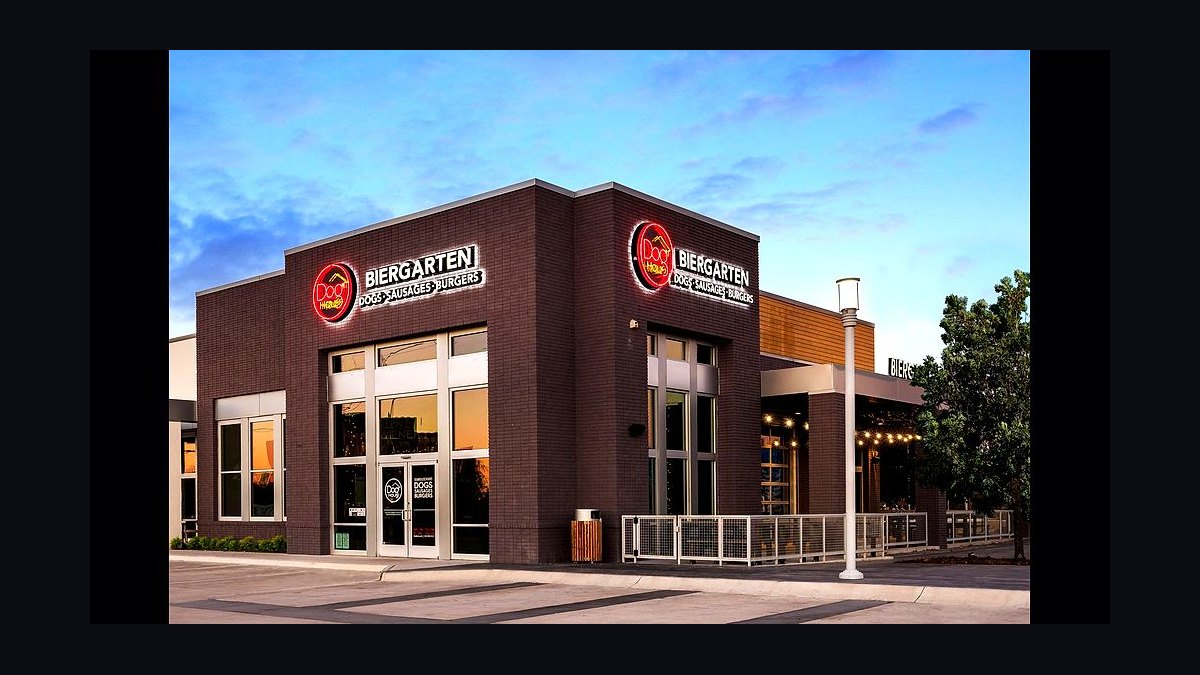
Only if you are a hospitality operator with $200K–$350K liquid and comfort running a bar. Dog Haus is a craft-casual "haute dog" concept with roughly $600K–$1.2M in total investment, mature units grossing $1.2M–$2.5M and owners clearing $140K–$350K. Weak sites and thin capital punish this model hard.
The outcome you should expect
Set your expectations against the actual unit economics rather than the brand story, because the two diverge quickly for anyone who opens a Dog Haus in a mediocre location. A mature, well-run unit in a market that supports craft comfort food and a beer program grosses somewhere in the $1.2M to $2.5M range annually. Owner earnings land between $140,000 and $350,000, but that spread is not random — it tracks almost perfectly with three variables: whether your beer program actually sells, whether your labor model matches your daypart mix, and whether you overpaid for the buildout.
Here is the honest shape of year one. You will not hit mature AUV. Most craft-casual restaurant concepts ramp over 18 to 30 months, with a grand-opening spike in weeks one through six that decays 25% to 40% before settling into a real baseline. If you underwrite your loan or your personal runway against opening-week numbers, you will be short by month four. Budget for a first-year gross that lands 60% to 75% of your eventual steady state, and assume owner draw is minimal or zero for the first nine to twelve months. That is normal for this category, not a sign of failure.
The second thing to internalize: this is not a QSR. A hot dog window with a $9 average ticket and four employees per shift has a fundamentally different risk profile than a 2,400-square-foot craft-casual room with a bar, table service in some formats, extended evening hours, and a staff of fifteen to twenty-five. The revenue ceiling is higher and so is the floor you can fall through. Fixed costs — rent, insurance, a manager's salary, the debt service on a $900,000 buildout — do not flex down when a slow Tuesday turns into a slow quarter. Concepts with heavy fixed cost structures are high-beta bets on traffic.

The third expectation to calibrate is time. Site selection through opening realistically runs nine to fifteen months, not the four to six months a franchise development rep will describe as "typical." Liquor licensing alone can consume six to eighteen months in restrictive jurisdictions. Permitting, grease interceptor requirements, health department sign-off, and the almost-universal contractor delay each add weeks. Every month of delay while you are paying rent on a shell burns $8,000 to $25,000 depending on your market. That pre-opening carry is the single most commonly under-budgeted line in restaurant franchising, and it is why the working capital figure in Item 7 should be treated as a floor rather than a plan.
Finally, expect the franchisor relationship to be a genuine constraint, not just a support system. You will owe a royalty in the 5% to 6% range plus a marketing fee around 2% — roughly 7% to 8% of gross off the top, before you have paid for a single sausage. On $1.7M in sales that is about $130,000 a year flowing to the brand. That money buys you a proven menu, supply chain leverage, and brand recognition that an independent has to manufacture from scratch. Whether that is a fair trade depends entirely on how much traffic the name actually generates in your specific trade area, which is exactly what franchisee validation calls are for.
What drives that outcome
Four levers move the number at the bottom of your P&L more than anything else, and three of them are decided before you serve a single customer.

Site quality is the dominant variable. Restaurant operators routinely discover that a great operator in a bad site loses to a mediocre operator in a great site. For a concept that depends on evening and weekend social traffic plus a beverage program, you need daypart depth — lunch from nearby offices or a campus, dinner from residential density, and late-evening from bar traffic or entertainment adjacency. A site with strong lunch but dead evenings will strand your entire beer program, which is where the margin lives. Look for end-cap or freestanding positions in lifestyle centers, university-adjacent corridors, or dense urban neighborhoods, and treat any site without visible evening activity as a hard pass regardless of how good the rent looks.
Beverage mix determines your margin structure. Food in this category typically runs 29% to 33% cost of goods. Draft beer runs materially better — often 20% to 30% cost, meaning 70% to 80% gross margin. When beverage climbs toward a fifth or a quarter of total sales, your blended COGS falls a couple of points and those points drop nearly straight to owner earnings. On $1.7M in revenue, a two-point blended COGS improvement is roughly $34,000 in additional annual profit. That is the entire economic case for tolerating liquor licensing, dram-shop insurance, and bar labor.
Labor discipline separates the top quartile from the rest. Craft-casual labor commonly runs 28% to 33% of sales. The operators clearing $300K+ are usually running scheduling tightly against hourly sales data, cross-training so a bartender can expo during a rush, and keeping a working owner or a genuinely capable general manager on the floor. The ones clearing $140K are usually over-scheduled on slow shifts and paying overtime to cover turnover they created through bad scheduling. A three-point labor swing on $1.7M is $51,000 — the same order of magnitude as the beverage lever, and more controllable day to day.
Buildout cost sets your permanent debt service. Everything above is annual and adjustable. The buildout number is permanent. Overspending $200,000 on a fit-out adds roughly $30,000 to $40,000 in annual debt service for a decade at typical SBA 7(a) terms. That is a standing tax on every year you operate, and no amount of operational excellence fully erases it.
Benchmarks and realistic ranges

Use the following as underwriting anchors, then verify every one of them against the current Franchise Disclosure Document and against operators you call yourself. An FDD's Item 7 is a range disclosed by the franchisor; Item 19 is a financial performance representation that may or may not be included and may cover only a subset of units. Neither is a promise.
Capital stack. The franchise fee sits in the $40,000 to $50,000 band. Buildout and leasehold improvements are the largest line, plausibly $350,000 to $700,000 depending on whether you inherit a former restaurant space with usable infrastructure or take a raw shell. Kitchen and bar equipment runs $150,000 to $320,000. Signage and decor add $25,000 to $70,000. Opening inventory, including beer, lands around $12,000 to $32,000. Grand-opening marketing is $18,000 to $45,000. Training and travel run $12,000 to $35,000. Working capital is nominally $40,000 to $110,000 — and this is the line I would personally double. Total Item 7 lands roughly $600,000 to $1,200,000.
Real estate. Footprints typically run 1,800 to 3,200 square feet. Rent varies enormously: a mid-tier metro might be $25 to $40 per square foot annually, while prime urban positions in high-cost markets push $50 to $80+. Landlords for a proven franchise brand generally expect a ten-year primary term with two five-year options. Tenant improvement costs frequently run $150 to $250 per square foot when a full bar, walk-in cooler, hood system, and grease interceptor are involved. Construction costs remain meaningfully elevated versus the pre-2021 baseline, so carrying an extra $75,000 to $150,000 above the FDD's TI assumption is prudent rather than pessimistic. Negotiate for a TI allowance from the landlord — in a soft retail submarket, $30 to $60 per square foot in landlord contribution is achievable and directly reduces the capital you have to raise.

Occupancy ratio. Whatever the rent number is, test it as a percentage of your projected sales. Occupancy above 10% of gross is a warning sign in this category; above 12% it is very hard to reach the upper end of the owner-earnings range no matter how well you operate. Run the arithmetic backward: if the site's all-in occupancy cost is $170,000 a year, you need roughly $1.7M in sales just to hold a 10% ratio. If your trade area cannot plausibly support that, the site is wrong, not the concept.
Licensing and compliance. A beer-and-wine license may cost $3,000 to $15,000 in application fees, and in quota states a transferable license can cost dramatically more on the secondary market. Timelines of six to eighteen months are common in restrictive jurisdictions. Ongoing compliance — server training, age verification protocols, inventory controls, and dram-shop liability coverage — adds a few thousand dollars annually plus real management attention. Bar labor typically costs $18 to $25 per hour all-in with tips, and you will want one to two bar staff per shift during peak periods.
Patio economics. In favorable climates a patio is one of the highest-ROI additions available: incremental seats at near-zero incremental rent. Operators frequently report meaningful revenue lift from outdoor seating, and the capital cost is a small fraction of interior buildout. Prioritize sites where a patio is permittable, and confirm it with the municipality before signing — "the landlord says it should be fine" is not confirmation.
Financing. Most first-unit franchise buyers use SBA 7(a) financing, typically requiring 20% to 30% equity injection, a personal guarantee, and often a lien on personal real estate. On a $900,000 project that means $180,000 to $270,000 of your own cash before working capital. Combined with the liquidity the franchisor will require, $200,000 to $350,000 liquid is a realistic entry bar. If that number leaves you with no personal reserve outside the business, you are under-capitalized regardless of what the loan approval says.
Risks, edge cases, and failure modes

The under-capitalized opening. This is the most common way these deals fail, and it rarely looks like failure at the time. You budget to the middle of Item 7, construction runs over, licensing slips two months, and you open with $30,000 in the bank instead of $110,000. Then a slow February arrives and you are choosing between payroll and your food distributor. Restaurants almost never die from a bad concept; they die from running out of cash during a normal seasonal trough. Hold six months of fixed costs in reserve beyond your opening budget.
Beverage program you cannot actually run. The beer program is the margin engine and the operational tax simultaneously. If your jurisdiction is a quota-license state, if your site's zoning restricts alcohol service, or if you personally are not prepared to own the compliance burden, you get the capital cost and complexity of a craft-casual build without the beverage margin that justifies it. That combination is close to unwinnable. Validate licensing feasibility for your specific address before you sign a lease, not after.
Daypart mismatch. A site chosen for lunch traffic that empties at 6pm will not support a concept whose profit depends on evening beverage sales. This failure is invisible in a weekday-noon site visit and obvious in a Tuesday-8pm one. Visit every candidate site at four separate times: weekday lunch, weekday evening, Saturday afternoon, and Saturday night. Count cars and count people, not just parking spaces.

Competitive compression. This concept sits in a crowded neighborhood of the market — better-burger chains, gastropubs, sports-bar concepts, craft-casual independents, and any local brewery serving food. Differentiation on "elevated comfort food plus craft beer" is real but not exclusive. In a trade area with three strong gastropubs already, you are fighting for share rather than creating demand. Map the competitive set within a two-mile radius honestly, including independents, before you fall in love with a site.
Delivery channel margin erosion. Third-party delivery can add volume but at 15% to 30% commission, which on a food item already carrying 31% COGS can leave the order barely contribution-positive after packaging and labor. Worse, delivery does not carry beverage — your highest-margin category is structurally absent from your fastest-growing channel. Treat delivery as incremental traffic that must be priced accordingly, and watch what percentage of sales it becomes.
Owner absence. Semi-absentee ownership works in some franchise categories. It generally works badly in craft-casual restaurants with bars, where theft risk, labor drift, and service consistency all degrade without ownership presence. If your plan requires a general manager to run the unit while you keep a day job, price in a $65,000 to $85,000 GM salary and accept that your owner earnings land materially below the ranges quoted, because those ranges typically assume a working owner.
Resale and exit. Restaurant franchise units commonly trade in the range of 2.5x to 4.0x seller's discretionary earnings, with the multiple driven by lease term remaining, equipment condition, franchise agreement runway, and financial record quality. A unit clearing $200,000 might list somewhere in the $500,000 to $800,000 zone, but a buyer looking at three years of remaining lease and a tired kitchen will discount hard — 30% to 50% haircuts on those units are ordinary. If exit matters to you, start protecting resale value on day one: keep clean books on accrual basis, maintain equipment on schedule, and negotiate lease options long enough that a buyer inherits eight or more years of runway.
Brand maturity and territory. In markets where the brand is already established, you inherit awareness but face internal competition for the remaining good sites. In markets where it is unknown, you carry the cost of building awareness yourself while paying a marketing fee. Ask the franchisor directly what development is planned within ten miles over the next three years, and get territorial protection language in writing.
A practical rollout plan

Treat the decision as a staged gate process where each stage can kill the deal cheaply. The failure mode to avoid is spending $40,000 on architecture and legal before validating whether the trade area supports the concept.
Weeks 1–4: Document diligence. Read the entire FDD, not the summary. Focus on Item 7 (investment), Item 19 (financial performance, if provided), Item 20 (unit counts, openings, closures, and transfers over three years), and Item 3 (litigation). Item 20's turnover table is the most honest page in the document — a brand with many transfers and terminations relative to openings is telling you something the marketing deck is not. Have a franchise attorney read the agreement, specifically the territory definition, transfer conditions, renewal terms, and personal guarantee scope.
Weeks 4–8: Franchisee validation. Call at least eight to ten existing operators, and insist on calling some the franchisor did not hand you — pull the full list from Item 20 and reach out cold. Ask concrete questions: actual first-year and current gross sales, beverage as a percentage of sales, food and labor cost percentages, what the buildout truly cost versus the estimate, how long licensing took, and the direct question — "knowing what you know now, would you sign again?" Take notes on the ones who hesitate.
Weeks 8–12: Market and site validation. Pull trade-area demographics, daytime and residential population, and competitive density. Visit candidate sites across four dayparts. Confirm alcohol licensing feasibility for the specific parcel with the municipality in writing. Confirm patio permittability. Get a preliminary contractor walkthrough and a real TI estimate rather than a per-square-foot guess.

Weeks 12–20: Capital and lease. Secure financing with a lender experienced in franchise restaurant lending — they will underwrite faster and price better than a generalist. Negotiate the lease with a tenant-rep broker who does not also represent the landlord. Push hard on TI allowance, free rent during construction, and a personal-guarantee burn-off after a defined period of performance.
Weeks 20–44: Build, license, staff. Run permitting and licensing in parallel with construction rather than sequentially. Hire your general manager sixty to ninety days before opening so they participate in hiring the rest of the team and complete franchisor training. Order long-lead equipment early; hood systems and walk-ins are common critical-path items.
Weeks 44–52: Open deliberately. Run friends-and-family services and a soft opening before any paid marketing. A concept that opens loud with a broken kitchen converts a marketing budget into negative word of mouth. Once service is stable, spend the grand-opening budget.
Months 3–18: Operate to the levers. Weekly review of food cost, labor as a percentage of sales by daypart, and beverage mix. Fix the biggest variance first. Do not consider a second unit until the first has held twelve consecutive months of stable margins with a manager capable of running it without you — the second unit's most common failure cause is that it consumed the attention keeping the first one profitable.
Related questions
Is a franchise better than opening an independent craft-casual restaurant?
A franchise buys a tested menu, supply chain leverage, and brand awareness for roughly 7% to 8% of gross plus a franchise fee. An independent keeps that cash but carries all concept risk. Franchising suits operators who execute well; independents suit operators with a genuine concept edge.
How much liquidity do I actually need beyond the down payment?

Plan on six months of fixed costs — rent, insurance, debt service, manager salary — held outside the opening budget. On a typical unit that is $80,000 to $150,000. Lenders will not require it; survival often does.
Does the beer program work in every state?
No. Quota-license states, dry counties, and zoning overlays can make alcohol service expensive or impossible at a given address. Since beverage margin justifies much of the capital, confirm licensing feasibility for the specific parcel before signing anything.
What is a realistic timeline from signing to opening?
Nine to fifteen months is typical once licensing, permitting, and construction delays are accounted for. Four to six months happens only with an existing restaurant space, a fast jurisdiction, and no surprises. Budget rent carry accordingly.
Should I buy an existing unit instead of building new?
Often yes. An operating unit has proven sales, existing licenses, and immediate cash flow, and typically trades around 2.5x to 4.0x seller's discretionary earnings. Diligence the reason for sale, lease term remaining, and deferred equipment maintenance carefully.
FAQ
What is the typical total investment to open a Dog Haus franchise?
The Item 7 range in recent disclosure documents runs roughly $600,000 to $1,200,000, covering the franchise fee, buildout, equipment, signage, opening inventory, training, and working capital. The wide spread reflects how much conversion versus raw-shell construction differs and how much local construction costs vary. Verify the current FDD directly, since these figures are updated annually.

How much can an owner realistically earn?
Mature units are commonly described as grossing $1.2M to $2.5M, with owner earnings of $140,000 to $350,000. Those figures generally assume a working owner and a healthy beverage mix. Subtract a general manager's salary if you plan to be absentee, and subtract debt service, which is often not reflected in franchisor-quoted earnings.
What are the ongoing fees?
Expect a royalty around 5% to 6% of gross sales plus a marketing or brand-fund contribution near 2%. That is roughly 7% to 8% of every dollar before food, labor, or rent. Confirm the exact percentages and any technology, local-advertising, or supplier fees in Items 5 and 6 of the FDD.
Is the craft-beer program worth the complexity?
For most locations, yes. Draft beer carries meaningfully better gross margin than food and drives longer visits and higher tickets. But it requires licensing, compliance, dram-shop coverage, and dedicated bar labor. If your site or jurisdiction makes the beverage program marginal, the concept's economics get much harder to justify.
How does this compare to a simpler hot-dog QSR franchise?
A counter-service hot-dog brand typically costs a fraction as much to open and runs with a much smaller crew. Ceiling is lower, floor is safer. A craft-casual concept with a bar has higher revenue potential and higher fixed costs, so it rewards strong operators in strong sites and punishes everyone else.
What should I look for in Item 20 of the FDD?
Track openings, closures, terminations, and transfers over the last three years. A healthy system opens more than it loses and shows few terminations. Frequent transfers can signal operators exiting quietly. Also use Item 20's franchisee contact list to call operators the franchisor did not pre-select for you.
Sources
- https://www.ftc.gov/business-guidance/resources/franchise-rule-compliance-guide
- https://www.sba.gov/funding-programs/loans/7a-loans
- https://www.ttb.gov/
- https://restaurant.org/research-and-media/research/
- https://www.entrepreneur.com/franchises
- https://www.franchise.org/
- https://www.ibisworld.com/united-states/industry/single-location-full-service-restaurants/1719/
- https://www.bls.gov/iag/tgs/iag722.htm
- https://www.nrn.com/
- https://www.qsrmagazine.com/
Related on PULSE
This page will be disappearing soon. Save it to your device for $1 — or read it free while it is here.
@Kory-White- · if Venmo asks, the last 4 of my number are 2012
This page is gone.
This one is off the shelf now. $1 keeps it on your phone for good — the whole page, pictures and diagrams included.
 franchiseShould I open or buy a Smoothie King franchise in 2027?
 franchiseShould I open or buy a Mac Tools franchise in 2027?
 franchiseShould I open or buy a Cold Stone Creamery franchise in 2027?
 franchiseShould I open or buy a Wendy's franchise in 2027?
 franchiseShould I open or buy a Merry Maids franchise in 2027?
 franchiseShould I open or buy a Take 5 Oil Change franchise in 2027?
 franchiseShould I open or buy a Bojangles franchise in 2027?
 franchiseShould I open or buy a Kumon franchise in 2027?
 franchiseShould I open or buy a Crumbl Cookies franchise in 2027?
 franchiseShould I open or buy a Meineke franchise in 2027?