


Should I open or buy a Cookie Plug franchise in 2027?
Quality
Certified
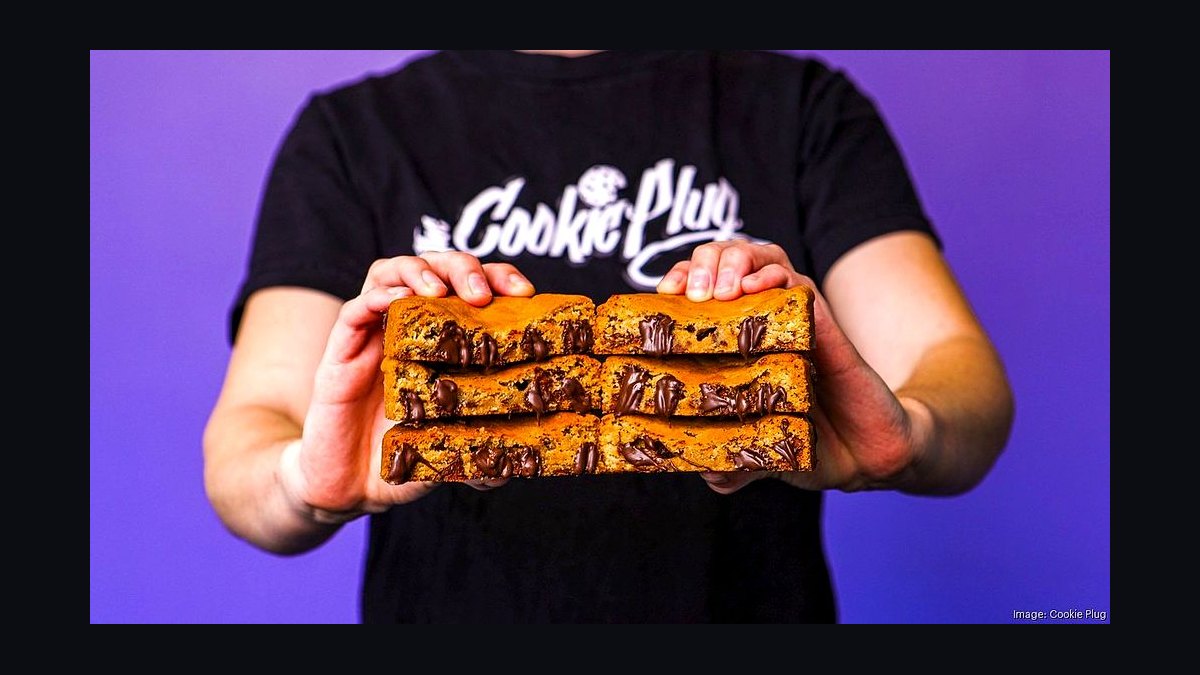
Yes, but only if you fit a narrow profile: enough cash for a $150,000-$350,000 build in a young, urban, social-media-driven market, and the stomach for a founded-in-2019 system with a thin track record inside an increasingly crowded gourmet-cookie category. If you lack the demographics or the brand instinct to run "the plug" theme authentically, skip it and look at a more established cookie franchise instead.
A Cookie Shop on a College Strip: The Scenario
Picture two prospective franchisees looking at the same Cookie Plug listing in the fall of 2027. The first is eyeing a 1,000-square-foot end-cap in a strip center three blocks from a state university, surrounded by a sneaker consignment shop, a boba tea spot, and a tattoo parlor. The second is looking at a similar-sized space in a quiet suburban outparcel fifteen minutes outside a mid-sized Midwestern city, anchored by a grocery store and a nail salon. Both franchisees have roughly $200,000 in liquid capital and both are reading the same 2026 Franchise Disclosure Document (FDD) with the same $25,000-$35,000 franchise fee and the same 6% royalty. The FDD tells them almost nothing about which location will work — that decision hinges entirely on demographic fit.
Cookie Plug's entire value proposition is built on a hip-hop and streetwear-culture identity: oversized stuffed cookies, brookies, limited "drop" flavors named after artists, and merchandise that functions less like bakery swag and more like a collectible sneaker release. That branding does real work in the first scenario — the college-adjacent location has a built-in audience of 18-to-24-year-olds who already understand drop culture from streetwear and sneaker resale, and who will post a $6 stuffed cookie to Instagram or TikTok without being asked. In the second scenario, the same brand language reads as confusing or even alienating to a customer base that skews older, more family-oriented, and less plugged into hype-drop marketing. The product is identical. The FDD numbers are identical. The outcome is not.

This is the central diagnostic question anyone evaluating a Cookie Plug franchise in 2027 needs to answer before touching a pro forma: does my trade area contain enough of the specific demographic that makes "the plug" theme feel like insider culture rather than a costume? A franchise built on cultural specificity either amplifies revenue dramatically in the right zip code or underperforms in the wrong one, and unlike a more neutral concept like a sandwich shop, there is very little middle ground. The scenario above is not hypothetical noise — it's the exact filter every Cookie Plug FDD conversation with existing franchisees should run through, because Item 19 earnings claims are typically built from a blended set of locations that may not resemble either the college strip or the suburban outparcel you're actually considering.
How the Streetwear-Brand Economics Actually Work
Cookie Plug's unit economics only make sense once you understand that the brand is not decoration on top of a cookie business — it is a second, higher-margin revenue line running parallel to the food. A mature store selling $500,000 a year in cookies, brookies, and drinks typically layers branded merchandise on top: hoodies, t-shirts, and hats tied to whatever "drop" is currently running. Franchisees report merchandise contributing 5% to 12% of total revenue, and the margin structure on that apparel is dramatically better than the food side — a hoodie costing roughly $12 to produce and retailing near $40 throws off close to a 70% gross margin, versus the 28%-to-35% cost of goods on the cookies themselves. That gap matters because it means the brand isn't just a customer-acquisition tool, it's a profit center in its own right, and a franchisee who treats merchandise as an afterthought is leaving some of the best margin in the business on the table.

The flow below shows how that dual-revenue structure moves from top-line sales down to owner cash flow, and where the brand's "drop" mechanic inserts itself into the funnel:
The scarcity mechanic — releasing a flavor or a merch drop for only one to two weeks — is doing double duty here. It compresses demand into short windows that generate social proof (people posting about getting something before it disappears), and it protects margin by avoiding the discounting and menu fatigue that plagues cookie brands running a static menu year-round. Crumbl's weekly rotating menu proved that novelty drives repeat visits in this category; Cookie Plug's bet is that exclusivity plus cultural specificity can do the same thing on a smaller footprint and a smaller marketing budget. The mechanism works when the local market actually participates in drop culture. It stalls when the customer base treats the store as a generic bakery and never engages with the social layer that makes the economics work — at that point you're left with a cookie shop paying premium ingredient costs without the merchandise margin or the organic marketing that's supposed to offset them.
The Real Numbers: Investment, Fees, and Returns

The 2026 FDD lays out a total Item 7 investment of roughly $150,000 to $350,000, which is genuinely low for a franchised food concept — well under what a full-service restaurant or even many quick-service chains require. That range breaks down into a franchise fee of $25,000 to $35,000, buildout and leasehold work of $70,000 to $180,000 for the small footprint (typically 800 to 1,400 square feet, though some sources describe locations as tight as 600 square feet), equipment and ovens at $45,000 to $100,000, signage and streetwear-brand decor at $12,000 to $38,000, initial inventory of $6,000 to $18,000, initial marketing of $10,000 to $28,000, training and travel of $6,000 to $20,000, and working capital of $15,000 to $45,000 to cover the first three months. Franchisees should expect to hold $70,000 to $130,000 in liquid capital going in, with the rest typically financed.
Ongoing costs run a royalty near 6% of gross sales plus a separate marketing fee, which is in line with — or slightly below — many quick-service franchise royalty structures. On the revenue side, mature Cookie Plug shops gross between $300,000 and $800,000 annually. At the middle of that range, a $500,000-a-year store typically produces $80,000 to $120,000 in owner-operator cash flow before debt service, translating to roughly a 25% to 35% EBITDA margin — a respectable number for food retail, but one that is unusually sensitive to two levers: food cost and labor. Ingredient cost for the oversized, stuffed cookies runs 28% to 35% of gross sales, higher than a standard cookie chain because of the premium chocolate, butter, and specialty fillings involved in a product that costs roughly $1.50 to $2.00 to make and sells for $5 to $7. Labor runs 25% to 32% of sales, pushed upward by the unpredictable, drop-driven rush pattern that social-media marketing creates — franchisees often deliberately overstaff during drop windows to avoid lines that would undercut the brand's cool factor. Occupancy for a location in a high-foot-traffic corridor typically runs $3,500 to $8,500 a month, or about 10% to 15% of sales on a $500,000 unit.

The practical takeaway from these numbers is that a 3-percentage-point swing in either food cost or labor — the difference between disciplined portioning and loose kitchen management, or between lean scheduling and chronic overstaffing — can move annual profit by $15,000 to $20,000 on a $500,000 store. That's a meaningfully larger swing than the total franchise fee, which means the operational discipline you bring to the business matters more to your actual return than anything in the FDD's boilerplate.
Trade-Offs and Alternatives to Cookie Plug
Every Cookie Plug decision is really a decision between three things: the brand's cultural differentiation, the risk of a young franchise system with limited history, and the reality that the broader gourmet-cookie segment is getting crowded. Crumbl remains the dominant player nationally with a much larger marketing budget and a longer operating history, which means Cookie Plug is never competing on scale — it's competing on identity. Chip City and Dirty Dough occupy adjacent positions in the same gourmet-cookie wave, each with their own take on rotating menus and premium ingredients. If your local market doesn't have the young, urban, socially-engaged population that makes "the plug" identity land, none of Cookie Plug's structural advantages — low capital, small footprint, high merchandise margin — will save the unit.

The territory structure adds another layer to this trade-off. Cookie Plug grants exclusive development territories, typically a one-to-two-mile radius in urban areas or a defined zip-code cluster, which is smaller than the protection Crumbl franchisees often report. That means a competing cookie brand can plant a flag nearby even if you're protected from a second Cookie Plug opening in your own footprint. The franchisor also caps new franchise approvals nationally, reportedly to roughly 15 to 25 per year, to preserve brand consistency — which creates a real timing pressure once you're approved, since you typically have a 6-to-12-month window from signing to opening before losing your preferred site.
Exit planning belongs in this trade-off conversation too. Cookie Plug has limited resale history simply because the system is too young to have generated a mature secondary market — a franchisee wanting out after five years will likely be selling within the franchisee network or to a buyer betting on future brand equity rather than a proven resale multiple. The franchise agreement typically runs 10 years with one renewal option, so realistic planning means expecting to hold for seven to ten years to recoup the investment and build the kind of local goodwill that makes the location valuable on its own, independent of the brand's national trajectory.
Common Pitfalls and How to Avoid Them
The single most common mistake prospective franchisees make with Cookie Plug is treating the brand as an aesthetic choice rather than an operating requirement. Because the entire differentiation strategy rests on authentic cultural execution — real collaborations with local artists and sneaker shops, Instagram-exclusive drops, merchandise that feels like a genuine collectible rather than a logo slapped on a blank shirt — a franchisee who runs the concept like a generic bakery with different signage will underperform the FDD's earnings claims regardless of location quality. Avoid this by building a local marketing plan around actual community partnerships before you open, not after sales disappoint.

A second pitfall is underestimating gourmet-cookie category saturation when reading Item 19. Franchisors have every incentive to present the segment as still growing, and it is — but "growing" and "not yet crowded" are different claims, and Crumbl's scale plus multiple regional cookie concepts means a new Cookie Plug location is entering a genuinely competitive field. Call multiple existing franchisees directly and ask pointed questions about average unit volume, actual food cost percentage, net profit after all fees, and how they're competing for foot traffic against nearby cookie and dessert options — not just whether they're happy with the brand.
A third pitfall is misjudging the trend-dependency risk baked into a culture-driven brand. Streetwear aesthetics are cyclical by nature, and franchisees should plan for what amounts to a three-to-five-year brand cycle rather than assuming "the plug" theme will feel fresh indefinitely to the Gen Z and young millennial customers it depends on. Build flexibility into your local marketing so you can evolve alongside the brand rather than being stuck promoting an aesthetic that's cooling nationally.
Finally, don't skip the FDD's litigation history and financial performance representation fine print. Check whether Item 19's earnings claims are drawn from a small, cherry-picked subset of stores, and scrutinize renewal terms for conditions that could complicate your exit ten years down the line. A 90-day-style diligence process — reading the FDD and Item 19 in the first few weeks, calling operators in weeks three through six, validating your local demographic fit in weeks six through eight, then building out and staffing before a social-media-driven opening — gives you the structure to catch these pitfalls before signing rather than after you've committed $150,000 or more.
Related questions
How much merchandise revenue does a typical Cookie Plug location generate?

Franchisees report branded apparel — hoodies, t-shirts, hats tied to drop campaigns — contributing roughly 5% to 12% of total store revenue, with gross margins near 70%, well above the 28%-to-35% margin structure on the cookies themselves.
What's the biggest competitive threat to a new Cookie Plug franchise?
Crumbl's scale and marketing budget dominate the gourmet-cookie category nationally, while Chip City, Dirty Dough, and independent cookie shops compete regionally — Cookie Plug's counter is cultural specificity, not price or scale.
How long is the Cookie Plug franchise agreement?
Franchise agreements typically run 10 years with one renewal option, meaning your exit timeline is tied closely to both your lease terms and how the brand's national reputation evolves over that decade.
Can I open multiple Cookie Plug units in the same city?
Only within the limits of your exclusive territory grant, typically a one-to-two-mile radius or a defined zip-code cluster — smaller than some competitors offer — so multi-unit growth usually requires negotiating additional, non-adjacent territories.
FAQ
What is the total investment range for a Cookie Plug franchise? The total initial investment (Item 7) ranges from roughly $150,000 to $350,000, covering the franchise fee, buildout, equipment, initial inventory, marketing, training, and working capital — a relatively low entry point compared to many food franchises.

How much can I expect to earn as a Cookie Plug franchise owner? Mature locations typically report annual gross sales between $300,000 and $800,000. After food cost, labor, royalties, and operating expenses, owner net profit generally falls in the $60,000 to $190,000 range, with a $500,000 store commonly producing $80,000 to $120,000 in cash flow before debt service.
What are the ongoing royalty and marketing fees? The royalty fee runs near 6% of gross sales, plus a separate marketing fee that funds brand advertising, drop campaigns, and franchisor-level operational support.
How long has Cookie Plug been franchising, and how many locations exist? Cookie Plug was founded in 2019 and began franchising shortly after, making it a younger system with a smaller, still-growing unit count relative to more established cookie chains like Crumbl.
What makes Cookie Plug different from other cookie franchises like Crumbl? Cookie Plug builds its identity around hip-hop and streetwear culture — oversized stuffed cookies, brookies, artist-named drop flavors, and collectible-style merchandise — targeting young, urban, socially-active consumers rather than competing on Crumbl's scale or rotating-menu format.
Is the gourmet cookie market too crowded to succeed with Cookie Plug in 2027? The category is genuinely competitive, with Crumbl, Chip City, Dirty Dough, and independents all expanding, but success is driven less by category saturation and more by whether a specific location's demographics match the brand's cultural identity and whether the operator executes food cost and labor discipline.
Sources
- https://www.entrepreneur.com/franchises
- https://www.ftc.gov/business-guidance/resources/franchise-rule-compliance-guide
- https://www.franchisebusinessreview.com
- https://www.qsrmagazine.com
- https://www.nrn.com
- https://www.ibisworld.com
- https://www.franchise.org
- https://www.statista.com
Related on PULSE
This page will be disappearing soon. Save it to your device for $1 — or read it free while it is here.
@Kory-White- · if Venmo asks, the last 4 of my number are 2012
This page is gone.
This one is off the shelf now. $1 keeps it on your phone for good — the whole page, pictures and diagrams included.
 franchiseShould I open or buy a Dunkin' franchise in 2027?
 franchiseShould I open or buy a Jamba franchise in 2027?
 franchiseShould I open or buy a Massage Envy franchise in 2027?
 franchiseShould I open or buy a Bahama Breeze franchise in 2027?
 franchiseShould I open or buy a Cold Stone Creamery franchise in 2027?
 franchiseShould I open or buy a Pizza Hut franchise in 2027?
 franchiseShould I open or buy a Roto-Rooter franchise in 2027?
 franchiseShould I open or buy a Culver's franchise in 2027?
 franchiseShould I open or buy a Hand and Stone Massage franchise in 2027?
 franchiseShould I open or buy a Big O Tires franchise in 2027?