


Should I open or buy a Lenny's Grill & Subs franchise in 2027?
Quality
Certified
Yes, for a service-minded operator with $200,000–$450,000 in capital who wants an established Southern sub-and-grill franchise — Lenny's Grill & Subs offers grilled subs and cheesesteaks with a loyal regional following, moderate investment, and a real catering channel, but it's a smaller system competing against Subway, Jersey Mike's, and Firehouse Subs outside its Southeast stronghold.
What it is and why it matters
Lenny's Grill & Subs was founded in 1998 in Memphis and has grown into a regional sub-and-grill franchise built around a simple differentiator: grilled subs and Philly-style cheesesteaks alongside the cold deli sandwiches every competitor offers. A typical unit runs 1,500–2,200 square feet in a strip-center end cap, inline retail space, or freestanding building, and serves dine-in, takeout, delivery, and catering. The brand leans hard into a Southern-hospitality identity — friendly counter service, community ties, and a loyal customer base concentrated in Memphis, Nashville, Charlotte, and other Southeast markets.
Why this matters before you sign anything: the sub segment is one of the most crowded categories in franchising. Subway alone operates more than 20,000 US locations, and Jersey Mike's and Firehouse Subs have both scaled into national household names with aggressive real estate strategies and marketing budgets Lenny's simply cannot match dollar-for-dollar. Lenny's competitive answer isn't scale — it's differentiation (the grill), regional loyalty, and a lower cost of entry than many national fast-casual concepts. If you're evaluating this franchise, you're really evaluating whether "smaller and more Southern" beats "bigger and more recognized" in your specific trade area, and whether you can execute the grilled-sub and catering advantages well enough to overcome a brand-awareness gap outside the footprint.

The 2026 Franchise Disclosure Document (FDD) is the authoritative source for everything that follows — franchise fee, total investment, royalty structure, and Item 19 earnings claims (if any are disclosed that year). Never rely on a summary, including this one, as a substitute for reading Items 5 through 7, 19, and 20 yourself and having a franchise attorney review the agreement before you open a Lenny's or buy an existing one.
The step-by-step process
Opening a Lenny's franchise follows a fairly standard fast-casual development sequence, though the timeline compresses or stretches depending on how fast you move through site approval and permitting. From initial FDD review to grand opening, most new franchisees are looking at 6–12 months.

The sequence typically runs: application and franchisor approval, FDD review and the mandatory 14-day disclosure waiting period, discovery day (often at the Memphis headquarters or a regional flagship store), franchise agreement signing and fee payment, site selection within your approved development territory, lease negotiation, design and permitting, build-out and equipment installation, staff hiring and the standardized training program, and finally grand opening with the initial marketing push.
Two steps in that chain deserve extra attention. First, site selection isn't just "find an open storefront" — Lenny's franchise agreements typically define a development territory (often a 2–3 mile radius around your location), and the franchisor's real estate team helps vet sites, but final approval authority usually rests with the franchisor. Second, training runs 2–3 weeks at an existing operating store rather than a classroom-only model, which means you and your key staff need to be available to travel and work a live kitchen before your own doors open. Skipping or rushing either of these steps is where a lot of first-time franchisees lose months later in the process through failed inspections, rejected sites, or undertrained crews.
Costs, timelines, and typical ranges
The 2026 FDD lists a franchise fee of roughly $25,000–$30,000. Total Item 7 investment — everything from the fee through opening-day working capital — runs approximately $200,000 to $450,000, a moderate range compared to drive-thru-equipped QSR concepts that frequently exceed $500,000–$1,000,000 because of the added site and equipment costs a drive-thru lane requires.

Breaking down the investment: buildout and leasehold improvements typically run $120,000–$280,000 for a sub-shop fit-out; equipment and grill installation (grills, prep stations, POS systems) run $60,000–$130,000; signage and decor to bring the space to brand standard run $14,000–$42,000; initial food and packaging inventory runs $8,000–$22,000; initial marketing for the grand-opening push runs $12,000–$32,000; training and travel costs for the operator and key staff run $8,000–$22,000; and working capital to cover the first three months of operation runs $22,000–$60,000. Ongoing, the royalty sits near 6% of gross sales, plus a separate marketing fee around 2% of gross — both standard for the sub-shop category and comparable to what Subway and similar franchisors charge.
Beyond the FDD line items, real estate carries its own 2027 numbers. Base rent runs $3,500–$8,000 per month depending on market — Memphis rents lower than Charlotte or Nashville — with common area maintenance (CAM) adding another 15–25% on top. Leases generally run 10 years with two 5-year renewal options, and you should budget an additional $15,000–$30,000 for leasehold improvements beyond the core build-out figure, plus $8,000–$12,000 extra for commercial-grade HVAC and grease-trap work if the space isn't already fitted for a grill-heavy kitchen — a cost first-time franchisees frequently underestimate.

On the financing side, most franchisees need $75,000–$150,000 in liquid capital to qualify for an SBA 7(a) loan, which typically covers 80–90% of startup costs at 10-year terms and 7–9% interest as of early 2027. Some operators use home-equity lines or a ROBS (Rollover for Business Startups) 401(k) rollover instead, though both carry more personal financial risk than a straight SBA loan. Break-even timelines vary widely: a high-traffic location near a university or hospital can reach monthly profitability by month 6–9, while a slower suburban location may take 14–18 months. Lenny's reports roughly 70% of new franchises reach cash-flow positive status by month 12, contingent on holding food cost near 32–35% of revenue and labor near 28–32%.
If you're buying an existing Lenny's rather than opening new, expect to pay $150,000–$350,000 for the business and equipment, plus a $10,000–$15,000 transfer fee to the franchisor. A resale typically comes with proven sales history and trained staff already in place, which can shorten your ramp-up to 3–6 months — but you also inherit the prior owner's lease terms and equipment condition, so a third-party equipment inspection before closing is non-negotiable.
Once open, mature units gross $400,000–$900,000 annually, with owners clearing $60,000–$170,000 in earnings. That range is wide because it depends heavily on site quality, catering volume, and cost discipline — the same three levers that separate winning operators from struggling ones in this system.
Where teams get it wrong

The single most common mistake is opening or buying outside the Southern footprint without a real awareness-building plan. Lenny's brand recognition drops sharply once you leave the Southeast, and franchisees who assume the grilled-sub differentiation will sell itself in an unfamiliar market often underperform for years while national chains with bigger marketing budgets dominate mindshare in the same trade area.
Labor is the second major failure point. The sub-and-grill format is labor-intensive, requiring 8–15 employees per shift across grill cooks, sandwich assemblers, cashiers, and a shift lead to handle lunch rushes and catering orders simultaneously. Quick-service labor in Southern markets runs $12–$16/hour for line staff and $17–$22/hour for shift managers in 2027, and turnover across the QSR industry averages 130–150% annually — meaning you'll likely replace your entire crew every 9–12 months. Franchisees who don't budget $8,000–$15,000 per year for recruitment, onboarding, and retention find themselves perpetually short-staffed, which directly hurts both ticket times and food-cost control since undertrained staff over-portion or waste product.
Food cost is the third recurring problem. The target is 32–35% of revenue, and grill-based concepts are less forgiving than cold-sandwich shops because grilled proteins carry more waste, more prep labor, and tighter shelf-life windows. Operators who don't build disciplined portioning and inventory systems from day one routinely drift 4–6 points above target, which is often the difference between the $60,000 and $170,000 ends of the owner-earnings range.

Catering is frequently under-leveraged rather than over-invested. Done well, Lenny's catering program — boxed lunches and party platters — can generate 15–25% of total revenue at higher margins than walk-in traffic, but it requires a dedicated route driver or a manager willing to own outbound sales calls to local businesses, which adds roughly $35,000–$45,000 per year in labor if pursued aggressively. Franchisees who treat catering as an afterthought leave real margin on the table; franchisees who staff for it without actually building the sales pipeline overspend on labor they can't fill with orders. Finally, site selection mistakes — choosing a low-visibility location or one outside a genuine lunch-traffic corridor — compound every other problem on this list, since no amount of cost control or catering hustle rescues a store nobody drives past.
Decision framework: when to choose what
The clearest way to think about this decision is to separate it into three questions: are you in (or willing to build toward) the Southern footprint, can you personally run tight cost and labor discipline, and do you have a realistic plan to drive catering rather than relying on walk-in traffic alone. Answer yes to all three and Lenny's is a genuinely strong regional play. Answer no to the footprint question and you should look hard at whether a national sub brand — Jersey Mike's, Firehouse Subs — better fits your market, since brand recognition alone will carry more weight there than Lenny's grilled differentiation.

If capital is the constraint rather than fit, a resale purchase at $150,000–$350,000 plus a $10,000–$15,000 transfer fee can be a faster, cheaper path in than a new build, provided the third-party equipment inspection and lease review come back clean. If you clear every gate — footprint, cost discipline, catering commitment, and capital — the framework points toward moving forward with FDD review and Discovery Day; if you stall on any single gate, that's the specific thing to fix or reconsider before signing, not a reason to abandon the concept outright.
Related questions
How much does it cost to open a Lenny's Grill & Subs franchise?
Total Item 7 investment runs roughly $200,000–$450,000 per the 2026 FDD, including a $25,000–$30,000 franchise fee, build-out, equipment, initial inventory, marketing, training, and working capital.
Is Lenny's Grill & Subs profitable compared to other sub franchises?
Mature units gross $400,000–$900,000 with owner earnings of $60,000–$170,000, broadly comparable to other regional sub concepts, though national chains benefit from greater marketing scale and buying power.
What is Lenny's royalty and marketing fee structure?
The royalty runs approximately 6% of gross sales, plus a separate marketing fee near 2% of gross — standard for the sub-shop franchise category.
Can I buy an existing Lenny's franchise instead of opening new?

Yes — resales typically cost $150,000–$350,000 plus a $10,000–$15,000 transfer fee, and often come with proven sales history and trained staff, shortening ramp-up to 3–6 months.
How does Lenny's differentiate itself from Subway and Jersey Mike's?
Lenny's focuses on grilled subs and Philly-style cheesesteaks rather than purely cold deli sandwiches, paired with a Southern-hospitality brand identity and strong regional loyalty in the Southeast.
FAQ
What is the total investment range for a Lenny's Grill & Subs franchise? The total investment, including the franchise fee, ranges from roughly $200,000 to $450,000 per the 2026 FDD. This covers build-out, equipment, initial inventory, marketing, training, and opening working capital, though actual amounts vary by market and site size.
How much can I expect to earn as a Lenny's franchise owner? Mature units typically generate annual gross sales between $400,000 and $900,000. Owner earnings generally fall in the $60,000–$170,000 range, depending heavily on location, food-cost control, labor management, and how aggressively the owner pursues catering.

What are the ongoing fees for a Lenny's franchise? The royalty fee is approximately 6% of gross sales, plus a marketing fee near 2% of gross. Both are standard for the sub-shop franchise category and fund brand advertising, training resources, and operational support from the franchisor.
How does Lenny's compete against larger sub chains like Subway or Jersey Mike's? Lenny's leans on a grilled-sub and cheesesteak niche paired with Southern-hospitality service, differentiating on product and regional loyalty rather than national scale. As a smaller system, it faces real headwinds in marketing reach and purchasing power compared to the giants.
What are the biggest challenges of opening a Lenny's franchise? The biggest challenges are competing against entrenched national sub chains, controlling food cost in a grill-heavy kitchen, staffing through high QSR turnover, and finding a site with genuine lunch-traffic visibility. The regional footprint also limits brand recognition outside the South.
How long does it take to open a Lenny's franchise from signing to grand opening? Typical timelines run 6 to 12 months from FDD review through grand opening, covering site selection, lease negotiation, build-out, permitting, and the 2–3 week in-store training program — timing that shifts based on local permitting speed and contractor availability.
Sources
- https://www.entrepreneur.com/franchises/directory
- https://www.franchise.org
- https://www.technomic.com
- https://www.ibisworld.com
- https://www.statista.com
- https://www.nrn.com
- https://www.qsrmagazine.com
- https://www.franchisebusinessreview.com
- https://www.sba.gov/funding-programs/loans/7a-loans
Related on PULSE
- Should I open or buy a Lenny's Sub Shop franchise in 2027?
- Should I open or buy a Jon Smith Subs franchise in 2027?
- Should I open or buy a Port of Subs franchise in 2027?
- Should I open or buy a Cousins Subs franchise in 2027?
- Should I open or buy a Penn Station East Coast Subs franchise in 2027?
- Should I open or buy a Firehouse Subs franchise in 2027?
This page will be disappearing soon. Save it to your device for $1 — or read it free while it is here.
@Kory-White- · if Venmo asks, the last 4 of my number are 2012
This page is gone.
This one is off the shelf now. $1 keeps it on your phone for good — the whole page, pictures and diagrams included.
 franchiseShould I open or buy a Domino's franchise in 2027?
 franchiseShould I open or buy a Jeremiah's Italian Ice franchise in 2027?
 franchiseShould I open or buy a Servpro franchise in 2027?
 franchiseShould I open or buy an F45 Training franchise in 2027?
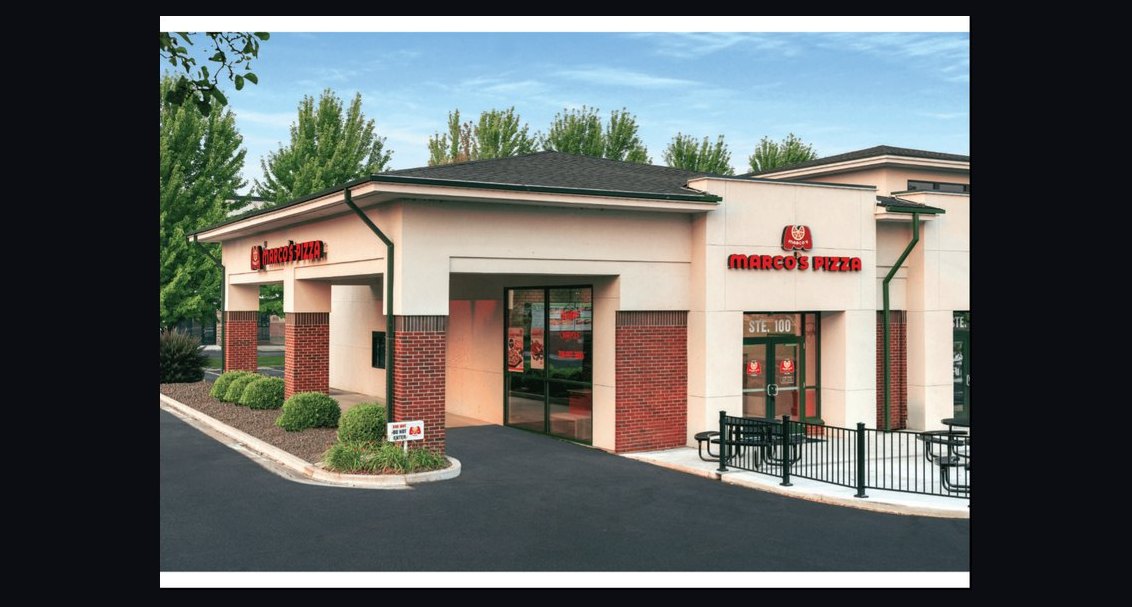 franchiseShould I open or buy a Marco's Pizza franchise in 2027?
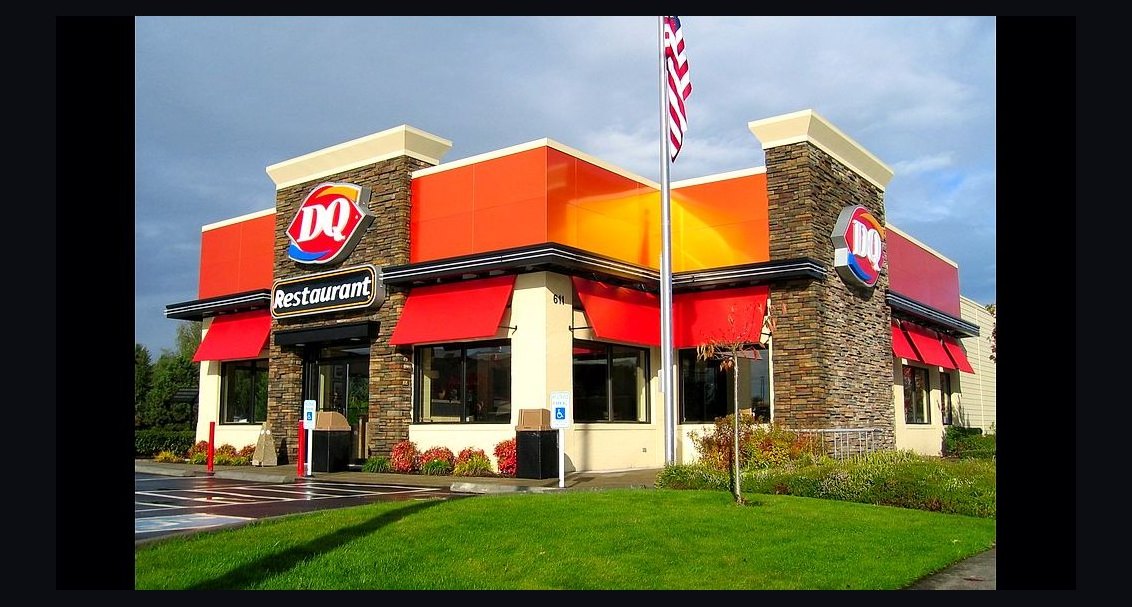 franchiseShould I open or buy a Dairy Queen franchise in 2027?
 franchiseShould I open or buy a Kumon franchise in 2027?
 franchiseShould I open or buy a Dunkin' franchise in 2027?
 franchiseShould I open or buy a Sonic Drive-In franchise in 2027?
 franchiseShould I open or buy a Cinnabon franchise in 2027?