


Should I open or buy a Great Steak franchise in 2027?
Quality
Certified
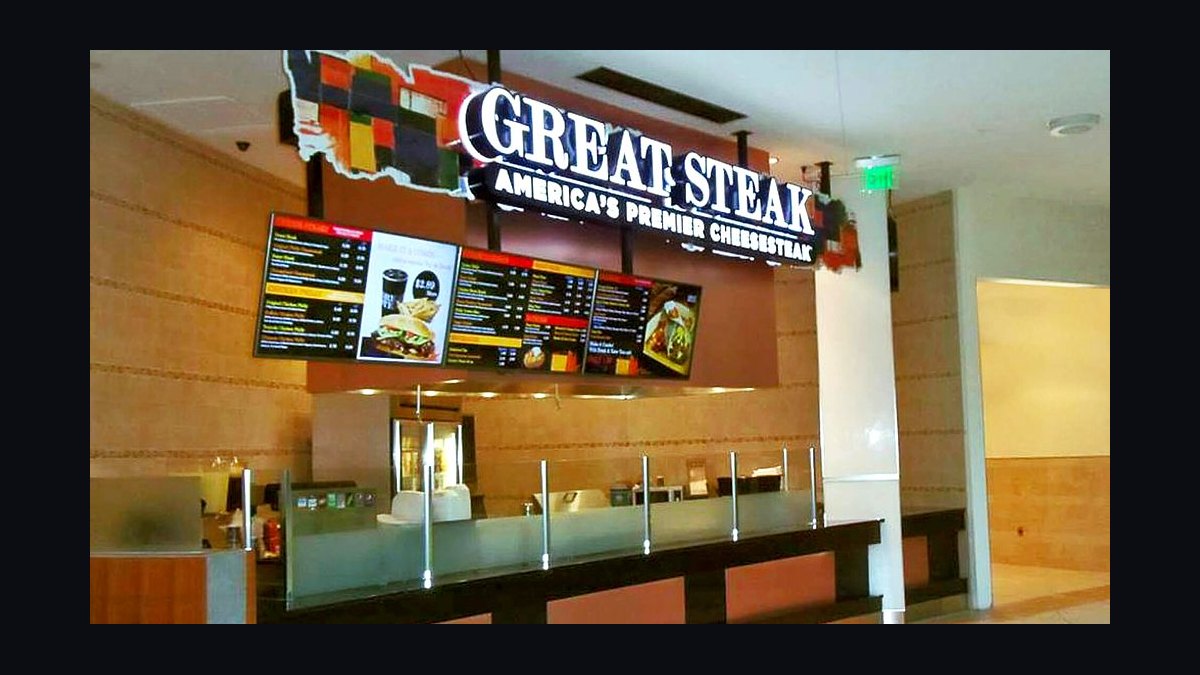
Open a Great Steak franchise in 2027 only if you can lock a top-tier, high-traffic venue — the concept works when foot traffic is strong, with $200,000-$400,000 total investment and owners clearing $60,000-$170,000 in mature units. Skip it if your only options are declining malls or low-traffic centers, since venue trajectory — not the concept itself — determines whether the unit survives.
A Food-Court Decision That Hinges on One Number
Picture two operators evaluating the same Great Steak franchise offer in early 2027. Both have $150,000 in liquid capital, both like the display-cooking concept, and both have run quick-service restaurants before. The difference is the venue each one is being offered. Operator A is looking at a space in an "A" mall anchored by a thriving department store chain, with reported daily foot traffic north of 1,000 shoppers and a food court that turns over lunch seating three times between 11:30 a.m. and 2 p.m. Operator B is looking at a "B" mall that lost an anchor tenant eighteen months ago, with daily traffic estimated at 500-700 visitors and a food court that feels half-empty on a Tuesday afternoon.
Both operators will sign nearly identical franchise agreements, pay nearly identical franchise fees in the $25,000-$30,000 range, and build out nearly identical 600-1,000 square foot units with the same griddles, hoods, and POS systems. But Operator A is likely to land in the $650,000-$900,000 gross sales range that makes the unit profitable after food cost, labor, mall occupancy, and royalty. Operator B is more likely to land in the $350,000-$500,000 range — sales too low to clear a profit once every fixed cost is paid. This is the single variable that separates a smart franchise purchase from a mistake: not the brand, not the recipe, not the training program, but the venue's traffic and its trajectory over the next five to ten years. A cheesesteak that sells well in a busy food court sells poorly in an empty one, and no amount of operational skill fixes a traffic problem.

This is why the question "should I open a Great Steak" cannot be answered in the abstract. It can only be answered against a specific venue, a specific lease, and a specific set of foot-traffic numbers that the prospective franchisee has to go verify directly rather than take on faith from a broker or a regional developer.
How the Food-Court Economics Actually Work
Great Steak's business model is a chain of dependencies that starts with mall health and ends with owner take-home pay. Understanding the mechanism — not just the headline revenue figure — is what separates a franchisee who can diagnose trouble early from one who gets surprised by a bad quarter.
It starts with venue traffic, which drives impulse buying in a food court far more than destination dining does. Nobody drives across town for a Great Steak the way they might for a sit-down restaurant; they buy one because they're already at the mall and the smell of grilled onions and sizzling steak on display pulls them to the counter. That means gross sales are almost entirely a function of how many people walk past the storefront each day and what fraction convert into a purchase. A strong "A" mall with anchor department stores, high vacancy occupancy, and steady weekend crowds pushes conversion higher simply through volume; a declining mall depresses it no matter how good the food tastes.

From gross sales, the franchise's cost structure eats a predictable set of percentages. Food cost typically runs around 30-35% of gross sales for a cheesesteak-and-fries concept, driven by beef, cheese, bread, and packaging. Labor runs 25-30%, reflecting the reality that display cooking during a lunch rush requires three to five trained employees who can assemble eight to twelve sandwiches a minute without a bottleneck forming at the grill. Mall occupancy costs — base rent plus percentage rent plus common area maintenance (CAM) — commonly land in the 12-18% range in food-court venues, meaningfully higher than the 6-10% a standalone fast-food restaurant pays for real estate, because food-court space is scarce, high-turnover, and priced accordingly. Royalty runs roughly 6-7% of gross sales, with an additional 1-2% marketing fee layered on top.
What remains after all of that is the owner's earnings. On a unit doing $650,000 in gross sales, a rough model looks like: food cost around $208,000 (32%), labor around $182,000 (28%), mall occupancy around $97,500 (15%), and royalty plus other operating costs around $91,000 (14%) — leaving approximately $71,500 in owner earnings before the value of the owner's own labor is considered. Shift that same cost structure onto a $400,000-gross unit in a declining mall and the fixed and semi-fixed costs (occupancy, a baseline labor crew, royalty minimums) consume a much larger share of a smaller pie, often erasing the margin entirely. This is the mechanism in one sentence: Great Steak's food cost and labor percentages are fairly stable across locations, but mall occupancy costs and gross sales both swing hard based on venue quality, and it's that combination — high fixed-percentage rent against uncertain and possibly declining sales — that turns a mediocre venue into a money-losing one.
Real Numbers to Underwrite Against

Before signing anything, a prospective franchisee should build a pro forma using ranges pulled from the 2026 Franchise Disclosure Document (FDD) and cross-checked against operator interviews, not marketing materials. The franchise fee sits at $25,000-$30,000. Buildout and food-court fit-out — the largest line item — runs $120,000-$250,000 depending on the size and condition of the space and how much the landlord contributes in tenant improvement allowances. Equipment, including griddles, hoods, and point-of-sale systems, runs $50,000-$110,000. Signage and food-court branding adds $12,000-$32,000, initial inventory another $8,000-$20,000, and initial grand-opening marketing $8,000-$22,000. Training and travel for the owner and a manager typically costs $8,000-$22,000, and working capital to cover the first three months of operations before the unit stabilizes should be budgeted at $22,000-$60,000. Altogether, total Item 7 investment lands in the $200,000-$400,000 range, with lenders and the franchisor generally expecting $80,000-$140,000 of that to be liquid capital the owner brings to the table rather than financed debt.
On the revenue side, mature units report gross sales of $400,000-$900,000 annually, with owner net profit in the $60,000-$170,000 range — a spread wide enough that venue quality alone can be the difference between the bottom and the top of that range. A 2025 franchisee survey of 42 operators found that units run by hands-on owner-managers averaged roughly $120,000 in net profit, compared to about $75,000 for units run by a hired, absentee manager — a 35-40% gap driven by shrink, waste, and slower service when the owner isn't present. Labor turnover in mall environments can exceed 150% annually, which means budgeting real dollars — $5,000-$10,000 for initial training alone — for the ongoing cost of hiring and retraining a crew that turns over more than once a year on average.

Lease terms matter as much as the investment figures. Great Steak franchise agreements typically run 10-20 years, and the underlying mall lease should match or exceed that term with renewal options built in — a shorter lease risks losing the location right as the unit matures and becomes profitable, forcing a costly relocation. CAM fees tend to escalate 3-5% annually if uncapped, so negotiating a 3% cap or tying increases to CPI protects the margin over the life of the lease. Co-tenancy clauses that reduce rent if mall occupancy falls below a threshold (commonly 80%) or if an anchor tenant closes are a critical, often-overlooked protection; without one, a franchisee can end up paying full rent in a half-empty mall with no recourse.
Weighing Great Steak Against the Alternatives
A Great Steak franchise is one of several ways to enter the fast-casual sandwich category, and the trade-offs against its closest peers clarify what an operator is actually choosing. Against Charleys Philly Steaks, another cheesesteak-forward food-court concept, Great Steak tends to be a lower-cost entry with a smaller footprint and a more regionally concentrated brand — strongest in the Midwest and Southeast — which can mean less consumer recognition in unfamiliar markets. Against Steak Escape, a closely related cheesesteak concept, the economics and venue dependence are broadly similar, so the decision often comes down to which brand has a stronger relationship with the specific mall developer controlling the available space. Against a non-mall fast-casual sandwich concept, Great Steak trades lower real estate flexibility for the built-in impulse traffic of a captive food-court audience — a reasonable trade in a thriving mall, a poor one in a declining center where that captive audience has shrunk.

The most important alternative to weigh honestly is not another franchise at all but an independent cheesesteak shop in a street-front or strip-mall location. Independence means full control over hours, menu, and marketing, and it means escaping the 12-18% mall occupancy costs entirely in favor of standalone lease economics closer to 6-10% of gross sales. It also means giving up the brand recognition, the training program, the supply chain relationships, and the impulse traffic that a food-court location provides — an independent operator has to build foot traffic from scratch rather than borrowing it from a mall's existing draw. For a first-time restaurant owner without an existing customer base, that trade-off often favors the franchise; for an experienced operator who already has a following or a strong standalone site, it can favor independence.
The resale market is a trade-off worth weighing before opening, not after. Great Steak units are not highly liquid compared to national burger or pizza chains — typical resale multiples run 1.5-2.5x net profit, so a unit earning $100,000 annually might sell for $150,000-$250,000, a modest return on a $300,000 investment once broker fees (8-10%) and franchise transfer fees ($5,000-$10,000) are subtracted. Lease term remaining, venue health, and brand recognition in the local market all swing that multiple significantly — a unit with five or more years left on a favorable lease in a thriving mall can command 20-30% more than one with two years left in a mall that has lost anchor tenants.
Common Pitfalls and How to Avoid Them
The single most common mistake prospective franchisees make is underwriting the investment off the franchisor's Item 19 averages without independently verifying the specific venue's foot traffic. Item 19 figures blend results from strong and weak locations together; an operator who assumes their unit will land near the average without checking whether their specific mall is closer to the "A" tier or the "B" tier is essentially gambling. The fix is straightforward but requires legwork: call the mall's leasing office for occupancy rate and recent anchor tenant history, and independently observe foot traffic at the proposed location across a weekday lunch and a weekend afternoon before signing anything.

A second common pitfall is underestimating lease economics, particularly CAM fee escalation and the absence of a co-tenancy clause. Franchisees who focus only on the base rent percentage and skip the fine print on CAM caps and anchor-tenant protections can find their occupancy costs climbing well past the 15-18% range within a few years, even as the mall's traffic declines around them. Negotiating these terms before signing — not after opening — is the only point of real leverage; once the unit is built out, the landlord holds all the negotiating power.
A third pitfall is treating the unit as a passive investment. The data on owner-managed versus absentee-managed units is stark enough to take seriously: a 35-40% gap in net profit is not a rounding error, it's the difference between a unit that comfortably services its debt and one that struggles. Franchisees who cannot commit to being on-site 40-plus hours a week for the first two to three years should plan for a co-owner or an unusually experienced, well-compensated general manager rather than assuming a standard hire will replicate owner-level performance.
A fourth pitfall is ignoring the resale exit before it's needed. Operators who plan to hold a unit five to seven years should prioritize lease terms and venue health from day one, and should keep equipment — hoods, refrigeration, POS — in excellent condition throughout ownership, since a well-maintained, turnkey unit can command a meaningfully higher resale multiple than a neglected one with deferred maintenance. Waiting until the exit is imminent to address any of this narrows the pool of buyers and weakens negotiating position considerably.
Related questions
How much does it cost to open a Great Steak franchise?

Total investment typically runs $200,000-$400,000, including a franchise fee of $25,000-$30,000, buildout, equipment, and initial working capital. Exact costs depend heavily on venue size and the amount of landlord tenant-improvement allowance available.
What ongoing fees does a Great Steak franchisee pay?
Franchisees pay a royalty of roughly 6-7% of gross sales plus a marketing fee of about 1-2%. Mall occupancy costs, often 12-18% of gross sales, are separate and typically the largest recurring expense.
Is Great Steak profitable for a first-time franchisee?
It can be, particularly for hands-on owners in top-tier venues — owner-managed units average around $120,000 in net profit versus roughly $75,000 for absentee-managed ones. Success depends more on venue selection and operational involvement than prior franchise experience.
How does Great Steak compare to Charleys Philly Steaks?
Both are cheesesteak-forward food-court concepts with similar venue dependence, but Great Steak is generally a lower-cost entry with a more regionally concentrated brand. The better choice often comes down to which brand has the stronger relationship with the specific mall developer.
What's the biggest risk in buying a Great Steak franchise?
Dependence on mall or venue foot traffic is the dominant risk, since it drives gross sales more than any operational factor. A structurally declining mall can make even a well-run unit unprofitable regardless of food quality or service.
FAQ
How much does it cost to open a Great Steak franchise? The total investment typically ranges from $200,000 to $400,000, including a franchise fee of $25,000 to $30,000. This covers build-out, equipment, and initial inventory, but exact costs depend on venue size and location.
What are the ongoing fees for a Great Steak franchise? Franchisees pay a royalty of around 6% to 7% of gross sales and a marketing fee, usually 1% to 2%. These fees fund brand advertising and ongoing operational support from the franchisor.
How much can I earn owning a Great Steak franchise? Mature units generally generate annual gross sales of $400,000 to $900,000, with owner net profits typically between $60,000 and $170,000. Actual earnings vary significantly based on venue traffic, lease economics, and whether the owner operates the unit directly.
What are the biggest risks of a Great Steak franchise? The main risk is dependence on mall or venue foot traffic, which can decline due to retail trends or a mall losing anchor tenants. Food-court leases also carry higher occupancy costs than standalone restaurants, and labor turnover can squeeze margins.
How long does it take to open a Great Steak franchise? From signing the franchise agreement to opening, the process usually takes 4 to 8 months, including site selection, lease negotiation, build-out, and the 2-3 week training program.
Is Great Steak a good fit for someone who wants a passive investment? Not typically — data shows owner-managed units significantly outperform absentee-managed ones. Anyone unwilling or unable to be on-site regularly for the first two to three years should plan for a strong, experienced manager or a hands-on co-owner rather than treating the unit as passive.
Sources
- https://www.entrepreneur.com/franchises/directory
- https://www.franchisebusinessreview.com
- https://www.ibisworld.com
- https://www.statista.com
- https://www.franchise.org
- https://www.technomic.com
- https://www.icsc.com
- https://www.ftc.gov/business-guidance/resources/franchise-rule-compliance-guide
Related on PULSE
This page will be disappearing soon. Save it to your device for $1 — or read it free while it is here.
@Kory-White- · if Venmo asks, the last 4 of my number are 2012
This page is gone.
This one is off the shelf now. $1 keeps it on your phone for good — the whole page, pictures and diagrams included.
 franchiseShould I open or buy a KinderCare franchise in 2027?
 franchiseShould I open or buy a Kumon franchise in 2027?
 franchiseShould I open or buy a Crumbl Cookies franchise in 2027?
 franchiseShould I open or buy a Jamba franchise in 2027?
 franchiseShould I open or buy a Great Clips franchise in 2027?
 franchiseShould I open or buy a UPS Store franchise in 2027?
 franchiseShould I open or buy a Bruster's Real Ice Cream franchise in 2027?
 franchiseShould I open or buy a Marco's Pizza franchise in 2027?
 franchiseShould I open or buy a Big O Tires franchise in 2027?
 franchiseShould I open or buy a FACE FOUNDRIÉ franchise in 2027?