


Should I open or buy a Curry Up Now franchise in 2027?
Quality
Certified
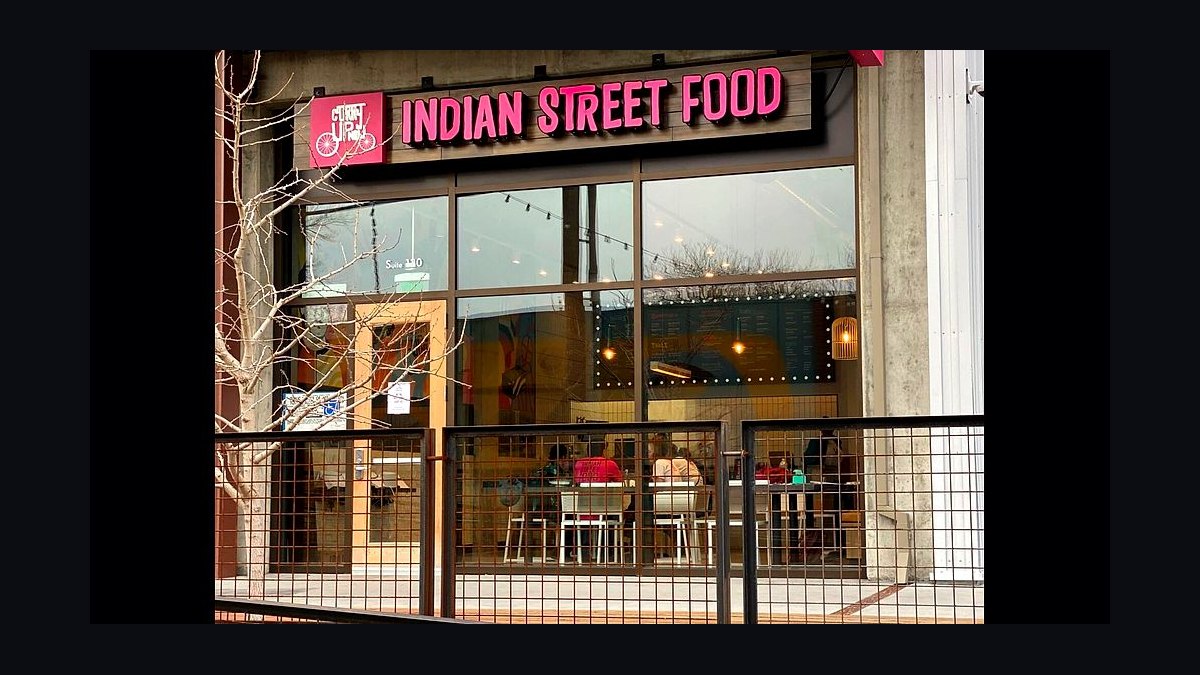
Opening a Curry Up Now in 2027 makes sense for a well-capitalized operator ($600K–$1.2M, with $200K–$350K liquid) who wants a differentiated Indian-street-food niche riding the global-flavors trend, can execute a complex tandoor-driven menu, and is willing to educate a market that may not yet know the concept. Under-capitalized buyers or those uncomfortable with a young, still-scaling system should look elsewhere.
A Concrete Scenario That Frames The Problem
Picture a 38-year-old operator named Priya who has run two Jimmy John's locations for six years. She's tired of thin sandwich margins and wants something with more upside and more personality. She's food-passionate, has $280,000 in liquid capital sitting after a cash-out refinance, and she's been watching "Indian fusion" and "global flavors" trend upward on every restaurant-industry newsletter she reads. She finds Curry Up Now through a franchise broker and gets excited: Indian burritos, tikka masala bowls, "sexy fries" — a menu that photographs well and travels well on delivery apps.
But Priya's Jimmy John's experience doesn't map cleanly onto this concept. A sandwich shop runs on assembly-line simplicity: bread, protein, toppings, wrap, done. A Curry Up Now kitchen runs a tandoor oven, simmers curry bases for hours, holds spice blends that need to be sourced consistently, and trains line cooks to plate dishes that still look appetizing after a 20-minute delivery ride. That's a different operational animal. She also has to think about her market — she's looking at a mid-size Sun Belt metro where nobody has ever heard of "Indian street food," which means her first six months will be spent explaining the menu to customers who default to ordering the safest-looking item, not the most interesting one.

This is the real decision Priya (and anyone else evaluating this franchise for 2027) is making: not "do I like the food," but "can I execute a labor-intensive menu, carry the capital for 12–18 months of ramp-up, and do the market education necessary before this becomes a habit purchase for local customers?" The answer to whether you should open a Curry Up Now hinges almost entirely on whether you can say yes to all three.
How The Mechanism Actually Works (Franchise Fee To Owner Payout)
The economic engine behind a Curry Up Now unit runs through a predictable sequence, and understanding the mechanism — not just the headline investment number — is what separates operators who succeed from operators who get blindsided by cash flow in year one.
It starts with the upfront capital stack: a franchise fee in the $40,000–$50,000 range buys you the brand, initial training, and territory rights. That's layered under a total Item 7 investment of roughly $600,000 to $1,200,000, which includes buildout, kitchen equipment (tandoor ovens are a meaningful line item), signage, initial inventory, marketing, training travel, and working capital to survive the first three months before revenue stabilizes.

Once doors open, the ongoing mechanism is a percentage-of-gross model: roughly 6% royalty and roughly 2% marketing fee flow back to the franchisor continuously, off top-line sales, regardless of your profitability that month. That's the part new franchisees sometimes underweight — royalty and marketing fees are due whether you had a great week or a slow one, because they're calculated on gross sales, not net profit.
Below that sits your controllable cost structure: food cost (spices, proteins, produce — typically higher than a standard fast-casual concept because of ingredient complexity), labor (skilled enough to execute the menu correctly, which usually means a slightly higher wage bill than an assembly-line concept), and occupancy. What's left after all of that is owner earnings, and it's why the operators who "leverage the niche" — meaning they lean into catering, delivery, and word-of-mouth around the differentiated menu rather than trying to out-compete Chipotle on speed — tend to outperform operators who try to run it like a generic fast-casual box.
This is also why the ramp-up period matters so much to the mechanism: during year one, before the market understands the menu, gross sales sit lower, which compresses every line in this flow simultaneously — you're paying royalty on a smaller number, covering fixed occupancy costs against thinner revenue, and often carrying higher relative labor cost because your team hasn't hit efficient throughput yet. The mechanism only starts working in your favor once volume climbs, which is why patience and adequate working capital reserves are as important as the initial buildout budget.
Real Numbers, Ranges, And Benchmarks

Here's what the 2026 FDD and operator-reported data suggest for someone evaluating this franchise heading into 2027.
Investment range. Franchise fee: $40,000–$50,000. Buildout and leasehold improvements: $320,000–$650,000 depending on whether you're taking a raw shell or a second-generation restaurant space. Equipment and kitchen (tandoor, cook line, hood system, POS): $150,000–$320,000. Signage and interior branding: $22,000–$70,000. Initial inventory: $12,000–$32,000. Initial marketing/grand opening: $18,000–$45,000. Training and travel for you and your opening staff: $12,000–$35,000. Working capital reserve: $40,000–$100,000. All in, total Item 7 investment lands between roughly $600,000 and $1,200,000, and liquidity requirements typically sit at $200,000–$350,000 with a net worth requirement above that.
Revenue benchmarks. Year-one gross sales for a reasonably well-located unit typically run $600,000–$900,000 as the market learns the concept. By year three, mature units are reporting $900,000–$2,000,000-plus, with the top of that range generally reserved for dense urban locations, college towns, or units with a strong catering program layered on top of dine-in and delivery.
Margins. Net profit margin after all costs — royalty, marketing fee, food, labor, occupancy, and other operating expenses — typically runs 12%–18% of gross sales once a unit is mature, translating to owner earnings of roughly $120,000–$320,000 annually on a single unit. Early-stage margins (years one and two) tend to run lower, in the 8%–12% range, due to training inefficiencies, local brand unfamiliarity, and startup debt service.
Financing math. If you finance around 70% of your initial investment, expect monthly debt service in the neighborhood of $5,000–$8,000, which is a real drag on cash flow during the ramp-up window before sales normalize.
Real estate benchmarks. Preferred footprint is 1,200–2,800 square feet depending on whether it's an inline, end-cap, or freestanding unit, generally targeting areas with 200,000-plus population and median household income above $75,000. Lease rates run $25–$40 per square foot NNN in secondary Sun Belt markets versus $60–$100-plus per square foot in prime urban cores like San Francisco or Chicago.
System size and support. As of mid-2026, the system carries roughly 25–35 open units, which is meaningfully smaller than a mature national chain. That has real implications: field support visits happen on a quarterly cadence rather than monthly, and operational response times average 24–48 hours — workable, but not the same infrastructure you'd get from a 3,000-unit brand.
Payback timeline. Single-unit operators are generally looking at a 4–6 year payback period; multi-unit operators who open a second location within 18–24 months of the first can compress that closer to 3–4 years per unit by spreading fixed overhead and leveraging shared marketing and management.
Trade-Offs And Alternatives

Every franchise decision is a trade-off between differentiation and risk, and Curry Up Now sits firmly on the "higher differentiation, higher execution risk" side of the fast-casual spectrum. Weighing that honestly against the alternatives is the most useful exercise a prospective operator can do before signing.
The case for opening one in 2027: this is a genuinely underserved niche. Very few franchise concepts bring Indian flavors into a mainstream, approachable, fast-casual format — the "Indian burrito" framing does real work here, giving customers a familiar mental model (burrito, bowl, fries) for an unfamiliar cuisine. That's a smart trojan horse for introducing bold flavors to a broad, non-specialist audience, and it's riding a real macro trend: global and ethnic flavors have been climbing steadily in fast-casual demand data for several years running. Strong average-unit-volume potential and a distinctive, shareable brand identity add to the appeal, especially in markets full of younger, food-adventurous, delivery-app-native consumers.
The case against, or at least the case for caution: the capital requirement is meaningfully higher than a lot of comparable fast-casual concepts, the system is young and still building out its support infrastructure, the menu itself is operationally harder to execute consistently than a build-your-own-bowl concept, and you're taking on real market-education risk in any city where Indian street food isn't already a known quantity.

If the capital or complexity gives you pause, the honest alternatives worth benchmarking against are: a fresh-Mex assembly-line concept like Chipotle or Salsarita's, which trades menu novelty for operational simplicity and a much more mainstream customer base; an Asian-bowl concept like BIBIBOP or Tokyo Joe's, which offers a similar "familiar format, adventurous flavor" positioning with a somewhat gentler learning curve; a Mediterranean concept like The Simple Greek or Garbanzo, which shares the global-flavors tailwind with less kitchen complexity than a tandoor operation; or going independent with your own Indian fast-casual concept, which trades brand support and marketing cooperative for full creative and financial control. None of these are strictly "better" — they're different points on the same risk-versus-differentiation curve, and the right answer depends on whether you value Curry Up Now's brand recognition and niche positioning enough to accept its higher capital bar and steeper execution curve.
Common Pitfalls And How To Avoid Them
The operators who struggle with this franchise tend to fall into a small number of repeatable traps, and most of them are avoidable with the right preparation before you sign.

Under-capitalizing the working capital reserve. Because the ramp-up period to mature sales can run 12–18 months, operators who fund the buildout and opening inventory but skimp on the working capital line often find themselves cash-strapped exactly when they need flexibility most — during the slow months while the local market is still learning the menu. Fix: budget toward the higher end of the $40,000–$100,000 working capital range, and stress-test your model assuming a 12-month ramp rather than a 6-month one.
Underestimating menu execution difficulty. Operators coming from simpler fast-casual backgrounds sometimes assume training will fully close the gap on tandoor cooking and curry-base consistency. It usually doesn't happen overnight. Fix: spend extended time in the designated training store beyond the standard four-week program if you can, and prioritize hiring at least one or two kitchen staff with prior Indian or South Asian cooking experience for your opening team.
Choosing a location without validating food-adventurousness. A strong demographic profile on paper (population, income) doesn't guarantee a market is ready for unfamiliar cuisine. Fix: before signing a lease, look at how the local market already responds to global-flavor concepts — are there other ethnic fast-casual brands succeeding nearby? Is there a university, tech employer base, or diverse population that skews toward trying new food?
Skipping Item 19 and operator validation calls. Because the system is young, disclosed financial performance data can be thinner than a mature franchise, and self-reported operator numbers can be optimistic. Fix: call multiple existing franchisees directly, not just the ones the franchisor refers you to, and ask pointed questions about actual net profit, not just gross sales.

Treating catering as an afterthought. Operators who build a real catering program tend to outperform the benchmark ranges cited above, because catering orders carry better margins and build corporate/institutional word-of-mouth faster than walk-in traffic alone. Fix: budget marketing dollars and staff training specifically toward catering from day one, not as a "maybe later" initiative.
Overleveraging the initial investment. Financing 70% or more of the total investment creates $5,000–$8,000 in monthly debt service that compounds the cash-flow strain of a slow ramp-up. Fix: where possible, bring a larger equity share to reduce debt service during the vulnerable first 12–18 months.
Related questions
How long does it take to open a Curry Up Now franchise?
Most owners report 6–12 months from signing the franchise agreement to opening day, covering site selection, lease negotiation, buildout, training, and local permitting — permitting timelines vary significantly by municipality.
Is prior restaurant experience required to open one?
No, but the franchisor prefers candidates with business management or multi-unit leadership experience. Training covers day-to-day operations, but hands-on ownership involvement is expected, especially in the first year.
What's the difference between Curry Up Now and a traditional Indian restaurant?

Curry Up Now packages Indian flavors into familiar fast-casual formats — burritos, bowls, fries — rather than a traditional sit-down thali or curry-house menu, making it more accessible to first-time customers.
How does catering factor into total revenue for a unit?
Operators who build a real catering program report it meaningfully boosting average unit volume, since catering orders tend to run larger tickets and better margins than individual walk-in or delivery orders.
Should I compare Curry Up Now against Chipotle before deciding?
Yes, comparing against a mainstream assembly-line concept clarifies whether you value differentiation and niche upside enough to accept higher capital requirements and steeper menu-execution demands.
FAQ
What is the total investment range for a Curry Up Now franchise? The total initial investment typically falls between $600,000 and $1,200,000, covering buildout, equipment, signage, inventory, training, and working capital. Actual cost depends heavily on location size, lease terms, and local construction pricing.
How much can I expect to earn as a franchise owner?

Mature units generally report annual gross revenue of $900,000 to $2,000,000 or more, with owner net profit ranging from $120,000 to $320,000 depending on location, execution, and local market receptiveness to the concept.
What are the ongoing fees I need to pay? Franchisees pay a royalty of roughly 6% of gross sales plus a marketing fee near 2%, both calculated on top-line revenue regardless of monthly profitability — standard structure for the fast-casual franchise industry.
How long does it take to open a new location? Most owners report a 6-to-12-month timeline from signing the franchise agreement to opening, covering site selection, lease negotiation, buildout, staff training, and local permitting approvals.
Is prior restaurant experience required to own this franchise? No prior restaurant experience is strictly required, though the franchisor prefers operators with business management or multi-unit leadership backgrounds. Formal training is provided, but hands-on ownership involvement is expected throughout the ramp-up period.
What makes Curry Up Now different from other Indian fast-casual chains? Its menu is built around inventive street-food formats — Indian burritos, tikka masala bowls, "sexy fries" — that translate unfamiliar flavors into familiar formats, targeting a younger, trend-driven, food-adventurous customer base.
Sources
- https://www.entrepreneur.com/franchises/directory
- https://www.franchisedirect.com
- https://www.ftc.gov/business-guidance/resources/franchise-rule-compliance-guide
- https://www.franchisetimes.com
- https://www.qsrmagazine.com
- https://www.nrn.com
- https://www.ibisworld.com
- https://www.statista.com
- https://www.franchisebusinessreview.com
- https://www.franchise.org
Related on PULSE
- Should I open or buy a The NOW Massage franchise in 2027?
- Should I open or buy an Any Lab Test Now franchise in 2027?
- Should I open or buy a Stand Up Guys franchise in 2027?
- Should I open or buy a Pick Up Stix franchise in 2027?
- Should I open or buy an Eggs Up Grill franchise in 2027?
- Should I open or buy a Stand Up Guys Junk Removal franchise in 2027?
This page will be disappearing soon. Save it to your device for $1 — or read it free while it is here.
@Kory-White- · if Venmo asks, the last 4 of my number are 2012
This page is gone.
This one is off the shelf now. $1 keeps it on your phone for good — the whole page, pictures and diagrams included.
 franchiseShould I open or buy a Pizza Hut franchise in 2027?
 franchiseShould I open or buy a Massage Envy franchise in 2027?
 franchiseShould I open or buy an Auntie Anne's franchise in 2027?
 franchiseShould I open or buy a Mathnasium franchise in 2027?
 franchiseShould I open or buy a Dunkin' franchise in 2027?
 franchiseShould I open or buy an Anytime Fitness franchise in 2027?
 franchiseShould I open or buy a Papa John's franchise in 2027?
 franchiseShould I open or buy a KinderCare franchise in 2027?
 franchiseShould I open or buy a McAlister's Deli franchise in 2027?
 franchiseShould I open or buy a Dairy Queen franchise in 2027?