


Should I open or buy a Pick Up Stix franchise in 2027?
Quality
Certified
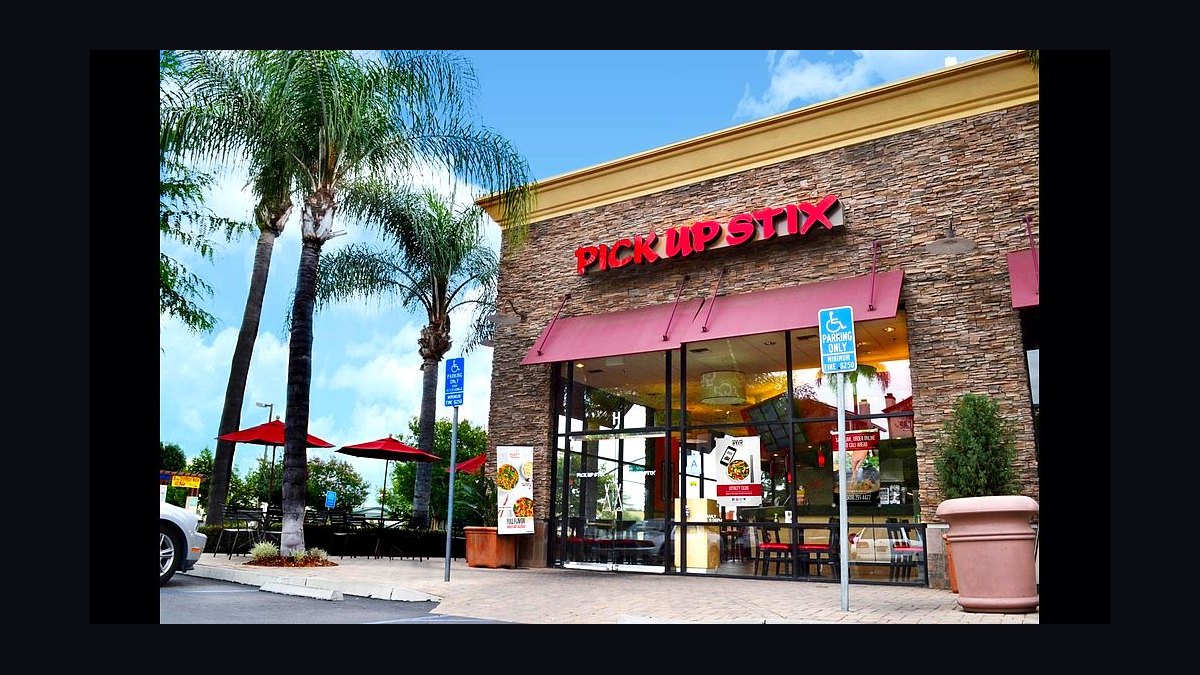
Treat Pick Up Stix as a brand to watch, not a franchise to open in 2027: it has grown almost entirely through company-operated stores concentrated in California and the West, so a real franchise opportunity may not exist in your market. Confirm availability directly with corporate before spending a dollar, and line up an actively-franchising Asian fast-casual brand as your backup path.
A Concrete Scenario That Frames The Problem
Picture an operator in Riverside, California who grew up eating Pick Up Stix's House Special Chicken and decides in early 2027 that it's time to open a location of their own. They search "Pick Up Stix franchise," find a handful of vague articles, and assume — reasonably — that a brand with dozens of visible storefronts must have an open franchise program. They start budgeting for a $300,000–$700,000 buildout, call a commercial real estate broker, and even scout a 2,000-square-foot end-cap space near a grocery anchor. Only when they try to request a Franchise Disclosure Document (FDD) do they discover the truth: Pick Up Stix does not maintain an active, broadly available franchise program. The company has instead grown almost entirely through company-owned and operated restaurants, a structure closer to a regional chain than a national franchise system.
This is the scenario that matters most for anyone typing "should I open a Pick Up Stix franchise" into a search bar in 2027. The brand is real, its food has a loyal following, and its unit economics — where the restaurants exist — are respectable for the category. But the franchise mechanism that would let an outside operator buy in, sign a franchise agreement, pay an initial fee, and open under the brand's name may simply not be running. That distinction — brand strength versus franchise availability — is the single most important filter before any capital moves. An operator who skips this step and starts signing leases or hiring architects before confirming franchise status risks burning tens of thousands of dollars in soft costs chasing a deal that was never on the table.

The lesson generalizes beyond this one brand: any time a concept feels ubiquitous or nostalgic, it's tempting to assume it must be franchisable. Wendy's, In-N-Out, and dozens of beloved regional chains are proof that popularity and franchise availability are two completely separate variables. Before this operator — or you — commits to a real estate search, a lease negotiation, or a six-figure buildout budget, the very first phone call needs to go to the brand's corporate or franchising department, not to a contractor or a landlord.
How The Mechanism Actually Works
Understanding why a popular brand like Pick Up Stix might not be actively franchising requires understanding the two growth models a restaurant company can choose between, and why they pull in opposite directions.

In a company-operated model, the parent company owns every unit, hires every general manager, and keeps 100% of the profit (and 100% of the risk) at each location. This model gives leadership tight control over food quality, service consistency, and brand image — which matters enormously for a concept built around fresh, made-to-order wok cooking, where an under-trained or under-capitalized operator could easily produce an inconsistent product that damages the whole brand. The tradeoff is slower growth: expansion is capped by how much capital and management bandwidth the parent company itself can deploy, which is exactly why Pick Up Stix's footprint has stayed concentrated in California, Nevada, and Arizona for decades instead of spreading nationally.
In a franchise model, the parent company licenses its name, recipes, systems, and support infrastructure to independent operators in exchange for an upfront franchise fee (commonly in the $25,000–$50,000 range for fast-casual concepts) plus ongoing royalties (typically 5–7% of gross sales) and a marketing fund contribution (typically 1–2%). This lets a brand scale far faster than its own capital would allow, because franchisees bring their own money and labor to every new location. The cost is dilution of control: quality now depends on hundreds of independent owner-operators following the system correctly, which is why franchise agreements come with detailed operations manuals, mandatory training programs, and field consultant visits.
A brand doesn't have to pick one model forever — many chains start company-operated to prove the concept, then open franchising once the systems are documented and repeatable, and some do the reverse, buying back underperforming franchised units to convert them to company-operated stores. The critical takeaway for a prospective owner is that you cannot tell which model a brand is currently running just by counting storefronts. The only reliable proof is a current FDD, a franchising webpage with an active inquiry form, or a direct answer from a corporate development contact.
Real Numbers, Ranges, and Benchmarks

Because Pick Up Stix's own current franchise fee, royalty rate, and Item 19 financial performance figures are not something a prospective buyer can verify without a current FDD in hand, the responsible way to plan is to benchmark against the broader Asian fast-casual category and treat any Pick Up Stix-specific figure as unconfirmed until the paperwork says otherwise.
Across comparable Asian fast-casual concepts — think stir-fry, teriyaki, and Asian bowl brands with a similar footprint and kitchen complexity — total initial investment for a single unit commonly runs $300,000 to $700,000. That range typically breaks down roughly as: leasehold improvements and buildout at $180,000–$420,000 (the single biggest line item, driven heavily by local construction costs and whether the space needs a ventilation hood and fire suppression system for wok cooking, which alone can add $20,000–$40,000 in some jurisdictions); kitchen equipment including the wok line and POS system at $100,000–$220,000; signage and interior branding at $18,000–$55,000; opening inventory at $10,000–$26,000; grand-opening marketing at $14,000–$38,000; training and travel at $10,000–$30,000; and working capital to cover the first three months of operations at $30,000–$80,000.

On top of the build, a franchise fee for a comparable Asian fast-casual concept commonly falls in the $25,000–$40,000 range, with ongoing royalties of roughly 5–7% of gross sales and a marketing fund contribution of 1–2%. Lenders and franchisors alike generally want to see $120,000–$200,000 in liquid capital and a net worth well above the total investment before they'll support a first-time single-unit deal, because restaurant buildouts routinely run over budget.
On the revenue side, mature, well-located company-operated Asian fast-casual units in this size class have been reported to gross $700,000 to $1.4 million annually, with catering frequently cited as a meaningful secondary revenue stream that boosts margins because it doesn't require additional dine-in seating capacity. From that top line, a rough operating model for a $1 million-a-year unit might allocate about 30% to food cost, 28–30% to labor (wok cooking is labor-intensive because it's made-to-order rather than batch-prepped), 8–10% to occupancy, and the remainder to royalties, marketing fees, and other operating expenses — leaving somewhere in the neighborhood of 12–18% as pre-debt-service owner earnings for a well-run location. These are category benchmarks, not confirmed Pick Up Stix figures, and every one of them needs to be checked against a specific FDD's Item 19 disclosure and against real conversations with existing operators before it enters your business plan.
Trade-Offs And Alternatives
The core trade-off with Pick Up Stix in 2027 isn't food quality or brand loyalty — by most accounts both are strong within its existing footprint — it's access. You can love a brand and still be unable to buy into it, and that reality should reshape how you spend your diligence time.

If your initial outreach to Pick Up Stix confirms there's no active franchise program in your target market, or if you're outside its historical footprint of California, Nevada, and Arizona and would be building brand awareness from zero, the more productive move is to widen your search to Asian fast-casual concepts that are actively signing new franchisees right now. Categories worth comparing side-by-side include large-scale players like Panda Express, which offers a well-established multi-unit franchise system but typically expects $500,000+ in liquid capital and often requires a multi-unit development commitment; mid-size teriyaki and bowl-format concepts that tend to have somewhat lower entry investment and a single-unit-friendly structure; and Korean or fusion concepts that carry a higher average ticket but more complex kitchen operations. Each of these brands can hand you a current FDD, a franchisee reference list, and an Item 19 you can actually compare against Pick Up Stix's category benchmarks — something Pick Up Stix itself may not be able to offer if it isn't franchising.
The decision tree, in practice, is straightforward: first confirm availability, and only branch into a buildout plan once you have a signed franchise agreement in hand or a documented "yes, we're accepting applications in your state" from corporate. Treat any brand's popularity as a signal that the category (Asian fast-casual) works, not proof that this specific brand is your access point into it. An independent, non-franchised Asian fast-casual concept is also worth considering if you want full creative and operational control and are comfortable building your own systems, supply chain, and brand from scratch instead of licensing someone else's.
Common Pitfalls And How To Avoid Them
The single biggest pitfall is skipping verification and moving straight to real estate and financing based on brand familiarity alone. Fix this by making your very first action a direct call or email to Pick Up Stix's corporate offices, and by checking whether their website has a live "Franchising" page with an inquiry form versus one that quietly redirects to general "Careers" or "Contact Us" pages — the latter is a strong signal that franchising isn't currently active.
A second pitfall is assuming brand visibility equals franchise support infrastructure. Even if a franchise slot does open up, a brand that has spent decades operating company stores may have a thinner field-support team, fewer standardized training materials for new owners, and less experience onboarding outside operators than a brand built for franchising from day one. Ask directly about training length, field visit frequency, and what happens if a wok exhaust or ventilation permit gets held up by your local health department — a real risk given that fire suppression retrofits can add tens of thousands of dollars and weeks of delay to a timeline.
A third pitfall is underestimating regional brand-awareness costs. Someone opening outside the loyal California/Nevada/Arizona base is essentially launching a new local restaurant brand and should budget accordingly — realistically $50,000–$100,000 in first-year local marketing on top of any franchise marketing fund contribution — rather than assuming decades of West Coast goodwill will translate automatically to a new region.

A fourth pitfall is comparing offers apples-to-oranges. When you request FDDs from Pick Up Stix (if available) and from two or three actively-franchising alternatives, line up the same fields side by side: total investment range, franchise fee, royalty percentage, marketing fee percentage, and Item 19 average unit volume. A brand with a slightly higher franchise fee but a materially higher average unit volume and stronger franchisee support may be the better economic bet even if it's the less nostalgic choice. Finally, never sign anything or wire a deposit before an attorney experienced in franchise law reviews the FDD and franchise agreement — this is standard practice regardless of which brand you ultimately pursue.
Related questions
Is Pick Up Stix owned by a larger restaurant company?
Ownership structure and any parent-company relationship should be confirmed directly through the current FDD or corporate contact rather than assumed, since public information on this can be incomplete or outdated by 2027.
What's the difference between a franchise fee and ongoing royalties?
The franchise fee is a one-time upfront payment for the right to open under the brand; royalties are an ongoing percentage of gross sales (commonly 5–7% in fast-casual) paid for continued use of the system, brand, and support.
Do I need restaurant experience to open an Asian fast-casual franchise?

Most franchisors prefer or require prior restaurant, retail management, or multi-unit operating experience, since wok-based made-to-order cooking has a steeper operational learning curve than a simpler QSR format.
How long does it take to open a fast-casual restaurant from signing to opening day?
For comparable Asian fast-casual concepts, expect roughly 6–12 months from signing a franchise agreement to opening day, depending on permitting, construction, and whether ventilation or fire-suppression retrofits are needed.
Can I negotiate a lower franchise fee for a first location?
Some franchisors offer incentive pricing for first-time single-unit owners or for underdeveloped territories, but this varies by brand and is disclosed (or not) in the FDD rather than through informal negotiation.
FAQ
Is Pick Up Stix actively offering new franchises in 2027? This is uncertain and brand-specific. The company has historically grown through company-operated stores concentrated in the West, so you should contact Pick Up Stix directly to confirm whether any franchise opportunities exist in your state before making any commitments.
What would it likely cost to open a Pick Up Stix-style Asian fast-casual restaurant?

If a franchise path is available, comparable fast-casual buildouts in this category commonly run $300,000–$700,000 including buildout, equipment, signage, opening inventory, and initial marketing — but only a current FDD can confirm brand-specific figures.
How much revenue can a well-run Asian fast-casual unit generate? Mature, well-located units in this category have been reported to gross $700,000–$1.4 million annually, with catering often cited as a valuable secondary revenue stream, though actual results vary widely by location and operator execution.
What should I do first if I'm interested in this brand? Confirm franchise availability before anything else — request the FDD, check for an active franchising page on the corporate website, and call the corporate office directly to ask whether they're awarding new franchises and in which states.
What's the biggest risk with pursuing Pick Up Stix specifically? The biggest risk is that no franchise opportunity exists at all, since the brand has grown primarily through company-owned stores; a secondary risk is regional concentration limiting growth outside its established West Coast footprint.
Are there good alternatives if Pick Up Stix isn't franchising in my area? Yes — several actively-franchising Asian fast-casual and teriyaki/bowl-format brands maintain current FDDs, franchisee reference networks, and open territories, making them a more accessible entry point into the same growing category.
Sources
- https://www.ftc.gov/business-guidance/resources/franchise-rule-compliance-guide
- https://www.franchise.org
- https://www.entrepreneur.com/franchises
- https://www.nrn.com
- https://www.ibisworld.com
- https://www.statista.com
- https://www.technomic.com
- https://www.sba.gov/business-guide/plan-your-business/franchise-businesses
Related on PULSE
This page will be disappearing soon. Save it to your device for $1 — or read it free while it is here.
@Kory-White- · if Venmo asks, the last 4 of my number are 2012
This page is gone.
This one is off the shelf now. $1 keeps it on your phone for good — the whole page, pictures and diagrams included.
 franchiseShould I open or buy an Orangetheory Fitness franchise in 2027?
 franchiseShould I open or buy an Auntie Anne's franchise in 2027?
 franchiseShould I open or buy a Roto-Rooter franchise in 2027?
 franchiseShould I open or buy a Great Clips franchise in 2027?
 franchiseShould I open or buy a Panera Bread franchise in 2027?
 franchiseShould I open or buy a Subway franchise in 2027?
 franchiseShould I open or buy a Mathnasium franchise in 2027?
 franchiseShould I open or buy a Rita's Italian Ice franchise in 2027?
 franchiseShould I open or buy a Planet Fitness franchise in 2027?
 franchiseShould I open or buy a Culver's franchise in 2027?