


Should I open or buy a Famous Dave's franchise in 2027?
Quality
Certified
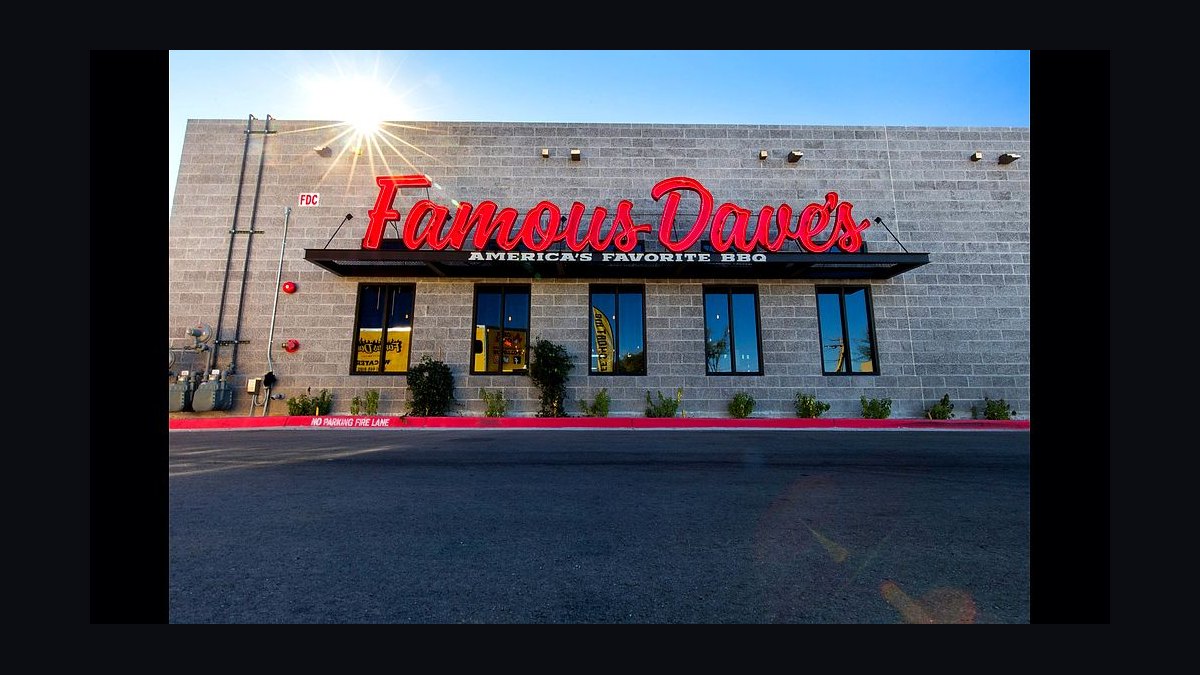
Yes, if you can fund the right format and you're prepared for BBQ's operational demands: a fast-casual Famous Dave's runs roughly $600,000–$1,200,000 to open, a full-service location $1,500,000–$2,500,000, with mature units grossing $1M–$3M and owners clearing $130K–$450K. Skip it if you're under-capitalized, can't recruit pitmasters, or won't invest in catering.
Full-service or fast-casual: the two paths into Famous Dave's
Anyone evaluating whether to open a Famous Dave's franchise in 2027 is really evaluating two different businesses wearing the same brand. The full-service "Classic" restaurant is a 3,500–5,000 square foot sit-down operation with table service, a full bar in many locations, and a dining room built around families and groups. It behaves like a casual-dining concept — Applebee's or Texas Roadhouse territory — except the kitchen is built around slow-smoked brisket, ribs, and pulled pork instead of a flat-top grill. The fast-casual "Quick Que" format strips that down to 1,800–2,500 square feet, counter ordering, and a faster table turn, competing more directly with Dickey's or Sonny's BBQ than with a dine-in chain.
The decision between them is not just about how much capital you have — it changes what skills you need day to day. Full-service Famous Dave's locations depend on hospitality management: server training, bar operations, host-stand flow, and a general manager who can run a dining room during a Friday-night rush. Fast-casual locations depend far more on throughput — how fast a line moves through the counter, how consistently the kitchen can portion smoked meat by the pound without a server to buffer mistakes. Both formats share the same core production challenge (the smoker), but the front-of-house skill set is almost a different job.

Franchisees also need to weigh format against catering ambition. The full-service Classic restaurant has more kitchen capacity and typically a banquet or private-event space, which makes it the stronger platform for large corporate catering orders. The fast-casual format can still cater, but usually caps out at smaller residential and office orders because the kitchen wasn't built with catering-volume smoker capacity in mind. If catering is central to your business plan — and for Famous Dave's it should be, since it's one of the brand's real structural advantages — that alone can tip the decision toward the higher-capital full-service format even if your balance sheet would technically support either.
Geography matters too. A full-service Famous Dave's wants a freestanding pad or strip-center endcap with strong drive-by visibility, usually in a suburban retail corridor with enough rooftops to support a $2.5M-3M annual sales volume. A fast-casual unit can work in a tighter footprint — an inline strip-center space, a food-hall-adjacent spot, or a downtown/urban location where a 5,000-square-foot freestanding building isn't available or affordable. If your target market is a tertiary town without the traffic counts to support a large casual-dining box, fast-casual is often the only format that pencils.
How to decide between them
Work through the decision in this order: capital available, market type, and operating skill set. If you have $2M+ in accessible capital (including reserves beyond the build-out), are targeting a suburban trade area with strong dinner traffic, and either you or a hired GM has full-service hospitality management experience, the Classic format is usually the stronger long-term earner because of its higher revenue ceiling and catering capacity. If your capital caps out closer to $600K–$1M, or your target market is smaller or more urban/tight-footprint, fast-casual is the more realistic entry point — and it still gives you the Famous Dave's name and smoked-meat menu, just at a lower table-turn ceiling.

Whichever format you land on, don't skip Item 19 in the FDD. It's the only place the franchisor discloses actual unit-level financial performance, and it should be your reality check against the ranges quoted above — ask specifically whether the disclosed figures are broken out by format, since blending full-service and fast-casual averages can mask which one is actually the better bet in your market. Also weight the interview calls with existing franchisees heavily here: ask each operator directly whether they'd choose the same format again, and why. Format regret — an operator who built full-service in a market that couldn't support it, or built fast-casual and hit a revenue ceiling they now wish they'd built past — is one of the most common and avoidable mistakes in casual-dining and fast-casual franchising.
Concrete numbers behind each option
The 2026 FDD lists a $40,000 franchise fee regardless of format. Where the formats diverge is everywhere else in Item 7. For the fast-casual format, budget roughly $350,000 for buildout and leasehold improvements, $180,000 for smokers and kitchen equipment, $30,000 for signage and decor, $15,000 for initial inventory, $20,000 for opening marketing, $18,000 for training and travel, and $60,000 in working capital to cover the first three to four months — a total Item 7 investment around $600,000. For the full-service format, those same categories scale up substantially: buildout runs closer to $1,400,000, smokers and equipment $500,000, signage $130,000, inventory $45,000, opening marketing $55,000, training $50,000, and working capital $200,000, pushing total Item 7 investment toward $2,500,000. Ongoing fees are the same across formats: a royalty near 5% of gross sales and a marketing fee around 2%–4%.

Revenue and profitability scale with format too. Mature units gross $1,000,000 to $3,000,000-plus annually, with full-service locations generally landing at the higher end of that range given their larger dining rooms and catering capacity, and fast-casual units more often clustering in the $1M–$1.8M range. Owner earnings after all expenses typically fall between $130,000 and $450,000 per year. On a full-service unit doing roughly $2,000,000 in gross sales, a realistic cost structure looks like: food cost around 32% ($640,000), labor around 30% ($600,000), occupancy around 9% ($180,000), and royalty, marketing, and remaining operating expenses around 14% ($280,000) — leaving owner earnings near $300,000 before debt service. That math changes fast if food cost or labor runs even a few points hot, which is exactly why BBQ production discipline and pitmaster retention matter as much as the site-selection decision.
Real estate costs also differ meaningfully by format and market tier. Leasehold improvements for the full-service Classic model often run $150–$300 per square foot, so a 4,000-square-foot restaurant can require $600,000–$1.2 million in build-out alone before equipment. The fast-casual formats run closer to $100–$200 per square foot given their smaller footprint and simpler dining-room finish. Triple-net lease rates in 2027 are running an average of $18–$28 per square foot in suburban markets and $30–$45 per square foot in prime metro infill locations — franchisees should budget six to twelve months of rent carry during pre-opening construction, since permitting and buildout timelines for a smoker-equipped kitchen routinely run long.
Implementation details and sequencing

Once you've chosen a format and validated Item 19, execution splits into three workstreams that need to run in parallel rather than sequentially: real estate and construction, pitmaster staffing, and catering/retail setup. Real estate is usually the long pole — expect 6 to 18 months from signed lease to opening day depending on format, with full-service locations taking longer because of the larger buildout and more complex permitting (grease traps, smoker exhaust venting, and fire suppression all require additional inspection cycles that fast-casual kitchens can sometimes streamline).
Staffing has to start well before the doors open. Experienced pitmasters in 2027 command $55,000–$75,000 in base salary plus performance bonuses, and most operators report three to six months to fully train a new pitmaster to brand standard even when hiring someone with prior BBQ experience. That means pitmaster recruiting should begin during construction, not after. The franchisees who build a durable operation run a pitmaster apprenticeship program — cross-training two or three back-of-house staff simultaneously on smokehouse operations rather than depending on a single hire — which both reduces key-person risk and creates an internal promotion path that helps retention. Budget $15,000–$25,000 annually for ongoing training and certification, and consider $1,000–$2,500 signing bonuses plus quarterly retention bonuses tied to food-quality scores; the FDD notes that units with turnover below 60% outperform higher-churn locations by 15–20% in EBITDA margin, which is a direct, measurable payoff for staffing investment.
Catering and retail should be built as a dedicated sales function from day one rather than bolted on after opening. Mature units generate 15–25% of total sales from catering, with top performers exceeding 30%, and catering carries 40–50% gross margins — meaningfully higher than dine-in because it avoids table-service labor. Corporate catering tickets in 2027 range $400–$1,200, residential tickets $150–$400. Franchisees who invest early in a branded catering vehicle or van wrap ($3,000–$8,000) and a POS-integrated digital ordering platform ($2,000–$5,000 setup) see faster catering ramp than those who treat it as an afterthought. "Heat-and-serve" family meal kits ($50–$90 each) are a low-labor add-on that can generate $2,000–$5,000 per week in incremental revenue during peak seasons like summer and football season. Third-party delivery apps will likely represent 10–15% of sales but carry 25–30% commission, so treat them as a marketing channel for awareness rather than a profit driver.
Related questions

How does Famous Dave's compare to Dickey's Barbecue Pit as a franchise?
Dickey's leans more heavily fast-casual with a lower typical investment, while Famous Dave's offers both a full-service option and a stronger built-in catering and retail-sauce program. Compare Item 19 figures directly rather than assuming either brand's reputation predicts your market's results.
Is a fast-casual Famous Dave's a good fit for a small town?
It can be, if the town has enough dinner-oriented traffic and no dominant local BBQ competitor. The smaller footprint and lower build-out cost make fast-casual the more realistic format in trade areas that can't support a 5,000-square-foot full-service box.
How much does staffing a pitmaster really cost in year one?
Beyond the $55,000–$75,000 base salary, budget $15,000–$25,000 for training and certification and $1,000–$2,500 for signing bonuses. Add three to six months of below-standard output while the pitmaster trains to brand consistency.
What's the biggest financial risk in opening a Famous Dave's?
Under-capitalizing the full-service format is the most common failure point — Item 7 investment can reach $2.5 million, and franchisees who stretch to open often lack the working capital reserve needed to survive a slow ramp-up period.
FAQ
What is the total investment range for a Famous Dave's franchise in 2027?

It depends heavily on format. A full-service restaurant runs roughly $1,500,000 to $2,500,000 in total investment, while the fast-casual format ranges from about $600,000 to $1,200,000, including the $40,000 franchise fee and all startup costs.
How much can I expect to earn as a Famous Dave's franchise owner? Mature units typically generate $1,000,000 to $3,000,000-plus in annual gross revenue, with owner earnings generally falling between $130,000 and $450,000 per year depending on format, location, and operational execution.
What are the ongoing fees for a Famous Dave's franchise? The royalty runs around 5% of gross sales, with a marketing fee typically in the 2%–4% range. Both are standard for the segment and confirmed in the current franchise agreement.
Is BBQ production really that difficult to manage as a franchise owner? Yes — smoking meat to consistent brand standard requires skilled pitmasters, tight quality control, and careful yield management across 12–16 hour smoke cycles. It's more labor- and skill-intensive than most quick-service concepts, and staffing it is the most commonly underestimated part of the business.
What makes Famous Dave's different from other BBQ franchise chains? The combination of two formats (full-service and fast-casual), a structurally strong catering program that can reach 30%+ of sales at top units, and a retail sauce line gives Famous Dave's more revenue diversity than most single-format BBQ competitors.
How long does it typically take to open a Famous Dave's franchise? Plan for 6 to 18 months from signed lease to opening day. Fast-casual locations tend toward the shorter end given simpler permitting and smaller buildout; full-service locations run longer because of larger construction scope and more complex kitchen/venting permitting.
Sources
- https://www.franchise.org
- https://www.entrepreneur.com/franchises
- https://www.qsrmagazine.com
- https://www.nrn.com
- https://www.technomic.com
- https://www.ibisworld.com
- https://www.statista.com
- https://www.franchisebusinessreview.com
- https://www.famousdaves.com
Related on PULSE
- Should I open or buy a Famous Dave's BBQ franchise in 2027?
- Should I open or buy a Lee's Famous Recipe Chicken franchise in 2027?
- Should I open or buy a Nathan's Famous franchise in 2027?
- Should I open or buy a Dave's Hot Chicken franchise in 2027?
- Should I open a Dave's Hot Chicken franchise in 2027?
- Should I open or buy a Dave & Buster's franchise in 2027?
This page will be disappearing soon. Save it to your device for $1 — or read it free while it is here.
@Kory-White- · if Venmo asks, the last 4 of my number are 2012
This page is gone.
This one is off the shelf now. $1 keeps it on your phone for good — the whole page, pictures and diagrams included.
 franchiseShould I open or buy a FACE FOUNDRIÉ franchise in 2027?
 franchiseShould I open or buy a Primrose Schools franchise in 2027?
 franchiseShould I open or buy a Bruster's Real Ice Cream franchise in 2027?
 franchiseShould I open or buy an Anytime Fitness franchise in 2027?
 franchiseShould I open or buy a Mathnasium franchise in 2027?
 franchiseShould I open or buy a Little Caesars franchise in 2027?
 franchiseShould I open or buy a Meineke franchise in 2027?
 franchiseShould I open or buy a Massage Envy franchise in 2027?
 franchiseShould I open or buy a Take 5 Oil Change franchise in 2027?
 franchiseShould I open or buy a Merry Maids franchise in 2027?