


Should I open or buy a The Coffee Bean & Tea Leaf franchise in 2027?
Quality
Certified
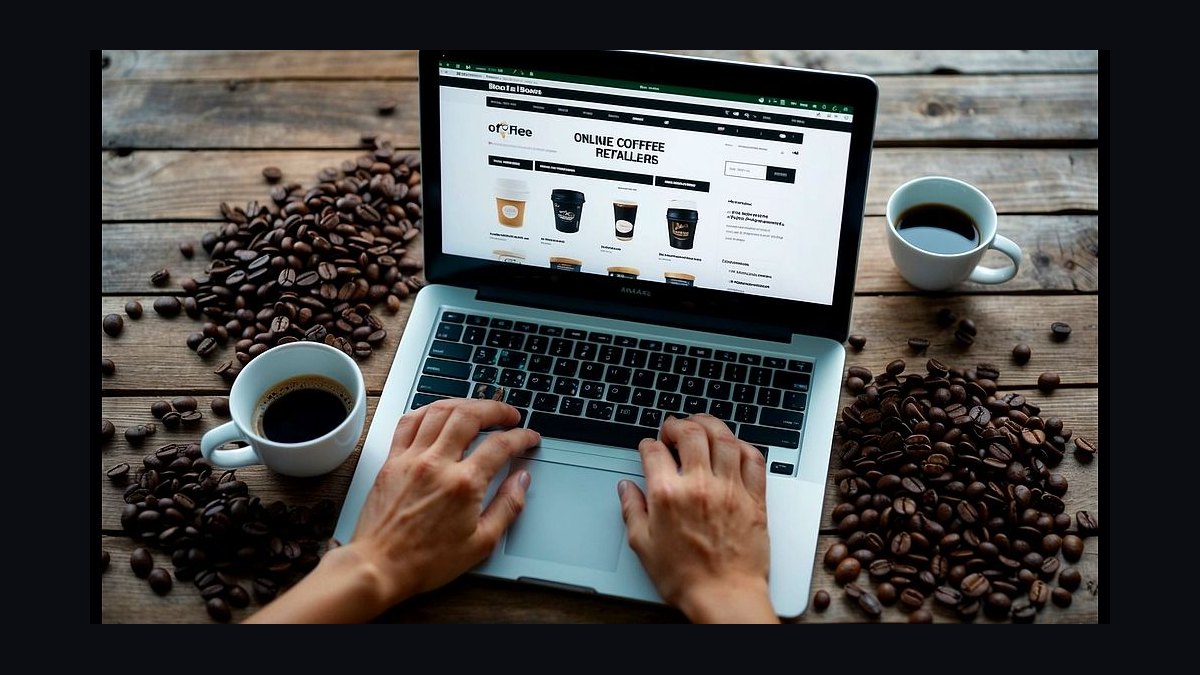
Yes, if you are coffee-minded, have $120,000-$200,000 in liquid capital, and can secure a high-traffic, coffee-and-tea-receptive site — opening a The Coffee Bean & Tea Leaf franchise in 2027 gives you a heritage brand (since 1963), a coffee-plus-tea differentiation built around Ice Blended drinks, and recurring daily-habit traffic. Skip it if you can't compete against Starbucks and Dutch Bros for location and labor.
The outcome you should expect
Franchisees who open a The Coffee Bean & Tea Leaf location in 2027 should expect a multi-year build toward profitability rather than an immediate payoff. The total Item 7 investment runs $300,000 to $700,000, which includes a franchise fee of $35,000-$45,000, buildout and leasehold costs of $150,000-$380,000, and equipment and espresso-line costs of $90,000-$200,000. A mature cafe — typically defined as one that has operated for 24-36 months and built a repeat customer base — grosses between $500,000 and $1,200,000 annually. Owner net profit on a mature, well-run location lands in the $70,000-$220,000 range after royalty (roughly 6% of gross), marketing fee (1-3%), labor, occupancy, and cost of goods sold.
The realistic outcome split depends heavily on three variables: site quality, local brand familiarity, and your ability to leverage the tea/Ice Blended differentiation rather than competing purely on coffee. Because The Coffee Bean & Tea Leaf has roughly 200 U.S. locations — concentrated in California with growing footprints in Texas, Nevada, and Arizona — compared to Starbucks' 16,000+ and Dutch Bros' 900+, you are opening into a market where brand recognition is real but regional, not universal. In markets where the brand already has a presence (Southern California especially), you inherit existing customer habit and can expect faster ramp to breakeven, often 12-18 months. In a market where the brand is new, expect an 18-24 month ramp as you build the daily-habit traffic the concept depends on.
The honest expectation for 2027 openings: this is a mid-tier, moderate-capital specialty beverage franchise that rewards operators who commit to a 5-10 year hold, actively manage labor and beverage throughput, and treat the tea program as a genuine point of differentiation rather than an afterthought to the coffee menu. It is not a path to rapid, Starbucks-level scale, and it is not a turnkey passive investment — it requires a full-time, hands-on operator in year one, with multi-unit potential only after the first location proves out.
What drives that outcome
Three forces determine whether a The Coffee Bean & Tea Leaf location hits the top or bottom of its earning range: site traffic, cost discipline, and differentiation execution.
Site traffic is the single biggest driver because coffee-and-tea is a habit-purchase category — customers form routines around locations that are convenient on their regular path, which means 30,000+ vehicles per day on arterial roads (for drive-thru-capable sites) or 15,000+ daily pedestrians in urban centers are the realistic floor for a location to reach the top half of the revenue range. Cost discipline matters because the gap between a 28% cost-of-goods cafe and a 35% cost-of-goods cafe (driven by waste, portion control, and vendor negotiation within approved-supplier constraints) is often the entire difference between a $70,000 owner income and a $150,000 owner income on the same gross revenue. Differentiation execution — actually selling the Ice Blended tea line and signature tea program as a reason to choose The Coffee Bean & Tea Leaf over a pure-coffee competitor — expands the customer base beyond coffee-only buyers and can lift average ticket and visit frequency, particularly among customers who rotate between coffee and tea occasions throughout the day.
When all three forces align — a strong site, tight cost control, and a cafe that actually markets its tea program rather than defaulting to coffee-only positioning — a The Coffee Bean & Tea Leaf location can reach the top of its owner-income range even against larger competitors, because it isn't trying to out-Starbucks Starbucks on scale; it's winning a specific customer who wants both coffee and tea options under one recognized, heritage brand. When any one of these three breaks down — a marginal site, loose labor management, or a cafe that behaves like a generic coffee shop — the location drifts to the bottom of the range or fails to cover its fixed costs, regardless of how good the brand's underlying economics look on paper.
Benchmarks and realistic ranges
Use these 2026 FDD-sourced benchmarks to stress-test any specific site or pro forma you're evaluating before you open in 2027.
Investment breakdown (Item 7, 2026 FDD):
- Franchise fee: $35,000-$45,000
- Buildout/leasehold: $150,000-$380,000 (drive-thru conversions run toward the high end)
- Equipment and espresso line: $90,000-$200,000
- Signage and decor: $18,000-$55,000
- Initial inventory: $10,000-$26,000
- Initial marketing (grand opening): $12,000-$35,000
- Training and travel: $10,000-$28,000
- Working capital (first 3 months): $30,000-$80,000
- Total: $300,000-$700,000
Ongoing fees: royalty near 6% of gross sales, plus a marketing fee typically 1-3% of gross. On a $700,000-grossing cafe, that's roughly $42,000 in royalty and $14,000-$21,000 in marketing fees annually — call it $56,000-$63,000 off the top before any operating costs are paid.
Revenue and profit benchmarks: mature cafes gross $500,000-$1,200,000 annually; owner net profit typically lands between $70,000 and $220,000. A useful rule of thumb from industry operators: keep rent at 8-12% of projected gross sales. On $700,000 in projected annual revenue, that caps monthly rent at roughly $4,700-$7,000 — anything higher and you're structurally squeezing your own margin regardless of how well you run the cafe.
Real estate benchmarks for 2027: target 1,200-2,000 square feet; expect $40-$80 per square foot annually for prime urban corners, with suburban retail centers currently showing higher vacancy and softer lease terms post-pandemic. Build-out costs for a Coffee Bean & Tea Leaf location range $200,000-$450,000 depending on whether you're converting an existing restaurant shell (cheaper) or building from a raw shell (more expensive).
Financing benchmarks: an SBA loan covering the bulk of a $300,000-$700,000 investment typically requires a 20-30% down payment and a personal credit score above 680 in the current lending environment.
Resale benchmarks: established locations typically sell for 2-3.5x annual EBITDA. A location generating $100,000 in annual owner income might sell for $250,000-$350,000 — a meaningful exit path, though compressed if the brand falls behind on cold brew, mobile ordering, or loyalty-program trends relative to competitors.
Risks, edge cases, and failure modes
The primary risk is direct competition from larger, better-capitalized coffee chains. Starbucks' 16,000+ U.S. locations and Dutch Bros' 900+ (alongside 7 Brew, Scooter's, and strong independents) mean you are rarely opening into an uncontested market — you are opening into a category where the biggest players can outspend you on real estate, marketing, and labor rates in the same trade area. A site that looks adequate on paper can underperform simply because a Starbucks or Dutch Bros opens nearby within your first 12-18 months and captures the convenience-driven customer before your location builds its own habit traffic.
A second failure mode is treating The Coffee Bean & Tea Leaf as a coffee-only concept. Franchisees who don't actively market and merchandise the signature tea and Ice Blended line forfeit the brand's actual differentiation and end up competing head-to-head with coffee giants on their weakest ground — pure coffee throughput and price. The operators who struggle most are the ones running the cafe as a generic coffee shop that happens to carry the Coffee Bean & Tea Leaf name, rather than leaning into what makes a customer choose this brand specifically.
A third risk is the brand's ownership and scale trajectory. The Coffee Bean & Tea Leaf was acquired by Jollibee Foods Corporation in 2019, which has funded international expansion but introduces some uncertainty about how much priority domestic U.S. franchise growth and marketing support receive relative to overseas markets. With roughly 200 U.S. locations against competitors with 10-80x that footprint, new-market franchisees should expect to do more of their own local marketing lift than a Starbucks or Dutch Bros franchisee would, since the brand's organic awareness is thinner outside its established West Coast base.

Labor is a persistent, underestimated risk. Espresso-and-tea cafe operations require trained baristas capable of consistent throughput during rush periods; high turnover in a tight local labor market directly erodes both speed-of-service and drink consistency, which in turn erodes the repeat-visit habit the entire economic model depends on. Operators who underinvest in training or retention see it show up first in slower throughput during peak hours, then in declining repeat visits over the following 60-90 days — a lagging indicator that's easy to miss until revenue has already softened.
Real estate risk compounds if you overpay for rent relative to projected sales — a location paying 15%+ of gross sales in rent (above the 8-12% benchmark) can be structurally unprofitable even with strong traffic and good operations, because there's no amount of operational excellence that offsets a lease that consumes too much of the margin before fixed costs are even covered. Finally, resale risk exists if the broader specialty-coffee category shifts faster than the brand adapts — cold brew innovation, mobile ordering, and loyalty-program sophistication are now baseline customer expectations, and a brand that lags on these can see its resale multiple compress even for well-run individual locations.
A practical rollout plan

A disciplined 130-day pre-opening sequence, followed by a long-term differentiation strategy, is how successful 2027 franchisees de-risk the open.
Days 1-20: Read the full 2026 FDD, with particular attention to Item 19 (financial performance representations) and Item 20 (outlet and franchisee turnover data). Cross-reference the Item 7 investment range against your actual liquid capital and financing plan before going further.
Days 21-40: Interview a minimum of 5-8 existing operators directly, not just references the franchisor provides. Ask specifically about AUV (average unit volume), daily traffic patterns, labor cost as a percentage of sales, and net profit after all fees — not just gross revenue, which can mask a thin-margin location.
Days 41-60: Validate your specific site against the brand's traffic benchmarks (30,000+ vehicles/day for drive-thru-capable arterial locations, 15,000+ pedestrians/day for urban walk-up locations) and confirm projected rent stays within the 8-12%-of-gross-sales guideline using a conservative revenue estimate, not an optimistic one.
Days 61-100: Build out and staff the location, using the franchisor's approved equipment and supplier list. Budget training and travel costs ($10,000-$28,000) for both yourself and your initial management team, and begin pre-opening local marketing to build awareness before doors open.
Days 101-130: Open and focus every operational decision on building recurring daily-habit traffic — consistent hours, consistent drink quality, and visible, in-store promotion of the tea and Ice Blended program from day one rather than introducing it later.
Beyond opening, the long-term plan is to operate as a top-quartile store within the system — ranking in the top 25% for sales and customer satisfaction — which gives you leverage on resale terms and better access to the franchisor's operational improvements and advisory-council input. Franchisees who engage actively with annual conventions and the advisory council consistently report higher satisfaction and faster access to menu and operational updates than those who operate in isolation.
Related questions
How does The Coffee Bean & Tea Leaf compare to opening an independent coffee shop?
The franchise provides a turnkey brand, supply chain, and training that can shorten the typical 12-18 month independent ramp-up, but costs you 6% royalty plus 1-3% marketing fees and locks you into approved suppliers. An independent operator keeps more margin but bears 100% of the brand-building risk.
What's the biggest site-selection mistake new franchisees make?
Overpaying for rent in a marginal location. Keep rent at 8-12% of projected gross sales — on $700,000 in revenue, that's a $4,700-$7,000 monthly cap, not a number to stretch past for a "better" address.
Is the Jollibee ownership a risk for U.S. franchisees?
It's a mixed signal: Jollibee's 2019 acquisition brought capital for international growth but introduces some uncertainty about domestic U.S. franchise priority. Budget for more self-driven local marketing than a larger domestic brand would require.
How long until a new location breaks even?
Expect 12-18 months in markets where the brand already has recognition, and 18-24 months in new markets where you're building awareness from scratch alongside daily-habit traffic.
Can I expect to go multi-unit?
Yes, but only after your first location proves out — typically after 2-3 years of mature, top-quartile performance — since multi-unit approval generally depends on demonstrated operational and financial track record with the brand.
FAQ
How much does it cost to open a The Coffee Bean & Tea Leaf franchise? The total investment typically ranges from $300,000 to $700,000, including a franchise fee of $35,000-$45,000. Costs vary by location size, build-out scope, and equipment needs, with drive-thru conversions running toward the higher end.
What are the ongoing fees?
You pay a royalty of about 6% of gross sales plus a marketing fee, usually 1-3%. These are standard for established food-and-beverage franchise systems and should be built into your pro forma from day one, not treated as an afterthought.
How much can I expect to earn? Mature cafes generally gross $500,000-$1,200,000 annually, with owner net profit in the $70,000-$220,000 range. Actual earnings depend heavily on site traffic, cost discipline, and local competition from larger chains.
Is The Coffee Bean & Tea Leaf a strong brand against Starbucks? It has a loyal following for its specialty coffee and tea, especially Ice Blended drinks, but it's a mid-tier brand with roughly 200 U.S. locations against Starbucks' 16,000+. Success depends heavily on site selection and local marketing rather than passive brand pull.
What are the biggest risks? Intense competition from larger chains for both customers and real estate, rising labor costs, and the brand's comparatively smaller scale, which can mean less corporate marketing support than bigger franchise systems provide.
How long does it take to open? From signing the franchise agreement to opening day, expect 6-12 months, covering site selection, lease negotiation, build-out, and staff training.
Sources
- https://www.ftc.gov/business-guidance/resources/franchise-disclosure-document
- https://www.coffeebean.com
- https://www.entrepreneur.com/franchises
- https://www.technomic.com
- https://www.ibisworld.com
- https://www.statista.com
- https://www.nrn.com
- https://www.franchise.org
- https://www.qsrmagazine.com
- https://www.franchisebusinessreview.com
Related on PULSE
- Should I open or buy a The Human Bean franchise in 2027?
- Should I open or buy an Orange Leaf franchise in 2027?
- Should I open or buy a Sunright Tea Studio franchise in 2027?
- Should I open or buy a CoCo Fresh Tea & Juice franchise in 2027?
- Should I open or buy a Vivi Bubble Tea franchise in 2027?
- Should I open or buy a Kung Fu Tea franchise in 2027?
This page will be disappearing soon. Save it to your device for $1 — or read it free while it is here.
@Kory-White- · if Venmo asks, the last 4 of my number are 2012
This page is gone.
This one is off the shelf now. $1 keeps it on your phone for good — the whole page, pictures and diagrams included.
 franchiseShould I open or buy a Taco Bell franchise in 2027?
 franchiseShould I open or buy a Rita's Italian Ice franchise in 2027?
 franchiseShould I open or buy a Matco Tools franchise in 2027?
 franchiseShould I open or buy a Supercuts franchise in 2027?
 franchiseShould I open or buy a Marco's Pizza franchise in 2027?
 franchiseShould I open or buy a Jimmy John's franchise in 2027?
 franchiseShould I open or buy a Chipotle franchise in 2027?
 franchiseShould I open or buy a Valvoline Instant Oil Change franchise in 2027?
 franchiseShould I open or buy an Auntie Anne's franchise in 2027?
 franchiseShould I open or buy a Crumbl Cookies franchise in 2027?