


Should I open or buy a HealthSource Chiropractic franchise in 2027?
Quality
Certified
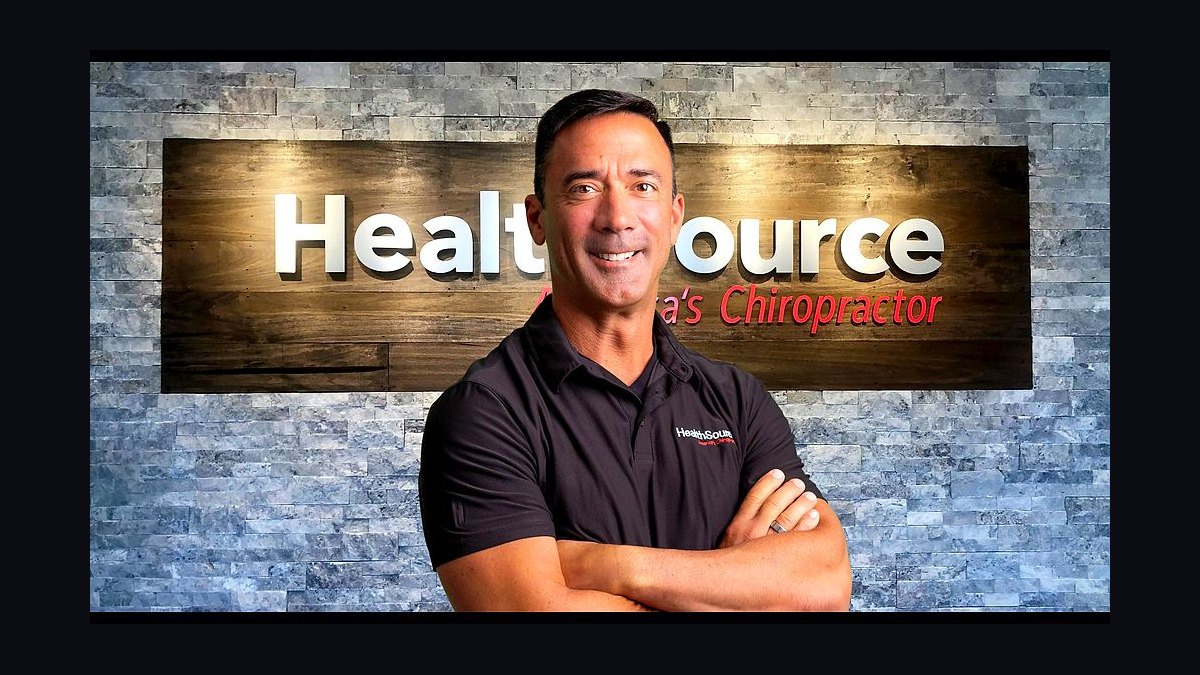
Yes, if you are a licensed Doctor of Chiropractic — or a non-DC operator with a committed DC partner — opening a HealthSource Chiropractic franchise in 2027 is a reasonable move: it pairs recession-resilient chiropractic and rehab demand with real business systems for a moderate $150,000–$400,000 investment. Skip it if you cannot secure a DC, since the model cannot legally operate without one.
The outcome you should expect
Walk into a HealthSource Chiropractic decision with a clear picture of what "success" actually looks like three to five years in, because the range of outcomes is wide and mostly explained by two variables: whether the clinic has a stable, patient-facing DC, and how much revenue comes from cash-pay services versus insurance reimbursement. A mature HealthSource clinic — meaning one that has been open long enough to build a recurring patient base, typically 24-36 months — grosses somewhere between $400,000 and $1,200,000 a year. Owner earnings on that range from $100,000 to $400,000 once payroll, rent, supplies, royalty, and marketing fees are subtracted. That is a wide band, and where a given clinic lands inside it depends almost entirely on execution, not on the franchise agreement itself.
The franchise's core value proposition is business infrastructure layered on top of clinical training. Chiropractors are trained extensively in diagnosis, adjustment technique, and rehab protocol, but most DC programs spend little to no time on marketing funnels, patient recall systems, insurance billing workflows, or staff management. HealthSource's franchise fee — $30,000 to $45,000 under the 2026 FDD — buys access to a packaged version of those business systems: local SEO and Google Ads templates, patient recall campaigns, staffing frameworks, and a standardized rehab-plus-chiropractic service menu that has already been tested across roughly 150-200 open locations. The realistic expectation is not that the franchise makes patient acquisition easy — it doesn't — but that it removes the need to build a marketing and operations playbook from scratch, which is where many independent chiropractic startups stall in year one.
Break-even timing is the most concrete outcome marker to plan around. Most HealthSource clinics reach break-even in 12 to 24 months, with the spread driven by three factors: how saturated the local chiropractic market already is, how aggressively the owner invests in cash-pay marketing in the first six months, and whether the clinic can retain its DC (or DCs) through the ramp-up period. A clinic that opens in a market with unmet demand, launches with a full cash-pay service menu (decompression, laser therapy, wellness memberships) from day one, and keeps its founding DC in place tends to land at the front of that range. A clinic that opens with a single overstretched DC, thin marketing spend, and heavy reliance on Medicare/Medicaid reimbursement tends to land at the back of it, or beyond it.
What drives that outcome
The single largest lever inside a HealthSource clinic's P&L is payer mix — the split between cash-pay services and insurance-reimbursed visits — because cash-pay services carry 60-80% gross margins while insurance-reimbursed chiropractic manipulation reimburses at a comparatively thin $35-45 per visit under projected 2027 Medicare fee schedules. A clinic that structures its service menu around wellness plans, nutritional counseling, spinal decompression, and Class IV laser therapy is building a business with real margin; a clinic that leans on insurance-billed adjustments alone is building a business that is structurally vulnerable to fee-schedule cuts and the growing prior-authorization requirements private insurers (UnitedHealthcare, Aetna, Cigna) are applying to visits beyond 12-20 per year.

The second driver is the DC relationship itself. Because state law requires a licensed chiropractor to own or operate the clinical side of the business, every dollar of revenue ultimately traces back to that person's capacity, chairside manner, and retention. A non-DC owner who recruits a strong associate DC — someone with three-plus years of clinical experience and an existing referral network — starts with a structural advantage over an owner who hires a new graduate with no patient base to bring in. Recruitment itself has become a real constraint: with only 18 accredited chiropractic colleges in the U.S. and rising burnout among practicing DCs, filling an associate role can take three to six months, which delays the revenue ramp before the clinic has even opened its doors in some cases.
Marketing execution is the third driver, and it is the one most directly influenced by the franchise itself. HealthSource's marketing fee — roughly 2% of gross, on top of the 6-9% (or tiered) royalty — funds local SEO, Google Ads infrastructure, and patient recall campaigns that typically cost $1,500-$3,000 a month to run at the local level. Owners who lean into that system, rather than treating it as a fee to minimize, tend to fill their new-patient pipeline faster than owners who treat marketing as an afterthought once the clinic opens.
Benchmarks and realistic ranges

Use these ranges to sanity-check any specific HealthSource Chiropractic offering or FDD Item 7 disclosure you're evaluating for a 2027 opening. Franchise fee: $30,000 to $45,000. Buildout and leasehold improvements for a 2,000-3,500 square foot clinic: $60,000 to $170,000. Rehab and treatment equipment (tables, decompression units, laser modalities): $40,000 to $110,000 — note that progressive rehab equipment alone (spinal decompression, Class IV laser) can run $20,000-$40,000 of that figure. Signage and interior branding: $12,000 to $35,000. Initial clinical supplies: $8,000 to $22,000. Initial marketing spend to seed the local patient pipeline before opening: $20,000 to $50,000. Training and travel for the DC, owner, and staff: $10,000 to $28,000. Working capital, sized specifically to cover the lag inherent in insurance billing cycles: $30,000 to $80,000. Altogether, total Item 7 investment lands between roughly $150,000 and $400,000, with $70,000 to $130,000 of that expected to come from liquid capital rather than financing.
On the staffing side, benchmark associate DC compensation at $65,000-$95,000 in base salary as of 2027, with performance bonuses commonly structured as 20-30% of collections above a defined threshold. A more experienced DC — the kind who arrives with an existing patient following — can command $100,000-$130,000, or may ask for an equity stake, commonly structured as a 10-20% buy-in available after two years of tenure, as a retention tool. Budget a three-to-six-month recruitment window if you are not the clinic's clinical owner yourself.
On revenue, benchmark a mature clinic (24+ months open, stable DC, established patient base) at $400,000-$1,200,000 in annual gross revenue, translating to $100,000-$400,000 in owner earnings after royalty, marketing fee, payroll, rent, and supplies are subtracted. A clinic hitting the low end of that gross-revenue range with a heavy insurance mix will land toward the low end of owner earnings; a clinic at the high end of gross revenue with 40%+ cash-pay mix will land toward the high end of owner earnings, even before accounting for scale efficiencies. Royalty runs approximately 6-9%, sometimes tiered based on clinic revenue, with an additional roughly 2% marketing fee layered on top — budget 8-11% of gross revenue combined for ongoing franchise fees when modeling your P&L.
Risks, edge cases, and failure modes

The single disqualifying risk is straightforward: if you are not a licensed DC and cannot secure one before signing the franchise agreement, you are in breach of the operating covenant, and you risk losing your franchise fee outright. This is not a soft requirement — it is dictated by state corporate-practice-of-medicine law in most jurisdictions, and HealthSource's franchise structure is built around it. Treat DC recruitment as the first item to solve, not the last, in your pre-opening timeline.
Territory saturation is a quieter but real risk heading into 2027. HealthSource operates roughly 150-200 locations concentrated in the Midwest, Southeast, and Texas, with lighter density in the Northeast and West Coast. Franchisees receive protected territories, usually defined by zip codes or a 2-3 mile radius, but the exact boundaries vary by FDD addendum, and some agreements reserve the franchisor's right to open corporate-owned clinics inside your territory — a provision that can split patient flow if triggered. Before committing to a specific market, request the 2027 FDD Item 12 territory map, and independently count competing chiropractic practices (including The Joint Chiropractic, Atlas Chiropractic, and independents) within your radius via local business license databases. Three or more established competitors in your radius, or an existing HealthSource location within five miles, are both red flags worth walking away from or renegotiating territory over.

Payer-mix exposure is the risk most owners underestimate going in. If 70% or more of the patients in your target market rely on Medicare or Medicaid, the model becomes structurally harder to sustain, because projected 2027 Medicare fee-schedule reimbursement for chiropractic manipulation (CPT 98940-98942) is flat to down 0.5-1.5%, and private insurers are adding prior-authorization friction on top of that. A clinic that hasn't deliberately built cash-pay revenue to at least 40% of the mix is exposed to reimbursement policy it cannot control. Audit the local payer mix in any market you're evaluating before signing, not after opening.
Finally, patient-acquisition failure remains the most common operational failure mode even when the DC requirement and territory are handled correctly. The franchise's marketing systems lower the barrier to building a pipeline, but they do not build the pipeline for you — an owner who underfunds the $20,000-$50,000 pre-opening marketing budget, or who treats the ongoing $1,500-$3,000/month local marketing spend as optional, will see break-even slip well past the 24-month benchmark regardless of how strong the clinical care is.
A practical rollout plan
Sequence the process in the order the risks above actually resolve, starting with the DC requirement rather than the real estate. First, confirm your DC status: either your own license, or a signed commitment from a partnering DC, before you spend meaningful money on FDD review or site selection — this is the gating item, and skipping ahead of it is the most common early mistake. Second, request and read the 2026-2027 FDD in full, with particular attention to Item 19 (financial performance representations), Item 12 (territory), and Item 7 (initial investment), and independently verify the royalty and marketing-fee structure against what you're modeling.

Third, interview three to five existing HealthSource operators — ideally a mix of DC-owners and non-DC/DC-partner structures — and ask specifically about patient acquisition timelines, how they used the franchise's business systems, their actual payer mix, and their real net profit relative to the FDD's disclosed ranges. Fourth, validate your target market: pull competing-practice counts from local business license databases, confirm the territory is genuinely protected under Item 12, and assess the local payer mix (commercial insurance versus Medicare/Medicaid concentration) before signing a lease.
Fifth, build the clinic and staff simultaneously rather than sequentially — the 2,000-3,500 square foot buildout typically takes 60-120 days, which is roughly the same window you'll need to finalize your DC hire and clinical staff if you started recruitment in step one. Sixth, launch with your full cash-pay service menu live from day one rather than phasing it in later, since the margin on decompression, laser therapy, and wellness plans is what buffers you against reimbursement pressure in year one. Seventh, fund and actually use the franchisor's marketing system at the recommended $1,500-$3,000/month level rather than treating the fee as sufficient on its own — the system provides the infrastructure, but sustained local spend is what fills the pipeline. Finally, treat the first 12-24 months as a patient-base-building phase: track cash-pay percentage monthly, and use it as your leading indicator toward break-even rather than waiting for the trailing revenue numbers to tell the same story later.
Related questions

Can a non-chiropractor legally own a HealthSource Chiropractic franchise?
Generally only by partnering with a licensed DC, since most states' corporate-practice-of-medicine laws require chiropractic clinics to be owned or clinically operated by a licensed chiropractor. Confirm your specific state's rule before signing.
How does HealthSource Chiropractic differ from The Joint Chiropractic?
The Joint runs a membership, high-volume adjustment model with lower per-visit revenue, while HealthSource combines chiropractic care with progressive rehab and wellness services aimed at higher revenue per patient and insurance-plus-cash-pay billing.
What percentage of HealthSource clinic revenue should come from cash-pay services?
Aim for at least 40% cash-pay revenue by year two. Cash-pay services like decompression and laser therapy carry 60-80% margins and buffer the clinic against declining insurance reimbursement rates.
How long does chiropractor recruitment typically take for a new franchise?
Budget three to six months. The shortage is driven by only 18 accredited U.S. chiropractic colleges and elevated burnout rates among practicing DCs, so start recruiting before finalizing your lease.
FAQ
Do I need to be a chiropractor to open a HealthSource Chiropractic franchise? Yes, in most states the franchise requires a licensed Doctor of Chiropractic as owner or clinical operator. A non-DC can partner with a licensed chiropractor to satisfy state corporate-practice-of-medicine requirements and the franchisor's operating covenant.

How much does it cost to open a HealthSource Chiropractic franchise in 2027? Total investment typically runs $150,000 to $400,000, including a $30,000-$45,000 franchise fee, buildout, equipment, and working capital. Ongoing costs include a roughly 6-9% royalty and a 2% marketing fee on gross revenue.
What revenue can a mature HealthSource Chiropractic clinic expect? Mature clinics report $400,000 to $1,200,000 in annual gross revenue, with owner earnings between $100,000 and $400,000. Results vary significantly with local competition, payer mix, and how effectively the owner uses the franchise's business systems.
How long until a new HealthSource Chiropractic clinic breaks even? Break-even typically takes 12 to 24 months. Clinics that launch with a strong cash-pay service mix, retain their founding DC, and fund local marketing aggressively tend to break even faster than clinics relying primarily on insurance billing.
What is the biggest risk in opening a HealthSource Chiropractic franchise? Failing to secure a licensed DC before signing, which breaches the operating covenant and risks the franchise fee. Territory saturation and over-reliance on insurance reimbursement, particularly Medicare/Medicaid-heavy markets, are the next-largest risks.
What support does HealthSource Chiropractic provide franchisees? The franchisor provides business systems including local SEO, Google Ads infrastructure, patient recall campaigns, and operational training. Franchisees remain responsible for actual patient acquisition, DC recruitment, and navigating insurance billing complexity themselves.
Sources
- https://www.healthsourcechiro.com
- https://www.ftc.gov/business-guidance/resources/franchise-rule
- https://www.entrepreneur.com/franchise-500
- https://www.ibisworld.com
- https://www.statista.com
- https://www.acatoday.org
- https://www.franchisebusinessreview.com
- https://www.franchise.org
- https://www.sba.gov/business-guide/plan-your-business/franchise-your-business
Related on PULSE
This page will be disappearing soon. Save it to your device for $1 — or read it free while it is here.
@Kory-White- · if Venmo asks, the last 4 of my number are 2012
This page is gone.
This one is off the shelf now. $1 keeps it on your phone for good — the whole page, pictures and diagrams included.
 franchiseShould I open or buy a Firehouse Subs franchise in 2027?
 franchiseShould I open or buy a Drybar franchise in 2027?
 franchiseShould I open or buy a Subway franchise in 2027?
 franchiseShould I open or buy a Wendy's franchise in 2027?
 franchiseShould I open or buy a FACE FOUNDRIÉ franchise in 2027?
 franchiseShould I open or buy a KinderCare franchise in 2027?
 franchiseShould I open or buy a Smoothie King franchise in 2027?
 franchiseShould I open or buy a Jeremiah's Italian Ice franchise in 2027?
 franchiseShould I open or buy a Cook Out franchise in 2027?
 franchiseShould I open or buy a Meineke franchise in 2027?