


Should I open or buy a 100% Chiropractic franchise in 2027?
Quality
Certified

Only if you are a licensed chiropractor or have a committed DC partner. 100% Chiropractic's family-wellness model — adjustments plus massage plus retail supplements — supports mature clinic revenue of roughly $700,000 to $2,000,000 on a $200,000 to $500,000 investment, but the license requirement and slow patient ramp disqualify most passive buyers.
The situation most buyers are actually in
Picture a specific version of this decision, because the generic version is useless. A 34-year-old chiropractor has been an associate for six years at a high-volume practice, sees roughly 90 patient visits a week, and takes home $115,000 with no equity. She has $140,000 liquid — some savings, some from a 401(k) rollover into a ROBS structure her CPA is nervous about — and a spouse with a W-2 income that covers the household. She is looking at a 100% Chiropractic franchise in a suburban trade area of about 45,000 households with three independent chiropractors already operating and one membership-model competitor two miles away.
That is the realistic buyer profile, and every number in this analysis should be read against it. Her decision is not "is chiropractic a good business" — it is "does paying a franchise fee of roughly $45,000 to $60,000 plus 8% to 10% royalty plus a marketing fee buy me enough system to beat what I could build as an independent for $180,000 and no ongoing tax on revenue." That is the real question, and it has a real answer that depends on things she can measure before signing.
The second common profile is the non-DC. An operator with $400,000, franchise experience in food or fitness, likes healthcare because it feels recession-resilient, and assumes he can hire a chiropractor the way he'd hire a general manager. This is where most deals die. State corporate-practice-of-medicine rules in many jurisdictions restrict who can own an entity that provides chiropractic services, and 100% Chiropractic's model expects a DC on the ownership team. The workaround — a management services organization structure where the non-DC owns the management company and a licensed DC owns the professional entity — is legal in many states but adds legal cost, adds a partner whose incentives you must engineer, and adds a single point of failure: if your DC walks, your revenue stops that week. A restaurant can survive losing a chef. A chiropractic clinic cannot survive losing its only chiropractor.

The third profile is the buyer of an existing clinic rather than a new opening. This is materially different math and materially different risk, and it is usually the better trade for someone who can find a legitimate seller. You skip the 6-to-12-month ramp to breakeven, you buy a patient file with observable behavior, and you can underwrite from three years of tax returns instead of an Item 19 average that blends winners and strugglers. You pay for that in purchase price — resales in this category tend to trade around 2.5x to 4x annual net profit, so a clinic clearing $200,000 might list near $500,000 to $800,000 — and you inherit whatever reputational and staffing damage the seller is quietly exiting.
How the money actually moves through a clinic
The mechanism that makes or breaks a 100% Chiropractic franchise is the visit-to-plan conversion and the retail attach rate, not the adjustment itself. Understanding the sequence is the difference between underwriting this correctly and guessing.
A new patient enters through a marketing channel — a community screening, a Google Local Service Ad, a referral from an existing family. Cost to acquire that patient typically runs $50 to $150 depending on how competitive your market is. They come in for an exam and, in most cases, imaging or an evaluation. At that visit, the clinic presents a care plan: a defined number of visits over a defined number of weeks, usually paid as a package or a monthly membership rather than billed visit-by-visit to insurance. That conversion moment is the entire economic engine. A clinic that converts 60% of new patients into a paid plan and a clinic that converts 30% have identical marketing spend and wildly different P&Ls.

Once a patient is on a plan, three revenue layers stack. The base is the chiropractic care itself. The second is massage therapy, which both raises per-patient revenue and gives the front desk a natural rebooking hook. The third is retail — supplements, orthotics, wellness products — which in this model can add roughly 15% to 25% to per-patient revenue at gross margins meaningfully better than clinical labor, because the product does not consume a doctor's hour. Owners in this system commonly report that a majority of patients buy something from the retail program, with per-clinic monthly retail sales often landing somewhere in the $5,000 to $15,000 band. Retail is not a rounding error here; it is frequently the difference between a clinic that clears $150,000 for the owner and one that clears $300,000.
The cash-pay orientation is the structural choice that makes this work and also the structural risk. Cash-and-membership pricing removes insurance write-downs, removes 45-day receivables, removes most billing labor, and lets you forecast revenue from active-plan count. It also means every patient is making a discretionary purchase decision with post-tax dollars, so your value communication has to be excellent and your local economy matters more than "healthcare is recession-resilient" implies. People do not stop needing back care in a downturn. They absolutely do downgrade a $200-a-month family wellness plan to as-needed visits.
Read that loop carefully, because the leverage point is not at the top. Most struggling owners respond to weak numbers by spending more on marketing — pushing more volume into the top of a funnel that leaks at the conversion step. If your conversion rate is 30%, doubling ad spend doubles your wasted acquisition cost. Fixing conversion from 30% to 50% is free and does more for the P&L than any marketing budget increase.
Real numbers, ranges, and the benchmarks to underwrite against
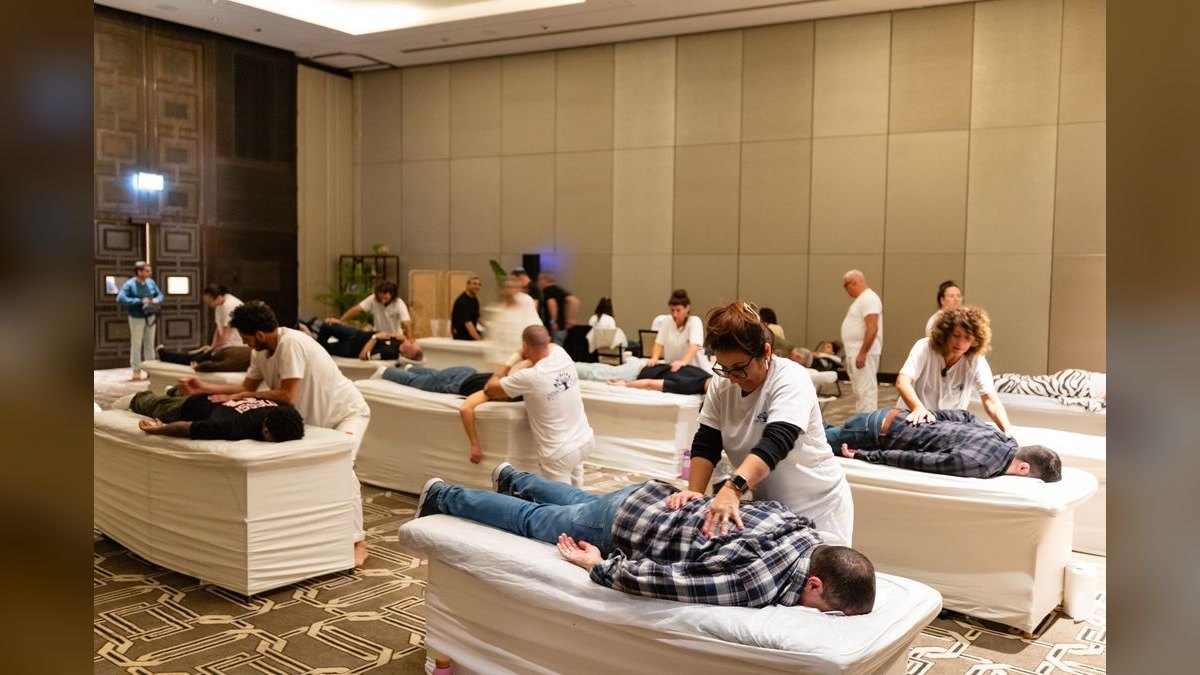
Here is the investment structure, drawn from the disclosure ranges for this brand. Verify every line against the current Franchise Disclosure Document before you commit — Item 5, Item 6, Item 7, Item 19, and Item 20 are the five that matter, and they change year to year.
The initial franchise fee sits roughly in the $45,000 to $60,000 range. Buildout and leasehold improvements for a 2,000 to 3,500 square foot clinic run roughly $80,000 to $220,000, and this is the line with the widest real-world variance — a second-generation medical space with existing plumbing and treatment rooms can come in near the bottom, while a raw retail shell in a new development can blow through the top. Equipment — adjusting tables, massage tables, modalities, and any imaging — runs roughly $50,000 to $130,000. Signage and interior brand elements run roughly $15,000 to $45,000. Opening supplement and retail inventory runs roughly $12,000 to $35,000. Grand-opening and pre-launch marketing runs roughly $25,000 to $60,000, and underspending this line is one of the more common self-inflicted wounds. Training and travel run roughly $12,000 to $32,000. Working capital in the disclosure typically shows roughly $35,000 to $90,000. Total Item 7 lands roughly $200,000 to $500,000.
I would treat the working capital number as the single most dangerous line in the table. A clinic that takes 6 to 12 months to build a base of 200 to 400 active patients and reach breakeven is burning payroll, rent, and royalty the entire time. Model your actual monthly burn — say $38,000 in fixed costs for a modest clinic — and multiply by your honest ramp estimate, not the optimistic one. Nine months at $38,000 with revenue ramping from zero is a cumulative shortfall well past $90,000. Plan for $120,000 to $180,000 of true working capital, funded or reserved, and be pleasantly surprised if you need less.

Ongoing fees: royalty in the neighborhood of 8% to 10% of gross revenue, plus a brand marketing fee commonly around 1% to 2%. On top of the brand fee, expect to spend another 3% to 5% of revenue on genuinely local acquisition. So your all-in revenue tax before you pay a single employee is roughly 12% to 17%.
Now the revenue side. Mature clinics in this system are reported in the $700,000 to $2,000,000+ range, with owner earnings commonly in the $150,000 to $500,000 range. Those are wide bands for a reason, and averages will mislead you. Ask franchise development for the Item 19 and then ask the specific questions the Item 19 will not answer: what percentage of open clinics are below the average, what does the bottom quartile look like, how many units closed or transferred in the last three years, and what is the median time to breakeven rather than the fastest.
Model a mid-case $1.2 million clinic honestly. Clinical and support payroll is the biggest bite — with one or two doctors, one or two massage therapists, two or three front desk and billing staff, and a chiropractic assistant or two, payroll commonly runs 40% to 50% of gross. Take 42%, or roughly $504,000. Rent for 2,500 square feet in a decent retail or medical location, plus cost of retail goods sold, plus supplies, call it 16%, or roughly $192,000. Royalty plus brand marketing at 11% is $132,000. Local marketing at 4% is $48,000. Insurance, malpractice, software, merchant fees, utilities, and the rest of operating expense at roughly 9% is $108,000. That leaves roughly $216,000 before debt service. If you financed $350,000 on a ten-year SBA 7(a) note, service that debt and you are somewhere near $160,000 to $170,000 in owner cash flow — plus whatever you pay yourself as a treating doctor if you are still in the room.
That last clause is the number people fudge. If you are personally adjusting 30 hours a week, part of what looks like "owner earnings" is really your clinical wage. The honest test: what does the clinic earn after paying a market-rate associate DC — call it $85,000 to $130,000 base plus production — to do your clinical work? If that number is comfortably positive, you own a business. If it is near zero, you bought a job with a $45,000 entry fee and a 10% royalty on your own labor.

Staffing benchmarks worth writing into your model: associate chiropractors in this category commonly earn $80,000 to $130,000 base plus production bonuses; massage therapists roughly $35,000 to $55,000; front desk roughly $30,000 to $45,000. Turnover in clinical support roles runs roughly 20% to 30% annually, and massage therapists are consistently the hardest hire to retain because demand for them is high and many prefer flexible or independent schedules. Budget for recruiting cost and for the revenue dip when a therapist leaves and takes a book of standing appointments with them.
What you give up, and what else that money could buy
Every franchise decision is a comparison, not an absolute judgment. Here is what the 8% to 10% royalty is actually buying and what it is costing.
What you get: an operating system rather than a blank page. Care-plan scripts and conversion training, which for a clinically excellent but commercially untrained DC is worth real money. A retail program with vendor relationships and merchandising already solved. Site selection support and buildout specifications. Hiring templates, training protocols, and a patient acquisition playbook — screenings, gym and studio partnerships, corporate wellness talks, referral programs. Brand recognition that shortens the trust conversation with a family choosing between you and an unknown independent. A peer network of operators who have already made your mistakes.
What you give up: roughly 10% of every dollar forever, on gross not net, which means you pay it in a bad month too. Territory and system rules that constrain pricing, services, and vendors. A 10-year agreement with renewal conditions. Transfer approval rights that mean you cannot sell to whoever you want. And the structural reality that the franchisor's incentive is unit count and system revenue, which is aligned with yours most of the time but not all of the time.

The honest independent comparison: a DC opening a solo family-wellness practice can often do it for $150,000 to $250,000, keeps the full 10%, and on a $1.2 million clinic that royalty savings alone is roughly $120,000 a year. That is not a small edge. The counter is that a large share of independent startups never reach $1.2 million, and the ones that do usually took longer to get there. The franchise is buying speed and reducing variance, and you should decide whether your specific gap — clinical skill high, business systems low — is the gap it fills.
The adjacent alternatives are worth pricing before you sign anything. Membership-model chiropractic franchises trade lower revenue per patient for far higher volume, smaller footprints, and lower buildout, which is a genuinely different risk profile and a different kind of operator. Other chiropractic franchise brands compete directly on similar family-wellness ground with different fee structures and different retail emphasis. Physical therapy franchises use a licensed-provider model with heavier insurance participation and different reimbursement risk. And buying an existing independent practice — a retiring DC's book of business — often prices at a lower multiple than a franchise resale and comes with zero royalty, though also with zero system and frequently with a patient base loyal to a person, not a place.
The pitfalls that actually kill these deals
Underfunding the ramp is the number one killer, and it is entirely preventable. Owners fund to the Item 7 total and treat that as sufficient. Item 7 covers opening the doors; it does not comfortably cover nine months of negative cash flow while you climb to 200 to 400 active patients. Fix it by raising a working capital reserve independent of the buildout budget and by treating the SBA loan sizing conversation as a cash-flow question, not a construction question.

Choosing a site on rent per square foot instead of on household density and visibility. A clinic that saves $2,000 a month in rent but sits in a low-traffic strip behind a building will spend more than $2,000 a month in extra marketing trying to be found, forever. In a business where a meaningful share of new patients come from proximity, being seen is a marketing channel you pay for once in the lease.
Being the only doctor and never hiring the second one. The transition from treating full-time to managing typically takes 6 to 18 months and only happens if you deliberately make it happen. Owners who never hire an associate cap their revenue at their own hands and destroy their own exit value, because a clinic that cannot function without the seller is a clinic nobody wants to buy at a good multiple.
Treating retail as an afterthought. If your attach rate is low, you are leaving 15% to 25% of per-patient revenue on the table while paying full royalty on the rest. Fix it with front-desk training, with visible merchandising, and by making the recommendation part of the clinical conversation rather than a transaction at checkout — while staying scrupulously honest about what you are recommending and why. The fastest way to torch a family-wellness reputation is to be perceived as a supplement store with an adjusting table.
Getting the DC partnership structure wrong. If you are the non-DC operator, a 50/50 handshake with no vesting, no non-compete, no buy-sell, and no defined role split is a time bomb. Structure it with a vesting schedule, a clear operating agreement, a valuation formula for a buyout, and a realistic answer to "what happens to revenue in the 90 days after this person leaves." Have a healthcare-specialized attorney in your state review it — corporate-practice-of-medicine rules vary enough that generic templates are worse than nothing.

Skipping the franchisee interviews or only calling the list the franchisor hands you. Item 20 gives you every current franchisee and every one who left in the past year. Call the leavers. Call the ones not on the recommended list. Ask them the specific questions: months to breakeven, actual conversion rate, actual retail attach, whether the Item 19 matched their experience, what they would do differently, and whether they would buy again. Twelve of those calls will teach you more than any brochure.
Underwriting a resale on the seller's summary instead of the underlying documents. Demand three years of tax returns, not just P&Ls. Demand active-patient counts by month, not just revenue, because a clinic whose revenue is flat while active patients decline is being propped up by price increases and is about to fall. Look at staff tenure — if the whole clinical team is under a year, you are buying a building. And build the transfer fee, commonly in the $10,000 to $25,000 range, plus required training, into your acquisition budget.
Finally, misreading "recession-resilient." Healthcare demand is durable; discretionary cash-pay wellness spending is less so. A clinic in a market whose employment base is concentrated in one cyclical industry carries more revenue risk than the category-level story suggests. Diversify your patient base across employers and age brackets, and keep enough insurance participation or flexible plan tiers that a family under pressure can step down instead of stepping out.
Related questions
Can I own a 100% Chiropractic franchise if I'm not a chiropractor?
Usually only with a licensed DC on the ownership team. Many states restrict who may own an entity delivering chiropractic care. A management company structure is possible in some jurisdictions but requires healthcare counsel in your specific state and creates real key-person risk.
How long until a new clinic breaks even?
Commonly 6 to 12 months, driven by reaching roughly 200 to 400 active patients. Budget working capital for the slow case, not the fast one — the gap between an eight-month ramp and a fourteen-month ramp is often more than $200,000 in cumulative burn.
Is buying an existing clinic better than opening a new one?

Often yes, if you can verify the financials. You skip the ramp and buy observable patient behavior. Expect roughly 2.5x to 4x EBITDA plus a transfer fee, and require three years of tax returns and monthly active-patient counts before committing.
What single metric predicts clinic profitability best?
New-patient-to-care-plan conversion rate. Marketing spend, retail attach, and staffing all matter, but conversion sits upstream of everything — a clinic converting 55% of new patients outperforms an identical clinic converting 30% by a margin no ad budget can close.
How much should I really reserve for working capital?
Well above the disclosed range. The Item 7 working capital line is a startup figure, not a survival figure. Model your actual monthly fixed burn against an honest ramp and reserve $120,000 to $180,000 separately from buildout for a typical clinic.
FAQ
Do I need to be a licensed chiropractor to own this franchise?
In practice, yes — either you hold a Doctor of Chiropractic license or you have a licensed DC as a committed owner or partner. State corporate-practice rules govern who can own an entity providing chiropractic services, and those rules vary by state. A non-DC operator can sometimes use a management services structure, but it requires state-specific healthcare counsel and it concentrates enormous risk in one clinician.
What is the realistic total investment?

The disclosed Item 7 range runs roughly $200,000 to $500,000, covering the franchise fee, buildout, equipment, signage, opening inventory, launch marketing, training, and working capital. The variance is driven mostly by real estate — a second-generation medical space costs far less to convert than a raw shell. Verify the current FDD, and add working capital beyond the disclosed figure to survive a slow ramp.
What do mature clinics earn?
Reported gross revenue for mature clinics spans roughly $700,000 to $2,000,000 or more, with owner earnings commonly in the $150,000 to $500,000 range. Treat those bands as a distribution, not a forecast. Ask for the Item 19, then ask what share of clinics fall below the average and what the bottom quartile looks like — that answer tells you more than the headline.
What are the ongoing fees?
Expect royalty in the range of 8% to 10% of gross revenue plus a brand marketing fee commonly around 1% to 2%. Add another 3% to 5% for genuinely local marketing and your all-in revenue tax lands near 12% to 17% before payroll. Confirm the exact percentages and any minimum-spend requirements in the current disclosure document, since terms vary by agreement and by year.
How much does the retail supplement program actually matter?
Materially. Retail and wellness products commonly add roughly 15% to 25% to per-patient revenue at margins better than clinical labor, since the sale does not consume a doctor's treatment hour. Per-clinic monthly retail sales frequently land in the $5,000 to $15,000 range. Ignoring the program is one of the most common reasons an otherwise busy clinic produces disappointing owner earnings.
What does the exit look like?
Agreements typically run 10 years with renewal options, and resales commonly price around 2.5x to 4x annual net profit — roughly $200,000 for a small clinic to $800,000 or more for an established multi-doctor location. The franchisor approves buyers and charges a transfer fee, often $10,000 to $25,000. Clinics that run without the owner in the treatment room sell for meaningfully higher multiples.
Sources
- https://www.ftc.gov/business-guidance/resources/franchise-rule-compliance-guide
- https://www.sba.gov/funding-programs/loans/7a-loans
- https://www.franchise.org/
- https://www.acatoday.org/
- https://www.bls.gov/ooh/healthcare/chiropractors.htm
- https://www.nbce.org/
- https://www.ada.gov/
- https://www.irs.gov/businesses/small-businesses-self-employed/starting-a-business
- https://www.entrepreneur.com/franchises
- https://www.franchisebusinessreview.com/
Related on PULSE
This page will be disappearing soon. Save it to your device for $1 — or read it free while it is here.
@Kory-White- · if Venmo asks, the last 4 of my number are 2012
This page is gone.
This one is off the shelf now. $1 keeps it on your phone for good — the whole page, pictures and diagrams included.
 franchiseShould I open or buy a Smoothie King franchise in 2027?
 franchiseShould I open or buy a Jamba franchise in 2027?
 franchiseShould I open or buy a Massage Envy franchise in 2027?
 franchiseShould I open or buy a Goddard School franchise in 2027?
 franchiseShould I open or buy a Cook Out franchise in 2027?
 franchiseShould I open or buy a Meineke franchise in 2027?
 franchiseShould I open or buy a Kumon franchise in 2027?
 franchiseShould I open or buy a Bruster's Real Ice Cream franchise in 2027?
 franchiseShould I open or buy a Domino's franchise in 2027?
 franchiseShould I open or buy a Dairy Queen franchise in 2027?