


Should I open or buy a FYZICAL Therapy & Balance Centers franchise in 2027?
Quality
Certified
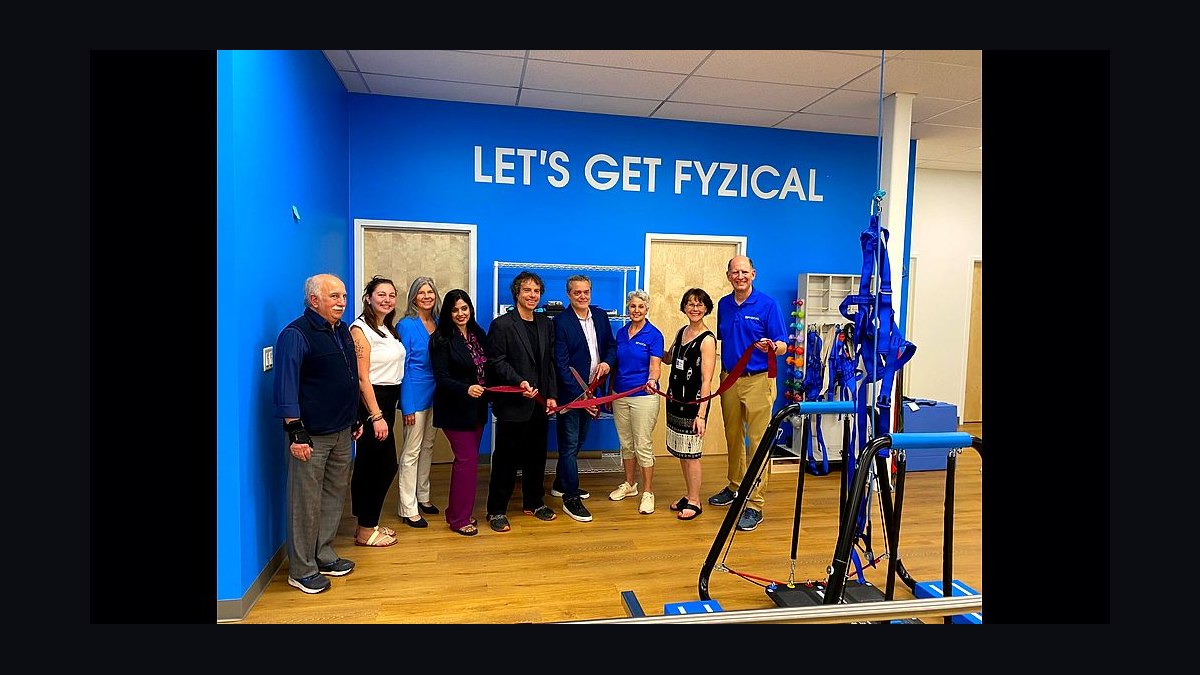
Yes, if you are a licensed physical therapist — or you can partner tightly with one — looking for a recession-resilient healthcare franchise with a differentiated balance and fall-prevention niche; FYZICAL Therapy & Balance Centers pairs standard PT economics with an aging-demographic tailwind at $150,000-$500,000 total investment. Skip it if you have no PT relationship or cannot manage insurance reimbursement.
The two paths into FYZICAL ownership
Every prospective FYZICAL franchisee ends up choosing between two structurally different ownership paths, and the choice shapes everything from your capital stack to your day-to-day role. The first path is the licensed-PT owner-operator model: you are the physical therapist, you hold the clinical license, and you build or buy a FYZICAL clinic that you personally run. This is the cleanest path from a regulatory standpoint because most state physical therapy practice acts require a licensed PT to own or directly supervise a clinic delivering PT services, and as the owner-operator you satisfy that requirement automatically. You keep 100% of the equity and the clinical decision-making authority, but you also absorb 100% of the operating risk and you are personally on the hook for treating patients, managing staff, and running the business simultaneously — a combination that burns out a meaningful share of new owners in year one.
The second path is the partnered-operator model, where a business-minded franchisee (often someone with retail, healthcare administration, or multi-unit franchise experience but no PT license) co-owns the clinic with a licensed physical therapist. In this structure, the PT partner typically handles clinical oversight, treatment protocols, and compliance, while the business partner runs marketing, finance, staffing, and growth. Equity and profit splits in these arrangements commonly run 50-70% to the PT partner (reflecting their licensure exposure and malpractice risk) and 30-50% to the business partner, though terms vary by state and by how much capital each side contributes. A close variant of this path is buying an existing FYZICAL clinic that already has a PT on staff or as a partner — this is an acquisition rather than a build, and it removes the "find a PT" problem entirely but costs roughly two to three times what a new build costs, often landing in the $400,000-$1,200,000 range for a turnkey, revenue-generating location.

A third, smaller path worth naming is hiring a PT as clinic director under a non-PT owner, which some FYZICAL corporate-approved structures allow in states with less restrictive ownership rules. Here the non-clinician owns the business outright and the PT director typically holds 10-25% equity plus full clinical autonomy, backed by a strong employment agreement and malpractice coverage. This path concentrates business risk with the owner and clinical risk with the director, and it only works where state licensing law permits that separation — so it requires legal review before you sign anything, not after.
How to decide between them
The decision tree above collapses to three questions you should answer in order, because each one eliminates a path. First: are you personally a licensed physical therapist? If yes, the owner-operator path is usually simplest and cheapest, provided you are prepared to be both the clinician and the CEO of a small business, which is a harder combination than it sounds for people trained clinically rather than commercially. Second, if you are not a PT, do you already have a working relationship with one who wants to co-invest? If yes, the partnered-operator path lets you move fastest, but only if you negotiate the equity split, decision rights, and exit terms in a written partnership agreement before you sign the FDD — doing this after you've already committed capital is the single most common source of franchisee-partner disputes in healthcare franchising. Third, if you have no PT relationship at all, your realistic option is acquiring an existing clinic where a PT is already embedded in the business, accepting the 2-3x price premium as the cost of skipping the search-and-recruit phase. Trying to open a brand-new FYZICAL with no PT and no partner identified is not a viable fourth option in most states — you will stall at the licensing stage before you ever see a patient.
Concrete numbers behind each option

The 2026 FDD lists a franchise fee of roughly $35,000-$50,000 regardless of which ownership path you take, since that fee attaches to the territory and brand license, not to your personal clinical status. Where the paths diverge sharply is total Item 7 investment and ongoing labor cost. For a new-build owner-operator or partnered clinic, total investment runs $150,000-$500,000, broken down roughly as: buildout and leasehold improvements $70,000-$220,000 for a 1,800-2,800 square foot space; equipment and balance/vestibular technology (including computerized dynamic posturography systems) $50,000-$150,000; signage and decor $12,000-$40,000; initial clinical supplies $8,000-$25,000; initial marketing and referral-building $20,000-$50,000; training and travel $12,000-$32,000; and working capital of $40,000-$100,000 to cover the lag between delivering care and receiving insurance reimbursement. Ongoing costs add a royalty of roughly 6%-8% of gross revenue and a marketing fee near 2%.
For the acquisition path — buying an existing FYZICAL with a PT already in place — expect total cost of $400,000-$1,200,000, which includes a multiple on the clinic's trailing cash flow plus assumption of its lease, equipment, and staff. This path trades a higher upfront price for immediate revenue and a removed licensing bottleneck. Across all paths, mature clinics gross $500,000-$1,500,000+ annually, with owners clearing $100,000-$400,000 in net profit, and many locations generate 20-40% of revenue from cash-pay balance and wellness programs rather than insurance billing, which is the specific number that makes FYZICAL's economics different from a generalist PT franchise. If you are in the partnered-operator structure, budget $80,000-$120,000 annually for the PT's salary or equity-adjusted draw — after rent, this is typically the single largest line item on your P&L, and underestimating it is a common reason first-year cash flow runs tighter than projected.
Implementation details and sequencing
Sequencing matters more in this franchise than in most, because the PT-licensing step gates everything downstream — you cannot productively sign a lease, order balance-lab equipment, or hire staff until you know whether you are the licensed clinician or you have a signed partnership/employment agreement with one. Start there, and treat it as a hard gate rather than a parallel task. Once that's resolved, read the FDD's Item 19 financial performance representations closely and interview three to five existing operators about actual reimbursement timelines, how much of their revenue is cash-pay versus insurance, and what their physician-referral pipeline looks like in practice — franchisor-provided averages can mask wide variance between a clinic embedded near three senior-housing complexes and one that isn't.

Site selection is the next gate, and it is more specific than typical retail site selection: look for ground-floor medical office or retail space within 1-3 miles of at least three senior-focused housing complexes (55+ communities, assisted living, or independent living centers), in a demographic radius where the 65+ population is at least 15% of the total and growing roughly 2% annually. Expect suburban lease rates of $18-$35 per square foot, and insist on zero-step entry and ample parking, since a meaningful share of FYZICAL's balance and fall-prevention patients use walkers or wheelchairs — a location that saves $500-$1,000 a month in rent by sitting in a cheaper, less senior-dense area can easily cost more than that in lost patient volume. After the lease, buildout and equipment installation (including the balance/vestibular technology that differentiates the brand) typically take several months, followed by staff hiring and protocol training. Launch marketing should lead with physician-referral outreach and cash-pay balance/fall-risk assessment programs rather than generic PT advertising, because that dual channel is what drives the 20-40% cash-pay mix that makes the model recession-resilient. Most clinics reach profitability in 12-24 months, with the range driven primarily by how fast the referral pipeline and cash-pay programs ramp.
Related questions
Can a non-PT own a FYZICAL franchise outright?
Generally no — most states require a licensed PT to own or directly oversee a clinic delivering PT services. Non-clinicians must partner with a PT or structure a PT-director arrangement where the PT holds equity and clinical autonomy under a strong employment agreement.
How does FYZICAL's balance niche change the revenue mix compared to generic PT franchises?
Many FYZICAL locations generate 20-40% of revenue from cash-pay balance programs, wellness memberships, and fall-risk assessments, reducing dependence on insurance reimbursement compared to generalist PT franchises like Athletico.
What's the biggest hidden cost in the partnered-operator structure?

The PT's salary or equity-adjusted draw, typically $80,000-$120,000 annually, is usually the largest operating line after rent and is frequently underestimated in first-year cash flow projections.
Is buying an existing FYZICAL clinic worth the premium over building new?
It can be, if it removes your biggest bottleneck — finding a PT. Expect to pay 2-3x a new build ($400,000-$1,200,000 total) for an operating clinic with a PT and patient base already in place.
FAQ
Do I need to be a licensed physical therapist to own a FYZICAL franchise? Generally yes — you need to be the licensed PT yourself or have one as an owner/partner, since state practice acts require professional oversight of patient care. Some multi-unit owners use a PT director instead, but clinical involvement is still required by law in most states.
What is the typical total investment to open a FYZICAL clinic? New-build total investment ranges from about $150,000 to $500,000, including a $35,000-$50,000 franchise fee. Acquiring an existing clinic with a PT in place typically costs $400,000-$1,200,000 instead.
How much can an owner expect to earn from a mature FYZICAL clinic? Mature clinics typically gross $500,000 to $1.5 million annually, with owner net profit ranging from $100,000 to $400,000, depending on patient volume, cash-pay mix, and local referral strength.
What makes FYZICAL different from other physical therapy franchises? FYZICAL specializes in balance and fall-prevention (vestibular) therapy, which targets the growing aging population and often drives 20-40% of revenue from cash-pay programs rather than insurance billing alone.
How long does it take for a new FYZICAL clinic to become profitable? Most clinics reach profitability within 12 to 24 months, depending heavily on how quickly the physician-referral pipeline and cash-pay balance programs ramp up.
Are there ongoing royalty and marketing fees? Yes — the royalty runs roughly 6%-8% of gross revenue, plus a marketing fee near 1%-2%, funding national brand development and operational support.
Sources
- https://www.fyzical.com
- https://www.entrepreneur.com/franchises/fyzicaltherapyandbalancecenters/334892
- https://www.ibisworld.com
- https://www.statista.com
- https://www.cdc.gov/falls
- https://www.franchisebusinessreview.com
- https://www.franchise.org
- https://www.census.gov
Related on PULSE
This page will be disappearing soon. Save it to your device for $1 — or read it free while it is here.
@Kory-White- · if Venmo asks, the last 4 of my number are 2012
This page is gone.
This one is off the shelf now. $1 keeps it on your phone for good — the whole page, pictures and diagrams included.
 franchiseShould I open or buy a UPS Store franchise in 2027?
 franchiseShould I open or buy a Great Clips franchise in 2027?
 franchiseShould I open or buy a Pizza Hut franchise in 2027?
 franchiseShould I open or buy a Crumbl Cookies franchise in 2027?
 franchiseShould I open or buy a Chipotle franchise in 2027?
 franchiseShould I open or buy a Servpro franchise in 2027?
 franchiseShould I open or buy a Bojangles franchise in 2027?
 franchiseShould I open or buy a Panera Bread franchise in 2027?
 franchiseShould I open or buy a Cold Stone Creamery franchise in 2027?
 franchiseShould I open or buy a Mac Tools franchise in 2027?