


Should I open or buy a My Eyelab franchise in 2027?
Quality
Certified
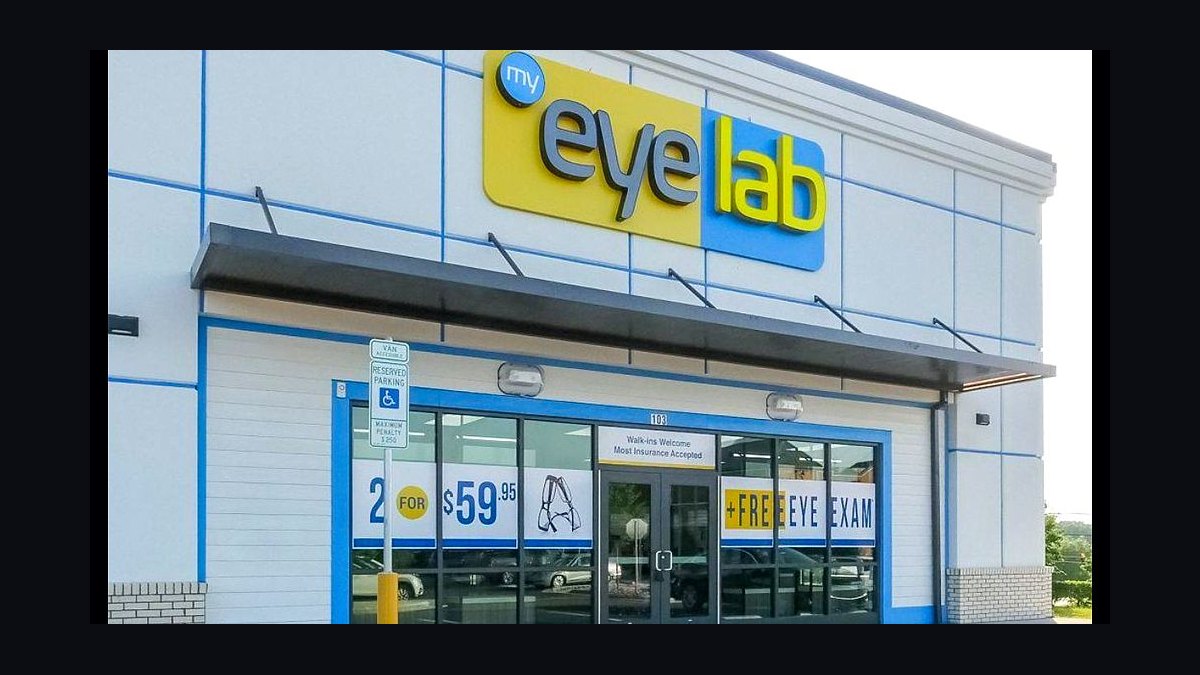
Yes, if you can operate in a telehealth-friendly state, want a value-optical model with recession-resilient demand, and can fund a $400,000–$700,000 investment. My Eyelab franchise economics reward operators who lean into low-cost eyewear positioning, remote-exam efficiency, and high-margin frame sales; skip it if your state restricts telehealth optometry or you can't compete against value and online eyewear chains nearby.
What it is and why it matters
My Eyelab is a value-optical retail concept owned by Now Optics, the same parent group behind Stanton Optical. A My Eyelab franchise sells affordable eyeglasses, contact lenses, and eye exams out of a 3,000–4,500 square foot showroom, and in many locations the eye exam itself is delivered through telehealth-assisted technology rather than a full-time, on-site optometrist. That single design choice — remote-doctor exam capability — is what separates My Eyelab from a traditional optical retailer, and it's the first thing a prospective franchisee needs to understand before evaluating anything else about the opportunity.
The reason this matters commercially is labor cost. A traditional optical store needs an on-site OD (doctor of optometry) present for exams, and OD salaries or contracted hours are one of the largest fixed costs in eye-care retail. My Eyelab's telehealth model, where state law permits it, lets a central doctor hub serve multiple locations remotely, which can strip $50,000–$80,000 a year off a single store's labor line compared to a traditionally staffed competitor. That's the core financial argument for opening a My Eyelab rather than an independent optical shop or a brand that requires in-person doctor staffing at every location.
The demand side is equally important to why this franchise exists as a viable 2027 play. Vision care is broadly recession-resilient — people don't stop needing glasses or contacts when the economy softens, and in tighter economic conditions value-conscious consumers actively trade down from premium optical chains and independent optometrists toward lower-priced alternatives. My Eyelab is built to capture exactly that trade-down behavior with same-day eyewear, aggressive pricing, and a no-frills retail format. This is why the brand markets itself on affordability and speed rather than premium styling or luxury service — the entire unit economics model depends on volume and eyewear margin rather than high average ticket.
Being backed by Now Optics is also a meaningful franchise-value factor. A newer, single-brand franchise entering optical retail would face steep uphill costs in supply chain, lab relationships, and lens-sourcing agreements. Now Optics already runs Stanton Optical at scale, which means a My Eyelab franchisee inherits established vendor relationships for frames, lenses, and contact lens inventory, plus a proven store-buildout template rather than a from-scratch design process. That established infrastructure shortens the time between signing a franchise agreement and generating first revenue, and it reduces some of the operational risk that sinks newer optical concepts.
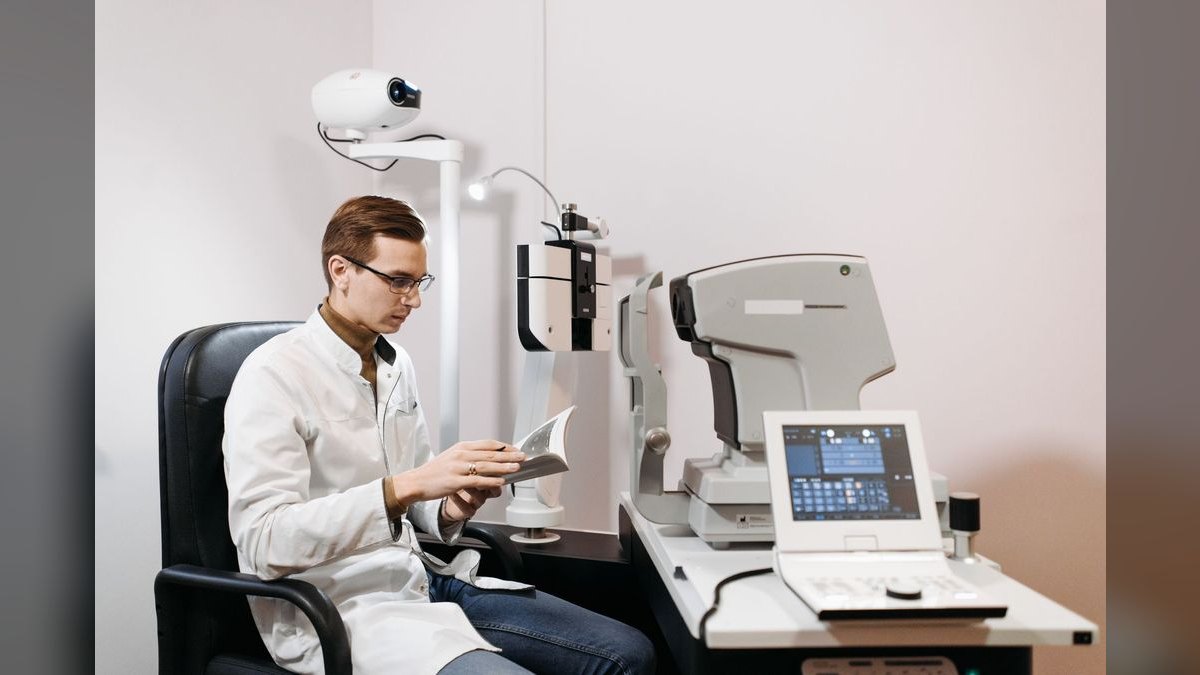
The trade-off is that the entire value proposition rests on regulatory permission. If your target state doesn't allow telehealth-based eye exams, or requires an on-site optometrist for prescription issuance, you lose the labor-cost advantage that makes My Eyelab's economics distinct from a conventional optical store — you're left paying for a doctor on-site anyway while carrying My Eyelab's brand fee and royalty on top. That's why regulatory verification isn't a footnote here; it's the first diligence item, ahead of even the FDD's financial figures.
The step-by-step process (mermaid)
Opening a My Eyelab franchise follows a fairly linear sequence, but the ordering matters because skipping ahead — signing a lease before confirming telehealth legality, for instance — is the single most common and costly mistake franchisees make.
The process starts with FDD (Franchise Disclosure Document) review, specifically Items 5 through 7 (fees and investment), Item 19 (financial performance representations, if disclosed), and Item 20 (outlet counts and turnover). Read these before any conversation with a broker or Now Optics development representative, because the FDD is the only document with legally mandated accuracy — sales materials are not. In parallel with the FDD review, contact the optometry licensing board in your target state and ask directly about the legality of remote refraction and telehealth eye exams, including any pending legislation. This step alone determines whether My Eyelab's central value proposition (lower labor cost via telehealth) applies to you at all.

Next comes operator interviews. Existing My Eyelab franchisees are the best source of ground-truth information on net profit, telehealth reliability, staffing headaches, and how corporate site-selection support actually performs versus what's promised. Ask specifically about time-to-breakeven, actual royalty and marketing fee deductions from gross, and whether their state's telehealth rules have shifted since they signed.
With regulatory and operator validation done, move into market and site validation — confirming there's a genuine value-conscious customer base in your trade area (median household income roughly $45,000–$75,000, a population base of at least 50,000 within a 3–5 mile radius, and ideally proximity to a Walmart, Target, or grocery anchor that already draws value shoppers). This is also when you formally apply for financing, since SBA lenders and equipment-leasing companies will want site and lease details as part of underwriting.
Build-out, staffing, and telehealth setup follow financing approval — general contractor buildout of the retail and exam space, hiring opticians and support staff, and integrating whichever telemedicine platform and doctor-hub arrangement your state's rules allow. Finally, the store opens and shifts into customer acquisition mode, where the operator's job becomes converting local awareness into exam volume and, critically, into eyewear sales, since frames and lenses carry the highest margin in the business.
Costs, timelines, and typical ranges

Based on the 2026 FDD, the franchise fee for a My Eyelab location runs $30,000–$50,000. Total Item 7 investment — everything needed to open the doors — falls between roughly $400,000 and $700,000. Within that range, buildout and leasehold improvements typically run $180,000–$380,000, since a value-optical retail space still needs a professional showroom, exam areas, and an in-store optical lab or lab-adjacent workspace. Equipment and telehealth infrastructure (exam technology, fixtures, remote-doctor connectivity) adds another $90,000–$200,000, and initial eyewear inventory — frames, lenses, and contacts — typically costs $40,000–$110,000 to stock a store adequately for opening. Signage and interior branding run $20,000–$60,000, initial marketing to drive opening-period traffic is $25,000–$60,000, training and travel for the operator and initial staff is $12,000–$32,000, and working capital to cover the ramp-up period (before revenue stabilizes) should be budgeted at $40,000–$100,000.
Ongoing fees are a royalty of roughly 6%–8% of gross sales plus a marketing fee of approximately 2%–3% of gross, both standard for optical retail franchising. Franchisees should also plan for telehealth-specific recurring costs not always highlighted upfront: telemedicine platform licensing, doctor credentialing, and state-specific recordkeeping can add $15,000–$35,000 annually, and monthly software subscriptions across telemedicine, inventory management, and CRM systems typically run $2,000–$4,000 per month. Legal review of the franchise agreement before signing a lease is worth budgeting $3,000–$8,000.

On financing, franchisees typically need $150,000–$250,000 in liquid capital and a net worth of $500,000 or more to qualify. SBA 7(a) loans are the most common financing route for optical franchises, generally carrying 10–25 year terms at 8%–12% interest as of 2027. Equipment leasing for frames, exam equipment, and lab machinery runs $80,000–$150,000 separately from the SBA loan in many structures. A common financing pattern is an SBA loan covering roughly 80% of startup costs, paired with a home equity line of credit or a retirement-account rollover (ROBS) for the remaining 20%, which preserves cash reserves for the first 12 months of working capital.
For buyers considering an existing My Eyelab rather than a new build, expect a valuation of 2.5–4x seller's discretionary earnings (SDE), with asking prices for mature stores typically $350,000–$650,000 against SDE of $150,000–$300,000, plus a 10%–15% premium for goodwill and transfer fees of $5,000–$15,000.
On timelines, new store openings typically reach breakeven in months 12–18, with full payback on the initial investment in 3–5 years. Once mature, centers report gross revenue of $800,000 to over $2,000,000 annually, with owner earnings after expenses, royalties, and marketing fees ranging from $130,000 to $400,000. Existing, already-profitable stores can generate a 15%–25% annual return on investment for a buyer, though that figure needs to be weighed against the goodwill premium and against how much of that revenue is tied to a location or lease that may not renew on favorable terms.
Where teams get it wrong

The single biggest mistake is signing a franchise agreement or committing to a lease before confirming telehealth-optometry legality in the specific state and even specific municipality of the target location. As of early 2027, roughly 35 states permit some form of remote refraction or telehealth eye exam, while about 15 still require an on-site optometrist for prescription renewals or initial exams — and several states, including Texas, Florida, and New York, have tightened remote-prescribing rules for contacts and glasses even after being telehealth-friendly earlier. An operator who assumes national uniformity and skips this check can end up paying for a full-time on-site OD anyway, which erases the labor-cost advantage that justified choosing My Eyelab over a conventional optical brand in the first place.
A second common error is site selection driven by rent savings rather than trade-area quality. My Eyelab stores in A-minus retail centers average $1.2 million or more in annual sales, while stores in C-grade centers average under $700,000 — the difference in sales volume dwarfs whatever rent was saved by choosing the cheaper location. Related to this is underestimating direct-competitor proximity: locating within roughly one mile of a Warby Parker or America's Best can siphon 20%–40% of potential exam and frame sales, since these brands compete for the identical value-conscious customer.
Buyers of existing My Eyelab locations frequently skip a hard look at whether the store's historical performance is still repeatable — reviewing traffic counts, lease renewal terms, and whether a new America's Best, Warby Parker, or online disruptor has opened nearby since roughly 2023. A store that performed well several years ago can be quietly eroding if the competitive landscape around it has changed, and that erosion won't show up in a quick review of trailing revenue alone.
On the financial-modeling side, teams often build a pro forma that captures the labor savings from telehealth but omits the offsetting recurring technology costs — the $2,000–$4,000 monthly software subscriptions and $15,000–$35,000 in annual compliance and credentialing overhead. Missing these costs makes the model look more favorable than reality, and it's an easy trap because the telehealth cost savings are heavily marketed while the added technology overhead is not.
Finally, some operators underestimate staffing difficulty. Even without a full-time OD, a My Eyelab store still needs trained opticians who can fit and dispense eyewear accurately and handle contact lens fittings — and in a value-retail environment with thinner margins per transaction, staffing turnover directly hits the bottom line faster than it would in a higher-ticket optical business.
Decision framework: when to choose what (mermaid)

The choice to open or buy a My Eyelab franchise comes down to three gating questions, and getting any one of them wrong undermines the economics regardless of how good the other two look. First: does your target state actually permit the telehealth exam model at the level My Eyelab's franchise system is built around? Second: is your trade area genuinely value-conscious and under-saturated by direct value-optical competitors? Third: do you or your management team have the retail discipline to drive eyewear attachment and volume, since the business model depends on transaction volume and margin on frames rather than high per-visit pricing?
If all three answer favorably, My Eyelab represents a reasonably differentiated entry into optical retail franchising — an established parent group's supply chain, a real cost advantage over traditionally staffed competitors, and demand that holds up across economic cycles. If the telehealth question answers unfavorably, it's worth evaluating whether a brand that doesn't depend on remote-exam economics — a traditional optical franchise, or an independent optical center where you control every design decision — fits your state better. If the site-selection question is the weak link, the fix is patience: keep searching for the right trade area rather than settling for available real estate, since the revenue gap between A-minus and C-grade centers is too large to offset with a lower rent bill. If the operational-discipline question is the concern, it's worth being honest before signing, since franchise systems can supply a playbook but cannot supply the day-to-day sales execution a value-retail eyewear business requires.
Related questions
Is My Eyelab the same company as Stanton Optical?
No, but they're closely related. Both are franchised by the Now Optics group, sharing supply chain and back-end systems, but they operate as distinct brands with different store formats and market positioning.
Do all My Eyelab locations use telehealth exams?

No. Telehealth-assisted exams are used where state regulations permit them; roughly 15 states still require an on-site optometrist, meaning some locations run with traditional in-person doctor staffing.
How long does it take a My Eyelab franchise to break even?
Typically 12–18 months from opening, with full payback on the total investment generally achieved within 3–5 years, based on FDD-disclosed performance ranges.
What's the biggest competitive threat to a My Eyelab franchise?
Other value and online eyewear players — Warby Parker, America's Best, Walmart Vision Centers, and direct online retailers — all target the same price-sensitive customer segment.
FAQ
What is the total investment range to open a My Eyelab franchise? Based on the 2026 FDD, total Item 7 investment typically falls between $400,000 and $700,000, including the $30,000–$50,000 franchise fee plus buildout, equipment, inventory, and working capital. Actual costs vary by location, lease terms, and local construction costs.
How much can a My Eyelab franchise owner expect to earn?

Mature centers generally report gross revenues of $800,000 to over $2,000,000 annually, with owner earnings after expenses, royalties, and fees typically ranging from $130,000 to $400,000. These figures depend heavily on location, management quality, and local market conditions.
Do I need an optometrist on staff to run a My Eyelab? In many models, no — the brand relies on telehealth-enabled exams with remote doctors where state law permits it. Roughly 15 states still require an on-site optometrist, so this must be verified for your specific location before assuming the labor-cost savings apply.
What are the ongoing fees for a My Eyelab franchise? The royalty is typically 6%–8% of gross sales, plus a marketing fee of roughly 2%–3%. Franchisees should also budget for telehealth-related technology subscriptions and compliance costs, which aren't always itemized in headline fee summaries.
How does My Eyelab compete with other optical brands? It targets value-conscious consumers with affordable eyewear, same-day service, and telehealth-enabled exams, backed by the Now Optics group. It competes most directly against Warby Parker, America's Best, and Walmart Vision Centers, which serve overlapping price-sensitive customers.
What are the biggest challenges of owning a My Eyelab franchise? Navigating state-specific telehealth-optometry regulations, competing with established value and online eyewear retailers, and staffing trained opticians are the three most commonly cited challenges among franchisees.
Sources
- https://www.ftc.gov/business-guidance/industry/franchises
- https://www.sba.gov/loans-grants/see-what-sba-offers/sba-loan-programs/7a-loans
- https://www.entrepreneur.com/franchises
- https://www.ibisworld.com/united-states/industry/optical-goods-stores/1063/
- https://www.visioncouncil.org/
- https://www.franchisebusinessreview.com/
- https://www.census.gov/
- https://www.statista.com/
- https://www.myeyelab.com/franchise/
- https://nowoptics.com/
Related on PULSE
- How long does it take to open a franchise and break even in 2027?
- Should I open or buy a Tommy Gun's Original Barbershop franchise in 2027?
- Should I open or buy a Painting with a Twist franchise in 2027?
- Should I open or buy a Stanton Optical franchise in 2027?
- Should I open or buy a Pearle Vision franchise in 2027?
This page will be disappearing soon. Save it to your device for $1 — or read it free while it is here.
@Kory-White- · if Venmo asks, the last 4 of my number are 2012
This page is gone.
This one is off the shelf now. $1 keeps it on your phone for good — the whole page, pictures and diagrams included.
 franchiseShould I open or buy a Bojangles franchise in 2027?
 franchiseShould I open or buy a Chipotle franchise in 2027?
 franchiseShould I open or buy a KinderCare franchise in 2027?
 franchiseShould I open or buy a Drybar franchise in 2027?
 franchiseShould I open or buy a Taco Bell franchise in 2027?
 franchiseShould I open or buy a Jimmy John's franchise in 2027?
 franchiseShould I open or buy a Kona Ice franchise in 2027?
 franchiseShould I open or buy a Planet Fitness franchise in 2027?
 franchiseShould I open or buy a Sonic Drive-In franchise in 2027?
 franchiseShould I open or buy a Crumbl Cookies franchise in 2027?