


Should I open or buy a Stanton Optical franchise in 2027?
Quality
Certified
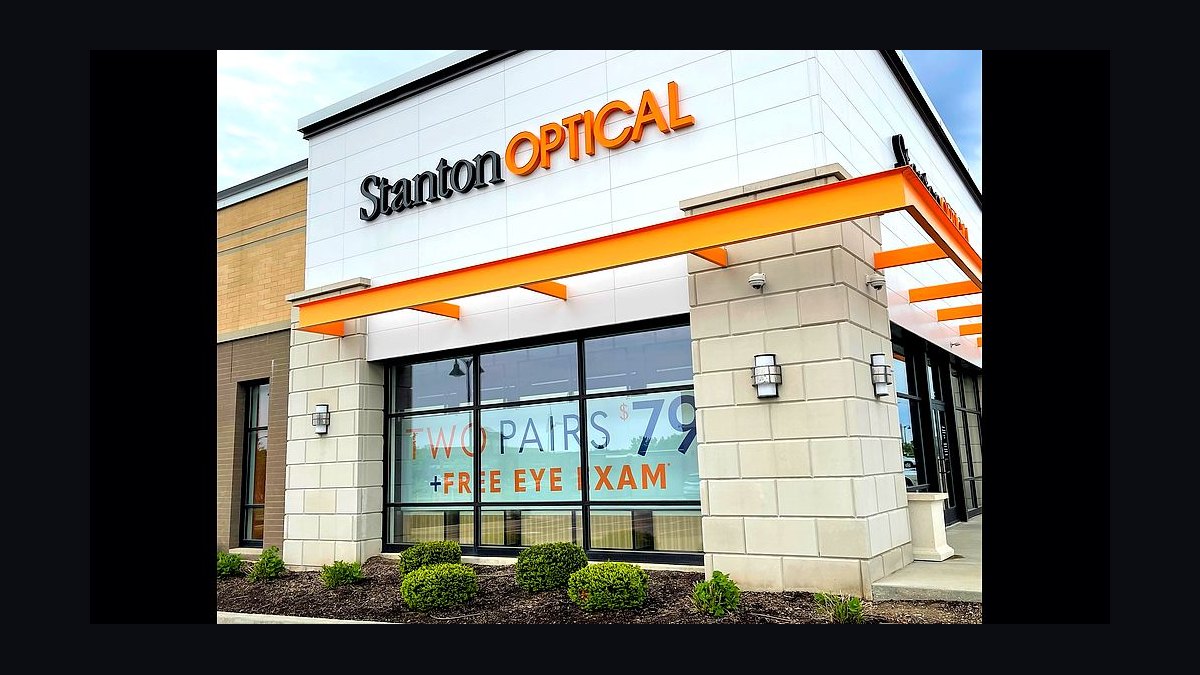
Yes, if you can fund the larger value-optical format and either buy a proven resale unit or build new in a high-traffic corridor: Stanton Optical suits an operator who wants affordable eyewear, an on-site lab for same-day glasses, and telehealth-assisted exams under Now Optics' systems. Skip it if your state restricts telehealth without a workaround, you can't clear $500,000–$900,000 in capital, or you can't drive high volume.
Buying an Existing Location vs. Building a New One
Every prospective Stanton Optical owner in 2027 faces the same fork before anything else gets decided: buy a franchisee's existing store on the resale market, or open a brand-new unit from a raw lease. These are not two flavors of the same decision — they carry different capital profiles, different risk curves, and different timelines to your first dollar of owner profit.
Buying resale means acquiring a unit that already has staff, an established patient file, a working lab, and — critically — trailing revenue you can underwrite against. Asking prices for established, profitable Stanton Optical franchises run $250,000 to $600,000, scaled to annual revenue, remaining lease term, and how recently the lab equipment was refreshed. The catch is supply: only 5 to 10 resales happen per year across the whole system, so you're shopping a thin market, usually against other existing multi-unit franchisees who already know the operator and can move faster than a first-time buyer. The franchisor also holds a right of first refusal on every resale, meaning Now Optics can step in and buy the unit itself at your agreed price before you close — a real possibility given the company runs roughly 60 corporate stores alongside 120-plus franchised ones. Add a $10,000 to $25,000 transfer fee the franchisor charges to approve you as the new operator, and confirm the underlying lease is assignable — many Stanton Optical leases are co-signed by the franchisor itself, which complicates a clean handoff.

Opening new gives you a blank slate: you pick the corridor, negotiate your own lease terms from scratch, and install a lab and buildout that reflects current-year standards rather than whatever the prior owner left behind. The 2026 FDD prices this path at a franchise fee of $30,000 to $50,000 and total Item 7 investment of $500,000 to $900,000, covering $220,000 to $450,000 in buildout and leasehold work, $130,000 to $280,000 for the on-site lab and exam technology, $60,000 to $160,000 in opening eyewear inventory, and $50,000 to $120,000 of working capital to survive the ramp before patient volume stabilizes. The tradeoff is time and risk: a new build typically takes 4 to 6 months from signed lease to grand opening, during which you're paying rent, staff, and loan interest with zero revenue, and you're betting on a location's demographics rather than validating them against two or three years of actual point-of-sale data.
A third, hybrid consideration worth naming: converting an existing optical or general retail space into a Stanton Optical footprint. This can shave weeks off permitting and electrical work if the prior tenant was already retail-zoned, but the 1,800 to 2,500 square foot format Stanton Optical requires, plus the plumbing and power draw of an on-site lab, often means gutting most of what's there anyway — so the savings are real but smaller than they first appear.
How to Decide Which Path Fits Your Capital, Timeline, and Risk Tolerance

The choice between buying and building comes down to five concrete inputs, and running them honestly before you fall in love with a specific listing or a specific corner will save you from the most common first-year regret franchisees report: picking the path that matched their emotional timeline instead of their financial one.
First, liquid capital. Franchisors generally want to see $175,000 to $300,000 liquid on top of financing capacity, and that number moves the decision — resale purchases often carry a lower all-in cash requirement than a full new build once you net out the revenue the resale unit is already generating, but the purchase price itself is due faster and in a lump sum rather than drawn down over a 4-to-6-month construction schedule.
Second, timeline to income. If you need owner draws within 60-90 days, resale is the only realistic path; a new build's construction and ramp period means most operators don't see meaningful take-home for 6-9 months post-signing.
Third, territory saturation. With 120-plus franchised units against roughly 60 corporate stores, and franchise agreements granting only a 3-to-5-mile radius of protection (shrinking to 1-2 miles in dense urban markets), you need to map every Now Optics-owned location — corporate or franchised, Stanton Optical or sister brand My Eyelab — within 10 miles of any site you're evaluating, whether you're buying an existing box or scouting new ground. Now Optics does not guarantee exclusivity against its own stores opening nearby.
Fourth, telehealth permissibility. Stanton Optical's staffing-cost advantage depends on remote-doctor exam technology, and state telehealth-optometry rules vary enough that this single regulatory question can swing your entire staffing model — and therefore your margin — regardless of which path you choose.

Fifth, your tolerance for construction risk versus inheritance risk. A new build lets you spec a fresh lab and negotiate original lease terms, but exposes you to permitting delays and cost overruns. A resale hands you working equipment and cash flow on day one, but you inherit whatever maintenance backlog, staff turnover, or reputational baggage came with the prior owner.
The Numbers Behind Each Path
Put side by side, the two paths reach similar mature economics but arrive there on very different cost and cash-flow curves — and the gap matters more than the destination when you're the one financing it.
New build, all-in Item 7 investment: $500,000 to $900,000. Breaking that down: franchise fee $30,000-$50,000; buildout and leasehold improvements $220,000-$450,000 (site selection favors strip malls or power centers anchored by Walmart, Target, or a grocery chain, with leasehold costs specifically running $150,000-$250,000 of that buildout range); equipment and on-site lab $130,000-$280,000; signage and decor $22,000-$65,000; initial eyewear inventory $60,000-$160,000; initial marketing $30,000-$70,000; training and travel $15,000-$35,000; working capital $50,000-$120,000. Ongoing, you carry a royalty near 6%-8% of gross plus a marketing fee of roughly 2%-3%.

Resale purchase: asking prices of $250,000-$600,000 for the unit itself, plus the $10,000-$25,000 transfer fee, plus whatever working capital cushion you want beyond what the seller leaves in the register. You inherit the existing royalty and marketing-fee structure unchanged. The number that matters most here is trailing twelve-month revenue and, ideally, two to three years of it — mature Stanton Optical centers gross $1,000,000 to $2,500,000-plus with owners clearing $150,000 to $450,000, and a resale priced at 1.5x-2.5x that owner earnings figure is the rough band experienced buyers use to sanity-check an asking price.
On depreciation: lab machines typically need replacement every 7-10 years, and if you plan to hold and later sell within 5 years — whether you bought resale or built new — factor in that build-out and lab equipment can lose 30%-50% of their value relative to your original investment by the time you exit, which compresses net proceeds more than most first-time buyers model going in.
The break-even math differs by path too: a new build amortizes its full Item 7 investment against zero starting revenue, while a resale amortizes a smaller purchase price against revenue that's already flowing, which is why resale buyers frequently reach personal cash-flow positive faster even when their total capital outlay isn't dramatically lower.
Sequencing the First 150 Days, Whichever Path You Choose
Whether you buy or build, the operational sequence converges quickly, and treating it as one runway rather than two separate playbooks keeps you from missing steps that matter regardless of path.
Days 1-20: read the 2026 FDD, Item 19 (financial performance representations), and your state's telehealth-optometry regulations before you sign anything. If you're evaluating a resale, this is also when you pull the unit's actual P&L, lease assignment terms, and equipment maintenance records rather than taking the seller's summary at face value.
Days 21-40: interview current operators — both resale sellers' peers and new-build franchisees — about real net profit, lab uptime, telehealth exam volume, and how often their field operations rep actually shows up versus how often the franchisor promised they would. Ask specifically about weekly support call wait times; this varies meaningfully by region, with operators outside dense corporate hubs reporting slower response.
Days 41-60: validate your market. For a new build, this means confirming a value-conscious, high-traffic demographic and site-specific telehealth permissibility. For a resale, it means confirming the existing patient base and insurance panel contracts transfer cleanly and that no competing Now Optics location is about to open inside your protected radius.
Days 61-110: for new builds, this is construction, lab installation, and staffing — the highest-risk window for cost overruns and permitting delays. For resales, this window compresses into transfer approval, lease reassignment, and staff retention, since your on-site lab is already running.
Days 111-140: open (new build) or complete transition (resale), then drive volume immediately using the value-and-same-day positioning that differentiates Stanton Optical from Warby Parker, Costco, LensCrafters, and pure online sellers. Enroll in or confirm national insurance panel contracts through the corporate team during this window if you haven't already.
Ongoing from day 140: build a recurring patient base rather than one-time walk-ins, lean on the 24/7 lab and software help desk for operational issues, and expect quarterly visits from a field operations rep as your primary ongoing support touchpoint.
Related questions
How does Stanton Optical compare to My Eyelab for a first-time franchise buyer?
Both are Now Optics value-optical brands with similar economics and on-site labs; the practical difference is usually territory availability and which brand already has a foothold in your target market — check overlap before choosing.
What happens if my state restricts telehealth eye exams?
You'll likely need an on-site or visiting optometrist more often, raising staffing costs and narrowing the margin advantage telehealth otherwise provides — confirm your state's specific rules before signing.
Can I convert an existing retail space into a Stanton Optical?
Sometimes, but the required 1,800-2,500 square foot format plus lab plumbing and power usually means substantial rebuild regardless of the prior tenant, so savings are modest rather than dramatic.
How many Stanton Optical units can one owner operate?
Multi-unit ownership is common and often preferred by the franchisor for territory continuity; most multi-unit operators build to 2-4 locations before layering in additional management.
What's a realistic payback period on a $700,000 investment?
With owner earnings of $150,000-$450,000 annually at maturity, payback commonly falls in the 3-5 year range post-ramp, faster for resale purchases that skip the construction runway.
FAQ
What is the total investment required to open a Stanton Optical franchise? Total initial investment for a new build typically runs $500,000 to $900,000, including a franchise fee of $30,000 to $50,000. This covers buildout, on-site lab equipment, inventory, and working capital, with exact costs depending on location and lease terms.
How much can I expect to earn as a Stanton Optical franchise owner? Mature locations generally report annual gross revenue between $1,000,000 and $2,500,000, with owner net profit ranging from $150,000 to $450,000. Actual earnings vary by market, management quality, and whether you bought resale or built new.
What ongoing fees does Stanton Optical charge franchisees?
Franchisees pay a royalty of approximately 6% to 8% of gross sales plus a marketing fee near 2%-3%. These fees fund brand advertising, technology, and field operations support from the Now Optics group.
Does Stanton Optical require an on-site lab for same-day eyewear? Yes, most locations include an on-site lab enabling same-day eyewear production. This is a core differentiator from many competitors and a major driver of repeat visits and customer satisfaction.
Is previous optical experience necessary to open a Stanton Optical franchise? No prior optical experience is required. Now Optics provides a 3-to-6-week initial training program in Boca Raton, Florida, plus on-site grand opening support, though strong retail management skills matter more than industry background.
How easy is it to sell a Stanton Optical franchise later? Moderately easy but not liquid — the system sees only 5-10 resales per year, the franchisor holds right of first refusal, and a $10,000-$25,000 transfer fee applies, so plan your exit timeline well before you need to sell.
Sources
- https://www.entrepreneur.com/franchises/stantonoptical/334826
- https://www.ftc.gov/business-guidance/resources/franchise-rule-compliance-guide
- https://www.ibisworld.com/united-states/industry/optical-goods-stores/1132/
- https://www.statista.com/topics/1231/eyewear/
- https://www.cchpca.org/telehealth-policy/
- https://www.aoa.org/practice/telehealth
- https://www.franchise.org/franchise-information/franchise-economic-outlook
- https://franchisebusinessreview.com/
Related on PULSE
- Should I open or buy a Costco Optical franchise in 2027?
- How long does it take to open a franchise and break even in 2027?
- Should I open or buy a My Eyelab franchise in 2027?
- Should I open or buy a Pearle Vision franchise in 2027?
- Should I open or buy a Tommy Gun's Original Barbershop franchise in 2027?
This page will be disappearing soon. Save it to your device for $1 — or read it free while it is here.
@Kory-White- · if Venmo asks, the last 4 of my number are 2012
This page is gone.
This one is off the shelf now. $1 keeps it on your phone for good — the whole page, pictures and diagrams included.
 franchiseShould I open or buy an Orangetheory Fitness franchise in 2027?
 franchiseShould I open or buy a Drybar franchise in 2027?
 franchiseShould I open or buy a Servpro franchise in 2027?
 franchiseShould I open or buy a Jeremiah's Italian Ice franchise in 2027?
 franchiseShould I open or buy a Chipotle franchise in 2027?
 franchiseShould I open or buy a Supercuts franchise in 2027?
 franchiseShould I open or buy a Mac Tools franchise in 2027?
 franchiseShould I open or buy a Bojangles franchise in 2027?
 franchiseShould I open or buy a Pizza Hut franchise in 2027?
 franchiseShould I open or buy a Take 5 Oil Change franchise in 2027?