


Should I open or buy a MassageLuXe franchise in 2027?
Quality
Certified
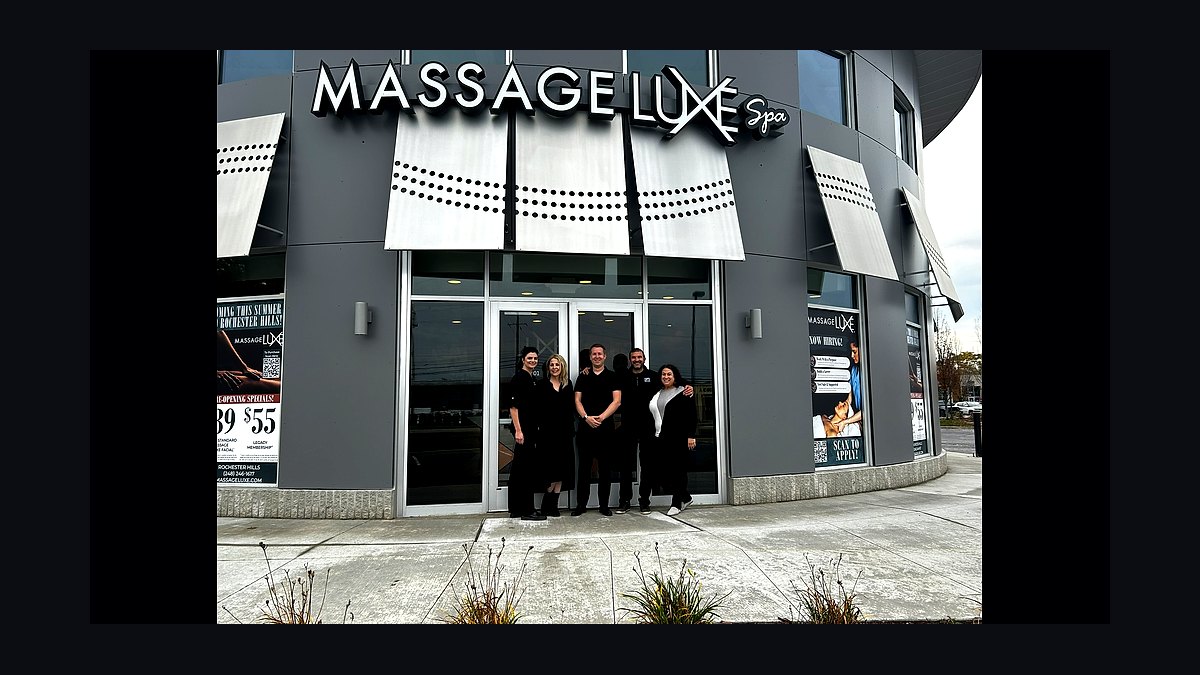
Yes, open a MassageLuXe in 2027 if you can recruit and retain licensed massage therapists and you're entering a wellness-receptive market without a saturated membership-massage competitor nearby. The franchise's recurring-membership model, spa-services add-on, and self-care tailwinds are real strengths — but therapist staffing, not capital, is the constraint that decides whether the investment pays off.
The outcome you should expect
Franchisees who open a MassageLuXe in 2027 should expect a slow first 12-18 months followed by a genuinely durable, recurring-revenue business if they clear the staffing bar. The realistic base case: you'll spend $400,000-$700,000 to open, take 6-10 months to reach a stable member base, and cross into profitability somewhere between month 14 and month 24 depending on how fast you fill treatment rooms with licensed therapists. Studios that hit 800-1,200 active memberships within two years typically gross $700,000-$1,500,000 annually and clear $120,000-$350,000 in owner earnings once royalty, labor, and rent are paid.
The outcome splits sharply on one variable more than any other: whether you can staff the studio. A franchise with five treatment rooms needs 8-15 licensed massage therapists (LMTs) to run at capacity across evenings and weekends, and the Bureau of Labor Statistics projects roughly 20% growth in demand for massage therapists through 2032 against only about 12% growth in the labor supply. That gap means every MassageLuXe studio is competing not just for members but for therapists — against Massage Envy, Hand & Stone, Elements Massage, day spas, and independent LMTs who can freelance without franchise overhead. Owners who solve staffing early (through massage-school partnerships, above-market pay, and flexible scheduling) tend to hit membership targets on schedule. Owners who don't spend their first 18 months in a staffing deficit, which caps how many members they can even accept, regardless of demand.

The second-order outcome is what the membership model does to your cash flow once it's running. Unlike a transactional spa or a la carte massage studio, a stabilized MassageLuXe collects predictable monthly membership revenue before services are even delivered — a $59-$89 monthly fee per member for one session, plus discounted add-on visits and a facial/skincare upsell that roughly 30-40% of members use at least quarterly. That recurring collection smooths seasonality that hurts most personal-service businesses and is the single biggest reason mature studios outperform independent competitors on revenue predictability. But it also means a bad retention year compounds: if members cancel faster than you sign new ones, the studio can slide from profitable to underwater within two or three quarters, because the fixed costs (rent, base payroll, royalty) don't shrink with membership count.
What drives that outcome
Three forces determine whether a 2027 MassageLuXe opening lands in the profitable outcome or the staffing-deficit outcome: therapist supply, membership retention, and local competitive density. Therapist supply is upstream of everything else — you cannot sell more memberships than you have appointment capacity to service, and appointment capacity is a direct function of how many LMTs you employ and retain. Franchisees report spending 40-50% of their time in the first two years on therapist recruiting, interviewing, and retention, which is a materially higher time investment than most first-time owners expect walking in. Typical pay structures run $25-$35 per hour plus tips (services commonly run $15-$40 in variable tip range), with commission incentives layered on membership sales; even with competitive pay, annual LMT turnover at franchise studios averages 35-50%, so staffing isn't a one-time hire, it's a continuous operating function.

Membership retention is the second driver, and it's directly downstream of both service quality and how well you manage the member experience once therapists are in place. The massage-membership industry average retention window is 12-18 months; MassageLuXe franchisees report averaging 14-20 months, modestly ahead of the category, largely credited to the brand's more boutique, spa-like ambiance compared to the clinical positioning of Massage Envy. Top-performing owners actively manage this number with quarterly check-in calls, birthday perks, and referral incentives (commonly one free massage per three referrals), and they treat therapist continuity as a retention lever too — members who see the same LMT visit-over-visit cancel less often than members who get rotated between different therapists.
The third driver is competitive density, which sets the ceiling on how fast you can acquire members regardless of how well you execute internally. A 2025 franchisee survey found studios within three miles of an existing Massage Envy location saw 15-25% lower new-member acquisition in their first year. In markets with multiple independent spas nearby, MassageLuXe franchisees report membership retention running 10-20% lower than in less-contested territories, because independents can undercut on price and flexibility even without brand marketing muscle. This is why territory diligence before signing matters as much as the FDD numbers: two studios with identical build-outs can post completely different three-year results purely based on how crowded the local massage-and-spa landscape already is.
Benchmarks and realistic ranges

Use the 2026 Franchise Disclosure Document as your anchor, but treat every line as a range, not a point estimate, because build-out costs vary heavily by market. The franchise fee runs $40,000-$50,000. Total Item 7 investment — the all-in cost to open — spans roughly $400,000 to $700,000, with the largest swing coming from buildout and leasehold improvements ($220,000-$420,000 for a 3,000-4,500 sq ft studio with plumbed treatment rooms, HVAC suited to a spa environment, and soundproofing between rooms). Equipment and furnishings (massage tables, facial equipment) typically run $70,000-$160,000, signage and decor $20,000-$55,000, initial inventory $10,000-$30,000, initial marketing for your membership pre-sale $25,000-$60,000, training and travel $12,000-$32,000, and working capital $40,000-$100,000 to cover the first three to six months while membership ramps. Plan on $150,000-$250,000 in liquid capital on top of financing for the rest.
Ongoing fees are a royalty near 6% of gross revenue plus a separate marketing fee around 2%, both calculated off top-line, not profit — so they hit you even in slow months before you've covered fixed costs. Lease rates for an appropriately sized studio in a retail strip or mixed-use development range from $2,500-$6,000 per month in secondary markets to $8,000-$15,000+ in prime urban locations, and franchisees should budget 3-5 months for permitting and construction, since medical/spa-style plumbing and zoning approval (some municipalities require special permits for massage businesses) routinely takes longer than a standard retail build-out.
On the revenue side, mature studios (generally year three and beyond, once membership has stabilized) gross $700,000-$1,500,000+ annually, with owner earnings in the $120,000-$350,000 range after royalty, marketing fee, labor, rent, and operating expenses. A rough cost structure for a $1.1M-revenue studio looks like: therapist and staff labor around 42% of gross, rent and product costs around 18%, royalty plus marketing around 8%, and remaining operating expenses around 14% — leaving roughly 18% as owner earnings before tax. Territory economics matter here too: the franchisor generally looks for territories with 50,000+ residents within a 3-mile radius, median household income of $75,000+, and 25-45% of the population in the 25-54 core membership demographic. A market where more than roughly 15% of residents already hold a massage membership elsewhere is a signal of saturation worth walking away from, regardless of how attractive the demographics otherwise look.
Risks, edge cases, and failure modes

The single largest failure mode is chronic understaffing that never resolves. Because the LMT labor market is structurally tight nationally, a franchisee who underestimates how hard hiring will be in their specific metro can end up running a studio permanently below capacity — collecting membership revenue on paper while unable to actually service the appointment volume, which drives cancellations and member churn simultaneously. This is the scenario that turns a $400,000-$700,000 investment into a multi-year cash drain rather than a slow ramp to profitability, and it's the risk least visible in the FDD, since Item 19 earnings claims (where provided) reflect studios that already solved staffing, not the ones still fighting it.
Cancellation and no-show behavior is a second, underappreciated risk. A typical five-room studio can handle 60-80 appointments per day at peak, but if roughly 20% of members cancel within 24 hours — common in a studio's first year before policies and habits are established — daily revenue can drop $1,000-$2,000. Franchisees who don't implement firm no-show policies (commonly 50% of the service fee for late cancellations) and waitlist/double-booking systems for high-demand slots like Saturday mornings bleed capacity they already paid labor costs to staff.
Competitive saturation is the third major risk, and it's largely locked in at the site-selection stage — you can't out-execute your way past a market where Massage Envy, Hand & Stone, Elements, and two or three independents are already splitting the addressable membership base. A territory that looks fine on population and income data can still fail if the massage-membership category is already over-penetrated locally; the 10-20% retention gap and 15-25% acquisition gap franchisees report in contested markets are large enough to turn a marginal proforma into a loss.

Edge cases worth planning for specifically: a manager or owner who cannot personally commit to hands-on staffing management in year one, in which case a studio manager with spa experience ($45,000-$65,000 salary) becomes close to mandatory rather than optional overhead; a location within two miles of an existing Massage Envy, which historically depresses first-year new-member acquisition regardless of your own execution; and underestimating parking and zoning requirements (roughly one space per 200 sq ft, plus special-use permits some municipalities require for massage establishments), which can add months of delay and tens of thousands in unplanned costs before you even open. A site-selection consultant, typically $5,000-$10,000, is cheap insurance against exactly these edge cases relative to the downside of guessing wrong on territory.
A practical rollout plan
Treat the period before you open as a staffing and validation exercise, not just a construction project — the studios that open successfully in 2027 are the ones that started recruiting therapists and pre-selling memberships well before the doors opened, not after. Days 1-20: read the full 2026 FDD, Item 19 if provided, and specifically study therapist-staffing dynamics in your target metro — call a massage school or two and ask about local LMT graduate volume and typical starting pay expectations. Days 21-40: interview at least eight existing operators, and weight your questions toward therapist recruitment and retention, membership ramp speed, actual retention rates achieved, and net profit after labor — not just top-line revenue, which can mask a staffing-constrained studio. Days 41-60: validate that your specific territory is genuinely wellness-receptive and not already saturated — pull the demographic thresholds (population, income, age band) and count existing massage-membership competitors within a three-mile radius.
Days 61-100: this is the highest-risk window in the whole timeline — begin build-out while simultaneously recruiting your first wave of licensed therapists, since a finished studio with no therapists to staff it is a common and costly first-year mistake. Days 101-130: pre-sell memberships ahead of your grand opening using the franchise's marketing support, and open with as close to full staffing as you can manage rather than opening understaffed and hoping to catch up. After opening, the ongoing operating discipline is what separates the profitable outcome from the stalled one: keep building and retaining memberships, keep investing in therapist retention (continuing education, flexible scheduling, and pay competitive enough to beat turnover), and only once the first studio is stable and profitable should you evaluate multi-unit expansion into an adjacent, similarly under-saturated territory.
Related questions

How much does it cost to open a MassageLuXe franchise?
Total initial investment runs $400,000-$700,000 per the 2026 FDD, including a $40,000-$50,000 franchise fee, buildout, equipment, initial marketing, and working capital. Plan on $150,000-$250,000 in liquid capital before financing the rest.
How long does it take a MassageLuXe to become profitable?
Most studios take 14-24 months to reach profitability, gated primarily by how fast the owner can staff licensed therapists and build a stable membership base, not by construction timelines alone.
What's the biggest risk in opening a MassageLuXe franchise?
Chronic therapist understaffing is the dominant risk — LMT demand is projected to outgrow supply nationally, and studios that can't hire enough therapists cap their own revenue regardless of member demand.
Is MassageLuXe better than Massage Envy for a first-time franchisee?
Neither is categorically better; MassageLuXe positions as a more boutique, spa-like experience with a facial upsell, while Massage Envy has broader brand recognition and scale. The better fit depends on local competitive density and your capital.
What membership retention rate should I expect at a MassageLuXe?
Industry average is 12-18 months; MassageLuXe franchisees report 14-20 months on average, improved further by quarterly check-ins, referral incentives, and consistent therapist assignment per member.
FAQ

What is the total investment to open a MassageLuXe franchise? The total initial investment typically ranges from $400,000 to $700,000, including the franchise fee of $40,000-$50,000. This covers build-out, equipment, grand-opening marketing, and working capital, per the 2026 FDD.
How much can I expect to earn as a MassageLuXe owner? Mature studios generally gross between $700,000 and $1,500,000 annually, with owner net income ranging from $120,000 to $350,000. Actual earnings vary heavily by therapist staffing levels, membership retention, and local competitive density.
What are the biggest challenges of running a MassageLuXe franchise? The main hurdles are recruiting and retaining licensed massage therapists, sustaining membership retention, and competing with established chains like Massage Envy and Hand & Stone. Labor availability is the recurring constraint across most markets.
How does the MassageLuXe membership model actually work? Members pay a monthly fee, typically $59-$89, for a set number of massage or facial services, creating predictable recurring revenue. The model depends on consistent client retention and add-on upselling, particularly facials, to maximize per-member revenue.
What ongoing fees does MassageLuXe charge franchisees? The royalty is approximately 6% of gross revenue, plus a separate marketing fee near 2%, both calculated on top-line revenue rather than profit. These fund national brand advertising and franchisor operational support.
Is the wellness industry strong enough in 2027 to justify opening a new MassageLuXe? Yes, self-care and wellness demand continues to expand and supports the category broadly. But whether an individual opening succeeds depends far more on local therapist supply and competitive saturation than on the macro trend alone.
Sources
- https://www.ftc.gov/business-guidance/resources/franchise-rule
- https://www.bls.gov/ooh/personal-care-and-service/massage-therapists.htm
- https://www.entrepreneur.com/franchises
- https://www.ibisworld.com/united-states/industry/massage-spa-services/
- https://www.franchisebusinessreview.com
- https://www.franchise.org
- https://www.statista.com/markets/419/topic/972/beauty-personal-care/
- https://www.census.gov/topics/income-poverty.html
- https://www.abmp.com
- https://www.massageluxe.com
Related on PULSE
- How long does it take to open a franchise and break even in 2027?
- Should I open or buy a Tommy Gun's Original Barbershop franchise in 2027?
- Should I open or buy a Painting with a Twist franchise in 2027?
- Should I open or buy a Massage Envy franchise in 2027?
- Should I open or buy a Hand & Stone Massage and Facial Spa franchise in 2027?
This page will be disappearing soon. Save it to your device for $1 — or read it free while it is here.
@Kory-White- · if Venmo asks, the last 4 of my number are 2012
This page is gone.
This one is off the shelf now. $1 keeps it on your phone for good — the whole page, pictures and diagrams included.
 franchiseShould I open or buy a Pizza Hut franchise in 2027?
 franchiseShould I open or buy a Dairy Queen franchise in 2027?
 franchiseShould I open or buy a Planet Fitness franchise in 2027?
 franchiseShould I open or buy a Crumbl Cookies franchise in 2027?
 franchiseShould I open or buy a Servpro franchise in 2027?
 franchiseShould I open or buy a Panera Bread franchise in 2027?
 franchiseShould I open or buy a Jeremiah's Italian Ice franchise in 2027?
 franchiseShould I open or buy a Mathnasium franchise in 2027?
 franchiseShould I open or buy a Jiffy Lube franchise in 2027?
 franchiseShould I open or buy a Bojangles franchise in 2027?