


Should I open or buy an Amada Senior Care franchise in 2027?
Quality
Certified
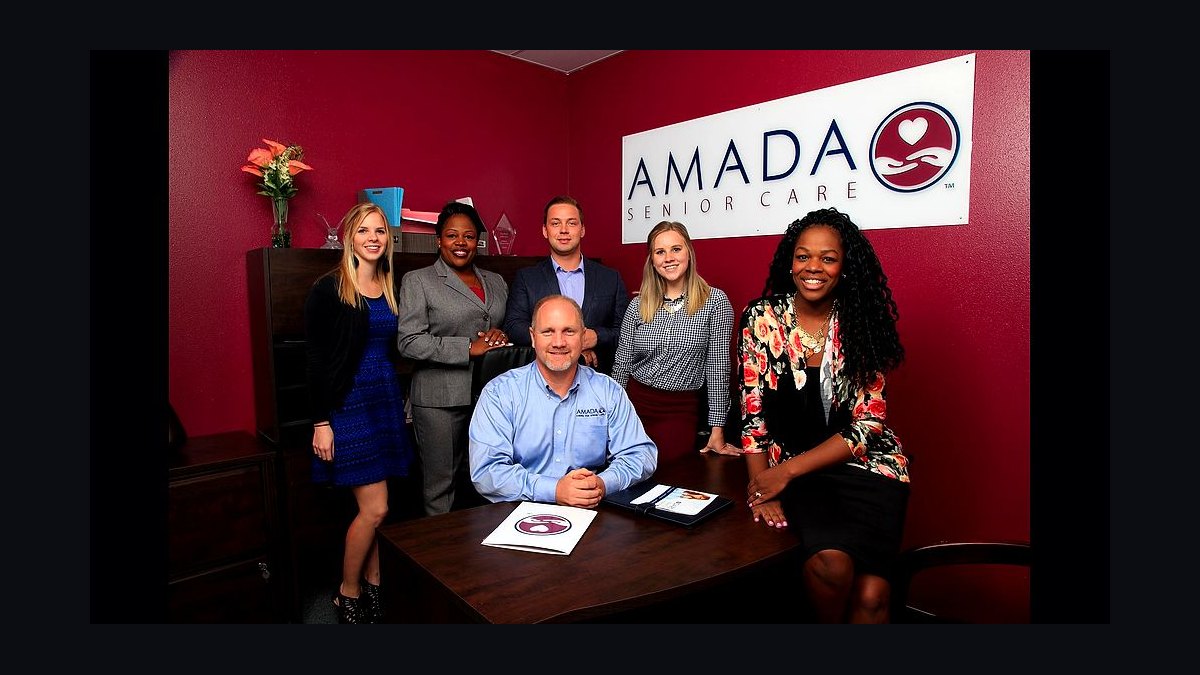
Yes, open an Amada Senior Care franchise in 2027 if you're a compassionate, sales-minded operator with $100,000-$200,000 in capital who can recruit and retain caregivers — the diversified model (home care plus senior-housing advisory plus LTC-insurance assistance) rides a powerful aging tailwind toward $130,000-$500,000 in owner earnings. Skip it if you can't staff caregivers or build referral relationships, since that single constraint determines almost every outcome.
The two (or more) options compared
Anyone weighing "should I open Amada Senior Care" is really choosing among four distinct paths, and conflating them is the most common early mistake. The first path is a new Amada Senior Care franchise territory, built from zero clients and zero caregivers, which costs $100,000-$200,000 in Item 7 investment and takes 12-18 months to reach breakeven. The second path is buying an existing Amada resale — an already-operating territory with an established client roster, trained caregivers, and referral relationships already in place — which typically costs a multiple of trailing cash flow (often 2-3x annual owner earnings) on top of a reduced or waived franchise fee, but skips the 12-18 month ramp entirely. The third path is a competing in-home senior-care franchise (Home Instead, Visiting Angels, FirstLight, Home Helpers, Senior Helpers), which offers similar non-medical home-care economics but without Amada's housing-advisory and LTC-insurance revenue layers. The fourth path is going fully independent — no franchise fee, no royalty, no brand restrictions, but also no proprietary caregiver app, no national referral network, no FDD-disclosed Item 19 benchmarks, and no corporate training program to compress the learning curve.
The core trade-off across all four is capital efficiency versus speed versus control. A new Amada territory demands the least capital ($100K-$200K) but the most patience — you are building caregiver supply and referral demand simultaneously from nothing. A resale demands more capital upfront but compresses time-to-profit dramatically, because the caregiver bench and referral sources already exist; the risk shifts from "can I build this" to "did I pay a fair multiple and will the caregivers stay after ownership changes hands." A competing franchise like Home Instead offers a longer track record and larger territory count, but without Amada's housing-advisory referral fee (typically 10-15% of total revenue) or LTC-insurance-claims assistance, which differentiates client acquisition when families are shopping multiple agencies. Independent ownership maximizes margin retention (no 5%-8% royalty, no ~2% marketing fee) but forces you to build everything — a scheduling platform, a caregiver-recruitment pipeline, a wage-benchmarking process, licensing compliance — that Amada's corporate system already provides on day one.

For most first-time senior-care operators without an existing caregiver network or referral book, a new Amada territory or an Amada resale beats independent ownership, because the caregiver-shortage problem (10-20% annual aide turnover industry-wide) is easier to solve with a proprietary caregiver app and a national referral network behind you than alone. Between a new build and a resale, the deciding factor is almost always available capital: if you can find $250,000-$400,000+ (including a resale premium), the compressed timeline usually pays for itself within two years of avoided ramp-up losses.
How to decide between them
The decision tree above collapses to three real questions. First: do you have the capital, and is it liquid enough to survive a slow ramp without panicking at month nine? Amada's own franchisees report that undercapitalized owners cut marketing spend right when referral-building matters most, which is the single most common self-inflicted wound in this system. Second: do you already have caregiver-recruitment instincts or relationships — nursing-school contacts, a background in home-care staffing, or a spouse/partner who can run recruiting full-time — or are you starting cold? Starting cold favors a resale, where 10-20 caregivers are already active. Third: does the diversified revenue model (care hours plus housing-advisory referrals plus LTC-insurance-claims assistance) actually matter to you, or would a simpler single-revenue-stream competitor suit your risk tolerance better? Operators who value a higher-margin buffer during caregiver shortages should weight Amada's advisory layer heavily, since it can keep cash flowing even when care-hour staffing dips.
Concrete numbers behind each option
A new Amada Senior Care territory in 2027 carries a franchise fee of $50,000-$60,000 per the 2026 FDD, with office setup running $8,000-$30,000, technology and care-management systems $5,000-$18,000, initial marketing $20,000-$50,000, training and travel $10,000-$28,000, licensing/bonding/insurance $10,000-$30,000, and working capital of $30,000-$80,000 to cover payroll float before receivables catch up — a total Item 7 range of roughly $100,000-$200,000. Royalty runs approximately 5%-8% on a tiered schedule, plus a marketing fee near 2% of gross. Mature single-territory agencies gross $1,000,000-$4,000,000+, with owner earnings landing between $130,000 and $500,000 depending on caregiver utilization, referral volume, and how much revenue comes from the higher-margin housing-advisory stream.

An Amada resale typically prices at a multiple of trailing owner earnings — commonly 2-3x — meaning a territory clearing $200,000 in annual owner earnings might transact for $400,000-$600,000, sometimes with a reduced or waived initial franchise fee since you're not consuming corporate onboarding capacity the same way a de novo owner does. Multi-unit Amada operators (roughly 20-25% of the existing franchise base run 2-5 territories) report combined annual revenue of $3,000,000-$6,000,000, which illustrates the ceiling once caregiver-staffing and referral systems are proven and replicated.
Competing franchises in the space carry comparable Item 7 ranges — generally $80,000-$180,000 depending on brand — but without the housing-advisory revenue layer, so total revenue tends to skew more heavily toward pure care-hour billing, which is more exposed to caregiver-shortage swings. Independent ownership avoids the $50,000-$60,000 franchise fee and the ongoing 5%-8% royalty entirely, but typically spends a comparable amount rebuilding the systems (CRM, scheduling software, caregiver-recruitment marketing) that a franchise fee already buys, and lacks Item 19 financial-performance disclosures to benchmark against.
Client economics matter across every option: average client retention on the Amada model runs 14-18 months (longer than many home-care-only competitors due to the housing-advisory upsell extending the relationship), and realistic growth for a single territory is 10-15 new clients per month within the first 12-18 months. Caregiver turnover industry-wide runs 10-20% annually, and Amada's 2026 FDD reports voluntary franchisee turnover of just 5-7% — a proxy for system health that's worth requesting during due diligence on any resale or new territory.

Implementation details and sequencing
The sequencing above applies almost identically whether you open a new territory or close on a resale, with one difference: a resale compresses steps S4 and S5 because the caregiver bench and referral relationships already exist, so due diligence there should focus on caregiver retention risk after ownership transition (some caregivers leave when "their" owner sells) rather than building from scratch. In the first 20 days, read the full 2026 FDD with particular attention to Item 19 performance representations and Item 20 franchisee turnover data, since caregiver-staffing dynamics are disclosed there more candidly than in marketing materials. Days 21-40 should include calls with at least eight current franchisees, specifically asking about caregiver recruitment cost-per-hire, how much revenue actually comes from the housing-advisory and LTC-insurance streams versus pure care hours, and how corporate lead generation compares to self-sourced referrals. Days 41-60 validate that your target market has genuine aging-population density (250,000-500,000 residents is Amada's typical exclusive-territory size) and that you can secure state-level home-care licensing, which varies significantly by state in both cost and timeline. Days 61-80 focus on recruiting an initial caregiver bench before you have clients waiting — undercapitalized owners who wait until they have clients to recruit caregivers create a bad first-client experience that damages referral word-of-mouth permanently. Days 81-110 launch operations and prioritize referral-relationship building with hospitals, senior centers, and estate attorneys, since these produce higher-intent leads than paid marketing alone. From month four onward, actively cross-sell the housing-advisory and LTC-insurance-claims services to existing care clients and their families, since this is the differentiated margin buffer that separates Amada from single-revenue-stream competitors during caregiver-shortage periods.
Related questions
Is a home-care franchise recession-proof?
Not entirely, but in-home senior care is highly recession-resilient because care needs don't disappear in a downturn and most revenue (85-90%) is private-pay rather than dependent on discretionary spending or government reimbursement cycles.
How much does it cost to buy an existing Amada territory versus opening new?
A resale typically costs 2-3x trailing annual owner earnings plus a reduced franchise fee, often $400,000-$600,000+ for a proven territory, versus $100,000-$200,000 to open new and build from zero clients.
What's the biggest reason senior-care franchisees fail?
Inability to recruit and retain caregivers is the dominant failure mode industry-wide, followed by underinvesting in referral-relationship building during the first 12 months when word-of-mouth hasn't yet compounded.
Do I need healthcare experience to open a senior-care franchise?
No — Amada and most competitors are designed for business-minded operators without clinical backgrounds; the franchisor provides training on care coordination, compliance, and caregiver management.
How long until an Amada franchise turns a profit?
Most new territories reach breakeven in 12-18 months, with some taking up to 24 months depending on how quickly the caregiver bench and referral pipeline are built.
FAQ

What is the total investment needed to open an Amada Senior Care franchise in 2027? The total initial investment typically ranges from $100,000 to $200,000, including a franchise fee of about $50,000 to $60,000. This low capital requirement makes it one of the more affordable senior-care franchise options, since it can be operated from a home or small office rather than a retail buildout.
How much can an owner expect to earn from an Amada Senior Care franchise? Mature agencies often generate annual gross revenues between $1,000,000 and $4,000,000, with owner earnings after expenses generally falling in the $130,000 to $500,000 range. Actual results vary widely based on caregiver staffing levels, referral volume, and how much revenue comes from the housing-advisory and LTC-insurance streams.
What makes Amada different from other in-home senior-care franchises? Amada layers a senior-housing advisory service and long-term-care insurance claims assistance on top of standard non-medical home care. This diversified revenue stream helps stabilize income compared to franchises that depend solely on hourly caregiver billing, especially during periods of caregiver shortage.
Is buying an existing Amada territory better than opening a new one? A resale compresses the 12-18 month ramp-up period because caregivers and referral relationships already exist, but it costs more upfront — typically 2-3x trailing owner earnings. A new territory costs less initially but requires patience while you build caregiver supply and client demand from scratch.
What are the biggest challenges franchisees face in this model? The primary challenge is recruiting and retaining reliable caregivers, since industry-wide turnover runs 10-20% annually. Building a steady referral pipeline through hospitals, senior centers, and estate attorneys is the second major challenge, and it requires consistent outreach rather than one-time effort.
Is this franchise suitable for someone with no healthcare experience? Yes, the model is built for business-minded operators without a clinical background. Amada provides training and support for the operational, compliance, and sales aspects, though a willingness to learn local care regulations and licensing requirements is essential before you open.
Sources
- Federal Trade Commission — Franchise Disclosure Document requirements: https://www.ftc.gov/business-guidance/resources/franchise-rule-compliance-guide
- International Franchise Association: https://www.franchise.org
- Home Care Association of America: https://www.hcaoa.org
- IBISWorld — Home Care Providers industry reports: https://www.ibisworld.com
- Statista — Home care services market data: https://www.statista.com
- Franchise Business Review: https://www.franchisebusinessreview.com
- U.S. Census Bureau — Population and aging demographics: https://www.census.gov
- Entrepreneur — Franchise 500 listings: https://www.entrepreneur.com/franchise500
- Small Business Administration — Franchise financing guidance: https://www.sba.gov
Related on PULSE
- Best senior care franchises to buy in 2027
- Should I open or buy an Always Best Care Senior Services franchise in 2027?
- Should I open or buy a Home Instead Senior Care franchise in 2027?
- Should I open or buy a Senior Helpers franchise in 2027?
- Best pet care franchises to start in 2027
- Should I open or buy an AFC Urgent Care franchise in 2027?
This page will be disappearing soon. Save it to your device for $1 — or read it free while it is here.
@Kory-White- · if Venmo asks, the last 4 of my number are 2012
This page is gone.
This one is off the shelf now. $1 keeps it on your phone for good — the whole page, pictures and diagrams included.
 franchiseShould I open or buy a Dairy Queen franchise in 2027?
 franchiseShould I open or buy a Supercuts franchise in 2027?
 franchiseShould I open or buy a Wingstop franchise in 2027?
 franchiseShould I open or buy a Meineke franchise in 2027?
 franchiseShould I open or buy a Stanley Steemer franchise in 2027?
 franchiseShould I open or buy a Taco Bell franchise in 2027?
 franchiseShould I open or buy a McAlister's Deli franchise in 2027?
 franchiseShould I open or buy a Dunkin' franchise in 2027?
 franchiseShould I open or buy a Firehouse Subs franchise in 2027?
 franchiseShould I open or buy an Anytime Fitness franchise in 2027?