


Should I open or buy a Nurse Next Door franchise in 2027?
Quality
Certified
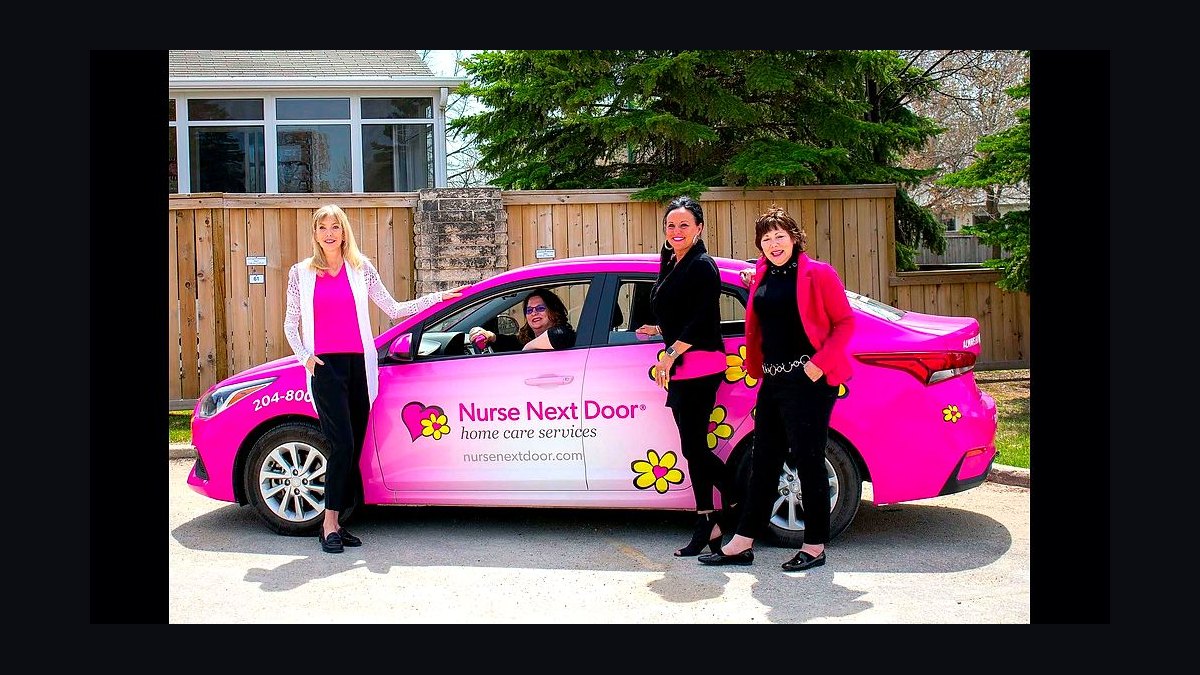
Yes, for an operator who is genuinely people-first, comfortable leading a culture instead of just supervising shifts, and financially able to absorb 12-24 months of caregiver-recruitment friction before hitting steady margins. Nurse Next Door's 2027 outlook is favorable because of the aging-population tailwind and its distinctive "Happier Aging" brand, but the franchise still lives or dies on your ability to staff and retain caregivers.
The outcome you should expect
Franchisees who open a Nurse Next Door in 2027 should expect a slow first year, a break-even second year, and a genuinely strong third year if they execute on referrals and staffing. The Item 7 investment sits in the $100,000 to $200,000 range, with $60,000 to $100,000 of that needing to be liquid capital rather than financed debt. That is a modest entry point compared to medical-model home health franchises, which often carry licensing and clinical-staffing costs that push total investment past $300,000.
The realistic outcome curve looks like this: Year 1 is dominated by care-license approval, hiring your first 15-25 caregivers, and building the first handful of referral relationships with discharge planners, senior living communities, and elder law attorneys. Most owners are not profitable in Year 1 — you are funding payroll and marketing out of working capital while revenue ramps from a handful of clients to a stable base of 30-50 active care recipients. Year 2 is typically the break-even year, when weekly care hours stabilize enough to cover payroll, royalty (roughly 5%-7%, tiered), marketing fund contributions (around 2% of gross), and office overhead. By Year 3, a well-run territory should be generating $1,000,000 to $1,800,000 in annual revenue, with owner earnings starting to clear $100,000-$150,000.

Mature agencies — meaning five-plus years old, with an established caregiver bench and diversified referral sources — commonly gross $1,000,000 to $3,000,000-plus, translating to owner earnings of $120,000 to $400,000 depending on market density and labor costs. That ceiling is genuinely high relative to the low capital requirement, which is the core financial argument for opening rather than skipping this franchise. But the spread between the low end and high end of that range is almost entirely explained by one variable: caregiver retention. Agencies that keep turnover under 40% annually consistently land in the upper half of that earnings range; agencies fighting 70%-plus turnover rarely escape the lower end, no matter how strong their marketing is.
The brand itself changes the outcome in a measurable way. Nurse Next Door's bright, joyful positioning — deliberately distinct from the clinical, muted tone used by Home Instead, Visiting Angels, and ComForCare — performs especially well with Gen X adult children (roughly ages 45-60) who are making care decisions for aging parents and respond to a less institutional, more aspirational framing of "aging well" rather than "declining." That demographic is currently the primary purchaser of non-medical home care services, so a brand built to appeal to them directly is not cosmetic — it is a genuine conversion advantage at the point of sale.
What drives that outcome

Three forces determine whether a Nurse Next Door franchise lands in the top or bottom of its earnings range: caregiver supply, referral density, and how well the owner personally embodies the brand's culture. Caregiver supply is the dominant driver because home care margin is a direct function of billable-hour utilization — every hour a caregiver is idle or a shift goes unfilled is revenue that never happens. Referral density determines how fast new clients replace natural attrition (clients who pass away, move into facilities, or recover). And culture leadership determines both of the first two: caregivers stay longer at agencies that feel joyful and well-led, and referral partners send more clients to franchisees who show up consistently and represent the brand well.
This is why two franchisees in identical markets, with identical territory demographics, can post wildly different results. The one who treats caregiver recruiting as a full-time, ongoing function — not a one-time hiring push — keeps a bench deep enough to say yes to new client inquiries. The one who hires reactively, only when a shift is already uncovered, ends up turning away new business, which referral partners notice and stop sending leads for. Because home care revenue is built almost entirely from recurring weekly hours rather than one-time transactions, the compounding effect of either strong or weak staffing shows up in the P&L within two to three quarters, not years — you will know by month nine of operation which direction your agency is heading.
Benchmarks and realistic ranges

Use these ranges to sanity-check any Item 19 or broker pitch before you sign. The franchise fee runs $50,000-$60,000 per the 2026 FDD. Office and technology setup (a home or small office-based agency, plus care-management and scheduling software) typically runs $14,000-$48,000 combined. Initial marketing to seed referral relationships runs $20,000-$50,000, training and travel for the owner and initial staff runs $10,000-$28,000, and licensing, bonding, and general liability insurance runs $10,000-$30,000 depending on state care-licensing requirements. Working capital to cover payroll and accounts-receivable float before cash flow stabilizes should be budgeted at $30,000-$80,000 — underfunding this line is the single most common reason new owners run out of runway in month seven or eight, right before referral volume typically breaks even with payroll obligations.
On the labor side, caregiver wages have been climbing steadily and will likely sit at $15-$20 per hour in most markets by 2027, driven by a Bureau of Labor Statistics-documented shortfall where demand for home health and personal care aides is projected to grow substantially faster than the available labor pool. Budget $5,000-$10,000 annually per territory for caregiver retention programs — wellness perks, paid ongoing training, attendance bonuses of $1-$2 per hour — because franchisees who invest here report 30%-50% lower annual turnover than those who compete on wage alone.
On exit economics: established home-care franchise resales, based on 2024-2026 FDD and broker resale data across the category, tend to trade at 2.5x to 4x annual net profit. A well-run Nurse Next Door doing $2,000,000-plus in revenue with a stable caregiver team and diversified referral sources could realistically sell in the $400,000 to $1,200,000 range by the time a 2027 opener is ready to exit five to seven years later. The factors that push a sale toward the top of that multiple are recurring monthly care-plan contracts (rather than one-off hourly bookings), caregiver turnover held under 40%, and a management layer — typically a director of care plus an office manager — that lets the business run without the founder present every day. Buyers pay a real premium, often 30%-50% higher, for an agency that demonstrably does not depend on the owner personally.
Risks, edge cases, and failure modes

The single biggest failure mode is chronic understaffing that the owner mistakes for a marketing problem. Franchisees who see stalled revenue often respond by increasing ad spend or chasing more referral partners, when the actual bottleneck is that they cannot staff the clients they already have. If you are turning down or delaying new client starts because you lack available caregivers, more leads will not fix the business — a deeper hiring pipeline will.
A second edge case is entering a market that is already saturated with entrenched competitors. Home Instead operates over 1,200 units nationally, Visiting Angels over 600, and ComForCare around 200; in a territory where one of these brands has been established for a decade with deep hospital and senior-center relationships, a new Nurse Next Door franchisee should expect a longer referral-building runway than the 90-day plan below assumes — plan for 6-9 months before referral sources start sending consistent volume, not 60-90 days. Nurse Next Door's smaller global footprint (roughly 150-200 units as of 2026) is a genuine trade-off: less brand recognition than the category leaders, offset by a more collaborative franchisee community and lighter territory competition within the brand itself.
A third failure mode is underestimating licensing timelines. Non-medical home care licensing requirements vary significantly by state — some states require nothing beyond business registration, while others require a formal home-care agency license, background-check infrastructure, and bonding that can take 60-120 days to clear. Franchisees who assume they can open on the same timeline regardless of state frequently find themselves paying rent and salaries for an office that legally cannot take clients yet.

Finally, watch for owners who are drawn to the brand's aesthetic without being suited to the actual daily work, which is fundamentally people-management: recruiting, scheduling, conflict resolution between caregivers and families, and being available for care emergencies. An owner who wants a passive, hands-off investment will struggle here regardless of capital — this is a full-time, relationship-driven operating business, not a royalty-collecting asset.
A practical rollout plan
A realistic 2027 opening sequence starts well before the doors open and extends through the first year of operation, not just the first 90 days. Days 1-20 should be spent reading the full 2026 FDD line by line, with particular attention to Item 19 (financial performance representations) and Item 20 (franchisee turnover and territory data), plus researching your specific state's home-care licensing requirements. Days 21-40 should be spent calling at least eight existing operators — ask them directly about caregiver recruitment difficulty, which referral sources actually convert, how the brand affected client trust, and their real net profit versus what Item 19 implied. Days 41-60 are for validating your specific territory's aging demographics and formally applying for your state care license, since this step often becomes the critical-path bottleneck. Days 61-80 are for recruiting your initial caregiver bench — aim for 15-20 hired and background-checked before you accept your first client — and standing up scheduling and care-management systems. Days 81-110 are for launch and the first wave of referral-relationship building with hospitals, senior living communities, and elder law attorneys.

Beyond day 110, the work shifts to converting one-time referrals into recurring weekly care plans, which is what stabilizes cash flow. By month twelve, a franchisee should be evaluating whether revenue supports hiring a director of care — the first management hire that starts converting the business from owner-dependent to systems-dependent, which matters enormously for both daily sanity and eventual resale value.
Related questions
Do I need a nursing or medical license to open a Nurse Next Door? No — the model is strictly non-medical companion and personal care, so no clinical license is required of the owner. State-level home-care agency licensing may still apply and varies by location.
How does Nurse Next Door compare to Home Instead for a first-time franchisee? Home Instead has far greater brand recognition and unit count, but Nurse Next Door offers lighter internal territory competition and a distinct brand positioning that can outperform in markets full of clinical-toned competitors.
What's the fastest way to fail in this franchise? Under-investing in caregiver recruiting while over-investing in lead generation — the business becomes staffing-constrained long before it becomes demand-constrained.
Can I run this as an absentee owner? Not in the early years. It requires hands-on hiring, scheduling, and referral relationship management until a director of care is hired and trained, typically not before year two.
FAQ
What is the total investment needed to open a Nurse Next Door franchise?

The total investment typically ranges from $100,000 to $200,000, including a franchise fee of $50,000 to $60,000. This is low relative to medical-model home care franchises since the office can be home-based and no clinical licensing is required.
How much can I expect to earn as a Nurse Next Door franchise owner? Mature agencies often generate annual revenues between $1,000,000 and $3,000,000, with owner earnings ranging from $120,000 to $400,000. Actual results depend heavily on caregiver retention, referral-source diversity, and local wage competition.
What are the biggest challenges of running this franchise? Recruiting and retaining reliable caregivers is the dominant challenge, followed by building referral relationships with hospitals, senior communities, and elder law attorneys, and differentiating from established competitors like Home Instead and Visiting Angels.
How long does it take to become profitable? Most franchisees reach profitability within 12 to 24 months. Year one is typically consumed by licensing, hiring, and early referral building, with break-even more realistically landing in year two.
Do I need a healthcare background to open or own this franchise? No. Nurse Next Door provides training on operations, marketing, and care coordination. What matters more is people-management skill, empathy, and the ability to lead a caregiving culture day to day.
Is the senior care market still worth entering in 2027? Yes — the aging U.S. population creates durable, non-discretionary demand for non-medical home care, and that demand is projected to keep growing through the next decade even as competition intensifies in individual markets.
Sources
- https://www.nursenextdoor.com
- https://www.franchise.org
- https://www.entrepreneur.com/franchises
- https://www.bls.gov/ooh/healthcare/home-health-aides-and-personal-care-aides.htm
- https://www.census.gov/topics/population/older-aging.html
- https://www.franchisebusinessreview.com
- https://www.ibisworld.com
- https://www.nahc.org
Related on PULSE
- Should I open or buy a Precision Garage Door franchise in 2027?
- How long does it take to open a franchise and break even in 2027?
- Should I open or buy a Tommy Gun's Original Barbershop franchise in 2027?
- Should I open or buy an Amada Senior Care franchise in 2027?
- Should I open or buy a FirstLight Home Care franchise in 2027?
- Should I open or buy a HomeWell Care Services franchise in 2027?
This page will be disappearing soon. Save it to your device for $1 — or read it free while it is here.
@Kory-White- · if Venmo asks, the last 4 of my number are 2012
This page is gone.
This one is off the shelf now. $1 keeps it on your phone for good — the whole page, pictures and diagrams included.
 franchiseShould I open or buy a Crumbl Cookies franchise in 2027?
 franchiseShould I open or buy a Jamba franchise in 2027?
 franchiseShould I open or buy a Taco Bell franchise in 2027?
 franchiseShould I open or buy a Wendy's franchise in 2027?
 franchiseShould I open or buy a Stanley Steemer franchise in 2027?
 franchiseShould I open or buy a Take 5 Oil Change franchise in 2027?
 franchiseShould I open or buy a Drybar franchise in 2027?
 franchiseShould I open or buy a Bojangles franchise in 2027?
 franchiseShould I open or buy a Bruster's Real Ice Cream franchise in 2027?
 franchiseShould I open or buy a Smoothie King franchise in 2027?