


Should I open or buy a Mr. Appliance franchise in 2027?
Quality
Certified
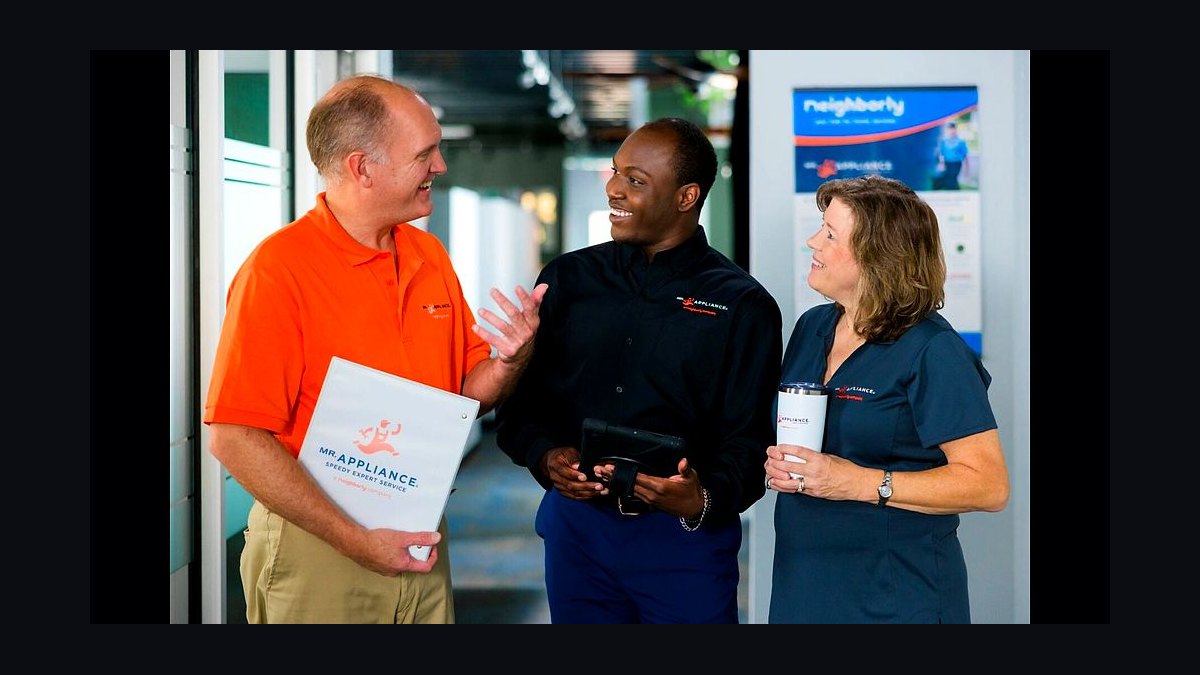
Open a new Mr. Appliance territory if you want the lower entry cost and a from-scratch culture; buy an existing one if you want technicians and revenue already in place. Both paths sit inside Neighborly's backing, a roughly $70,000-$180,000 Item 7 investment (new) or a resale priced at 2.5-4.5x owner earnings, and both live or die on technician staffing. For most first-time operators in 2027, buying an established territory reduces risk more than it costs.
The Two Paths Compared: Opening New vs. Buying Existing
Deciding whether to open a Mr. Appliance franchise from the ground up or buy an existing territory is really a decision about which risks you're willing to carry. Opening new means signing with the franchisor, paying the $40,000-$50,000 franchise fee, and building the business — recruiting technicians, establishing a customer base, and generating brand awareness in your territory — with zero revenue on day one. The advantage is a clean slate: no inherited reputation problems, no legacy pricing you're locked into, and no existing staff whose habits you didn't set. You also get first pick of a genuinely open or underserved territory, which matters in appliance repair because route density (how close your service calls are to each other) directly drives technician efficiency and fuel cost.
Buying an existing Mr. Appliance franchise means paying a premium — typically 2.5 to 4.5 times the seller's annual net profit — but you're purchasing cash flow, not just an idea. A resale come with trained technicians already on payroll, a customer database with repeat-service history, established commercial accounts (apartment complexes, property managers, restaurants), and a track record you can actually verify against the Item 19 financial performance representations in the FDD. The tradeoff is that you inherit whatever the seller built, good or bad: if technician turnover was already a problem, if the previous owner underpriced service calls to win volume, or if equipment is aging, those become your problems on day one of ownership.
There's a middle path worth naming: some Neighborly territories are available as "conversion" opportunities, where an independent appliance repair shop rebrands under the Mr. Appliance name. This is less common than a pure resale but can offer some of both worlds — an existing customer base and staff, combined with a lower purchase price than a fully built-out franchise resale, because the seller is trading independence for brand support rather than cashing out a mature operation. If you find one, treat the due diligence the same as a resale: verify technician retention, commercial contracts, and true profitability before assuming Neighborly's systems alone will fix underlying operational issues.
The capital-required math shifts the calculus too. A new franchise needs roughly $40,000-$80,000 in liquid capital against the $70,000-$180,000 total investment, financed in part through equipment loans or SBA-backed franchise financing. A resale often requires more cash up front — sellers rarely finance the full purchase price themselves — but many buyers use SBA 7(a) loans specifically because the business has demonstrated cash flow, which lenders view far more favorably than a startup with no operating history. If your credit and liquidity support it, a resale is frequently the easier loan to get approved, even though the sticker price is higher.
How to Decide Between Opening and Buying
The decision hinges on three questions: how much cash you have, how fast you need income, and how much operational control you want from day one. If you have strong liquid capital, can absorb 12-18 months of ramp-up with limited income, and want to build technician culture your way, opening new fits. If you need income sooner, have access to acquisition financing, and would rather inherit a trained team than recruit one from scratch, buying fits better. Territory availability also matters — in saturated metro markets, resale may be the only entry point since Neighborly may not release new territories where existing franchisees already cover the ground.

Run this decision alongside a hard look at your own tolerance for the technician-staffing problem, since it's the single biggest determinant of success either way. If you're opening new, you're recruiting a team from zero in a labor market where skilled appliance technicians are scarce — a challenge similar to what HVAC and electrical franchisees face industry-wide. If you're buying, you're betting that the sellers' technicians stay through and after the transition; franchise agreements typically require the buyer to interview and, where possible, retain key staff, but nothing legally binds a technician to stay once ownership changes hands. Ask the seller directly how long each technician has been employed and whether any have expressed interest in leaving — sudden departures right after a sale are common enough that experienced brokers flag it as the top post-close risk in service-based franchise transfers.
Concrete Numbers Behind Each Path
For opening new, the 2026 FDD structure breaks down roughly as follows: franchise fee $40,000-$50,000, service vehicles and tools $15,000-$50,000, vehicle branding and wraps $4,000-$15,000, home or warehouse setup $5,000-$20,000, initial parts inventory $8,000-$25,000, initial marketing $12,000-$35,000, training and travel $8,000-$22,000, and working capital $15,000-$45,000 — landing the total Item 7 investment between roughly $70,000 and $180,000. Ongoing costs run a royalty near 7% of gross revenue (or per the specific franchise agreement) plus a marketing fee around 2%. A newly opened unit typically takes 12-24 months to reach a stable technician count and predictable route density, during which owner draw is thin or negative while the business builds its customer base.

For buying an existing territory, expect a purchase price of 2.5-4.5 times the seller's trailing annual net profit. A franchise clearing $150,000 in owner earnings would sell in the $375,000-$675,000 range; one clearing $90,000 (toward the lower end of the reported $90,000-$350,000 owner-earnings band) might sell for $225,000-$405,000. On top of the purchase price, Neighborly charges a transfer fee of roughly $10,000-$25,000, and buyers must typically show $75,000-$150,000 in liquid capital plus pass the franchisor's financial and background screening before a sale is approved. Mature units overall gross $500,000-$1,800,000+ annually, and the spread between the low and high end of that range is driven almost entirely by technician headcount — a fully staffed unit running 3-6 technicians reaches the top of the band, while an understaffed one with 1-2 technicians caps out closer to $200,000-$400,000 in annual revenue regardless of which path got you there.
Financing shapes these numbers further. New-unit buyers often finance equipment and working capital through equipment-leasing companies or SBA loans, with the franchise fee frequently paid in cash since it's non-collateralizable. Resale buyers more commonly use SBA 7(a) acquisition loans, where the existing cash flow supports a larger loan amount and can sometimes cover 80-90% of the purchase price with the right down payment and collateral. Either way, budget an additional 10-15% cushion beyond the stated investment range for unexpected costs — permit delays, higher-than-quoted vehicle wrap pricing, or a slower-than-planned technician search are the most common overruns reported by both new-unit and resale franchisees.
Implementation Details and Sequencing

Whichever path you choose, the first 90 to 110 days determine whether the business finds its footing or starts behind. For a new-unit opening, the sequence starts with reading the full 2026 FDD and Item 19 earnings data closely, followed immediately by calling at least 10-15 existing franchisees — not just the ones Neighborly refers you to — to ask candidly about technician recruitment, route density in their market, how much of their lead flow comes from the Neighborly call center versus local marketing, and their actual first-year numbers versus what the FDD projected. From there, validate your specific territory: check population density, existing appliance-repair competition (independents and manufacturer service networks), and household income levels, since higher-income areas tend to favor repair-and-replace ambivalence that cuts both ways for a repair business.
Recruiting and equipping come next, and this stage typically takes the longest. Budget real time to source technicians from vocational schools, community college HVAC and electronics programs, and referrals from your regional Neighborly franchisee network before you have any revenue coming in — trying to recruit while simultaneously juggling incoming service calls is how new owners burn out in month two. Equip vehicles with branded wraps and stock initial parts inventory in parallel with hiring, so technicians can start immediately once brought on. Launch with a soft-open marketing push, lean on the Neighborly call center and national account referrals, and build local SEO and Google Business Profile presence simultaneously, since local search typically accounts for the majority of territory-specific inbound calls even where national campaigns exist.
For a resale, the sequence is different but no less demanding. Due diligence comes first: verify Item 19 figures against actual bank statements and tax returns (not just the seller's summary), interview technicians individually and privately if the seller permits it, review all active commercial contracts for transferability, and confirm the territory boundaries and any recent complaints or Neighborly compliance issues. Only after that verification should you move to financing and the franchisor's buyer-approval process, which includes background checks and confirming your liquid capital meets Neighborly's threshold. Close with a structured transition period — most successful resales include 30-60 days of the outgoing owner training the incoming one on local accounts, vendor relationships, and technician management style, since the operational knowledge that doesn't appear in any FDD is often what keeps a book of commercial contracts intact through the changeover.
Related questions

Should I buy an existing Mr. Appliance territory instead of opening a new one?
Buy if you have $75,000-$150,000+ liquid and want trained technicians and cash flow on day one; open new if capital is tighter and you're comfortable with a 12-24 month ramp to reach stable revenue.
How does Mr. Appliance compare to Mr. Handyman as a franchise choice?
Both are Neighborly home-service brands with similar low-capital, home-based models. Mr. Appliance leans more technical (electrical/mechanical diagnostics), while Mr. Handyman covers broader general repairs with a lower skill barrier for hiring.
What SBA loan options work best for a franchise purchase like this?
SBA 7(a) loans are the most common route for both new-unit and resale purchases; resales with verified cash flow often qualify for higher loan-to-value financing than ground-up startups with no operating history.
How long until a Mr. Appliance franchise breaks even?
New units typically take 12-24 months to reach stable break-even as technician count and route density build. Resales with existing revenue can be cash-flow positive from close, assuming technician retention holds through the transition.
What happens to technicians when a Mr. Appliance franchise changes ownership?
Franchise agreements generally require the buyer to interview existing staff, but nothing guarantees retention. Buyers should verify technician tenure and satisfaction directly with staff, since turnover right after a sale is one of the most common post-close risks.
FAQ
Is it better to open or buy a Mr. Appliance franchise in 2027? It depends on capital and timeline. Opening new costs less upfront ($70,000-$180,000) but takes 12-24 months to stabilize. Buying costs more (2.5-4.5x net profit) but delivers trained technicians and revenue immediately.
What is the total investment to open a new Mr. Appliance franchise? Total investment typically ranges from $70,000 to $180,000, including a $40,000-$50,000 franchise fee, vehicles, initial inventory, marketing, training, and working capital, per the 2026 FDD.
How much does an existing Mr. Appliance franchise resale cost? Resales typically sell for 2.5-4.5 times annual net profit, so a franchise clearing $150,000 in owner earnings would sell in the $375,000-$675,000 range, plus a Neighborly transfer fee of $10,000-$25,000.
What ongoing fees apply after I open or buy? Both paths carry a royalty near 7% of gross sales (or per the specific agreement) plus a marketing fee around 2%, supporting Neighborly's national brand systems, training, and call-center infrastructure.
Is technician staffing really the biggest risk in either path? Yes. Whether you open new or buy existing, the ability to recruit and retain skilled appliance technicians is the single largest driver of revenue — fully staffed units (3-6 technicians) gross far more than understaffed ones (1-2 technicians).
Does Neighborly help with financing or the buyer-approval process? Neighborly doesn't directly finance purchases but does require buyer approval — liquid capital thresholds and background checks — for resales, and provides franchise-development support and SBA-lender relationships for new-unit openings.
Sources
- https://www.entrepreneur.com/franchises/directory
- https://www.franchisedirect.com/
- https://www.ibisworld.com/
- https://www.statista.com/
- https://www.sba.gov/business-guide/plan-your-business/franchises
- https://www.bls.gov/ooh/installation-maintenance-and-repair/home-appliance-repairers.htm
- https://franchisebusinessreview.com/
- https://www.franchise.org/
- https://www.neighborlybrands.com/
- https://www.mrappliance.com/
Related on PULSE
- Should I open or buy a Mr. Handyman franchise in 2027?
- Should I open or buy a Mr. Electric franchise in 2027?
- Should I open or buy a Mr. Rooter Plumbing franchise in 2027?
- Should I open or buy a Mr. Mike's SteakhouseCasual franchise in 2027?
- Should I open or buy a Mr. Gatti's Pizza franchise in 2027?
This page will be disappearing soon. Save it to your device for $1 — or read it free while it is here.
@Kory-White- · if Venmo asks, the last 4 of my number are 2012
This page is gone.
This one is off the shelf now. $1 keeps it on your phone for good — the whole page, pictures and diagrams included.
 franchiseShould I open or buy a Dairy Queen franchise in 2027?
 franchiseShould I open or buy an Auntie Anne's franchise in 2027?
 franchiseShould I open or buy a Roto-Rooter franchise in 2027?
 franchiseShould I open or buy a Great Clips franchise in 2027?
 franchiseShould I open or buy an Orangetheory Fitness franchise in 2027?
 franchiseShould I open or buy a Subway franchise in 2027?
 franchiseShould I open or buy a Rita's Italian Ice franchise in 2027?
 franchiseShould I open or buy a Taco Bell franchise in 2027?
 franchiseShould I open or buy a Planet Fitness franchise in 2027?
 franchiseShould I open or buy a Mathnasium franchise in 2027?