


Should I open or buy a Mister Sparky franchise in 2027?
Quality
Certified
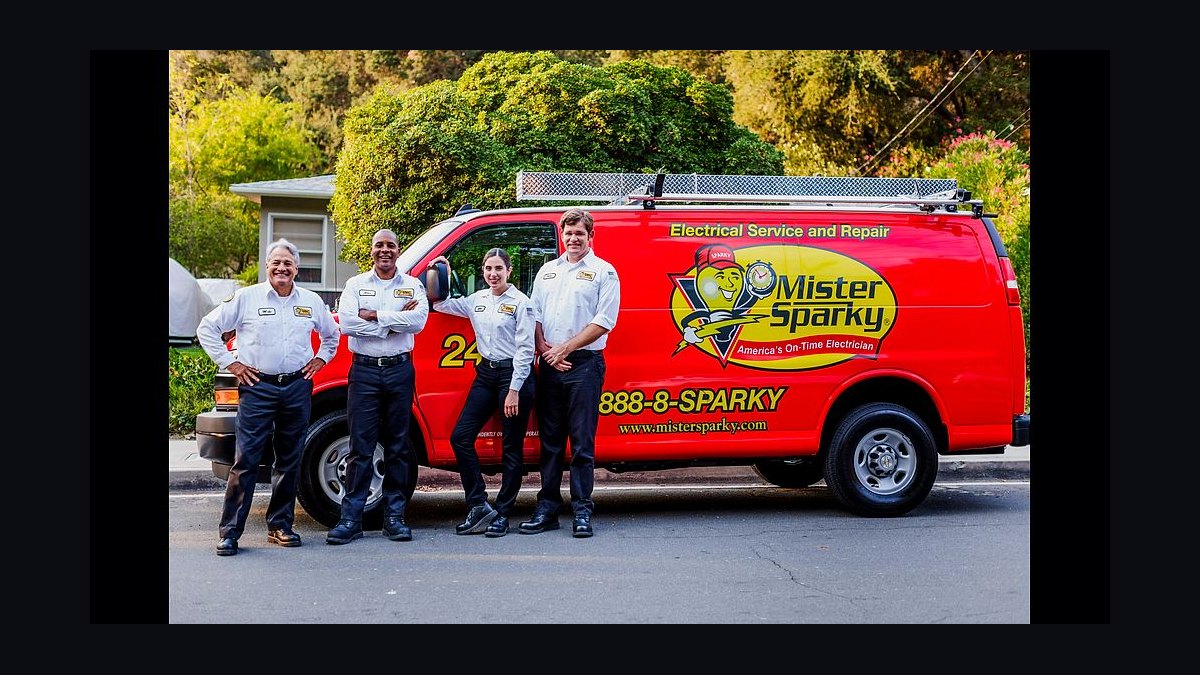
Open or buy a Mister Sparky franchise in 2027 if you can recruit and retain licensed electricians and want a recession-resilient, essential-trade business backed by Authority Brands, with total investment near $100,000-$300,000 and mature owner earnings of $130,000-$500,000. Buying is faster (inherited staff, proven territory); opening is cheaper but slower to staff. Skip it if you cannot solve the electrician-staffing constraint.
The outcome you should expect
Whether you open a new Mister Sparky franchise or buy an existing one, the first eighteen months look very different, and that difference should shape your decision more than the brand name does. A brand-new unit typically spends its first two to four quarters below breakeven while you recruit electricians, build a service-route density, and establish local lead flow. Franchisees who open from scratch in 2027 report reaching a single fully-staffed truck generating consistent weekly revenue somewhere between month six and month twelve, with a second truck added only after the first proves it can run at a healthy labor-to-revenue ratio.
Buying an existing Mister Sparky franchise compresses that runway dramatically. You inherit a customer base, a reputation with Authority Brands' cross-referral network, and — critically — an existing electrician team. That team is simultaneously the most valuable asset in the deal and the most fragile one, because employees who were loyal to the prior owner do not automatically transfer their loyalty to you. The realistic outcome for a buyer is a rocky first 90 days focused almost entirely on retention, followed by a smoother ramp than any new-unit opening could offer, assuming the core team stays intact.

Over a three-to-five-year horizon, both paths converge toward the same mature-unit economics: gross revenue in the $1.0 million to $4.0 million range for a multi-truck operation, with owner earnings after royalties, marketing fees, labor, and overhead landing between $130,000 and $500,000 annually. The spread inside that range is explained almost entirely by two variables — how many trucks you run, and how much of your revenue mix comes from high-ticket work like panel upgrades, full rewiring jobs, and EV-charger installations versus low-margin service calls. Operators who lean into the EV-charger tailwind and treat panel upgrades as a core offering, not a side job, consistently land in the upper half of the earnings range. Those who stay purely reactive — fixing outlets and running small repair tickets — tend to plateau in the lower half regardless of how many trucks they add, because truck count without ticket-size growth just multiplies thin margins.
The essential-trade nature of electrical work is what makes this outcome durable across an economic cycle. Unlike discretionary home-improvement spending, electrical safety issues (a tripped panel, a failed outlet, code violations found during a home sale) force a service call regardless of consumer confidence. That does not mean 2027 is immune to a slowdown in big-ticket discretionary rewiring or whole-panel replacements tied to new construction, but the base layer of service revenue tends to hold even when the broader remodeling market contracts.
What drives that outcome (mermaid)

Three levers explain almost all the variance between a Mister Sparky franchise that clears $150,000 a year for its owner and one that clears $450,000: electrician staffing, ticket-size mix, and the degree to which you actively use Authority Brands' system rather than treating it as passive overhead.
Staffing is the dominant lever because every dollar of revenue in this business is gated by a licensed body in a truck. The U.S. faces a shortage of roughly 80,000-100,000 electricians in 2027, driven by retirements outpacing apprenticeship graduates, and that scarcity translates directly into your growth ceiling. An owner who cannot hire a third electrician cannot run a third truck, full stop — there is no way to substitute capital or marketing spend for a missing licensed worker on a job that legally requires one. This is different from many franchise categories where a marketing dollar reliably buys a unit of growth; here, a marketing dollar spent without electrician capacity to fulfill the resulting calls just burns cash and damages your on-time service reputation.

Ticket-size mix is the second lever. A truck that spends its day on $150-$300 diagnostic and small-repair calls generates very different economics than one that lands even one $8,000-$15,000 panel upgrade or a $1,200-$2,500 EV-charger install per week. Authority Brands' training and marketing materials are built to push technicians toward identifying and selling these upgrade opportunities during routine service visits — a technician who only fixes what he was called for, without flagging an aging panel or an EV-readiness opportunity, is leaving the highest-margin revenue on the table.
The third lever, the Authority Brands system itself, changes the risk-and-referral equation. Because Mister Sparky sits inside the same portfolio as One Hour Heating & Air Conditioning, Benjamin Franklin Plumbing, and Molly Maid, a customer who calls a sister brand for an HVAC or plumbing issue can be referred to your electrical business at no incremental lead cost. Franchisee reports from 2024-2026 put these cross-brand referrals at roughly 5%-15% of new customer acquisition in mature markets — a meaningful, close-to-free channel that independent electrical contractors simply do not have access to.
Benchmarks and realistic ranges

The 2026 FDD lists a franchise fee of roughly $40,000-$50,000 and total Item 7 investment of $100,000-$300,000 for a new unit. That range breaks down, in practical terms, into vehicles and equipment ($30,000-$90,000 for service trucks and tools), branding and vehicle wraps ($5,000-$18,000), a home or small warehouse setup ($8,000-$28,000), initial electrical inventory ($10,000-$30,000), initial marketing ($15,000-$45,000), training and travel for the operator and first electricians ($10,000-$28,000), licensing and insurance ($12,000-$35,000), and working capital to cover the ramp period ($20,000-$60,000). Ongoing fees run a royalty near 5%-7% of gross plus a marketing fee around 2% of gross, sometimes with an additional local ad contribution layered on top.
For a secondary-market opening — a territory under roughly 500,000 population, which is increasingly where new single-unit openings are available as Authority Brands prioritizes multi-unit development in larger markets — expect the franchise fee to sit at the lower end of that band, but also expect a lower revenue ceiling, often $600,000-$1.2 million in annual gross for a single-truck operation rather than the multi-million-dollar figures mature multi-truck units report.
Buying an existing franchise runs on a different set of benchmarks entirely. Resale prices for Mister Sparky locations in 2025-2026 have ranged roughly 1.5x to 2.5x annual EBITDA, with typical asking prices of $250,000-$600,000 for a single-location business doing $1-2 million in revenue. Sellers commonly ask for 30%-50% cash down, financing the remainder through seller notes or SBA loans. On the lending side, banks tend to view the backing of a $1 billion-plus parent company as reduced risk, and multiple franchisees report qualifying for SBA loans with 10%-20% down rather than the 20%-30% typical for a fully independent electrical business — a meaningful benchmark difference in 2027's elevated-rate lending environment.

Recruitment costs are their own benchmark worth budgeting precisely. New franchisees commonly spend $15,000-$30,000 on electrician recruitment marketing in year one, plus signing bonuses of $2,000-$5,000 per electrician in competitive labor markets. Buyers, meanwhile, should budget 90-day retention bonuses of $1,000-$2,500 per key electrician, paid out in installments at 30, 60, and 90 days post-close, since industry data on franchise resales from 2024-2026 shows 30%-40% of electricians leave within 90 days of a sale.
Risks, edge cases, and failure modes
The single most common failure mode is straightforward: an owner cannot staff enough licensed electricians to fill the trucks the business needs to hit its revenue targets, and the whole model stalls regardless of how strong local demand is. This is not a marketing problem you can spend your way out of — it is a labor-market constraint that requires a genuine recruitment and retention strategy, ideally including apprenticeship partnerships with local trade schools. Franchisees who build ongoing apprenticeship pipelines report 40%-50% lower turnover than those who only hire already-licensed journeymen, and that turnover gap compounds over 18-24 months into a meaningful difference in owner earnings.

A second, less obvious risk applies specifically to buyers: inheriting a weakened cross-brand referral relationship. If the previous owner neglected the relationship with neighboring One Hour, Benjamin Franklin, or Molly Maid franchisees, you inherit that cold relationship along with the business, and rebuilding trust with sister-brand owners takes real time you may not have budgeted for. Before closing on a resale, ask specifically how active the cross-referral pipeline has been over the trailing 12 months — a dormant pipeline is a red flag that the unit's reported revenue may understate how much work the previous owner left on the table, but it also means your first-year numbers could disappoint if you assumed that channel would run itself.
Territory risk is a 2027-specific edge case. Authority Brands has been consolidating territories and, in some cases, buying back underperforming locations since 2023, and it is actively testing multi-brand hubs in dense markets. If you are buying an existing franchise, verify the territory agreement has not been modified or reduced across the last two renewal cycles — a shrinking exclusive service area changes the resale math even if the historical revenue numbers look solid.
Overnight and weekend staffing for the "on-time," 24/7 service promise is another failure mode that shows up in the margin line rather than the top line. Staffing for off-hours availability can eat 15%-20% of gross margin if not managed tightly, and when evaluating a purchase, overtime and on-call costs above roughly 8% of revenue should be treated as a warning sign that the unit has been running its labor model inefficiently.

Finally, licensing itself is a real operational risk, not a paperwork formality. Electrical licensing requirements vary by state and sometimes by municipality, and an owner who underestimates the complexity of maintaining compliant licensure across a growing service area — especially while scaling into a second or third territory — can face costly delays or even work stoppages. This risk sits alongside, but is distinct from, the electrician-shortage risk: you can have willing electricians on staff and still face licensing friction that slows your ability to legally dispatch them in a new area.
A practical rollout plan (mermaid)
The most successful Mister Sparky launches, whether opening or buying, follow a disciplined sequence rather than trying to solve staffing, marketing, and operations simultaneously in week one.
In the first three weeks, read the 2026 FDD in full — Items 5, 6, 7, 19, and 20 in particular — alongside your state and local electrical-licensing requirements, before you sign anything or make an offer on a resale. Weeks three through six should be spent calling existing operators (both Mister Sparky and, if possible, comparable Authority Brands franchisees) and asking pointed questions about electrician recruitment timelines, what share of revenue comes from high-ticket and EV work, how actively they use the cross-brand referral system, and what their actual net profit looks like after royalties and labor. Weeks six through nine are for validating your specific market — population density, competitive saturation from independent electricians and rival franchises like Mr. Electric, and, most importantly, beginning electrician recruitment or, for a resale, beginning retention conversations with the existing team before the deal closes.

Weeks nine through thirteen are for equipping trucks, finalizing licensing and insurance, and launching operations. From week thirteen onward, the focus shifts to building demand systematically — activating the Authority Brands referral relationships with sister-brand owners in your area, launching EV-charger-specific marketing to capture that growing segment, and training technicians to flag panel-upgrade opportunities on every service call rather than treating each visit as a single isolated repair. From there, scale electricians deliberately, adding a new truck only once the existing trucks are running at a labor-to-revenue ratio that supports it.
Related questions
Do I need to be a licensed electrician myself to open a Mister Sparky? No. You need to employ licensed electricians to perform the work, but the ownership role is management- and operations-focused. Many successful operators come from a business background and partner with or hire licensed leads.
Is buying always better than opening a Mister Sparky from scratch? Not always — buying is faster to cash flow but costs more upfront (1.5x-2.5x EBITDA) and carries retention risk on inherited staff. Opening is cheaper and gives you a clean territory but takes 6-12 months to staff reliably.

How does the EV-charger trend affect Mister Sparky's outlook in 2027? EV-charger installs are a genuine and growing high-ticket revenue driver as EV adoption rises, typically priced in the $1,200-$2,500 range per install, and franchisees who market this service actively tend to outperform those who treat it as incidental.
How does Mister Sparky compare to buying an independent electrical company? An independent gives full control and no royalty or marketing fees, but you lose Authority Brands' cross-brand referrals, national systems, bulk-purchasing power, and generally easier SBA lending terms.
FAQ
Do I need to be a licensed electrician to own a Mister Sparky franchise? No, you don't need to be a licensed electrician yourself. However, you must employ licensed electricians to perform the work, and staffing them is often the biggest operational challenge. Many owners come from a business or management background and partner with a licensed electrician or hire experienced crews to run the technical side.
What is the typical total investment to open a Mister Sparky franchise? The total investment range is roughly $100,000 to $300,000, including a franchise fee of about $40,000 to $50,000. This covers equipment, vehicles, initial marketing, and working capital, but actual costs vary by market size and whether you lease or buy service vehicles outright.
How much can I expect to earn as a Mister Sparky franchise owner? Mature units typically report annual gross revenue between $1,000,000 and $4,000,000, with owner earnings after royalties and expenses ranging from $130,000 to $500,000. Your actual income depends heavily on local demand, staffing efficiency, and how many trucks you run.
What are the ongoing fees I'll pay to the franchisor? You'll pay a royalty of around 5% to 7% of gross sales, plus a marketing fee often around 2%. Some territories may also require a local ad contribution. These fees fund national brand marketing and operational support from Authority Brands.
Is buying an existing Mister Sparky franchise a safer bet than opening new? It reduces staffing-ramp risk since you inherit an existing team, but it introduces its own risks — electrician retention after a sale, territory changes made by the previous owner, and paying a resale premium of 1.5x-2.5x EBITDA. Neither path eliminates risk; they trade one kind for another.
Is the electrical service business recession-resistant? Yes, electrical repairs and safety-related upgrades are essential home services that people need regardless of the economy. While discretionary big-ticket rewiring may slow in a downturn, service calls for outages, safety issues, and code-required upgrades tend to remain steady.
Sources
- https://www.entrepreneur.com/franchises/directory
- https://www.sba.gov/funding-programs/loans
- https://www.ibisworld.com/united-states/industry/electricians/1189/
- https://www.statista.com/markets/419/topic/470/energy-environment/
- https://www.bls.gov/ooh/construction-and-extraction/electricians.htm
- https://www.franchisebusinessreview.com/
- https://www.franchise.org/
- https://www.energy.gov/eere/electricvehicles/charging-home
- https://www.authoritybrands.com/
Related on PULSE
- Should I open or buy a Mister Sparky Electric franchise in 2027?
- Should I open or buy a Mister Car Wash franchise in 2027?
- Should I open or buy a Mr. Electric franchise in 2027?
- Should I open or buy a One Hour Heating & Air franchise in 2027?
- Should I open or buy a Benjamin Franklin Plumbing franchise in 2027?
This page will be disappearing soon. Save it to your device for $1 — or read it free while it is here.
@Kory-White- · if Venmo asks, the last 4 of my number are 2012
This page is gone.
This one is off the shelf now. $1 keeps it on your phone for good — the whole page, pictures and diagrams included.
 franchiseShould I open or buy a Kona Ice franchise in 2027?
 franchiseShould I open or buy a Planet Fitness franchise in 2027?
 franchiseShould I open or buy a Crumbl Cookies franchise in 2027?
 franchiseShould I open or buy a Firehouse Subs franchise in 2027?
 franchiseShould I open or buy a Roto-Rooter franchise in 2027?
 franchiseShould I open or buy a Pizza Hut franchise in 2027?
 franchiseShould I open or buy a Matco Tools franchise in 2027?
 franchiseShould I open or buy a Drybar franchise in 2027?
 franchiseShould I open or buy a Stanley Steemer franchise in 2027?
 franchiseShould I open or buy a Valvoline Instant Oil Change franchise in 2027?