


Should I open or buy a bluefrog Plumbing + Drain franchise in 2027?
Quality
Certified

Buy a bluefrog Plumbing + Drain franchise in 2027 if you can recruit and retain licensed plumbers and want a recession-resilient, essential-trade business — total investment runs $140,000-$350,000, and mature units can gross $1M-$3.5M+ with owners clearing $130,000-$450,000. Skip it if you can't solve staffing or don't want to manage a trade-dependent operation day to day.
A Concrete Scenario That Frames the Problem
Picture two operators signing a bluefrog Plumbing + Drain franchise agreement in the same month, in similarly sized metro markets. Operator A spends the four months before opening building a plumber pipeline: posting on trade-specific job boards, visiting the local plumbing-supply house counter every week to network with journeymen, and locking in one master plumber before the doors open. Operator B assumes that because bluefrog's brand and marketing will generate calls, plumbers will simply show up when needed. By month six, Operator A has three trucks running, is fielding emergency calls at premium rates, and is on pace toward a $1.4 million run rate. Operator B has one plumber, a stack of unanswered service requests, and a franchise fee that is starting to look like a bad bet.
This is the actual fork in the road for a bluefrog Plumbing + Drain franchise in 2027. The brand, the territory, and the marketing engine are largely identical for every franchisee who buys into the system. What separates a $600,000 location from a $2.5 million location is almost never demand — plumbing demand is close to universal — it's whether the operator solved the labor problem before it became urgent. The same fork shows up one layer downstream, too: a franchisee who nails staffing in year one but neglects ongoing apprentice pipeline development often sees a strong Operator-A start curdle into an Operator-B plateau by year three, once the original hires start aging out toward retirement or get poached by a competing shop. Any owner evaluating this franchise needs to mentally rehearse both scenarios above before signing, because the FDD and discovery-day pitch will emphasize the market opportunity, not the staffing grind that determines whether that opportunity gets captured.

It's also worth widening the lens to the adjacent decision many prospective owners are actually weighing: not "bluefrog versus doing nothing," but "bluefrog versus a competing plumbing brand versus building an independent shop." Each of those paths inherits the same underlying labor-market constraint, just with different levers attached — franchise systems give you recruiting marketing and training curricula, independent shops give you full margin capture but no scaffolding. Understanding that the constraint travels with you no matter which door you pick reframes the whole due-diligence process: you're not evaluating whether staffing will be hard, you're evaluating which system gives you the best tools to make it less hard.
How the Mechanism Actually Works
A bluefrog Plumbing + Drain unit is a dispatch-and-service business layered on top of a licensed trade. The franchisor supplies the brand, call-center or lead-routing technology, initial and ongoing training, national and local marketing support, and operational systems (pricing books, dispatch software, customer-relationship tools). The franchisee supplies capital, a home- or warehouse-based operating location, service vehicles, and — critically — the licensed plumbers who actually perform repairs, drain cleaning, water heater installs, repiping, and 24/7 emergency response.
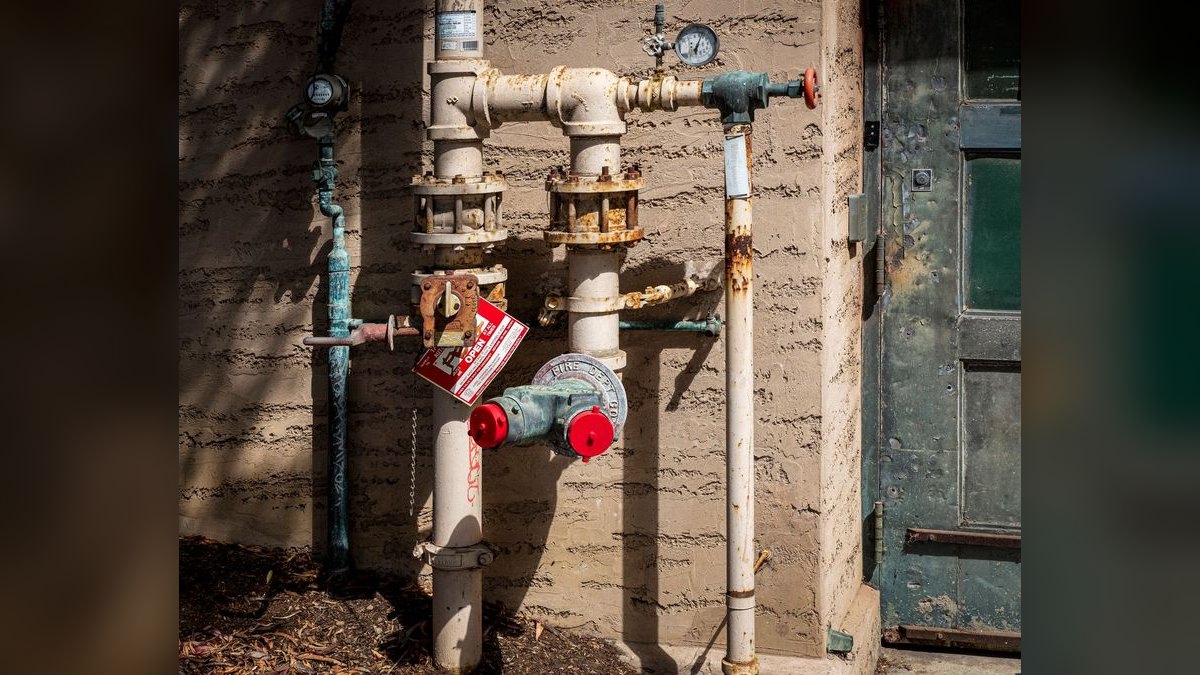
Revenue flows in through three channels that stack on top of each other: routine repair calls (the steady baseline), high-ticket replacement work like water heaters and repiping (the margin driver), and emergency/after-hours calls (the premium-priced layer that can carry 1.5x-2x standard rates). A franchisee who leans only on routine repair calls will plateau at a modest revenue level; the operators who hit the top of the $1M-$3.5M+ range are the ones who systematically convert routine calls into high-ticket upsells and staff enough plumbers to absorb emergency volume without turning away business.
The economic engine only works if plumber capacity keeps pace with lead volume. bluefrog's marketing can generate more calls than a two-truck operation can service, and every missed or delayed call is lost revenue and a damaged reputation in a local market where word-of-mouth and online reviews matter enormously for a home-service trade. This is why the franchise's own growth curve is gated by hiring, not by advertising spend — a pattern common to nearly every trade-based franchise concept (HVAC, electrical, plumbing) where the franchisor sells a demand-generation system but the franchisee must independently solve a licensed-labor supply problem that the franchisor cannot directly control.
There's a downstream effect worth naming explicitly: dispatch software and CRM systems only produce good outcomes when there's enough truck capacity to act on what they surface. A franchisee who invests in the tech stack but underinvests in headcount ends up with beautifully organized data about all the calls they couldn't get to — visibility into a problem is not the same as solving it. The operators who treat the dispatch system and the hiring pipeline as one connected system, rather than two separate line items, tend to convert lead volume into revenue far more consistently.
Real Numbers, Ranges, and Benchmarks

The 2026 FDD frames the investment and return profile with reasonably wide bands, which reflects how much territory, staffing execution, and local competitive density can move outcomes. On the investment side: a franchise fee of $40,000-$50,000, vehicles and equipment running $40,000-$110,000 for service trucks and plumbing/drain tools, branding and vehicle wraps at $5,000-$18,000, home or warehouse setup at $8,000-$28,000, initial inventory of plumbing parts at $12,000-$35,000, initial marketing at $15,000-$45,000, training and travel at $10,000-$28,000, licensing and insurance at $15,000-$40,000, and working capital of $25,000-$70,000 to cover the ramp period before cash flow stabilizes. That totals to a Total Item 7 investment of roughly $140,000-$350,000, with ongoing royalties near 6%-8% of gross revenue plus a marketing fee around 2%.
On the return side, mature units gross $1,000,000-$3,500,000+, with owner earnings landing between $130,000 and $450,000 depending on scale and efficiency. Labor is the largest single cost line for a plumbing franchise — expect plumber compensation to consume roughly 30%-40% of revenue when you account for hourly pay ($30-$45/hour for experienced service plumbers, or commission structures in the 35%-50% range), benefits, truck allowances, and overtime during emergency-call spikes. Parts, vehicle maintenance, and fuel typically run another 15%-20%. After royalty, marketing fee, and general operating expenses, owner earnings tend to land in the 15%-20% of gross range for well-run units, which is consistent with the $130K-$450K range on $1M-$3.5M+ in revenue.

Break-even timelines commonly run 12-24 months, which is faster than many franchise categories because plumbing demand is immediate and non-discretionary — a homeowner with a burst pipe doesn't defer the repair the way they might defer a discretionary purchase. That said, the fastest path to break-even is directly tied to how quickly an operator builds plumber capacity in the first two quarters; a franchisee who is still short-staffed at month twelve will likely still be short of break-even at month eighteen.
It's useful to compare this cost structure against a business that doesn't carry a licensed-trade labor line at all — a cleaning franchise or a lawn-care franchise, for example, where labor is a much smaller share of revenue and turnover is cheaper to absorb. A bluefrog franchise trades that lower labor-cost profile for a much higher revenue ceiling per unit, precisely because licensed plumbing work commands premium pricing that unskilled service work cannot. Investors weighing multiple franchise categories side by side should treat the labor-cost percentage as the single number that best predicts how much operational attention a concept will demand relative to its size.
Trade-offs and Alternatives

The central trade-off in a bluefrog Plumbing + Drain franchise is capital efficiency versus labor dependency. Compared to many franchise categories, the capital requirement is moderate ($140K-$350K) relative to the revenue ceiling ($1M-$3.5M+), and the business benefits from essential, recession-resilient demand — plumbing failures don't wait for a healthy economy. But that favorable capital-to-revenue ratio is entirely contingent on solving a skilled-labor problem that no amount of money can shortcut instantly; you cannot buy your way to a fully staffed truck fleet overnight in a market with a genuine plumber shortage.
Compare this to adjacent home-service franchise concepts. Mr. Rooter and Benjamin Franklin Plumbing operate on a similar plumbing-service model with comparable staffing dependencies — the trade-off doesn't disappear by picking a different plumbing brand, since the underlying constraint is the licensed-labor market, not the franchisor. Mister Sparky (electrical) and One Hour Heating & Air (HVAC, also an Authority Brands concept) carry similar dynamics in different trades, so an operator drawn to bluefrog because of the essential-trade thesis should recognize the same staffing math applies across the entire home-service-trade category. An independent, unbranded plumbing company avoids royalty and marketing-fee overhead entirely (saving 8%-10% of gross) but forfeits brand recognition, lead-generation infrastructure, training systems, and buying-power discounts on parts and vehicles — a real trade for an operator without an existing customer base or marketing capability.

The alternative worth weighing seriously is partnering directly with a licensed master plumber as a co-owner or key early hire rather than trying to recruit purely as an employer. Equity or profit-sharing arrangements with a master plumber can convert your single biggest operational risk into a retained, invested partner rather than a flight-risk employee — several successful multi-unit bluefrog operators report this structure directly addresses the retention problem that pure W-2 employment struggles to solve.
A related, often-overlooked alternative is the multi-territory rollup strategy: rather than opening one bluefrog unit and hoping to hit the top of the revenue range organically, some operators acquire two or three adjacent territories from the outset, sharing back-office staff, a single warehouse, and a pooled plumber roster across all three. This spreads fixed costs (dispatch software, insurance administration, marketing management) across more revenue and gives plumbers more consistent hours across a larger service area, which itself becomes a retention tool — a plumber who never runs short of work in a slow week is less likely to leave for a competitor.
Common Pitfalls and How to Avoid Them
The most common and most expensive mistake is signing the franchise agreement before securing a credible plumber-staffing plan. Franchisees who wait until after opening to start recruiting are effectively opening a service business with no service capacity, and the fix — emergency hiring under pressure — nearly always means overpaying, accepting under-qualified candidates, or both. Start recruiting 4-6 months before your planned launch date, not after signing paperwork.

A second pitfall is underestimating territory quality diligence. Not every bluefrog territory is equal: request demographic data on household density, home age (older homes built before 1980 generate meaningfully more service calls due to aging plumbing infrastructure), and existing competitive density before committing to a specific territory. A mediocre territory with excellent staffing can still gross over a million dollars; a great territory with poor staffing will struggle to clear $600,000. Territory selection is not a formality — treat it with the same seriousness as the franchise-brand decision itself.
A third pitfall is neglecting the high-ticket and emergency-premium revenue layers in favor of routine repair volume alone. Operators who train their plumbers to identify legitimate water heater and repiping opportunities during routine service calls, and who staff enough capacity to accept after-hours emergency work at premium rates, consistently outperform operators who treat every call as a flat-rate repair. This isn't about aggressive upselling — it's about making sure plumbers are trained to spot genuine replacement needs (an aging water heater near end-of-life, corroded galvanized piping) rather than leaving revenue on the table because the technician wasn't trained to look for it.
A fourth pitfall is treating licensing as a one-time compliance checkbox rather than an ongoing operational requirement. State plumbing-licensing rules vary, master-plumber requirements differ by jurisdiction, and maintaining compliant licensing as you add plumbers and expand into new zip codes within your territory requires ongoing attention — not a single review during due diligence. Build a relationship with a franchise-experienced attorney or your state plumbing board early, not after a compliance issue surfaces.

A fifth, less obvious pitfall shows up in how operators handle apprentices. Apprentice labor is cheaper and can be a smart way to build a bench for future licensed hires, but apprentices cannot legally perform unsupervised licensed work — a franchisee who miscounts apprentice hours as equivalent truck capacity will overstate their real service capacity and repeat the exact understaffing problem described above, just with an extra step of confusion baked in. Track licensed-plumber capacity and apprentice-support capacity as two separate numbers, not one blended headcount.
Finally, don't underestimate seasonal demand swings when budgeting labor. Plumbing emergencies spike 40%-60% during winter freeze-thaw cycles in colder climates and during summer heat waves that stress water heaters; a franchisee in a harsh-winter market who staffs for average demand rather than peak demand will lose emergency-premium revenue exactly when it's most available.
Related questions
Do I need to be a licensed plumber to own a bluefrog franchise?
No. You need to employ licensed plumbers and meet any state master-plumber requirements, but the franchisee's role is typically business management, staffing, and operations — not hands-on trade work.
How does bluefrog compare to Roto-Rooter as a franchise investment?
Roto-Rooter operates a similar plumbing/drain model with broader brand recognition and higher franchise costs in many markets; bluefrog's newer, smaller footprint can mean less territory competition but also less established local brand pull.
What's the fastest way to solve plumber staffing before opening?

Start recruiting 4-6 months pre-launch, partner with trade schools for apprentices, and consider offering equity or profit-sharing to a master plumber rather than relying purely on hourly employment.
Is a bluefrog franchise more resilient than a general contracting franchise during a recession?
Yes — plumbing repairs are non-discretionary emergency needs, while general contracting and remodeling work is often deferred during downturns, making bluefrog's demand base comparatively more stable.
How many plumbers does a mature bluefrog unit typically need?
Units grossing toward the higher end of the $1M-$3.5M+ range generally run multiple trucks, meaning four or more licensed plumbers plus apprentice support, scaled to territory size and call volume.
FAQ
How much can I realistically earn from a bluefrog Plumbing + Drain franchise? Mature units typically gross $1,000,000 to $3,500,000 annually, with owner net income ranging from $130,000 to $450,000. Actual earnings depend heavily on staffing execution, territory quality, and how well the operator converts routine calls into high-ticket and emergency-premium work.
Do I need to be a licensed plumber to own this franchise? No, you don't need to be a plumber yourself, but you must employ licensed plumbers and meet any state-required master-plumber qualifications. Partnering with an experienced plumber as a co-owner can help address this requirement more durably than pure employment.

What is the total investment required to open a bluefrog franchise? The total initial investment ranges from roughly $140,000 to $350,000, including a franchise fee of $40,000 to $50,000. This covers vehicles, equipment, initial inventory, marketing, licensing, and working capital for the ramp period.
How long does it take to break even or become profitable? Many franchisees reach profitability within 12 to 24 months, though this varies significantly by how quickly the operator builds licensed-plumber capacity. The essential, recurring demand for plumbing services generally shortens ramp-up compared to discretionary-service franchises.
What are the biggest challenges in running this franchise? The dominant challenge is recruiting and retaining licensed plumbers, since qualified tradespeople are in short supply in most markets. Secondary challenges include navigating state-specific licensing requirements and competing against established players like Roto-Rooter and Benjamin Franklin Plumbing.
Is bluefrog Plumbing + Drain a recession-resistant business? Yes. Plumbing repairs and drain services address essential, non-discretionary problems — leaks, clogs, no hot water, burst pipes — that homeowners cannot defer regardless of economic conditions, which makes the franchise notably more resilient than discretionary home-service categories.
Sources
- U.S. Small Business Administration — franchise financing and Item 7 investment guidance
- International Franchise Association (IFA) — franchise economic outlook and industry data
- Bureau of Labor Statistics — Occupational Outlook Handbook, Plumbers, Pipefitters, and Steamfitters
- Entrepreneur.com — Franchise 500 listings and franchise investment profiles
- IBISWorld — Plumbing Services industry reports
- Franchise Business Review — franchisee satisfaction and home-service franchise benchmarking
- U.S. Census Bureau — American Housing Survey, household age and repair-spending data
- FRANdata — franchise disclosure document research and trend analysis
Related on PULSE
- Best HVAC and plumbing franchises to buy in 2027
- Should I open a independent plumbing business in 2027?
- Should I open or buy a Benjamin Franklin Plumbing franchise in 2027?
- Should I open or buy a Mr. Rooter Plumbing franchise in 2027?
- Should I open or buy a Mister Sparky electrical franchise in 2027?
- How do I solve the skilled-trades labor shortage in a home-service franchise?
This page will be disappearing soon. Save it to your device for $1 — or read it free while it is here.
@Kory-White- · if Venmo asks, the last 4 of my number are 2012
This page is gone.
This one is off the shelf now. $1 keeps it on your phone for good — the whole page, pictures and diagrams included.
 franchiseShould I open or buy a Sonic Drive-In franchise in 2027?
 franchiseShould I open or buy an Ace Hardware franchise in 2027?
 franchiseShould I open or buy a Jiffy Lube franchise in 2027?
 franchiseShould I open or buy a Bahama Breeze franchise in 2027?
 franchiseShould I open or buy a Kona Ice franchise in 2027?
 franchiseShould I open or buy a Pizza Hut franchise in 2027?
 franchiseShould I open or buy a Chipotle franchise in 2027?
 franchiseShould I open or buy a Firehouse Subs franchise in 2027?
 franchiseShould I open or buy a Servpro franchise in 2027?
 franchiseShould I open or buy a Hand and Stone Massage franchise in 2027?