
Should I open or buy a More Space Place franchise in 2027?
 Curated byKory White · Fractional CRO · Maryland
 PULSEKNOWLEDGE LIBRARY
Published June 13, 2026 · Updated June 13, 2026
Read the full article free — or download it for $1 and it’s yours forever.Yes for a retail-and-design-minded operator who wants a custom-storage-and-space-solutions franchise with a showroom — More Space Place offers a closets, Murphy beds, and home-organization model with large tickets and a space-saving niche at moderate capital. More Space Place, founded in 1990, franchises custom-storage-and-space-solutions businesses offering custom closets, Murphy/wall beds, home offices, pantries, and organization systems — with a showroom plus in-home design and installation, and a distinctive Murphy-bed/space-saving specialty. The 2026 FDD lists a franchise fee around $40,000-$50,000, total Item 7 investment of roughly $200,000 to $400,000, a royalty near 5%-6%, and a marketing fee. Mature units gross $700,000-$1,800,000+, with owners clearing $100,000-$320,000. Its appeal is large project tickets, a Murphy-bed/space-saving niche differentiator, a showroom + in-home model, and durable home-organization demand; the challenges are moderate capital (showroom), in-home/showroom sales, installation, and competition.
The Real Numbers
A More Space Place operates with a showroom (displaying closets, Murphy beds, organization systems) PLUS in-home design and installation, designing and installing custom storage and space-saving solutions. The Murphy-bed specialty differentiates it, with large project tickets driving revenue.
| Line Item | Low | High | Notes |
|---|---|---|---|
| Franchise fee | $40,000 | $50,000 | Per 2026 FDD |
| Showroom buildout | $80,000 | $200,000 | Showroom fit-out |
| Equipment & install tools | $30,000 | $70,000 | Install tools, vehicle |
| Signage & decor | $15,000 | $40,000 | Showroom/brand image |
| Initial inventory/displays | $25,000 | $60,000 | Showroom displays |
| Initial marketing | $15,000 | $40,000 | Lead-gen + showroom |
| Training & travel | $10,000 | $28,000 | Sales/install training |
| Working capital | $25,000 | $60,000 | Project float |
| Total Item 7 | ~$200,000 | ~$400,000 | Per 2026 FDD |
| Royalty | ~5%-6% of gross | ||
| Marketing fee | ~2% of gross |
Revenue reality: mature units gross $700K-$1.8M+ with owners clearing $100K-$320K. More Space Place's edge is large project tickets (custom closets, Murphy beds, and organization systems run $2K-$15K+ per project), a distinctive Murphy-bed/space-saving niche (a differentiated specialty beyond standard closets — appealing for small spaces, guest rooms, multi-use rooms, riding space-efficiency demand), a showroom + in-home model (the showroom drives traffic and credibility while in-home design closes sales), and durable home-organization demand. The trade-offs are moderate capital (the showroom adds cost versus home-based storage franchises), in-home/showroom sales (closing large-ticket sales), installation, and competition (California Closets, Closets by Design, custom-storage companies). Operators who leverage the Murphy-bed niche, drive showroom + in-home sales, and execute installation perform best. The space-saving specialty differentiates it.
Who Wins With This Business
- Capital required: $200K-$400K, with $90,000-$160,000 liquid.
- Time commitment: full-time, showroom-and-in-home-sales operation.
- Skills: design/retail sales, in-home closing, and installation management.
- Geographic fit: suburban homeowner markets with organization/space demand.
- Lifestyle fit: design-and-sales-minded operator.
The winners are design-and-sales-minded operators who leverage the Murphy-bed niche and drive showroom + in-home sales.
Who Loses With This Business
- Operators weak at large-ticket sales (showroom + in-home).
- Those who can't execute/manage installation.
- Owners who underestimate the showroom cost.
- Buyers who don't leverage the Murphy-bed differentiation.
- Those in low-homeowner-density markets.
2027 Market Conditions
- Demand: home organization and space-saving solutions are durable, homeowner-driven.
- Differentiation: Murphy beds/space-saving niche.
- Showroom + in-home: traffic + closing.
- Large tickets: storage projects drive high AUVs.
- Competition: California Closets, Closets by Design, custom storage.
The 90-Day Decision Tree
- Day 1-20: Read the 2026 FDD and Item 19 space-solutions economics.
- Day 21-40: Interview operators; ask about showroom + in-home sales, Murphy-bed mix, install, and net profit.
- Day 41-60: Validate a homeowner market and showroom site.
- Day 61-100: Build the showroom and train.
- Day 101-130: Open and drive leads.
- Leverage the Murphy-bed niche and drive showroom + in-home sales.
- Scale and manage installation.
Alternative Plays
- ShelfGenie / Closets by Design — storage (see fr0981, library).
- More Space Place for Murphy beds + space-saving.
- California Closets — custom closets (in/near library).
- GarageExperts — garage storage (see fr0983).
- Independent custom-storage business — full control, no brand.
- Other home-improvement franchises — adjacent models.
Territory Availability and Site Selection in 2027
More Space Place’s territory strategy has evolved to favor denser, high-traffic suburban markets where the showroom-plus-in-home model works best. As of 2027, the franchisor typically grants exclusive territories based on population density or ZIP code clusters, with minimum thresholds around 150,000 to 250,000 households per territory. New franchisees should expect a territory fee included in the initial investment (often $5,000–$10,000), with the option to purchase adjacent territories later at a reduced rate.
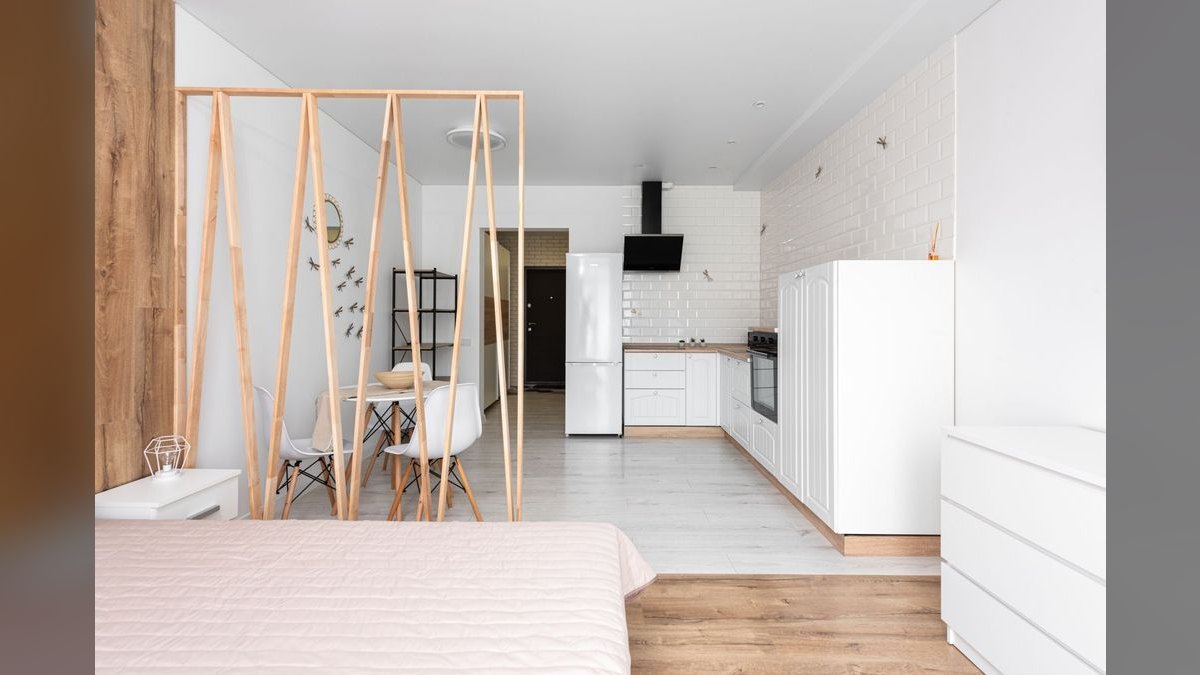
Site selection for the showroom is critical. The franchisor’s real estate team generally requires a retail space of 1,200 to 2,000 square feet in a strip center or power center with strong daytime traffic, ideally near home-improvement anchors like Lowe’s or Home Depot. Lease costs vary widely by market — expect $2,500 to $6,000 per month in most metro areas, with higher-end spaces in affluent suburbs costing up to $8,000. The showroom itself requires a build-out investment of $50,000 to $90,000 for displays, lighting, and a small design studio.
In 2027, the brand is actively expanding in Sun Belt states (Texas, Florida, Arizona, Carolinas) and Mid-Atlantic suburbs, where housing turnover and home-renovation spending remain strong. If you’re targeting a smaller market, be prepared to negotiate a lower population threshold — some recent franchisees have secured territories with as few as 100,000 households by demonstrating local contractor relationships.
Technology, Design Software, and Operational Workflow
A key differentiator for More Space Place in 2027 is its proprietary design and quoting software, which integrates with the franchisor’s supply chain and installation scheduling. New franchisees receive 2–3 weeks of initial training on the software, plus ongoing updates. The system allows designers to create 3D renderings, generate accurate material lists, and produce instant quotes — reducing the sales cycle from initial consultation to contract signing to typically 5–10 business days.
The operational workflow follows a predictable rhythm: in-home measurements (1–2 hours) → design session (1–2 hours) → quote presentation → order placement → manufacturing (2–4 weeks) → installation (1–3 days). Most franchisees handle 5–15 active projects per month, with average project tickets of $5,000–$15,000 for closets and pantries, and $3,000–$8,000 for Murphy beds. Larger whole-home projects can reach $25,000–$50,000+.
Technology investments in 2027 include cloud-based CRM for lead tracking, automated email follow-ups for past clients, and a mobile app for installation crews to access job details and photos. Franchisees should budget $3,000–$6,000 annually for software subscriptions and tech support. The franchisor also provides a national website with local SEO optimization, but franchisees are expected to invest $500–$1,500 per month in local Google Ads and social media to generate leads.
Exit Strategy and Resale Market in 2027
For franchisees considering a 5–10 year horizon, the resale market for More Space Place units is moderately active in 2027. The franchisor reports that 15–20% of existing franchisees sell or transfer their units annually, with typical resale prices ranging from $150,000 to $400,000 depending on territory size, revenue, and equipment age. Well-run units with $1M+ in annual revenue and a strong local reputation can command $300,000–$500,000 — roughly 2–3x net profit.
The franchisor’s right of first refusal means any sale must meet their approval, and they typically charge a transfer fee of $10,000–$15,000 to cover training and administrative costs. Buyers should also expect to pay 6–12 months of royalties upfront as part of the transfer agreement.
If you’re buying an existing unit rather than opening new, focus on units with at least 3 years of operating history, a stable installation crew, and low customer complaint ratios. Avoid units where the previous owner relied heavily on a single salesperson or had outdated showroom displays — refreshing those can cost $20,000–$40,000. The best opportunities in 2027 are in growing suburban markets where the previous owner is retiring — these often come with a built-in referral base and trained staff, reducing the learning curve to 3–6 months.
FAQ
What is the typical investment range for a More Space Place franchise? The total investment (Item 7) is roughly $200,000 to $400,000, which includes a franchise fee around $40,000 to $50,000. Costs vary based on showroom size, leasehold improvements, and local market conditions.
How much can I expect to earn as a franchise owner? Mature units typically gross between $700,000 and $1,800,000 annually, with owner earnings in the range of $100,000 to $320,000. Actual income depends on your market, sales volume, and operational efficiency.
What are the ongoing fees? You’ll pay a royalty of about 5% to 6% of gross sales plus a marketing fee. The exact percentages are detailed in the FDD and may vary slightly by agreement.
Do I need a showroom, and how does the business model work? Yes, a showroom is a core part of the model—customers see space-saving solutions in person. You also conduct in-home design consultations and manage installation, combining retail, design, and project management.
How does More Space Place differ from other closet or storage franchises? Its specialty is Murphy beds and space-saving solutions, giving it a unique niche. The large project tickets (often thousands per job) and the showroom-plus-in-home design model set it apart from simpler installation-only franchises.
What are the main challenges of owning this franchise? The moderate capital requirement for a showroom, the need for strong in-home sales skills, managing installation crews, and facing competition from other custom storage and home organization companies. Success depends on local marketing and service quality.
Bottom Line
Open a More Space Place if you want a custom-storage-and-space-solutions franchise with a distinctive Murphy-bed/space-saving niche, large project tickets, a showroom + in-home model, and durable home-organization demand, you're strong at large-ticket sales (showroom + in-home), and you can manage installation. Its Murphy-bed/space-saving differentiation, large tickets, showroom + in-home model, and durable demand are genuine strengths. Skip it if you're weak at large-ticket sales, can't manage installation, or underestimate the showroom cost. Validate Item 19 and operators carefully. For design-and-sales-minded operators who leverage the space-saving niche and drive sales, More Space Place offers a differentiated storage path — the Murphy-bed niche, large-ticket sales, and installation are the keys.
Sources
- More Space Place Franchise Disclosure Document (2026 filing) — Items 5, 6, 7, 19, 20
- More Space Place official franchise site — investment range and space-solutions model
- Entrepreneur Franchise listings — More Space Place
- IBISWorld — Custom Storage, Closets & Organization in the US, 2026 industry report
- Statista — US home-organization and space-saving market, 2025-2026
- Home-organization and small-space-living trend data 2026
- Franchise Business Review — home-improvement-franchise satisfaction data
- International Franchise Association (IFA) — 2027 Franchise Economic Outlook
- Competing storage concepts (California Closets, Closets by Design, ShelfGenie) data 2026
- US Census — homeowner and home-improvement-spending data, 2025-2026
Related on PULSE
- [Should I open or buy a Park Place Real Estate franchise in 2027?](/knowledge/fr0539)
- [How long does it take to open a franchise and break even in 2027?](/knowledge/fr1104)
- [Should I open or buy a Tommy Gun's Original Barbershop franchise in 2027?](/knowledge/fr1095)
@Kory-White- · if Venmo asks, the last 4 of my number are 2012
 pulse-moviesTop 10 Movies on Netflix 2027
 pulse-moviesTop 10 Movies on Max 2027
 pulse-moviesTop 10 Fantasy Movies of All Time in 2027
 pulse-moviesTop 10 Documentaries of All Time in 2027
 pulse-moviesTop 10 Superhero Movies of All Time in 2027
 pulse-moviesTop 10 Romance Movies of All Time in 2027
 pulse-moviesTop 10 Westerns of All Time in 2027
 pulse-moviesTop 10 Musical Movies of All Time in 2027
 pulse-moviesTop 10 Thriller Movies of All Time in 2027
 pulse-moviesTop 10 Crime Movies of All Time in 2027