


Should I open or buy a Bath Planet franchise in 2027?
Quality
Certified
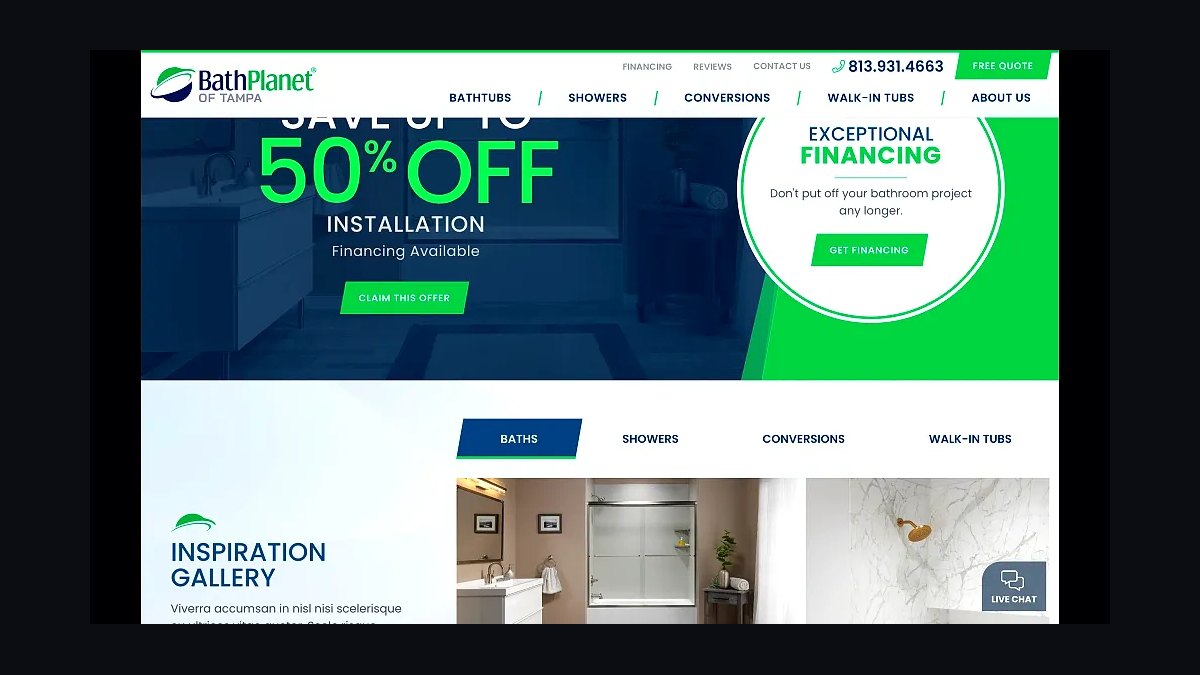
Yes, if you're a sales-and-installation operator who can run in-home consultations and manage fast-turnaround crews — Bath Planet offers a bath-remodeling franchise built on acrylic tub-to-shower conversions and one-day installs, with a roughly $150,000–$400,000 investment, large per-project tickets, and mature units grossing $1M–$4M+. Skip it if you can't sustain a lead-generation budget or manage installers.
What it is and why it matters
Bath Planet is a franchise brand under the BCI Acrylic manufacturing umbrella, built around a specific, narrow product category: acrylic bath and shower remodeling. The core offerings are tub-to-shower conversions, full tub and shower replacements, walk-in tubs for accessibility, and acrylic wall surrounds — all manufactured off-site by BCI Acrylic and installed by the franchisee's crew, frequently in a single day. That single-day install is the operational signature of the business and the reason the model works at all: homeowners tolerate a large-ticket purchase decision more readily when the disruption to their home is measured in hours, not weeks.
The business itself is a hybrid of direct sales and skilled trade labor. A Bath Planet franchisee is not primarily a contractor pulling permits and coordinating subcontractors across a multi-week renovation; they are running an in-home sales operation backed by a manufacturing supply chain. Leads come in from marketing (digital ads, direct mail, home shows, referrals), a sales consultant runs an in-home appointment and closes a project in the range of $5,000 to $20,000 or more, and an install crew executes the job using pre-fabricated acrylic components shipped from BCI Acrylic. This matters because it changes what skill set actually drives success: the business lives and dies on lead volume and close rate, not on construction expertise. A franchisee who is a phenomenal installer but a mediocre sales manager will struggle far more than one who is an average installer but an excellent closer of $10,000+ deals.

The manufacturer relationship is also structurally different from many home-services franchises. Rather than paying a high percentage-of-revenue royalty, Bath Planet's economics are largely product-based — the franchisor profits when the franchisee purchases acrylic product for each job, with royalty typically running low to near-zero as a standalone percentage, sometimes cited in the 2%–5% range on product purchases specifically rather than on gross sales. This is meaningfully more forgiving during slow months than a straight percentage-of-revenue model, because royalty obligations track material purchases for active jobs rather than accruing regardless of activity. It also means the franchisor has a direct incentive to keep franchisees selling and installing, since their revenue depends on unit volume moving through the system.
Why this matters for a 2027 buyer specifically: the home-improvement remodeling category has weathered several years of shifting consumer discretionary spending, and bath remodeling in particular benefits from two durable tailwinds — general home-equity-funded renovation demand and the aging-in-place trend, where walk-in tubs and accessible showers serve a demographic need that isn't cyclical in the same way as discretionary kitchen remodels. A franchisee entering in 2027 is buying into a category with genuine structural demand, but one that is also crowded with well-capitalized national competitors running similar acrylic-conversion models.
The step-by-step process

Opening a Bath Planet franchise follows a fairly standard franchise development sequence, but with bath-remodeling-specific steps layered in around territory validation and installer staffing. The flow below traces the path from initial inquiry to a fully operating location.
The practical texture behind each step matters more than the diagram alone. Reviewing Item 19 (the financial performance representations) is not optional due diligence — it's the only place a prospective franchisee sees unit-level revenue and profit ranges before committing capital, and it should be cross-checked against direct calls to existing operators, since Item 19 figures are historical averages that can mask wide variance between a top-quartile territory and a struggling one. Territory validation is its own discrete step: Bath Planet assigns protected territories based on household density, and a franchisee needs to confirm the assigned zip codes or county cluster actually contain enough homeowner households — generally in the 250,000–500,000 range — to sustain the lead volume the sales model requires.

Setup (warehouse or showroom, vehicles, initial inventory) typically runs in parallel with training, since the franchisor's initial training program covers both the sales process (structuring the in-home pitch, financing options, closing techniques for a $5,000–$20,000+ decision) and installation standards (measuring, prepping existing plumbing, installing acrylic panels and surrounds to spec). Most franchisees report a 3-to-6-month window from signing the franchise agreement to opening their doors, with variance driven mainly by territory availability, financing timelines, and how quickly a showroom or warehouse space can be secured and built out. Once open, the ongoing loop is simple to describe and hard to execute consistently: generate leads, run in-home appointments, close at a healthy rate, install fast, collect referrals, reinvest in more leads.
Costs, timelines, and typical ranges
The 2026 FDD lists a franchise fee of approximately $40,000 and a total Item 7 investment range of roughly $150,000 to $400,000, which covers considerably more than the fee itself. Below is a breakdown of where that capital typically goes, based on the disclosed ranges.
| Line Item | Low | High | Notes |
|---|---|---|---|
| Franchise fee | $40,000 | $40,000 | Fixed per 2026 FDD |
| Vehicles & equipment | $25,000 | $70,000 | Install vehicles, tools |
| Showroom/branding (optional) | $15,000 | $80,000 | Not all franchisees build one |
| Home/warehouse setup | $8,000 | $28,000 | Many operate warehouse-based |
| Initial inventory | $20,000 | $60,000 | Acrylic product stock |
| Initial marketing | $40,000 | $120,000 | The single largest variable cost |
| Training & travel | $10,000 | $30,000 | Sales and install training |
| Working capital | $30,000 | $80,000 | Buffer for project float and slow months |
| Total Item 7 | ~$150,000 | ~$400,000 | Per 2026 FDD |
Liquid capital requirements generally sit in the $80,000–$150,000 range, distinct from total investment, since lenders and the franchisor expect a meaningful cash cushion beyond financed equipment and buildout costs. Multi-unit development is available and often priced favorably — additional territories can run $30,000–$35,000 per unit in franchise fee rather than the full $40,000, which materially changes the math for an operator planning to scale past a single territory from the outset.

On the revenue side, first-year gross revenue commonly falls in the $500,000–$1,200,000 range as a franchisee builds referral networks and refines the sales process, with break-even typically reached within 12–24 months depending on territory density and lead-generation efficiency. By year three, mature territories often reach $1,500,000–$3,000,000 in annual revenue, and top-performing mature units can exceed $4,000,000. Net profit margins after product costs, installer labor, and lead-generation spend typically land in the 10%–18% range, translating to owner earnings commonly cited between $150,000 and $500,000 annually at maturity. Franchisees who invest aggressively in digital advertising and maintain a 20%–30% close rate on in-home consultations tend to shorten their break-even timeline by roughly 4–6 months relative to slower-ramping operators.
Seasonality is a real cash-flow variable that a franchisee should plan for before opening, not after the first winter catches them short. Peak season (March through September) typically accounts for 65%–75% of annual revenue, while the November–February window sees lead volume drop 40%–50%, softened somewhat by steadier demand for walk-in tubs tied to medical necessity rather than discretionary remodeling. Building a $50,000–$100,000 cash reserve by October, ahead of the slow season, is a common practice among operators who've been through at least one full annual cycle.
Where teams get it wrong
The single most common failure mode is treating Bath Planet as a construction business rather than a sales-and-marketing business that happens to install acrylic products. Franchisees who come from a trades background and are personally excellent installers often underinvest in lead generation, assuming that quality work and word-of-mouth will fill the pipeline. It doesn't, at least not fast enough to hit the revenue ranges above. The $40,000–$120,000 initial marketing allocation in Item 7 is not a padded estimate — it reflects the reality that this is a high-ticket, considered-purchase category where homeowners need to be found, educated, and converted through paid channels, direct mail, or aggressive referral programs, not simply waited for.
A second recurring mistake is underestimating installer staffing and quality control as the business scales past the founder-led phase. The one-day install promise is the brand's core differentiator, and a franchisee who can't consistently staff and train crews to hit that standard erodes the exact value proposition that justified the sales price in the first place. Callbacks, delayed installs, and quality complaints don't just cost money to fix — they poison the referral pipeline that mature territories depend on for a meaningful share of their leads.
Third, some buyers validate the wrong territory. Because revenue is a direct function of homeowner household density and local remodeling demand, a franchisee who secures a territory without confirming it actually contains 250,000+ qualifying households — or who buys into a market already saturated by Re-Bath, Bath Fitter, Jacuzzi Bath Remodel, or West Shore Home locations — can find themselves competing hard for a smaller addressable pool than the FDD's system-wide averages would suggest. Item 19 numbers are system averages; a specific territory can underperform them significantly if competitive density or household income skews unfavorably.
Fourth, franchisees frequently fail to build the winter cash reserve described above, then face a liquidity crunch in December and January precisely when lead costs are rising 20%–30% due to fewer homeowners actively shopping. This is a planning failure more than a market failure — the seasonality is well understood and predictable, but new operators without a full year of operating history often don't budget for it until they've already lived through one lean quarter.
Finally, some buyers skip direct operator interviews and rely solely on the FDD and franchisor sales materials. Item 19 discloses historical financial performance, but it doesn't capture the day-to-day texture of managing installer turnover, negotiating with a territory's specific lead-gen costs, or handling the product-based royalty mechanics in practice. Calling five to ten existing franchisees — including at least one or two who are underperforming, not just the top performers the franchisor may suggest — is standard due diligence that too many prospective buyers shortcut under time pressure.
Decision framework: when to choose what
Not every prospective franchise buyer is the right fit for this specific model, and the decision hinges less on available capital and more on which skills the operator already brings to the table.
Operators who clear all four checks tend to be the ones hitting the upper half of the revenue ranges described above. Those who are strong closers but weak at operations should look hard at whether they can hire a dedicated install manager early rather than trying to run both functions personally in year one. Those without a marketing budget large enough to sustain lead flow through a slow winter should either raise additional working capital before opening or reconsider the timeline, since undercapitalized marketing is the fastest route to a stalled territory. Buyers who want a more passive, non-sales-driven business are generally better served by a different franchise category entirely — this model does not reward absentee ownership.
Related questions
How does Bath Planet's royalty structure compare to a typical percentage-of-revenue model?
Bath Planet's royalty is largely product-based, tied to acrylic purchases rather than gross revenue, often cited around 2%–5% on product buys. This tends to be more forgiving during slow months since obligations track active job volume rather than accruing on total sales regardless of activity.
What territory size does Bath Planet typically protect?
Protected territories are generally sized to cover 250,000–500,000 households, defined by zip code clusters or county boundaries, with no overlapping franchisees permitted within an assigned zone.
How fast can a Bath Planet franchisee expect to break even?

Most franchisees reach break-even within 12–24 months, with territory density and lead-generation efficiency as the primary variables; strong closers with disciplined ad spend can shorten this by 4–6 months.
What happens if a franchisee misses minimum production targets?
BCI Acrylic reserves the right to adjust territory boundaries if a franchisee fails to hit minimum annual production, commonly cited around $500,000 in gross revenue after the first two years, which creates pressure to develop the assigned market aggressively.
Who are Bath Planet's main competitors?
The primary national competitors are Re-Bath, Bath Fitter, Jacuzzi Bath Remodel, and West Shore Home, all running broadly similar acrylic-conversion or bath-remodeling models in overlapping suburban markets.
FAQ
What is the typical investment range for a Bath Planet franchise in 2027? Total investment, including the $40,000 franchise fee, generally falls between $150,000 and $400,000. The range covers vehicles, initial inventory, marketing, training, and working capital, with actual costs depending on territory size and whether a franchisee builds a dedicated showroom.
How much can a Bath Planet franchise owner expect to earn?
Mature units often report annual revenues from $1,000,000 to over $4,000,000, with owner profits typically ranging from $150,000 to $500,000. Earnings vary widely based on local demand, sales-team performance, and marketing efficiency.
What are the main challenges of running a Bath Planet franchise? The biggest hurdles are generating consistent in-home sales leads and managing installation crews to protect the one-day install promise. Since the model relies on high-ticket, fast-turnaround jobs, both strong closing skills and reliable technicians are required simultaneously.
Does Bath Planet provide support with lead generation and marketing? The franchisor supplies marketing materials and product support, but day-to-day lead generation is largely the franchisee's responsibility. Most successful operators invest heavily in local digital advertising, direct mail, and referral programs to keep appointments booked.
Is aging-in-place remodeling a significant part of the Bath Planet model? Yes, walk-in tubs and accessibility upgrades are a meaningful and steadier demand driver, particularly valuable during slower winter months. That said, franchisees still compete with other bath remodelers and general contractors for this same customer segment.
How long does it take to open a Bath Planet franchise from signing to launch? Most owners report a 3-to-6-month timeline from signing the franchise agreement to opening, covering territory setup, training, and initial marketing launch, though delays can occur depending on financing and territory availability.
Sources
- https://www.entrepreneur.com/franchises/directory
- https://www.ibisworld.com
- https://www.statista.com
- https://www.franchisebusinessreview.com
- https://www.franchise.org
- https://www.census.gov
- https://www.bathplanet.com
- https://www.rebath.com
- https://www.bathfitter.com
- https://www.westshorehome.com
Related on PULSE
This page will be disappearing soon. Save it to your device for $1 — or read it free while it is here.
@Kory-White- · if Venmo asks, the last 4 of my number are 2012
This page is gone.
This one is off the shelf now. $1 keeps it on your phone for good — the whole page, pictures and diagrams included.
 franchiseShould I open or buy a Domino's franchise in 2027?
 franchiseShould I open or buy a Hand and Stone Massage franchise in 2027?
 franchiseShould I open or buy a Chipotle franchise in 2027?
 franchiseShould I open or buy a Servpro franchise in 2027?
 franchiseShould I open or buy a Valvoline Instant Oil Change franchise in 2027?
 franchiseShould I open or buy an Orangetheory Fitness franchise in 2027?
 franchiseShould I open or buy a Matco Tools franchise in 2027?
 franchiseShould I open or buy a Firehouse Subs franchise in 2027?
 franchiseShould I open or buy a Pizza Hut franchise in 2027?
 franchiseShould I open or buy a FACE FOUNDRIÉ franchise in 2027?