


Should I open or buy a Ned Stevens Gutter Cleaning franchise in 2027?
Quality
Certified
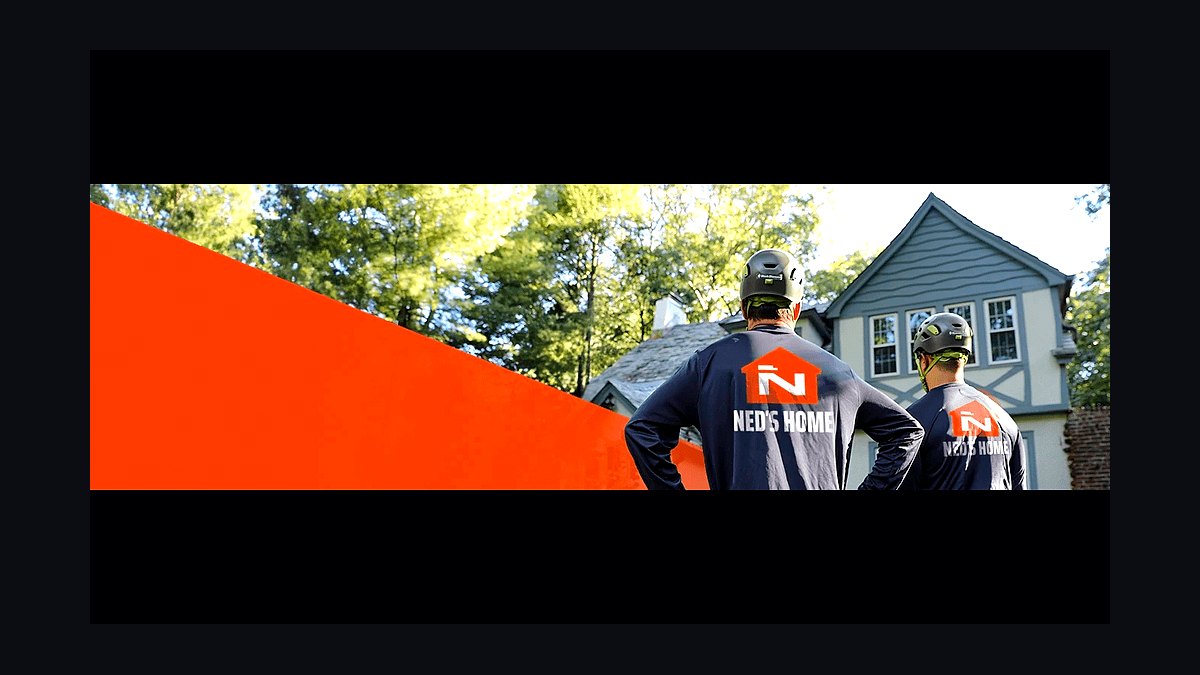
Proceed carefully. Ned Stevens Gutter Cleaning is a heritage recurring-revenue gutter brand founded in 1965, but it has grown predominantly company-operated and concentrated in the Northeast, so franchise availability in 2027 is genuinely uncertain — confirm directly with the company before budgeting anything. If franchising is open in your market, the subscription-cleaning model and recession-resilient demand are attractive; if it isn't, an actively-franchising gutter or exterior-maintenance brand is the faster path into the category.
A Buyer Weighing Ned Stevens Against an Open Franchise
Picture two prospective owners researching gutter-cleaning franchises in early 2027. The first lives in Fairfield County, Connecticut — inside Ned Stevens' historical company-run footprint — and assumes that because the brand is a household name on their street, a franchise territory must be available nearby. The second lives outside Charlotte, North Carolina, well outside the Northeast corridor, and finds no Ned Stevens presence at all, company-run or franchised. Both call the franchisor the same week and ask the same question: can I buy in?
This scenario matters because it's the exact trap that catches unprepared buyers of any brand transitioning from a purely corporate model toward franchising. A recognizable name creates an illusion of open availability that the underlying legal and operational reality doesn't support. Ned Stevens built its business for six decades primarily by opening and operating its own branches, not by awarding territories to independent owners. Franchising has only been explored more recently, and where it has been tested, it has been selective rather than a national rollout. The Fairfield County buyer may discover that the territory they want is already served by a corporate crew and isn't being carved out for a franchisee at all. The Charlotte buyer may discover there is no infrastructure, no regional support, and no existing customer base to leverage — they would essentially be asked to build brand awareness for Ned Stevens from zero in a market the company has never served.
The lesson from this scenario is that "Should I buy a Ned Stevens franchise" is really two separate questions stacked on top of each other: first, is franchising even available where I live, and second, if it is, do the recurring-cleaning unit economics work for me. Skipping straight to the second question — running spreadsheets on investment and payback — before answering the first is how buyers waste months of due diligence on a territory that was never for sale.
How the Franchise-Versus-Company-Run Mechanism Actually Works
Understanding why Ned Stevens' availability is uncertain requires understanding how a legacy company-operated brand transitions into franchising, because the mechanics directly shape what a prospective buyer will encounter.

A brand that grows company-run for decades builds its density through direct capital investment: the corporate parent buys trucks, hires and trains crews, and absorbs the losses of a new branch's ramp-up period directly on its own balance sheet. This is capital-intensive but keeps full control over service quality, pricing, and brand presentation — which is part of why Ned Stevens built such strong recognition in the Northeast. When a company like this decides to explore franchising, it typically does so market by market, not as a blanket national rollout. Corporate leadership has to decide, market by market, whether a given territory is better served by continuing to run it directly (keeping 100% of the profit and control) or by licensing it to a franchisee (trading some control and profit share for faster expansion capital and owner-operator motivation).
This creates a patchwork outcome for buyers: some regions stay permanently company-run because they're already profitable and the corporate parent has no incentive to give up the margin. Other regions — often ones adjacent to the existing footprint, where brand awareness already exists but the company doesn't want to commit more of its own capital — get opened to franchising first. Still other regions, far outside the historical footprint, may be nominally "available" but require the franchisee to build the market from scratch with none of the density advantages that make the recurring-subscription model work.
For the buyer, the practical implication is that you cannot infer availability from brand recognition or from the presence of Ned Stevens trucks in your area — a truck on your street is more likely to signal "this is a profitable company-run territory we're keeping" than "this territory is for sale." You have to go directly to the franchisor's development team and ask for a specific answer for your specific ZIP codes or county. If the FDD (Franchise Disclosure Document) hasn't been recently issued or updated, that itself is a signal that franchising isn't currently being pushed as a growth channel.
Real Numbers, Ranges, and Benchmarks

Because Ned Stevens' own franchise disclosure specifics fluctuate with availability, the most reliable planning approach is to benchmark against comparable recurring gutter-cleaning franchise economics, then confirm exact figures against Ned Stevens' current FDD if and when a territory is offered.
Initial investment. Total startup capital for a recurring gutter-cleaning franchise territory typically runs $100,000 to $200,000. That breaks down roughly as: a franchise fee of $25,000 to $50,000 (confirm this figure specifically — some sources cite $40,000-$50,000), vehicles and equipment at $25,000 to $65,000, vehicle branding and wraps at $5,000 to $15,000, home or warehouse-based setup costs of $5,000 to $20,000, initial inventory and repair-material stock of $6,000 to $18,000, initial marketing spend of $15,000 to $40,000 to seed the first subscriber base, training and travel costs of $8,000 to $22,000, and working capital reserves of $15,000 to $40,000 to cover the ramp period before recurring revenue stabilizes. Liquid capital requirements typically sit at $50,000 to $90,000, with the remainder financeable.
Ongoing fees. Expect royalties in the range of 6% to 8% of gross revenue, plus an additional 2% to 3% allocated to national or regional advertising funds — confirm the exact structure in the current FDD, since these percentages vary by brand and can change between disclosure years.

Revenue trajectory. In the first two to three years, a single-territory recurring gutter-cleaning franchise commonly generates $400,000 to $800,000 in annual revenue. Mature units, once the recurring subscriber base is built out and route density is optimized, gross $700,000 to $1,500,000-plus by year four or five. Gross margins in this category typically run 50% to 65%, since labor and vehicle/material costs dominate the cost structure; net profit margins after royalties, insurance, and administrative overhead land around 15% to 25%.
Break-even and ROI timeline. Most franchisees in this category reach positive monthly cash flow within 12 to 18 months of launch. Full recoupment of the initial $100,000-$200,000 investment — true return on investment — more typically takes 2 to 4 years, contingent on how aggressively the owner builds the recurring subscriber base in year one.
Subscription economics. The core value driver in this category is the annual or seasonal gutter-cleaning subscription contract. Renewal rates on these contracts often exceed 70% to 80% once a customer is on the books, which is what makes the recurring model so much more valuable than one-off service calls. But acquiring that first subscriber costs money: customer acquisition cost in this category runs $50 to $150 per new subscriber, funded through door hangers, digital ads, and referral partnerships with real estate agents and property managers.
Labor costs. Crew wages for gutter cleaners typically run $18 to $28 per hour, with overtime premiums during the September-through-December and March-through-May peak seasons, and higher rates common in high-cost Northeast labor markets. Annual crew turnover in this labor category can exceed 50%, which is a structural staffing risk every owner needs to plan for, not an occasional problem.

Fleet costs. A working fleet of 2 to 4 service vehicles (vans or box trucks equipped with ladders, gutter vacuums, and fall-protection gear) is standard for a single territory, at a startup cost of $40,000 to $80,000 per vehicle, plus $8,000 to $15,000 per truck annually in maintenance and insurance.
Territory size. Protected territories in this category are commonly sized at 50,000 to 150,000 households, or a defined service radius of 10 to 20 miles. Confirm whether Ned Stevens grants exclusive territory boundaries or allows its own company-run routes to overlap a franchisee's area — the latter would directly undercut a new franchisee's subscriber-acquisition math.
Trade-Offs and Alternatives
The central trade-off with Ned Stevens in 2027 is brand equity versus availability certainty. On one side, Ned Stevens carries six decades of Northeast brand recognition, a proven subscription-cleaning model, and demand that holds up in recessions because homeowners maintain gutters specifically to avoid water damage — a repair bill that's far more expensive than a cleaning subscription. On the other side, the company's predominantly company-operated growth history means the franchise support systems, territory maps, and Item 19 financial performance representations may be less mature and less proven than a brand that has franchised for a decade or more.

If a Ned Stevens territory isn't available or isn't a fit, the recurring gutter and exterior-maintenance category itself remains sound — the smarter move is to redirect the search toward brands that are actively franchising rather than forcing the Ned Stevens name. The Brothers that just do Gutters is a direct category peer already built around a franchise-first growth model. Exterior-cleaning brands like Window Hero, Shack Shine, and Men In Kilts occupy adjacent service categories (window washing, pressure washing, and general exterior upkeep) and can be layered onto a gutter-focused business to extend the working season. Gutter Guards America, Gutter Shutter, and Window Gang are additional gutter-adjacent concepts with more established, actively-expanding franchisee networks and clearer territory maps. An independent, unbranded gutter-cleaning startup is a further alternative — full control and no royalty, but none of the built-in name recognition or training infrastructure a franchise provides.
The decision tree here is straightforward: confirm Ned Stevens availability in your specific market first, since that single fact determines whether the rest of the analysis is even relevant. If it's company-run in your area, move immediately to comparing actively-franchising peers rather than waiting on a territory that may never open. If it is available, read the FDD and Item 19 numbers closely, validate that your market has the tree-heavy, seasonal-demand profile that makes recurring gutter subscriptions work, and only then commit capital.
Common Pitfalls and How to Avoid Them

The single most common mistake buyers make with Ned Stevens is assuming brand familiarity equals franchise availability. Avoid this by contacting the franchisor's development team directly and requesting a written answer, ideally an FDD, for your exact territory before spending any further time or money on due diligence.
A second pitfall is underestimating staffing volatility. Gutter cleaning is seasonal and physically demanding, and turnover in this labor category regularly exceeds 50% annually. Owners who don't build a recruiting pipeline before launch — rather than scrambling for crews once the season hits — routinely miss their busiest weeks. Cross-training crews for complementary exterior services such as window cleaning, pressure washing, and leaf removal is the standard mitigation, since it extends the working calendar and gives crew members year-round hours instead of a seasonal layoff, which materially improves retention.
A third pitfall is treating the franchise fee and equipment costs as the full investment picture while underfunding working capital. Because gutter cleaning is weather-dependent — a franchise might realistically operate only 150 to 200 working days a year once rain, snow, and ice are accounted for — revenue arrives in concentrated bursts rather than evenly across the calendar. Owners who don't reserve $15,000 to $40,000 in working capital to smooth over slow stretches can find themselves cash-strapped in the exact months they need to be investing in crew and marketing for the next peak season.
A fourth pitfall is skipping direct conversations with existing franchisees, where availability exists. A low current franchise count, for instance fewer than 10 to 15 open units, is itself a signal that the system is early-stage and that support infrastructure, training materials, and marketing playbooks may still be maturing. Ask existing owners directly how their subscription-acquisition costs and renewal rates compare to the $50-$150 CAC and 70-80% renewal benchmarks cited above; a significant gap is worth investigating before signing.

Finally, buyers sometimes fail to negotiate or clarify territory exclusivity before committing capital. If company-run Ned Stevens routes are allowed to operate inside a franchisee's assigned territory, that overlap directly erodes the subscriber base a new franchisee is trying to build. Get this in writing before you sign, not after.
Related questions
How many Ned Stevens locations are franchised versus company-owned?
Ned Stevens has historically operated predominantly company-owned locations concentrated in the Northeast. Franchising has been explored more recently and selectively, so the exact current franchise count should be confirmed directly with the company rather than assumed from its brand visibility.
What territories has Ned Stevens tested for franchising?
As of the mid-2020s, franchising activity has been reported in states like New Hampshire, Maine, and parts of Maryland and Virginia, alongside the core company-run footprint of Connecticut, Massachusetts, New York, New Jersey, Pennsylvania, and Rhode Island. Confirm current status directly, as this expands over time.
Is gutter cleaning a recession-resilient business?
Yes, generally. Homeowners maintain gutters to prevent water damage to roofs, foundations, and siding, which is a far more expensive repair than a routine cleaning subscription — this keeps demand relatively stable even during economic downturns.
What's the difference between Ned Stevens and The Brothers that just do Gutters as a franchise choice?

The Brothers that just do Gutters is built around an active, franchise-first expansion model with a more established territory map, while Ned Stevens carries deeper brand heritage but a company-run growth history that makes franchise availability less certain.
How long does it take to build a profitable subscriber base in gutter cleaning?
Most franchisees reach positive cash flow within 12 to 18 months, but building the recurring subscription base that drives long-term profitability, with renewal rates commonly exceeding 70-80%, typically takes 2 to 4 years of sustained local marketing.
FAQ
Is Ned Stevens actually offering franchises in 2027? Ned Stevens has historically operated mostly company-owned locations, though franchising has been explored in recent years. Availability in 2027 is uncertain — contact the company directly to confirm whether it is actively awarding new franchises and in which territories.
What is the typical investment range to open a Ned Stevens franchise? For comparable recurring gutter-cleaning franchises, total investment generally falls between $100,000 and $200,000, covering the franchise fee, equipment, initial marketing, and working capital. Exact figures depend on Ned Stevens' current FDD.

How much revenue can a mature Ned Stevens-style franchise expect? Established units in this category often gross $500,000 to $1,500,000-plus annually. Actual revenue varies with market density, route efficiency, and how effectively the owner manages recurring subscription customers.
What makes Ned Stevens different from other gutter-cleaning franchises? Its core appeal is a recurring subscription-cleaning model that produces predictable, recession-resilient revenue, plus strong brand recognition built up over decades in the Northeast. Its company-run history, however, means franchise support systems may be less proven than brands that have franchised longer.
What are the biggest challenges of pursuing a Ned Stevens franchise? The main hurdles are confirming franchise availability at all (since most locations are company-operated), managing seasonal crew staffing and turnover, and navigating spring and fall demand peaks. Route density is essential — enough customers in a compact area is what makes the subscription math work.
Are there better gutter or exterior-cleaning franchise alternatives in 2027 if Ned Stevens isn't franchising in my area? Yes. Brands like The Brothers that just do Gutters, Window Gang, Gutter Guards America, and Gutter Shutter are actively franchising with more established territory availability. Compare their current FDDs and speak with existing franchisees before choosing.
Sources
- https://www.ftc.gov/business-guidance/resources/franchise-rule-disclosure-requirements-prohibitions-concerning-franchising
- https://www.ibisworld.com
- https://www.statista.com
- https://www.franchisebusinessreview.com
- https://www.franchise.org
- https://www.census.gov
- https://www.nedstevens.com
- https://www.entrepreneur.com/franchises
- https://www.sba.gov/business-guide/plan-your-business/franchise-business
Related on PULSE
- Should I open a gutter cleaning business in 2027?
- Best cleaning and janitorial franchises to start in 2027
- Should I open or buy an Oxi Fresh Carpet Cleaning franchise in 2027?
- Should I open or buy a Fish Window Cleaning franchise in 2027?
- Should I open or buy a The Cleaning Authority franchise in 2027?
- Should I open a pool cleaning business in 2027?
This page will be disappearing soon. Save it to your device for $1 — or read it free while it is here.
@Kory-White- · if Venmo asks, the last 4 of my number are 2012
This page is gone.
This one is off the shelf now. $1 keeps it on your phone for good — the whole page, pictures and diagrams included.
 franchiseShould I open or buy a Little Caesars franchise in 2027?
 franchiseShould I open or buy a Cold Stone Creamery franchise in 2027?
 franchiseShould I open or buy a KinderCare franchise in 2027?
 franchiseShould I open or buy a Planet Fitness franchise in 2027?
 franchiseShould I open or buy a Kumon franchise in 2027?
 franchiseShould I open or buy a Crumbl Cookies franchise in 2027?
 franchiseShould I open or buy a Jamba franchise in 2027?
 franchiseShould I open or buy a Panera Bread franchise in 2027?
 franchiseShould I open or buy a UPS Store franchise in 2027?
 franchiseShould I open or buy a Drybar franchise in 2027?