


Should I open or buy a Pinch A Penny franchise in 2027?
Quality
Certified
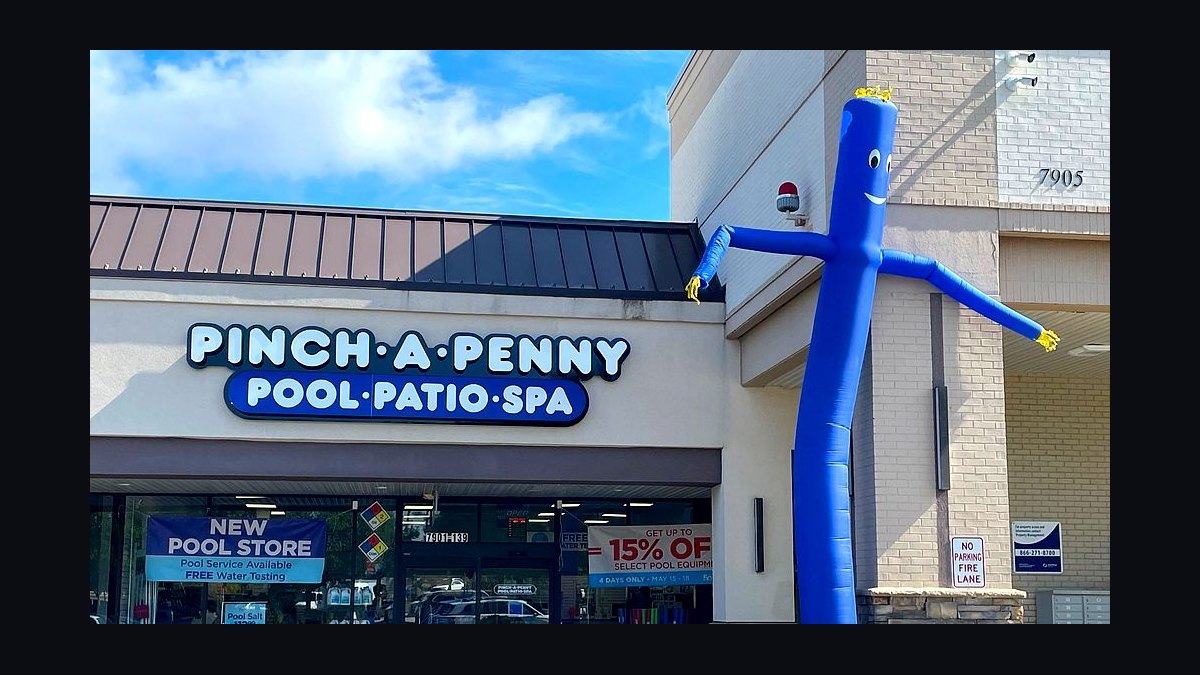
Yes, opening a Pinch A Penny franchise in 2027 makes sense for a well-capitalized, retail-and-service-minded operator in a pool-dense Sunbelt market — the hybrid retail-plus-service model captures recurring revenue from both chemical sales and maintenance contracts, backed by a brand that has operated since 1975. It demands $400,000-$700,000 in total investment and comfort managing pool technicians, but mature stores gross $1,000,000-$2,500,000+ with owners clearing $150,000-$450,000 a year.
The outcome you should expect
If you open a Pinch A Penny in 2027 in a genuinely pool-dense market — think coastal Florida, the Texas Triangle, Phoenix, or similar Sunbelt geographies where a meaningful share of households own an in-ground pool — you should expect a business that behaves less like a single retail concept and more like two businesses sharing one roof. The storefront pulls in walk-in and repeat customers buying chlorine, algaecide, test strips, filters, and pumps; the service side runs recurring routes cleaning, balancing, and repairing pools under standing contracts. Franchisees who lean into both sides typically see the retail counter cover fixed overhead (rent, utilities, base staffing) while the service routes deliver the higher-margin, stickier revenue that compounds month over month as the technician roster and customer list grow.
Realistically, your first 12-24 months will look thinner than the mature-store numbers suggest. You're building a customer list from zero, hiring and training technicians, and establishing route density (the number of service stops you can chain together in a single truck day, which drives labor efficiency more than almost any other variable). Owners who reach break-even in 12-18 months are usually in markets where Pinch A Penny already has a strong footprint — meaning brand awareness does some of your marketing for you — while owners in emerging or under-penetrated markets often need 18-24 months and a heavier local marketing spend to get there. Once past that ramp, the outcome converges toward the FDD's Item 19 ranges: gross revenue climbing from an opening-year figure well under $1,000,000 toward the $1,000,000-$2,500,000+ mature-store band, with net owner earnings settling into the $150,000-$450,000 range depending heavily on how well you've balanced retail margin against service labor cost.

The franchise's structural advantage — the reason this outcome is achievable at all — is that pool ownership creates involuntary recurring demand. A pool owner doesn't decide whether to buy chemicals this month; an unmaintained pool turns green, and turning it back requires the exact products and labor Pinch A Penny sells. That inelastic, recurring demand is what separates this model from most discretionary retail franchises and is the core reason the "open or buy" decision tilts positive for the right operator in the right geography.
What drives that outcome
Three forces determine whether a given Pinch A Penny location lands near the top or bottom of that revenue range: local pool density, the retail-to-service revenue mix, and technician capacity. Pool density sets your addressable market before you sign anything — a territory with 30,000-50,000 households and 15-25% pool penetration gives you 4,500-12,500 potential customers, while a territory below that threshold caps your ceiling no matter how well you operate. The retail-to-service mix determines your margin profile: retail carries thinner per-transaction margin but requires less labor, while service carries fatter margin per job but is bottlenecked by how many technicians you can hire, train, and retain. Technician capacity is the real constraint in almost every high-performing store — you can always sell more chemicals, but you can only run as many service routes as you have qualified people to run them.

Underneath those three levers sits a fourth, quieter driver: how you smooth revenue across the calendar. Pure pool-service businesses in markets with any winter live or die by the June-through-September rush; Pinch A Penny's retail counter offsets that because DIY pool owners keep buying test kits and small equipment year-round, and the brand pushes winterization services (pool closing, cover installation, winter chemical kits) that convert what would otherwise be a dead quarter into a secondary revenue season. Franchisees who treat the off-season as a chance to catch up on equipment repair backlogs and off-season storage of furniture and covers tend to post flatter, more predictable annual numbers than those who simply throttle down and wait for spring.
Benchmarks and realistic ranges
The 2026 FDD frames the investment in Item 7 as roughly $400,000 to $700,000 all-in, built from a franchise fee of $30,000-$40,000, buildout costs of $120,000-$300,000 for a 2,000-3,500 square foot retail space, $80,000-$180,000 for equipment and service vehicles, $15,000-$45,000 for signage, $80,000-$180,000 for initial inventory, $15,000-$40,000 for initial marketing, $12,000-$30,000 for training and travel, and $40,000-$90,000 in working capital to cover the ramp period. On top of that initial outlay, ongoing fees run roughly 5-6% of gross sales as royalty plus a marketing fee typically cited around 1-2%. Franchisors generally want to see $150,000-$250,000 in liquid capital on top of financing capacity for the rest, since lenders treat the retail build-out and inventory as collateralizable but still expect meaningful owner skin in the game.

On the revenue side, benchmark yourself against comparable retail-and-service franchise concepts, not against pure product retailers. A single mature Pinch A Penny location grossing $1,000,000-$2,500,000+ compares favorably to most single-unit retail franchises, which is a direct function of the service attach rate — a store that only sells retail product tops out well below that range, while one that has built a robust technician-driven service book pushes toward the top. Owner net income of $150,000-$450,000 implies operating margins in the high-single-digits to mid-teens percent of gross once you net out product cost (often 40-45% of retail revenue), labor (20-25% including techs and store staff), occupancy (roughly 6-10% depending on lease terms), and royalty/marketing/other opex (15-18% combined). Those aren't guaranteed numbers — they're the band that separates an underperforming location from a well-run one — but they give you a concrete target to underwrite against before you sign.
For territory sizing specifically, treat 30,000-50,000 households with 15-25% pool penetration as your floor, not your ceiling. Markets where Pinch A Penny already has five or more locations within 50 miles tend to see faster ramps (12-18 months to break-even) because brand recognition reduces your customer-acquisition cost; markets with fewer than five nearby locations often see 30-50% longer ramps (18-24 months) because you're building brand awareness from a lower base, which typically means budgeting 2-4% of projected revenue toward local marketing in years one and two rather than the lighter spend an established-market franchisee can get away with.
Risks, edge cases, and failure modes
The single most common failure mode is under-capitalizing the retail side while over-focusing on service. Because service margins look attractive on paper, some prospective owners try to trim the store build-out or initial inventory to save cash — and end up with a storefront that can't stock the range of chemicals and equipment customers expect, which erodes the retail leg of the hybrid model and pushes the whole location toward the bottom of the revenue range. The FDD's $400,000-$700,000 range exists because both halves of the business need real capital; treating the store as an afterthought defeats the purpose of buying a hybrid concept in the first place.

The second major risk is technician staffing, which the 2026 FDD flags explicitly as an acute, Sunbelt-wide labor shortage — many markets report 30-60 day hiring cycles for experienced pool technicians. Franchisees who plan to open with a bare-minimum crew and hire reactively as service demand grows tend to miss service windows during the exact summer peak when revenue is most available, damaging customer retention in a business where a pool owner's next call, after a missed appointment, often goes to a competitor. The operators who avoid this typically pre-build a bench: a base salary of $40,000-$55,000 plus 5-10% commission on service revenue generated, a clear promotion path to lead technician or manager, and — increasingly — sponsored CPO (Certified Pool Operator) certification costing $200-$400 per hire, paired with an apprenticeship pipeline rather than relying solely on seasonal labor.
A third edge case worth underwriting explicitly: territory exclusivity is not absolute. Pinch A Penny reserves the right to sell pool chemicals online directly to customers inside your territory, which means your physical location has to win on service, convenience, and the relationship your technicians build with customers rather than assuming brand exclusivity protects your retail volume. In markets where online chemical delivery is already a habit among pool owners, this compresses the margin available on the pure-retail side and pushes the economics even further toward valuing the service book.
Finally, geography is a hard constraint, not a soft preference. In low-pool-density or cold-dominant markets, the entire hybrid thesis weakens — retail foot traffic thins, service routes lose density (meaning more drive time between stops and lower technician utilization), and the winterization offset that smooths revenue in moderate-climate markets isn't enough to compensate for a genuinely short pool season. An operator evaluating a Pinch A Penny franchise in a market outside the traditional Sunbelt footprint should discount every benchmark above and pressure-test the local pool-ownership data — Census figures and county-level pool-permit records are a reasonable public proxy — before committing capital.
A practical rollout plan
Franchisees who move through a structured pre-opening sequence tend to avoid the two failure modes above — undercapitalized retail and reactive staffing — because both problems get caught during diligence rather than after the lease is signed. The sequence below compresses roughly five months of signing-to-open work into six checkpoints, with the explicit goal of validating pool density and technician supply before large sums of capital are committed to build-out.
In the operator-interview phase, push past generic satisfaction questions and ask specifically about retail-to-service revenue mix, how long it took to build a stable technician crew, and what net profit looked like in years one, two, and three — the gap between those answers and the Item 19 averages tells you how sensitive this concept is to local execution. During the validation phase, don't just count pools; call a few independent pool-service companies in the target territory to gauge how tight the technician labor market already is, since that's the constraint most likely to cap your growth in year one. During build-out, resist the temptation to defer technician hiring until after the store opens — a company vehicle with a branded wrap (typically $35,000-$50,000 per truck) and a tablet-based routing system in place from day one gives new hires a professional setup that franchisees report correlates with materially better retention than expecting techs to use personal vehicles. By the time you open, retail and service should launch together, not sequentially, because the whole rationale for choosing Pinch A Penny over a pure retail or pure service franchise is the recurring revenue that comes from running both at once.
Related questions
How does Pinch A Penny compare to Leslie's Pool Supplies?

Leslie's operates primarily as corporate-owned pure retail with limited franchise-style local ownership, while Pinch A Penny is a franchised hybrid combining retail with recurring service routes — meaning Pinch A Penny franchisees can capture service-contract revenue Leslie's locations generally don't offer at the local-owner level.
Is a pool-service-only franchise like Pool Scouts or ASP a lower-risk alternative?
Pure pool-service franchises require less upfront capital since there's no retail build-out or inventory, but they lack the retail counter's steady, less-labor-intensive revenue stream that helps Pinch A Penny franchisees smooth seasonality and offset technician staffing gaps.
What pool penetration rate should disqualify a territory?
Territories under roughly 15% pool penetration within a 30,000-50,000 household radius generally can't support the technician headcount and inventory investment the model assumes, making the unit economics unworkable regardless of how well it's operated.
Does buying an existing Pinch A Penny location reduce the risk versus opening new?
Buying an established location typically means an existing customer base, trained technicians, and real historical financials to underwrite against, which removes much of the ramp-period uncertainty that new-store openings carry — though it usually costs more upfront than a new build's Item 7 range.
FAQ
What is the total investment needed to open a Pinch A Penny franchise in 2027? The total investment typically ranges from $400,000 to $700,000, including a franchise fee of $30,000 to $40,000. This covers build-out, inventory, equipment, and initial working capital, though actual costs depend heavily on local real estate conditions and store size.

How much can I expect to earn as a Pinch A Penny franchise owner? Mature stores generally generate annual gross revenues of $1,000,000 to $2,500,000, with owner net income often between $150,000 and $450,000. Earnings vary significantly based on market pool density, the retail-versus-service revenue mix, and technician staffing efficiency.
Is pool service experience required to buy a Pinch A Penny franchise? No prior pool industry experience is required, since the franchisor provides training on retail operations, pool service, and repair. That said, a background managing a retail or service business, and comfort hiring and retaining skilled technicians, meaningfully improves your odds of hitting the higher end of the earnings range.
How long does it take to open a Pinch A Penny store from signing? The timeline from signing the franchise agreement to opening typically runs 6 to 12 months, depending on site selection, lease negotiation, build-out, and permitting. Competitive Sunbelt markets can extend the site-selection portion of that timeline considerably.
What are the main ongoing fees for a Pinch A Penny franchise? Franchisees pay a royalty of roughly 5% to 6% of gross sales plus a marketing fee, generally cited around 1% to 2%. These fees fund brand advertising, national purchasing arrangements, and ongoing operational support from the franchisor.
How seasonal is the business, and does it work outside the Sunbelt? Revenue is most consistent in warm, pool-dense states like Florida, Texas, and Arizona, where pool use runs close to year-round. In markets with real winters, service revenue can dip 20-40% in the off-season, but retail sales tend to hold within 10-15% of summer levels, and winterization services can further offset the seasonal gap.
Sources
- https://www.pinchapenny.com
- https://www.entrepreneur.com/franchises/pinchapenny/282485
- https://www.franchisedirect.com
- https://www.ibisworld.com
- https://www.statista.com
- https://www.theapsp.org
- https://www.franchisebusinessreview.com
- https://www.franchise.org
- https://www.census.gov
- https://www.franchisetimes.com
Related on PULSE
- Should I open or buy a Pinch A Penny Pool franchise in 2027?
- How long does it take to open a franchise and break even in 2027?
- Should I open or buy a Tommy Gun's Original Barbershop franchise in 2027?
- Should I open or buy a Pool Scouts franchise in 2027?
- What's the real earning potential of a service-based franchise in 2027?
This page will be disappearing soon. Save it to your device for $1 — or read it free while it is here.
@Kory-White- · if Venmo asks, the last 4 of my number are 2012
This page is gone.
This one is off the shelf now. $1 keeps it on your phone for good — the whole page, pictures and diagrams included.
 franchiseShould I open or buy a Marco's Pizza franchise in 2027?
 franchiseShould I open or buy a Matco Tools franchise in 2027?
 franchiseShould I open or buy a Servpro franchise in 2027?
 franchiseShould I open or buy a Valvoline Instant Oil Change franchise in 2027?
 franchiseShould I open or buy a Drybar franchise in 2027?
 franchiseShould I open or buy a Kona Ice franchise in 2027?
 franchiseShould I open or buy a Subway franchise in 2027?
 franchiseShould I open or buy a Panera Bread franchise in 2027?
 franchiseShould I open or buy a Jiffy Lube franchise in 2027?
 franchiseShould I open or buy a Planet Fitness franchise in 2027?