


Should I open or buy a Buildingstars franchise in 2027?
Quality
Certified
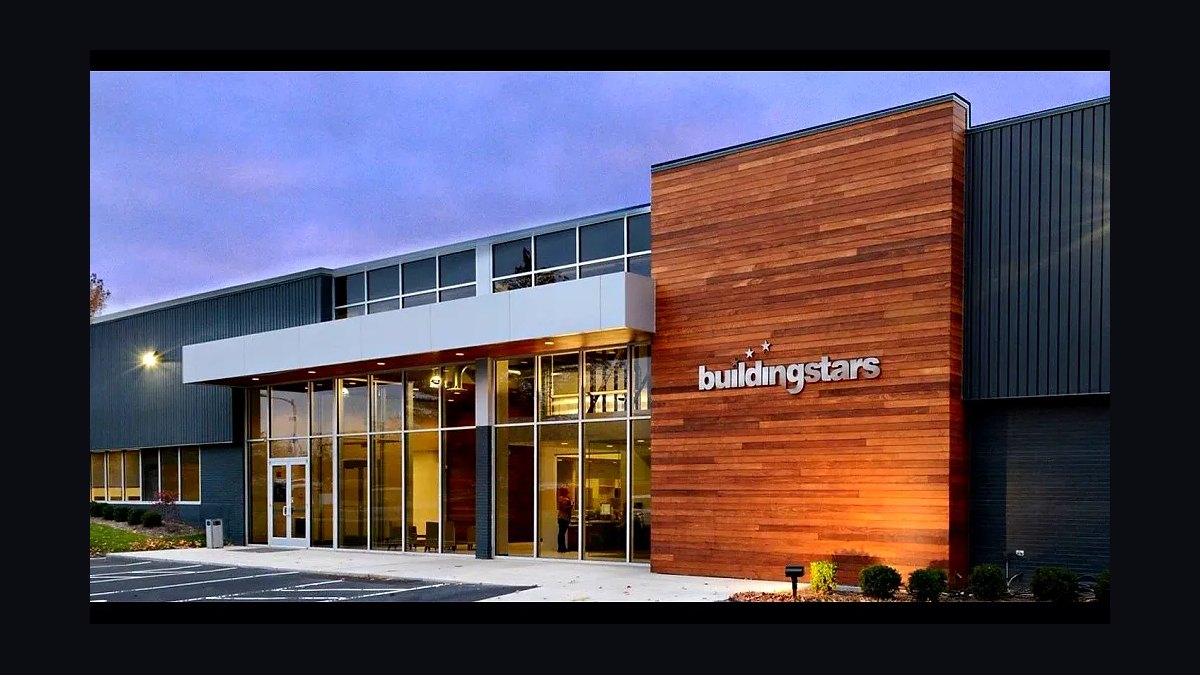
Yes, if you understand which tier you are buying before you sign: Buildingstars franchises recurring commercial-cleaning contracts through a two-tier structure — a low-cost unit franchise where the company provides accounts, or a costlier regional/master franchise that sells and supports units. Open a unit if you want an owner-operated cleaning route; open a regional if you want a scalable B2B business.
What it is and why it matters
Buildingstars, founded in 1994, franchises commercial-cleaning (janitorial) operations that service offices and commercial facilities on recurring nightly or weekly contracts. What separates it from a typical service franchise is the two-tier structure baked into the system itself. At the bottom tier sits the unit franchise: a low-capital entry point where the franchisor hands the new owner a set of already-secured cleaning accounts. The unit franchisee's job is to staff, schedule, and service those accounts — it behaves less like launching a business from zero and more like buying a managed cleaning route with a built-in customer base. At the top tier sits the regional or master franchise: a territory developer who recruits, trains, and supports unit franchisees, and who is responsible for going out and securing the commercial accounts that get distributed downstream.
This structure matters because it changes what "opening a Buildingstars franchise" actually means depending on which tier you buy. A prospective franchisee who reads generic franchise-review content and assumes there is one uniform Buildingstars experience will misjudge both the investment and the day-to-day work. A unit buyer who thinks they are building a scalable, sellable asset will be disappointed — the unit model is closer to a job with recurring income than a business you can exit for a multiple. Conversely, a regional buyer who wants a hands-on cleaning role without sales responsibility will find themselves managing a portfolio of franchisees, chasing account contracts, and handling escalations rather than pushing a vacuum.

The reason this model persists in the janitorial space is that commercial cleaning is inherently recession-resilient. Offices, medical buildings, retail centers, and industrial facilities need ongoing cleaning regardless of the broader economy — nobody stops cleaning restrooms during a downturn. Recurring contracts, once signed, generate predictable monthly revenue for as long as the client stays, which is why franchisors in this category emphasize contract retention above almost every other metric. Buildingstars' provided-accounts approach for unit franchisees is designed specifically to lower the single biggest failure point in cleaning-franchise ownership: the sales burden of finding your own commercial clients from scratch. That said, provided accounts are not permanent — they must be retained through service quality, and replacement accounts from the franchisor are typically limited to a set number per year, so retention skill still determines long-run income.
Before you open either tier, you need clarity on three things: which tier matches your capital and skill set, what the realistic income range looks like for that tier after ramp-up, and how competitive the local commercial-cleaning market already is (Jan-Pro, Anago, Stratus, Coverall, OpenWorks, and System4 all compete for the same office and facility contracts in most metro markets).
The step-by-step process

Opening a Buildingstars franchise follows a fairly linear sequence regardless of tier, though the substance of each step differs by tier. The core path is: request and read the current Franchise Disclosure Document, decide which tier fits your capital and goals, complete discovery calls and validation with existing franchisees, sign the franchise agreement, complete training, receive your account assignments (unit) or your territory and initial support materials (regional), and then launch — meaning you either begin servicing assigned commercial accounts or begin recruiting and supporting your first unit franchisees.
The FDD review step deserves more time than most first-time franchise buyers give it. Item 19 (financial performance representations) is where the franchisor discloses average revenue figures by tier, and Item 20 (franchisee turnover) tells you how many franchisees exit or fail to renew in a given year — a figure that is arguably more honest about franchisee experience than any marketing material. Do not sign before you have read both items for the tier you are considering, and do not accept a verbal summary of them from a franchise sales representative in place of the actual document.

Validation calls are the second step that gets rushed. Talk to at least three to five current unit franchisees and, if you are considering the regional tier, at least two to three current regional/master franchisees. Ask specifically about actual first-year and second-year revenue (not the FDD average, but their own number), how often accounts get canceled or replaced, how much they spend on labor relative to revenue, and whether the franchisor's account-replacement promise has held up in practice. Franchisees who are unhappy with a system are usually willing to say so on the phone even when a glossy discovery day made everything sound smooth.
Training for unit franchisees typically covers cleaning operational standards, quality-control checklists, staffing and scheduling software, and the franchisor's billing and invoicing system, since Buildingstars generally handles or standardizes client billing centrally. Training for regional/master franchisees is materially different: it covers how to sell unit franchises, how to source and negotiate new commercial accounts to distribute to units, and how to run field support and quality audits across a growing franchisee base. A regional owner who skips or underinvests in this training tends to struggle most with the account-acquisition side, since selling commercial cleaning contracts to office managers and property management companies is a distinct B2B sales skill separate from running a cleaning crew.
Costs, timelines, and typical ranges
The investment gap between the two tiers is the single most important number in this decision. A unit franchise total investment — franchise fee, equipment and supplies, minimal setup costs, training, and working capital — typically runs from a few thousand dollars up to roughly $50,000, with the franchise fee portion alone often landing between $1,000 and $20,000. Equipment and cleaning supplies typically add $2,000 to $15,000, training and travel another $1,000 to $8,000, and working capital to cover the ramp period another $2,000 to $15,000. Because the franchisor supplies the initial accounts, unit franchisees generally do not need a large separate marketing budget.

A regional/master franchise is a different order of investment entirely: total investment commonly runs $100,000 to $400,000 or more. That includes a franchise fee of roughly $50,000 to $150,000, a regional vehicle fleet at $15,000 to $50,000, office and setup costs of $15,000 to $60,000, initial regional marketing and sales spend of $20,000 to $60,000, training and travel for the owner and staff at $10,000 to $30,000, and working capital reserves of $30,000 to $90,000 to fund the ramp-up period before unit sales and account fees reach a steady state.
On the revenue side, the 2026 FDD reportedly shows unit franchisees operating at least 12 months averaging roughly $85,000 to $120,000 in gross annual revenue, with top performers exceeding $200,000; broader unit ranges cited across sources run as wide as $30,000 to $250,000 depending on tenure and account load. Around 60% of unit franchisees reach profitability within the first year, with the remainder taking 18 to 24 months to break even. Regional/master franchisees show a much wider spread — commonly cited at $350,000 to $750,000 in average gross revenue, with mature operations exceeding $1.5 million after three to five years of territory development, and some broader estimates putting the ceiling as high as $2 million to $3 million for the largest, most established regions.

Ongoing fees also differ by tier. Unit franchisees typically pay a royalty in the range of 5% to 10% of gross revenue plus a modest marketing fee. Regional/master franchisees generally pay a lower royalty on their own direct cleaning contracts, but they also collect (and share a negotiated portion back to the franchisor of) upfront unit franchise fees — often $5,000 to $15,000 per unit sold — plus ongoing royalty overrides on their units' revenue.
Timelines to launch run roughly 60 to 105 days from signed agreement to first service day for a unit franchisee, assuming FDD review, validation calls, and financing are handled before signing. Regional/master launches take longer in practice, since the first cohort of unit franchisees has to be recruited, trained, and matched with accounts before the regional operation is generating its own steady revenue — expect a longer runway, often six months to a year, before the regional business reaches a stable cash-flow rhythm.
Franchisee turnover, reported under FDD Item 20, runs approximately 8% to 12% annually for unit franchises — broadly in line with commercial-cleaning franchise norms — and roughly 3% to 5% annually for regional/master franchises, reflecting the larger capital commitment and longer development horizon at that tier. System-wide, Buildingstars reportedly operates in the range of 400 to 500 active unit franchises supported by roughly 15 to 20 regional/master franchisees nationally.
Where teams get it wrong

The most common and costly mistake is buying into the wrong tier for your actual goals and skill set. Someone who wants a straightforward, bounded, owner-operated income stream and instead buys a regional/master territory ends up managing sales, recruiting, and franchisee support — work they neither enjoy nor are equipped for — while carrying a $100,000-plus investment. The inverse mistake is just as common: a buyer with real capital and B2B sales experience opens a unit franchise expecting to scale it into a large business, only to discover the unit model has a structural ceiling, since growth mostly means adding more of your own labor and accounts rather than building a saleable multi-site enterprise.
The second major failure point is underestimating labor and staffing difficulty. Cleaning crews are hourly workers, commonly earning $12 to $20 per hour depending on the market, and turnover among janitorial staff tends to run high. A unit franchisee who cannot keep a reliable crew staffed will see service quality slip, which directly threatens contract retention — and contract retention, not sales, is the real profit lever in this model. Payroll taxes, workers' compensation insurance, and cleaning supplies typically consume another 10% to 15% of revenue on top of direct wages, so franchisees who price or budget without accounting for full labor burden frequently see their target 15% to 25% net margin evaporate.
Third, franchisees — especially at the unit level — often misunderstand how "provided accounts" actually works over time. The franchisor supplies an initial book of business, but client churn in commercial cleaning runs an estimated 10% to 25% annually, meaning a franchisee can expect to lose one to three of every ten contracts each year to relocations, budget cuts, or dissatisfaction. Buildingstars generally offers a set number of replacement accounts per year, but that number is finite — franchisees who treat the initial account load as permanent and make no effort to build direct client relationships or upsell add-on services (floor waxing, window cleaning, periodic deep cleans, which can lift per-contract revenue by 20% to 40%) tend to see slow revenue erosion rather than growth.
Fourth, on the regional/master side, the most frequent misstep is underestimating how long it takes to sell the first meaningful cohort of unit franchises and secure the commercial accounts to support them. A regional owner who assumed a fast ramp based on the franchisor's projections, without asking existing regional franchisees for their actual first-24-month timeline, commonly finds themselves burning working capital faster than expected while account and unit-sales pipelines are still building.
Finally, many buyers at both tiers skip direct validation calls entirely, relying instead on discovery-day materials and FDD averages. FDD Item 19 figures are historical averages, not guarantees, and can be skewed by a small number of very high performers — talking to multiple current franchisees, especially recent ones, is the only reliable way to gauge what a realistic first two years actually looks like in your target market and against your local competition.
Decision framework: when to choose what
The tier decision comes down to four honest questions: how much capital you can deploy, whether you want to do the cleaning work or build and manage a team of franchisees, how comfortable you are with B2B sales and account acquisition, and how much scalability matters to you versus a bounded, predictable role. Someone with a few thousand to $50,000, a preference for hands-on operational work, and a desire for a straightforward recurring-income business should lean toward the unit franchise. Someone with $100,000 or more in capital, real B2B sales and management experience, and a goal of building a larger, more scalable enterprise should evaluate the regional/master tier — but only after validating that a viable territory (one with enough commercial-office density) is actually available.

Either way, the deciding factor should never be the franchisor's marketing projection alone. Validate the specific tier's Item 19 numbers against direct conversations with three or more current franchisees at that tier, confirm your target territory has enough commercial-office density to support either a unit's account load or a regional's unit-sales pipeline, and stress-test your own tolerance for either hands-on cleaning-crew management (unit) or B2B recruiting and account sales (regional) before signing.
Related questions
How much does it cost to open a Buildingstars unit franchise?
Total investment for a unit franchise typically runs from a few thousand dollars up to about $50,000, covering the franchise fee ($1,000–$20,000), equipment, training, and working capital, since the franchisor supplies the initial cleaning accounts.
What does a Buildingstars regional/master franchise actually do?
A regional/master franchisee develops a territory by recruiting and selling unit franchises, securing commercial cleaning accounts to distribute to those units, and providing ongoing training and support — it is a B2B business-development role, not a cleaning role.
How long does it take to become profitable with a Buildingstars unit?
Based on reported FDD data, about 60% of unit franchisees reach profitability within the first year, while the remainder typically take 18 to 24 months, largely depending on account retention and staffing stability.
What is the biggest risk in the Buildingstars model?
Client churn: commercial cleaning contracts see an estimated 10% to 25% annual turnover, so franchisees who don't actively build client relationships or add revenue through upsells face gradual income erosion even with provided accounts.
Is Buildingstars a good franchise to open in 2027?
It can be, for the right buyer: recession-resilient recurring demand and provided accounts genuinely lower the unit-level sales burden, but success depends entirely on choosing the tier that matches your capital, skills, and goals.
FAQ
What exactly is a Buildingstars unit franchise? A unit franchise is a low-cost, largely owner-operated commercial cleaning route. You pay a modest franchise fee, typically a few thousand dollars, and receive assigned cleaning accounts from the franchisor or regional master. You handle the cleaning work yourself or with a small crew, while the franchisor or regional partner supports billing and account management.
How does the regional/master franchise differ from a unit? A regional/master franchise gives you a larger territory in which to sell unit franchises and support them. Investment is far higher, often $100,000 to $400,000-plus, but you earn revenue from unit franchise fees, royalty overrides, and often from securing commercial accounts. It is a business-development and management role, not a hands-on cleaning role.
What are the typical ongoing fees? Unit franchisees generally pay a royalty of roughly 5% to 10% of gross revenue plus a modest marketing fee. Regional/master franchisees typically pay a lower royalty on their own direct contracts but share a negotiated portion of unit franchise fees and royalties back with the franchisor. Exact percentages vary by FDD year, so confirm current terms before signing.
How long do client contracts typically last? Commercial cleaning contracts are commonly month-to-month or one-year terms with automatic renewal clauses. Retention depends heavily on service quality; many franchisees report average client relationships of two to five years, though 10% to 25% of contracts turn over annually due to relocations or budget changes.
Can I run a Buildingstars unit franchise part-time? Many unit franchisees start part-time, servicing accounts evenings or weekends around a day job. As account load grows, most eventually need to hire help or shift to full-time to maintain the franchisor's service standards and keep contracts from slipping.
What is the biggest operational challenge for franchisees? Staffing reliable cleaning crews is the most frequently cited challenge at the unit level, since hourly janitorial labor often has high turnover. At the regional level, the equivalent challenge is sourcing enough commercial accounts and unit franchisees to hit growth targets on schedule.
Sources
- https://www.entrepreneur.com/franchises/directory
- https://www.ibisworld.com/united-states/industry/commercial-industrial-machinery-equipment-repair-maintenance/
- https://www.statista.com/
- https://www.franchisebusinessreview.com/
- https://www.franchise.org/
- https://www.ftc.gov/business-guidance/resources/franchise-rule-compliance-guide
- https://www.census.gov/econ/currentdata/
- https://www.sba.gov/business-guide/plan-your-business/franchise-businesses
Related on PULSE
This page will be disappearing soon. Save it to your device for $1 — or read it free while it is here.
@Kory-White- · if Venmo asks, the last 4 of my number are 2012
This page is gone.
This one is off the shelf now. $1 keeps it on your phone for good — the whole page, pictures and diagrams included.
 franchiseShould I open or buy a Little Caesars franchise in 2027?
 franchiseShould I open or buy a Culver's franchise in 2027?
 franchiseShould I open or buy a McAlister's Deli franchise in 2027?
 franchiseShould I open or buy a FACE FOUNDRIÉ franchise in 2027?
 franchiseShould I open or buy a Meineke franchise in 2027?
 franchiseShould I open or buy a Wingstop franchise in 2027?
 franchiseShould I open or buy a Kumon franchise in 2027?
 franchiseShould I open or buy an Anytime Fitness franchise in 2027?
 franchiseShould I open or buy a KinderCare franchise in 2027?
 franchiseShould I open or buy a Jeremiah's Italian Ice franchise in 2027?