


Should I open or buy a Pet Butler franchise in 2027?
Quality
Certified
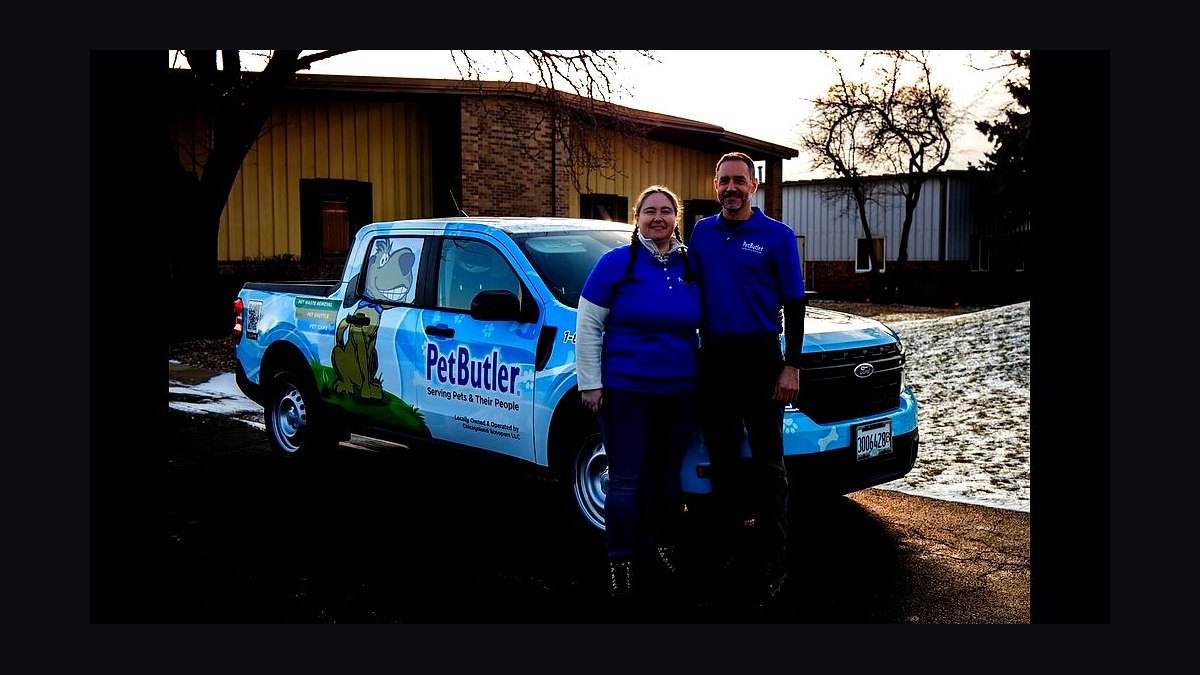
Yes, for a service-and-management-minded operator: Pet Butler is a low-capital ($60,000–$120,000), truck-based pet-waste-removal franchise built on recurring weekly and biweekly subscriptions, backed by a heritage brand dating to 1988. It rewards owners who can recruit and retain technicians and build dense recurring routes, and it's worth opening in 2027 if those are your strengths — skip it if you can't manage crews or want a passive, non-physical business.
The outcome you should expect
Opening a Pet Butler franchise in 2027 puts you into a labor-and-logistics business dressed up as a "simple" service concept. The unit economics are genuinely attractive on paper: a total investment of roughly $60,000 to $120,000 (per the 2026 FDD) against mature-unit gross revenue of $300,000 to $1,200,000-plus, with owner earnings ranging from $80,000 to $350,000. That spread is wide because the outcome depends almost entirely on two variables you control after signing: how fast you build a recurring subscription base, and how well you retain technicians long enough for route density to compound.
In the first 12–18 months, expect to be the technician, the salesperson, and the back-office operator simultaneously if you're bootstrapping a single-truck launch. Owner-operators who scoop yards themselves while building a client list typically land in the $150,000–$300,000 gross revenue range in year one, netting $70,000–$140,000 after vehicle costs, supplies, and royalties. That's a realistic, not aspirational, outcome — it assumes steady door-knocking, HOA outreach, and word-of-mouth referrals in a pet-dense suburban market, not overnight scale.
By year two or three, if you've reinvested in a second and third technician, the business shifts from "you personally scooping yards" to "you managing a crew." This is the inflection point that determines whether Pet Butler becomes a $100,000-a-year lifestyle business or a $300,000-plus regional operation. Semi-absentee ownership is achievable, but virtually every operator who reaches it says it required at least a year of hands-on involvement first to understand routing, pricing, and crew management before they could trust a manager to run it. The outcome you should expect, in short, is not passive income — it's an active, physical, people-management business that pays disproportionately well relative to its low capital requirement, provided you stay engaged through the staffing and density-building phase.

What drives that outcome
Three levers determine whether a Pet Butler unit becomes a $70,000-a-year side hustle or a $300,000-plus regional operation: recurring subscription volume, route density, and technician retention. Recurring subscriptions matter because pet-waste removal is inherently a repeat-visit service — a single cleanup has almost no value, but a weekly or biweekly contract compounds into predictable, forecastable revenue that lets you plan staffing and marketing spend with confidence. Route density matters because the entire cost structure of this business is driven by drive time, not scoop time. A technician who services 15–20 homes in a tight 5-mile radius in a day is highly profitable; the same technician driving 30 miles between scattered stops burns fuel, hours, and margin without adding revenue. Technician retention matters because this is a labor-intensive, physically demanding job — bending, lifting, working outdoors in heat, rain, and snow, handling pet waste — that carries real stigma in the labor market, and turnover of 30%–50% annually is common industry-wide.
These three levers interact. Strong recurring subscriptions without route density just means you're driving farther between profitable stops. Route density without technician retention means you're constantly retraining new hires on the same routes, losing efficiency gains every time someone quits. And neither subscriptions nor density matter if you can't keep a crew long enough to serve them reliably — a customer who gets an inconsistent or missed cleanup cancels, undoing months of acquisition work. The franchisor's territory exclusivity (typically 50,000–100,000 households) gives you the addressable market, but density within that territory has to be built deliberately by clustering marketing and sales efforts in specific neighborhoods and HOAs rather than accepting every scattered lead that comes in.
Benchmarks and realistic ranges

The 2026 FDD lays out three components of initial investment: a franchise fee of $25,000–$40,000, a vehicle and equipment package of $10,000–$35,000, and supporting costs (branding/wrap $3,000–$12,000, home-office setup $3,000–$12,000, initial marketing $10,000–$30,000, training and travel $5,000–$15,000, licensing and insurance $4,000–$12,000, working capital $8,000–$25,000) that bring the total Item 7 investment to roughly $60,000–$120,000. Ongoing costs are a royalty near 7%–9% (or a flat fee structure, depending on the agreement) plus a marketing fee around 2% of gross revenue.
Three realistic operating scenarios illustrate the earnings range:
Scenario A — Owner-operator, single truck, residential focus. Annual gross revenue of $150,000–$300,000, net profit of $70,000–$140,000 after royalties, vehicle costs, and supplies, typically reached within 12–18 months. This fits someone willing to personally scoop yards while building the client base.
Scenario B — Small crew, 2–3 technicians, residential plus some commercial. Annual gross revenue of $350,000–$600,000, net profit of $100,000–$180,000 with the owner managing rather than scooping, typically reached in 18–36 months. This fits a semi-absentee owner with management skills.

Scenario C — Multi-crew operation, 5-plus technicians, strong commercial and HOA contracts. Annual gross revenue of $800,000–$1,200,000-plus, net profit of $180,000–$350,000, typically reached over 3–5 years. This fits an experienced operator willing to invest in marketing and route optimization, possibly with a hired manager overseeing day-to-day operations.
Profit margins in this model commonly run 25%–40% net, which compares favorably to the 10%–20% margins typical of brick-and-mortar pet services like grooming or retail that carry heavier fixed costs. Insurance runs $3,000–$8,000 annually depending on location and headcount, covering general liability (typically $1–$2 million) and workers' compensation. Technician pay to remain competitive and reduce turnover typically runs $18–$25 per hour, above local minimum wage, often supplemented with performance bonuses and quality equipment. Seasonal variation is a real factor in benchmarking — northern, snow-belt markets can see 30%–50% revenue drops in winter months, and many operators there add snow-shoveling or other seasonal services to smooth cash flow across the year.
Risks, edge cases, and failure modes
The single biggest failure mode is staffing collapse: an owner who can't recruit or retain technicians ends up back in the truck themselves indefinitely, capping revenue at whatever one person can physically service. Because the work is physically demanding and carries a stigma some workers won't accept, franchisees who underpay or skip benefits and culture investment see turnover well above the 30%–50% industry norm, which compounds into missed cleanups, customer cancellations, and a shrinking subscription base rather than a growing one.

A second failure mode is accepting scattered accounts instead of building density. New franchisees eager for any revenue often say yes to customers far outside their core cluster, which feels like growth but actually destroys per-technician profitability by inflating drive time. The fix is disciplined geographic focus — even turning away distant leads — until a neighborhood or HOA is saturated before expanding outward.
A third risk is underestimating seasonal cash-flow swings in colder climates. An operator who budgets as if revenue is flat year-round can get caught short in a 30%–50% winter revenue dip if they haven't built a seasonal offset (snow removal, indoor pet services) or maintained enough working capital reserves through the slow months.
Competitive pressure is a real edge case to model honestly: Pet Butler competes with DoodyCalls, Scoop Soldiers, and a long tail of local independent scoopers in a genuinely fragmented market with low barriers to entry for non-franchised competitors. A heritage brand since 1988 provides credibility and a proprietary scheduling/routing software platform, but it doesn't guarantee territory dominance — franchisees still have to out-market and out-service local competitors on responsiveness and consistency.

Finally, there's a category of buyer for whom this franchise is simply a mismatch regardless of execution: someone who wants a fully passive, non-physical investment, someone who cannot stomach hands-on crew management and conflict resolution, or someone who underestimates that this is fundamentally a route-logistics and people-management business, not a "set it and forget it" recurring-revenue play. For that buyer, even flawless execution of the model won't produce a satisfying outcome, because the day-to-day reality of the job — managing outdoor laborers, optimizing routes, and personally handling customer complaints in year one — doesn't fit their goals.
A practical rollout plan
A disciplined 90-to-105-day launch sequence reduces the risk of the common failure modes above. Start with a genuine diligence phase: read the full 2026 FDD, with particular attention to Item 19 (financial performance representations) and Item 20 (franchisee turnover and territory data), during the first two weeks. Follow immediately with direct calls to existing operators — not just franchisor-provided references — asking pointed questions about actual recurring-subscription growth rates, technician turnover they've experienced, achievable route density in their market, and real net profit after all costs, not gross revenue claims.
Once diligence confirms the opportunity, spend three to four weeks validating that your specific target market is genuinely pet-dense and suburban enough to support the density-driven economics — this means looking at household pet-ownership data, HOA density, and existing competitor saturation in your intended territory, not just assuming any suburb will work. With that validated, move into hiring and equipping: recruiting your first technician(s) before or alongside your equipment purchase, so you're not sitting on a branded truck with nobody to run routes.

Launch and the first wave of subscription-building follows over roughly three to four weeks, focused on the clustering discipline described above — concentrate marketing spend and sales effort in a small number of neighborhoods or HOAs rather than spreading thin across an entire territory. After launch, the ongoing work becomes cyclical: build route density in your initial cluster before expanding geographically, and scale your technician headcount only as the recurring base justifies it, rather than hiring ahead of demonstrated demand.
Related questions
How much liquid capital do I need versus total investment? The 2026 FDD's $60,000–$120,000 total investment typically requires $35,000–$60,000 in liquid capital, with the rest often financed through equipment loans or SBA financing depending on your lender and creditworthiness.
Can one owner run multiple Pet Butler territories? Yes — multi-unit ownership is common in this model, with experienced operators adding crews and additional territories once their first unit demonstrates strong route density and manageable technician turnover.
Does Pet Butler require a retail storefront?

No. It's a home- and truck-based operation, which is a core reason its total investment is far lower than brick-and-mortar pet-service franchises like grooming or boarding facilities.
How does commercial and HOA business differ from residential? Commercial and HOA contracts typically offer larger, denser accounts in a single location, improving route efficiency per stop compared to scattered single-household residential clients, though they often require more formal bidding and contract negotiation.
FAQ
How much capital do I really need to start a Pet Butler franchise? The total investment range in the 2026 FDD is roughly $60,000 to $120,000. That includes the franchise fee ($25,000–$40,000), a vehicle, equipment, and initial marketing. It's one of the lowest-cost franchise opportunities in pet services, and you can often start from home without a retail location.
What are the realistic earnings for a Pet Butler owner? Mature units typically gross between $300,000 and $1,200,000 annually, with owner net income ranging from $80,000 to $350,000. Actual results depend heavily on route density, pricing, and whether you're hands-on or have a manager running crews. No franchise guarantees specific income.
Is this a recession-proof business?

Pet ownership is relatively recession-resistant, and recurring waste-removal subscriptions provide steady cash flow. However, during economic downturns, some customers may cancel or reduce service frequency. It's more stable than many discretionary services, but not completely immune.
How hard is it to find and keep reliable technicians? Staffing is the biggest operational challenge. The work is physical, outdoors, and involves handling pet waste, which can lead to high turnover — commonly 30%–50% annually. Successful owners invest in above-market pay ($18–$25/hour), benefits, and a positive crew culture to retain workers.
Can I run this franchise as a semi-absentee owner? Yes, many owners start hands-on and later hire a manager to run daily operations. The model is simple enough to delegate, but you'll need solid systems and reliable crew leaders. Semi-absentee ownership typically requires at least a year of direct involvement first.
How does Pet Butler compare to other pet franchises like daycare or boarding concepts? Pet Butler is much lower capital (under $120K versus $500K–$1M-plus for boarding/daycare), home-based, and focused on recurring outdoor service rather than a physical facility. It offers a faster breakeven and higher margins (25%–40% versus 10%–20%) but a lower absolute revenue ceiling than commercial-facility pet businesses.
Sources
- https://www.entrepreneur.com/franchises/directory
- https://www.franchisedirect.com
- https://www.ibisworld.com
- https://www.statista.com
- https://www.franchisebusinessreview.com
- https://www.franchise.org
- https://www.sba.gov/business-guide/plan-your-business/franchise-businesses
- https://www.census.gov
- https://www.ftc.gov/business-guidance/resources/consumer-guide-buying-franchise
Related on PULSE
- Best pet care franchises to start in 2027
- Should I open or buy an EarthWise Pet franchise in 2027?
- Should I open or buy a Pet Wants franchise in 2027?
- Should I open a pet sitting business in 2027?
- Should I open or buy a Pet Supplies Plus franchise in 2027?
- Should I open or buy a K9 Resorts Luxury Pet Hotel franchise in 2027?
This page will be disappearing soon. Save it to your device for $1 — or read it free while it is here.
@Kory-White- · if Venmo asks, the last 4 of my number are 2012
This page is gone.
This one is off the shelf now. $1 keeps it on your phone for good — the whole page, pictures and diagrams included.
 franchiseShould I open or buy an Orangetheory Fitness franchise in 2027?
 franchiseShould I open or buy a Jeremiah's Italian Ice franchise in 2027?
 franchiseShould I open or buy a Supercuts franchise in 2027?
 franchiseShould I open or buy a Roto-Rooter franchise in 2027?
 franchiseShould I open or buy a Dunkin' franchise in 2027?
 franchiseShould I open or buy a Marco's Pizza franchise in 2027?
 franchiseShould I open or buy a Valvoline Instant Oil Change franchise in 2027?
 franchiseShould I open or buy a Firehouse Subs franchise in 2027?
 franchiseShould I open or buy an Anytime Fitness franchise in 2027?
 franchiseShould I open or buy a Primrose Schools franchise in 2027?