


Should I open or buy a Hounds Lounge franchise in 2027?
Quality
Certified
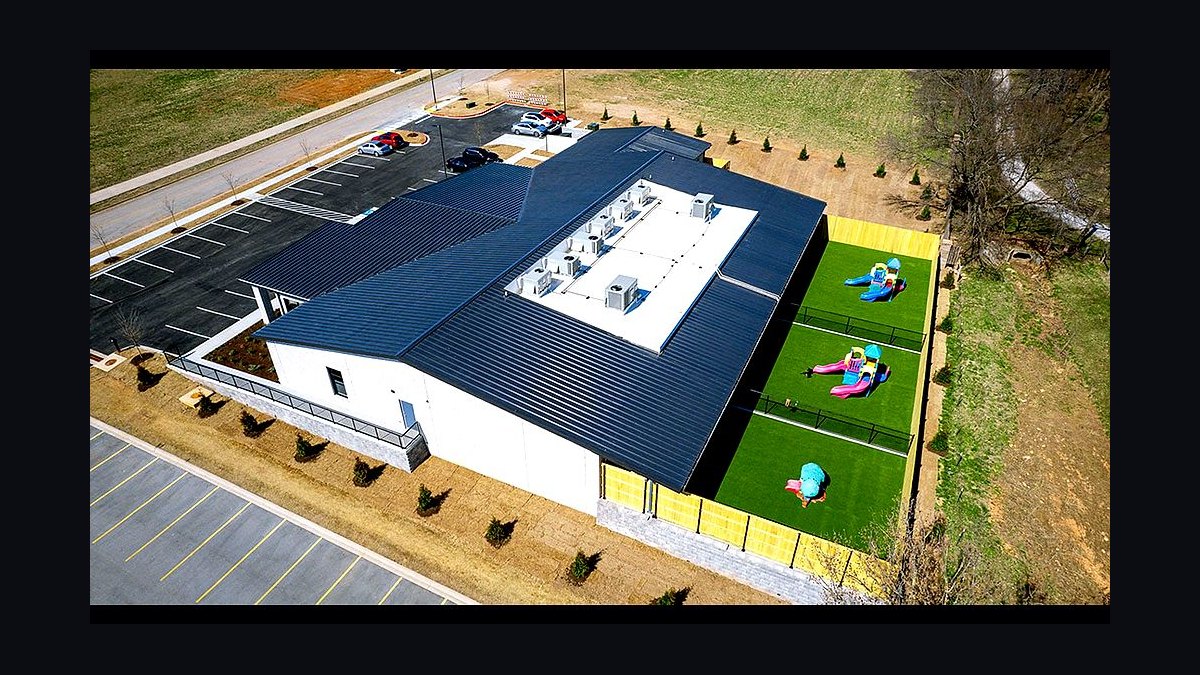
Yes, opening a Hounds Lounge franchise in 2027 is worth pursuing for a well-capitalized, pet-focused operator who wants a multi-service dog-care business with recurring membership revenue — daycare, boarding, and grooming under one roof. With Item 7 investment of $400,000–$900,000 and mature owner earnings of $100,000–$350,000, the model rewards hands-on operators in dog-dense markets who can staff and retain a reliable team.
Buying an Existing Location vs. Opening a New Territory
Every prospective Hounds Lounge franchise owner faces the same fork early: buy an operating, revenue-generating center from an existing owner, or sign with the franchisor to open a brand-new location in an unclaimed territory. Both paths lead to the same brand and royalty structure, but the risk profile, cash requirements, and timeline diverge sharply.
Buying an existing center gets you immediate cash flow. A mature Hounds Lounge grosses $700,000–$2,000,000+ annually, and if the seller's books show a stable membership base with churn under 5% monthly, you're acquiring a business that already has an established client list, trained staff, and a facility that's passed permitting and zoning review. The purchase price for an established center typically reflects a multiple of 2.5x–4x annual owner earnings — so a location clearing $200,000 a year might trade for $500,000–$800,000, on top of any transfer fee the franchisor charges (often 25%-50% of the current franchise fee, so roughly $12,500–$30,000). The tradeoff is that you inherit whatever the prior owner built, good or bad: if memberships were never built past 40% of daycare revenue, or if the local market is saturated with Dogtopia, Camp Bow Wow, or independent competitors, you're buying those headwinds along with the brand.

Opening new lets you pick your own site, build to your own standards, and enter a market before a competitor claims the dog-dense pocket you've identified. The downside is the 9–18 month runway from signing to opening, the 6–12 months of site selection and permitting that dog-care facilities often need (stricter zoning and waste-disposal rules than typical retail), and 12–24 months of ramp before memberships reach a mature 60-75% share of daycare revenue. You're also fronting the full $400,000-$900,000 build without any existing cash flow to offset carrying costs during construction.
A middle path some franchisees choose: negotiate a multi-unit development agreement that lets you open one new center while reserving rights to a second or third territory, spreading your risk across time rather than committing all capital to one build. This only works if your target market has the density — Hounds Lounge's own franchise development team typically wants to see at least 8,000-12,000 dog-owning households within a 10-minute drive before approving a territory, because that's roughly the threshold to support $1M+ in annual sales.
How to Decide Between Buying and Opening

The decision hinges on four variables: your liquid capital, your risk tolerance, the state of available territories in your target market, and how much operational experience you're bringing in. A buyer with $150,000-$275,000 liquid and no dog-care operating experience is generally safer acquiring an established, profitable center where the membership engine is already running — you're learning the business on a platform that's already validated, rather than validating a brand-new site while also learning to run kennels, grooming stations, and a 20-40 dog daycare floor for the first time.
Conversely, an operator who already has pet-industry experience (a former veterinary tech, groomer, boarding-facility manager, or multi-unit franchisee in an adjacent category) and who has identified a genuinely underserved dog-dense territory is often better served opening fresh, because they can capture the entire upside of building the membership base themselves rather than paying a resale premium for it.

Either branch should converge on the same due-diligence floor: read the 2026 FDD's Item 19 financial performance representations line by line, and speak with at least eight current franchisees — including at least two who bought resale and two who opened new — before signing anything. Ask specifically how long it took each to hit 60% membership share of daycare revenue, since that single metric predicts profitability better than gross revenue alone.
Concrete Numbers Behind Each Option
The financial shape of a Hounds Lounge franchise breaks into three buckets: upfront investment, ongoing fees, and unit economics once mature.
Upfront investment (Item 7, 2026 FDD): franchise fee $50,000-$60,000; buildout and leasehold improvements $220,000-$520,000 for a dog-care-appropriate facility of 5,000-10,000+ sq. ft. (or 1.5-2.5 acres for a standalone build); equipment and kennels $80,000-$200,000; signage and decor $20,000-$60,000; initial inventory $10,000-$30,000; initial marketing $25,000-$60,000; training and travel $12,000-$35,000; working capital $40,000-$110,000. Total Item 7 investment lands at roughly $400,000-$900,000, with $150,000-$275,000 expected in liquid capital and the remainder typically financed.

Ongoing fees: royalty runs approximately 6%-7% of gross sales, plus a marketing fee near 2% of gross. On a $1.2M-grossing center, that's roughly $96,000 in combined royalty and marketing fees annually — a meaningful line item that has to be underwritten into your pro forma from day one, not treated as an afterthought.
Real estate specifics: leasing a finished shell in a mid-tier suburb runs $12-$18 per sq. ft. annually, while ground-up construction runs $150-$250 per sq. ft. once you include site work, HVAC sized for odor control, and specialized flooring that holds up to daily sanitizing. Protected territories in the 2026 FDD run 2-3 miles in dense metros or 3-5 miles in suburbs, and can shrink if a nearby franchisee's trade zone overlaps yours — confirm in writing whether your territory is truly exclusive or only "protected" with right of first refusal.
Staffing costs: labor typically runs 35%-45% of gross revenue, higher than most food-service franchise models, because a safe daycare floor needs multiple attendants per shift plus a groomer and a manager. Entry-level attendants earn $14-$18/hour; experienced groomers command $20-$30/hour plus tips; a general manager, if you're not hands-on yourself, runs $55,000-$75,000 in salary plus benefits. Industry-wide turnover in pet care runs 60%-80% annually, so budget real dollars for retention: performance bonuses of $0.50-$1.00 per new membership sold, or free pet care for staff's own dogs, are common levers.

Membership economics: in mature centers, 60%-75% of daycare revenue comes from monthly memberships priced $200-$400/month for 2-5 days per week, with boarding ($35-$55/night) and grooming ($40-$80/visit) filling out the remaining 25%-40%. A member retained 12 months is worth $2,400-$4,800 in daycare fees alone before add-ons. Monthly cancellation runs 5%-10% for new centers, settling to 3%-5% after year two. Software and payment processing (a franchisor-mandated POS/CRM) adds $200-$600/month plus 2%-3% per transaction, and liability insurance for $1M-$2M coverage runs $3,000-$6,000/year. Centers that hold membership share above 60% and churn below 4% report unit-level margins in the 15%-25% range.
Implementation Details and Sequencing
Whether you buy or open, the practical sequence from decision to opening day follows a predictable arc, and skipping steps is the most common reason franchisees underperform their pro forma in year one.
Start with a 25-day document review: the full 2026 FDD, with particular attention to Item 19's financial performance representations and Item 20's outlet turnover history (a high churn rate among existing franchisees is a red flag worth walking away from). Overlap this with reaching out to current owners — plan on 8 or more conversations, since a handful of cherry-picked references the franchisor supplies won't surface the operational pain points. Ask each owner directly about their membership mix, their staffing turnover, their real (not projected) net profit, and what they'd do differently on site selection.

From roughly day 26 to day 50, validate your target market's dog density using census data or a paid tool like ESRI, and start scouting specific sites or, if buying, reviewing the target center's trailing three years of P&L and membership rosters. Day 51 to day 70 is where you lock the site or the acquisition agreement, and where a buyer should be running a formal financial audit while a new-build operator should be finalizing lease terms and beginning the permitting process, since dog-care zoning and noise/waste-disposal review often take longer than a standard retail buildout.
Day 71 through 120 is construction and staffing for a new build, or transition and retraining for an acquisition — this is when you complete the franchisor's 2-3 week initial training program (covering safety protocols, dog body-language reading, and scheduling software such as Gingr or PetExec) and start recruiting your attendant and grooming team. Day 121 to 150 is opening and the first membership-building push: reactivation campaigns, referral bonuses (a free day for both parties is standard), and local marketing aimed squarely at dog-owning households within your drive-time radius rather than a broad geographic campaign.

Once open, the single highest-leverage metric to track weekly is membership share of daycare revenue — not gross sales. A center at $900,000 gross with 70% membership share and 4% churn will consistently out-earn a $1.1M gross center stuck at 35% membership share, because the recurring base is what absorbs the 35%-45% labor cost and the 6%-9% combined royalty and marketing fee without the constant customer-acquisition spend that drop-in-heavy locations require.
Related questions
Is Hounds Lounge better than Dogtopia or Camp Bow Wow for a first-time franchisee? All three run similar multi-service dog-care models with comparable investment ranges; the better fit depends on territory availability, Item 19 specifics, and which brand's existing franchisees report the strongest membership retention in your target region.
Can I finance a Hounds Lounge franchise with an SBA loan? Many pet-care franchise concepts, including dog-daycare models, qualify for SBA 7(a) financing, but approval depends on your liquid capital, credit, and the lender's comfort with the brand's Item 19 performance data.

How long before a new Hounds Lounge location breaks even? Most new dog-care centers reach breakeven in 12-24 months, driven primarily by how quickly membership share climbs past the 50%-60% threshold rather than by gross revenue alone.
Do I need pet-industry experience to open a Hounds Lounge? It's not strictly required, but the franchisor and successful current owners both indicate hands-on comfort with dogs, staff management, and membership sales meaningfully improves your odds in the first two years.
FAQ
What is the typical total investment to open a Hounds Lounge franchise? The total investment range is roughly $400,000 to $900,000, including the franchise fee. Actual costs depend on real estate, build-out, and local permits, so expect variation within that bracket depending on whether you lease a shell or build ground-up.
How much can a Hounds Lounge franchise owner earn annually? Mature centers report owner earnings of $100,000 to $350,000 per year, based on gross revenues of $700,000 to over $2,000,000. Profitability depends heavily on membership share, staffing efficiency, and local dog-owning household density.

What ongoing fees does the franchisor charge? The royalty fee is approximately 6% to 7% of gross sales, plus a marketing fee near 2% of gross. These percentages are typical for the pet-care franchise segment and are detailed in the most recent FDD.
How long does it take to open a Hounds Lounge franchise from signing? Opening timelines generally run 9 to 18 months, depending on site selection, lease negotiation, build-out, and local permitting, which tends to run longer for dog-care facilities than standard retail due to zoning and waste-disposal review.
Is buying an existing Hounds Lounge safer than opening a new one? Buying an established, cash-flowing center with strong membership share and low churn generally reduces risk versus a ground-up build, but it also carries a purchase premium and inherits any weaknesses in the prior owner's operations or local competitive position.
What's the biggest driver of profitability once a Hounds Lounge is open? Membership share of daycare revenue is the single biggest lever — centers holding 60% or more membership share with churn under 4% consistently report the strongest unit-level margins, in the 15%-25% range.
Sources
- https://www.entrepreneur.com/franchises
- https://www.franchisedirect.com
- https://www.ibisworld.com
- https://www.statista.com
- https://www.franchisebusinessreview.com
- https://www.franchise.org
- https://www.sba.gov/business-guide/plan-your-business/franchise
- https://www.census.gov
- https://www.avma.org
Related on PULSE
This page will be disappearing soon. Save it to your device for $1 — or read it free while it is here.
@Kory-White- · if Venmo asks, the last 4 of my number are 2012
This page is gone.
This one is off the shelf now. $1 keeps it on your phone for good — the whole page, pictures and diagrams included.
 franchiseShould I open or buy a Primrose Schools franchise in 2027?
 franchiseShould I open or buy a Smoothie King franchise in 2027?
 franchiseShould I open or buy a Bojangles franchise in 2027?
 franchiseShould I open or buy a UPS Store franchise in 2027?
 franchiseShould I open or buy a Rita's Italian Ice franchise in 2027?
 franchiseShould I open or buy a Drybar franchise in 2027?
 franchiseShould I open or buy a Merry Maids franchise in 2027?
 franchiseShould I open or buy a Subway franchise in 2027?
 franchiseShould I open or buy a Take 5 Oil Change franchise in 2027?
 franchiseShould I open or buy a Papa John's franchise in 2027?