


Should I open or buy a Dogdrop franchise in 2027?
Quality
Certified
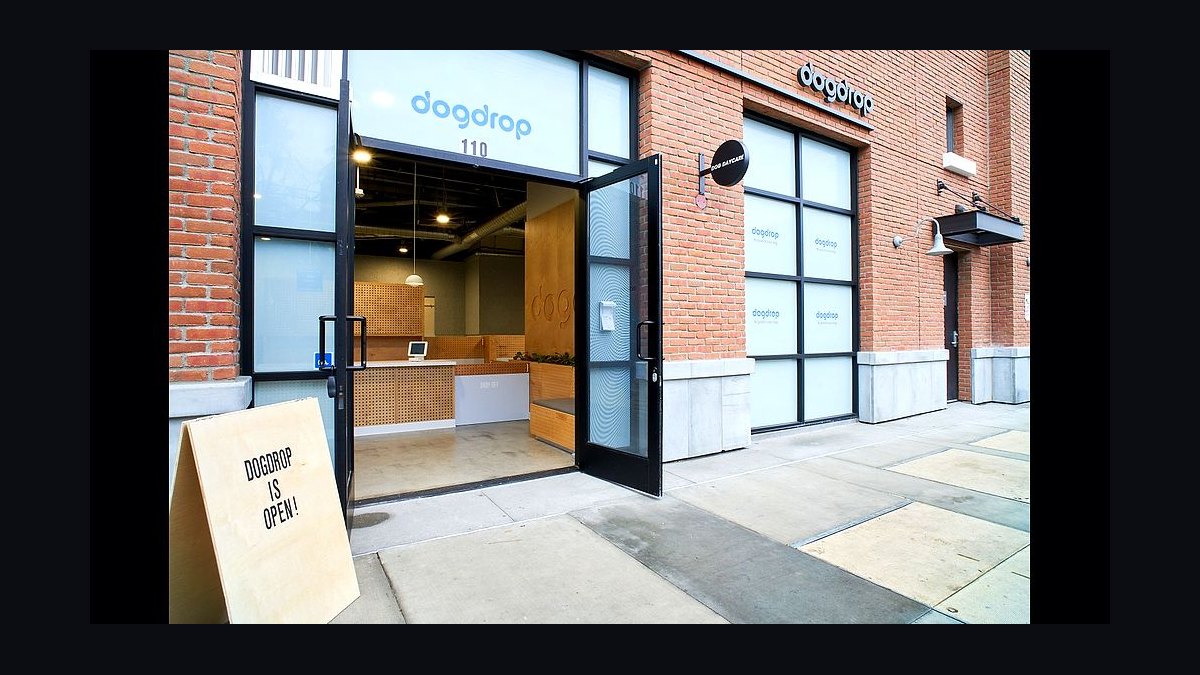
Open a Dogdrop franchise in 2027 only if you're targeting a dense urban market, have $100,000-$180,000 liquid capital toward a $250,000-$600,000 total investment, and can build a recurring membership base quickly — the smaller-footprint, app-based model rewards operators who execute fast on urban site selection and membership sales, but the young system (founded ~2020) means less proven support than legacy dog-care brands.
The Outcome You Should Expect
Anyone evaluating whether to open a Dogdrop franchise in 2027 needs to separate two different questions: what the model is designed to produce, and what a specific location will actually produce. Dogdrop is a small-format urban dog-daycare concept — typically 1,500 to 3,000 square feet, roughly a third to half the footprint of a traditional full-service dog daycare — built around app-based booking, drop-in visits, and monthly membership plans rather than one-off daycare drop-offs. That structural choice is what shapes the outcome an operator should expect.
At maturity, which the brand's own disclosures suggest takes roughly two to three years of stable operation, a Dogdrop location grosses somewhere between $400,000 and $1,000,000 or more annually. Owner earnings on that revenue range from $70,000 to $250,000, a wide band that mostly reflects how effectively the operator converts foot traffic into recurring memberships versus one-time visits. A location that leans heavily on drop-in customers will sit at the low end of that range; one that builds 200-400 active membership accounts — the level most mature units report — pushes toward the top.

The total capital required to reach that point is $250,000 to $600,000 under the 2026 FDD, including a $40,000-$50,000 franchise fee. That is meaningfully less than what a full-service dog-boarding-and-daycare franchise (grooming, overnight boarding, larger real estate footprint) typically demands, which is the core trade Dogdrop is selling: lower capital and lower footprint in exchange for a narrower service menu and a shorter operating track record. Royalties run near 6%-7% of gross revenue plus a marketing fee around 2%, which is standard for the pet-care segment and gets deducted before you calculate real owner take-home.
The honest expectation for year one is thin or negative owner income while the location builds its membership base, meaningful profitability by year two once the membership engine is running, and the $70,000-$250,000 owner-earnings range becoming realistic by year three. Operators who go in expecting immediate profitability from walk-in traffic alone are misreading the model — Dogdrop's economics depend on recurring revenue, not daycare drop-ins.
What Drives That Outcome

Three structural levers determine whether a Dogdrop location lands at the top or bottom of its earnings range, and a fourth — the young system — determines how much support you get pulling those levers.
The first lever is membership density. Because the format is small and the daily capacity per location is limited, revenue per square foot depends heavily on locking in recurring monthly plans (Dogdrop's model runs 2-8 visits per week per member) rather than relying on unpredictable single-visit traffic. A location with a strong membership base has predictable payroll planning, predictable food and supply ordering, and a cushion against slow weeks. A location without one is exposed to the same volatility as a walk-in retail business.
The second lever is urban site quality. The brand's own site-selection targets are specific: population density of 50,000+ people within a 1-2 mile radius, median household income of $80,000+ (needed to support $30-50/day daycare pricing), a 30%+ dog-ownership rate among households, and 5,000+ daily pedestrians passing the location. Sites that hit all four benchmarks tend to fill their membership base faster; sites that compromise on one or two — cheaper rent in a lower-density area, for instance — tend to stall.

The third lever is staffing and local operations. Dog-care labor is a real and recurring cost (staff costs typically run in the 30%+ range of gross revenue for daycare-format businesses), and a location's ability to retain trained staff directly affects both service quality and member retention.
The fourth factor cuts across all three: because Dogdrop is a younger system, franchisees get less institutionalized support than they would from a 200+ unit brand like Camp Bow Wow. That means more of the execution burden — local hiring, lease negotiation, community marketing — falls on the operator rather than corporate.
Benchmarks and Realistic Ranges
The Item 7 investment breaks down into distinct buckets, and knowing where the money actually goes helps you sanity-check any specific FDD or broker pitch you're handed. Buildout and leasehold improvements for the small urban format run $120,000-$300,000. Equipment, play structures, and the app/tech platform run $40,000-$110,000. Signage and interior decor, which matters more for this brand than most because the modern look is part of the pitch to urban pet owners, run $15,000-$45,000. Initial inventory (supplies, retail items) runs $8,000-$22,000, initial marketing for membership acquisition runs $20,000-$50,000, training and travel run $10,000-$28,000, and working capital to cover the ramp-up period runs $30,000-$80,000. Added together, that's the $250,000-$600,000 total range, on top of the $40,000-$50,000 franchise fee itself.

Ongoing costs are the 6%-7% royalty and roughly 2% marketing fee on gross revenue — both standard for the space and non-negotiable across nearly all franchise systems, pet-care or otherwise.
Real estate terms matter more here than in most franchise categories because the whole model depends on urban placement. Expect 5-7 year initial lease terms with renewal options. Landlords in dense urban corridors are not uniformly welcoming to dog-care tenants — some restrict the use outright over noise or odor concerns — so lease due diligence before signing is not optional.
On the exit side, resale data for Dogdrop specifically is thin simply because the system is young and likely under 50 units as of 2026-2027. Based on comparable small-format pet-care franchise resales, a profitable unit tends to sell for 2.5-3.5x annual EBITDA. A location clearing $80,000-$150,000 in EBITDA — typical for a $400,000-$600,000 revenue site — would sell in the $200,000-$525,000 range, plus $50,000-$100,000 for equipment and leasehold improvements. Most franchisees who plan an exit target the 5-7 year mark, once the location has 2-3 years of stable revenue, at least 3 years remaining on the lease, and a membership base of 200-400 active accounts. If the brand scales past 100 units by 2030, resale multiples could climb toward 3.5-4.5x EBITDA as brand recognition improves; if unit growth stalls, sellers may need to discount or hold longer.
Risks, Edge Cases, and Failure Modes

The single biggest risk factor in deciding whether to open a Dogdrop franchise is the system's youth. Founded around 2020 with franchising likely starting in 2022-2023, Dogdrop does not have the 15-20 year operating history of a Dogtopia or Camp Bow Wow. In practice this means: a training curriculum that is "still being refined as the system grows" per typical disclosures for brands at this stage, a field support team sized for a system under 50 units (often just 2-4 people doing site visits 2-4 times a year), no formal franchisee advisory council, no regional support directors, and a limited R&D budget for new service lines. You get more direct access to founders, which some operators value, but less institutionalized process to lean on when something goes wrong.
Urban real estate is the second major risk. Competitive lease markets, zoning restrictions on pet-care uses, and landlord noise/odor objections can all delay or derail a site search — and because the model depends on hitting specific density and income benchmarks, a franchisee under time pressure may be tempted to compromise on site quality, which directly damages the membership-building trajectory described above.

Staffing risk is real and recurring: dog-care labor turnover is a persistent issue across the pet-care franchise category, and a location that can't retain trained staff will see both service quality and membership retention suffer simultaneously.
Competitive risk is significant in exactly the markets Dogdrop targets. Dense urban neighborhoods are also where Dogtopia, traditional independent dog daycares, and adjacent concepts like Hounds Lounge compete hardest for the same pet-owning households — meaning the sites that score best on Dogdrop's own targeting criteria are often the same sites multiple competitors are also chasing.
Exit-related risks compound over the life of the franchise: landlord approval is required to transfer an urban lease and can be difficult to secure without negotiating a transfer-friendly clause upfront; franchise agreements typically include a 5-10 mile, 1-2 year non-compete after sale; and a small system size means fewer natural buyers, often limiting a seller to existing franchisees or local investors already familiar with the concept.
Finally, a market-level risk: the entire investment thesis assumes continued growth in the pet-humanization and urban-dog-daycare trend through 2027 and beyond. That trend has been durable for over a decade, but any franchisee should validate current local demand rather than assuming a national trend guarantees local results.
A Practical Rollout Plan

A disciplined 90-130 day pre-open process, followed by a clear-eyed view of what "support" actually looks like once you're open, reduces most of the controllable risk in this model. Days 1-20 should go entirely to reading the 2026 FDD, particularly Item 19 (financial performance representations) and Item 20 (unit counts and turnover), with specific attention to how many units have closed or transferred — a meaningful signal in a young system. Days 21-40 should be spent on the phone or in person with existing operators, asking pointed questions about actual membership counts, urban-site performance, the reality of field support versus what's disclosed, and net profit after royalties and real local labor costs. Days 41-60 validate the specific urban market and candidate site against the brand's own benchmarks: population density, income level, dog-ownership rate, and pedestrian traffic. Days 61-100 cover buildout and staffing — expect to lead much of the contractor coordination yourself, since a younger system offers a preferred-vendor list but less hands-on project management than a mature franchisor. Days 101-130 are for opening and aggressively building the membership base from day one, since early membership velocity is the strongest predictor of where a location lands in its earnings range.

Once open, expect a 2-4 week initial training program covering operations, the app/tech platform, membership management, and safety protocols, typically at a corporate or designated training location with franchisee-covered travel. Ongoing, plan on quarterly-ish field visits rather than a heavy corporate presence, a dedicated franchise business coach, and a cloud-based tech platform that updates automatically but still requires you to train staff on the dashboard, waitlist management, and member data handling. Multi-unit expansion is worth considering only after your first location has demonstrated it can hit membership targets in its specific urban submarket — the small-format model can replicate faster than full-service dog care, but only where the underlying demographics repeat.
Related questions
How long does it take a Dogdrop location to become profitable?
Most operators should expect thin or negative owner income in year one while building the membership base, with meaningful profitability arriving by year two and the full $70,000-$250,000 owner-earnings range becoming realistic by year three.
What population density does a Dogdrop site need?
The brand's own site-selection benchmarks target 50,000+ people within a 1-2 mile radius, $80,000+ median household income, 30%+ dog-ownership rate, and 5,000+ daily pedestrians passing the location.
How does Dogdrop's support compare to Dogtopia or Camp Bow Wow?

As a system likely under 50 units, Dogdrop offers smaller field support teams, no formal franchisee advisory council, and less institutionalized process than 200+ unit legacy brands, though founders are typically more directly accessible.
What's the realistic resale value of a Dogdrop unit?
Comparable small-format pet-care franchises resell around 2.5-3.5x annual EBITDA; a unit clearing $80,000-$150,000 in EBITDA would sell in the roughly $200,000-$525,000 range plus equipment value.
FAQ
What is the typical investment range for a Dogdrop franchise in 2027? The total investment (Item 7) typically falls between $250,000 and $600,000, including a franchise fee of $40,000-$50,000. Actual costs depend on location size, urban build-out complexity, and local real estate conditions.
How much can a Dogdrop franchise owner expect to earn? Mature centers generally gross $400,000 to $1,000,000+ annually, with owner net income ranging from $70,000 to $250,000. Earnings vary widely based on location, membership density, and operational efficiency.

What are the ongoing fees for a Dogdrop franchise? Royalties run around 6%-7% of gross revenue, plus a marketing fee near 2%. These are standard for the pet-care franchise space and fund brand development and technology upkeep.
Is Dogdrop a good fit for first-time franchise owners? It can be, especially for operators with strong business acumen and a willingness to be self-sufficient on hiring, real estate, and community partnerships. The younger system means less established support infrastructure than older dog-care brands.
What makes Dogdrop different from traditional dog daycares? Dogdrop uses a smaller-format, urban-focused model with membership-based, app-driven drop-in daycare, which reduces real estate costs and appeals to busy urban pet parents seeking flexibility over full-service boarding.
How competitive is the urban dog-daycare market for a new Dogdrop location? Competition is high in the dense urban areas Dogdrop targets, including Dogtopia, independent daycares, and concepts like Hounds Lounge. Success depends on securing a site that meets the brand's density and income benchmarks and converting early traffic into recurring memberships.
Sources
- https://www.entrepreneur.com/franchises
- https://www.ibisworld.com
- https://www.statista.com
- https://www.franchisebusinessreview.com
- https://www.franchise.org
- https://www.ftc.gov/business-guidance/resources/franchise-rule
- https://www.census.gov
- https://www.sba.gov/business-guide/plan-your-business/franchise-businesses
Related on PULSE
This page will be disappearing soon. Save it to your device for $1 — or read it free while it is here.
@Kory-White- · if Venmo asks, the last 4 of my number are 2012
This page is gone.
This one is off the shelf now. $1 keeps it on your phone for good — the whole page, pictures and diagrams included.
 franchiseShould I open or buy a Dairy Queen franchise in 2027?
 franchiseShould I open or buy a Mathnasium franchise in 2027?
 franchiseShould I open or buy a Planet Fitness franchise in 2027?
 franchiseShould I open or buy a Bruster's Real Ice Cream franchise in 2027?
 franchiseShould I open or buy a Hand and Stone Massage franchise in 2027?
 franchiseShould I open or buy a Pizza Hut franchise in 2027?
 franchiseShould I open or buy a Crumbl Cookies franchise in 2027?
 franchiseShould I open or buy a Jamba franchise in 2027?
 franchiseShould I open or buy an Orangetheory Fitness franchise in 2027?
 franchiseShould I open or buy a Jiffy Lube franchise in 2027?