


Should I open or buy an Office Evolution franchise in 2027?
Quality
Certified
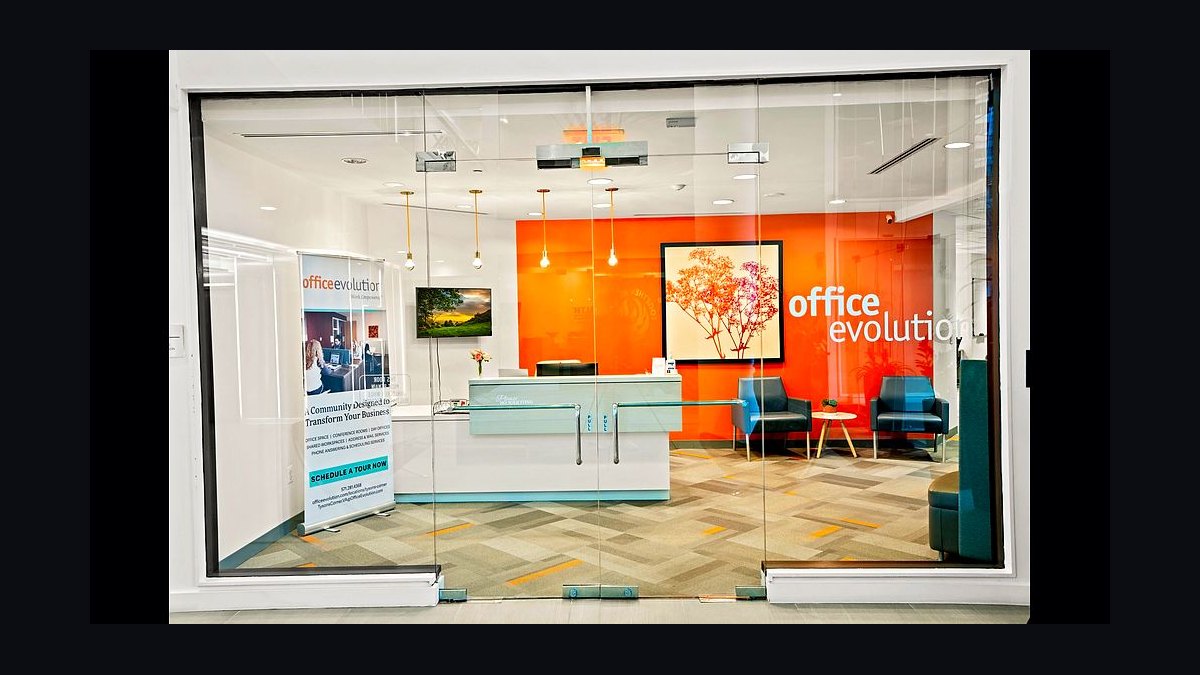
Only if you have $500K–$1.2M in capital, a genuine tolerance for a 10-year commercial lease, and the patience to grind through a 12–24 month occupancy ramp. Office Evolution's recurring membership revenue and suburban hybrid-work positioning are real advantages — but the lease you sign, not the franchise agreement, determines whether you profit.
What a flexible-workspace franchise actually is, and why the model matters
Office Evolution, founded in 2003, franchises flexible-workspace centers that bundle four distinct products under one roof: private lockable offices rented by the month, open coworking desks, virtual-office plans (mail handling, a business address, live receptionist answering), and hourly or daily meeting-room bookings. Understanding that this is four businesses stacked in one footprint is the single most useful frame for evaluating whether to open one, because each product has a different margin profile, a different sales cycle, and a different sensitivity to the economy.
Private offices are the anchor. They carry the highest revenue per square foot in the building and the longest customer tenure — a two-person law practice or an insurance agency that moves in tends to stay for years, not months. They also require the most capital to create, because every private office is a walled, doored, sound-managed room that has to be built. Coworking desks are the opposite: cheap to create, easy to fill, but churn-heavy and low-revenue. Virtual offices are the sleeper economics of the model — a virtual plan consumes essentially zero square footage, costs almost nothing to service beyond mail sorting and phone answering, and drops nearly all of its revenue to the bottom line. A center with a few hundred virtual members generates a meaningful monthly float that arrives regardless of whether a single physical seat is occupied. Meeting rooms monetize the same square footage twice, since conference space that members already pay to access can be sold by the hour to non-members.
Why the model matters relative to other franchise categories: this is a real-estate arbitrage business wearing a service-business costume. You sign one long lease at wholesale rates and resell that same square footage in small monthly increments at retail rates, with services layered on top. Your gross margin is the spread between what you pay per square foot and what your members collectively pay for the same footprint. That structure is closer to self-storage or a marina than it is to a food or retail franchise, and it means your operating leverage is brutal in both directions. Fixed rent does not fall when occupancy falls. Every incremental member above breakeven is nearly pure margin; every empty office below breakeven bleeds cash at a fixed rate.

The hybrid-work tailwind is genuine but frequently oversold in franchise marketing. What actually changed after 2020 is not that everyone works from home — it is that the demand for workspace fragmented geographically. A consultant who once commuted downtown now wants a professional room ten minutes from their house, and a distributed team that once leased 12,000 square feet downtown now wants three small satellite footprints in the suburbs where its people actually live. Office Evolution's positioning in suburban and secondary markets is a bet on exactly that fragmentation. It is a defensible bet, but it is a bet, and it lives or dies on local employment density rather than on any national statistic.
The adjacent categories worth understanding as comparison points are traditional executive-suite operators (Regus and its franchised cousins), independent coworking spaces, and the newer management-agreement model where an operator runs space on behalf of a landlord for a revenue share rather than signing a lease. That last structure is the most important thing happening in the flexible-workspace industry right now, and it is worth asking any franchisor directly whether they support it, because it moves the single largest risk in the business off your balance sheet.
The step-by-step process from first inquiry to a filled center
The path from curiosity to a cash-flowing center runs roughly 14 to 24 months, and the sequencing matters more than the speed. Rushing the middle steps — market validation and lease negotiation — is where most of the value gets destroyed, because those are the two decisions you cannot undo later.

Start with the Franchise Disclosure Document. You are legally entitled to it, and you get 14 days minimum to review it before signing anything. Read Item 7 for the investment range, Item 19 for any financial performance representation, Item 20 for the unit counts and — critically — the table of transfers, terminations, and non-renewals over the last three years. Item 20 is where the truth lives. A system where openings roughly match closures is telling you something the marketing deck is not. Have a franchise attorney read it too; expect to pay $3,000–$7,000 for a real review, which is trivial against a seven-figure commitment.
Then validate the FDD against reality by calling franchisees. Item 20 gives you the contact list, and the list includes people who left the system. Call both groups. Aim for at least eight to twelve conversations, and weight them toward operators who opened in the last three years, because their build costs and ramp experience reflect current conditions rather than 2018 conditions. The questions that produce real information are specific and financial: what were your actual all-in costs versus Item 7, what was your occupancy at month 6, 12, and 24, what does your rent per square foot look like, how much cash did you burn before breakeven, and would you do it again. That last question, asked plainly, gets more honest answers than people expect.
Market validation comes next and should be quantitative. Count the actual competing supply within a 15-minute drive — not just other franchised centers, but independent coworking spaces, executive suites, and the increasingly common landlord-operated flex floors. Look at daytime population, the density of businesses with 1–20 employees, household income, and whether the trade area is adding population. Drive the trade area at 10 a.m. on a Tuesday. If competing centers have full parking lots and waitlists, that is a stronger signal than any market study.
Site selection and lease negotiation is the highest-leverage phase and deserves the most calendar time. Then build-out, which typically runs three to five months depending on permitting, and permitting timelines vary enormously by jurisdiction. Then pre-sales — and this is the step most first-time operators underplay. You should be selling memberships and virtual plans during construction, not after opening. Virtual-office plans in particular can be sold before a single wall is framed, because the product is an address and a phone line. Operators who open with 20–30% of the building already committed cut months off their ramp.
Costs, timelines, and the ranges that actually determine outcomes

The headline number — roughly $500,000 to $1,200,000 all-in — is accurate but nearly useless on its own, because the spread inside it is where your outcome is decided. The franchise fee sits in the $50,000–$60,000 range and is the least interesting line item. Build-out and leasehold improvements dominate at $300,000–$700,000, furniture and technology add $80,000–$200,000, signage and finish work another $20,000–$60,000, opening marketing $25,000–$60,000, training and travel $12,000–$35,000, and working capital $60,000–$160,000. Ongoing, expect a royalty around 7% of gross and a marketing contribution of roughly 2–3%.
The working capital line is where under-capitalization kills otherwise viable centers. A realistic reserve is not $60,000; it is $80,000–$150,000 beyond the initial investment, because you are covering rent, staff, utilities, and internet for the six to nine months when occupancy sits at 15–30%. Do the arithmetic on your own deal rather than trusting a range: take your monthly rent plus a center manager's fully loaded cost plus utilities and connectivity, multiply by nine, and that is the hole you need to be able to fund without flinching. If that number frightens you, the answer is not to open a smaller center — it is to not open one.
Rent per square foot is the variable with the largest long-run impact. Suburban and secondary-market office space typically runs $18–$28 per square foot annually versus $35–$55 in central business districts, and Office Evolution's suburban orientation is precisely what makes the math work. On a 7,000-square-foot center, the difference between $22 and $30 per foot is $56,000 a year — larger than the entire franchise fee, recurring forever, and it compounds through every escalation. Model your center at three rent levels before you fall in love with a site.

Tenant improvement allowances are the second-largest swing. In softer secondary office markets, landlords have been willing to fund $30–$50 per square foot of improvements, which on a 7,000-foot space is $210,000–$350,000 of build-out you do not write a check for. That single negotiation can move your all-in investment from the top of the Item 7 range toward the bottom of it. It is also the term least likely to be volunteered — you have to ask, and you have to be prepared to walk to a comparable site to make the ask credible.
On timelines: 3–5 months from lease signing to permits and construction completion is typical, though permitting alone can consume 8–16 weeks in restrictive jurisdictions. Occupancy of 40–60% within 12–18 months is a reasonable target, with 70–80% by month 24–30. Positive cash flow generally arrives between month 12 and month 24. Full maturity and stable profitability is a two-to-four-year project. Mature centers gross in the $700,000–$1,800,000 range with owner earnings of roughly $80,000–$300,000 — a wide band that reflects occupancy, rent, and how aggressively the operator monetizes virtual and meeting-room revenue.
Buying an existing center changes every one of these numbers. A resale typically comes with 50–70% occupancy already in place, which means breakeven in 6–12 months instead of 18–24 and no construction risk at all. The price is a premium of roughly 1.5–2.5x the center's annual EBITDA on top of the assets. For most first-time operators, that premium is cheap relative to eliminating both the build risk and the ramp burn. The catch is availability — resales are sporadic and the good ones move quickly, so the practical answer is often to get approved as a franchisee first and then wait for inventory rather than defaulting to a new build because it is what is available today.
Where operators get it wrong
The most expensive mistake is treating the lease as paperwork that follows the franchise decision rather than as the deal itself. You will sign a lease for roughly 5,000–12,000 square feet, and that document governs 10+ years of your largest fixed cost. Operators who negotiate well target a 10-year initial term with two five-year renewal options, six to twelve months of rent abatement to cover build-out and initial ramp, and annual escalations capped at 2–3% rather than tied to CPI. Each of those is worth more than the entire franchise fee over the life of the deal.

The personal guaranty is where people get genuinely hurt. Landlords will ask for a full personal guaranty on the whole lease term; that can be a seven-figure personal exposure surviving a business that fails in year three. The negotiable alternatives are a burn-off guaranty that steps down as you hit occupancy or payment milestones, a capped guaranty limited to a fixed number of months' rent, or a carve-out structure limiting personal liability to fraud and abandonment. Not every landlord agrees to all three, but almost none volunteer any of them. Hire a commercial broker with actual coworking or flex experience — the $15,000–$30,000 commission routinely returns several times that in terms, and a broker who has papered these deals knows which clauses matter. Two clauses people forget entirely: explicit permission to license or sublicense space to your members, which some standard leases prohibit outright and which would make the business illegal under its own lease, and a co-tenancy provision giving you rent relief if the building's anchor tenants leave.
The second common failure is underselling virtual offices. Operators fixate on physical occupancy because it is visible, and neglect the product with the best margin in the building. Virtual plans require no square footage, scale almost without limit, and provide revenue during the exact months when the physical build is empty. A center that treats virtual as an afterthought is leaving the easiest money on the table.
Third: staffing thin. The model is described as semi-absentee-capable, and it genuinely is once stabilized — a competent center manager can run daily operations. But "semi-absentee" during the ramp is a fantasy. The first year is a sales job: local networking, tours, chamber events, relationships with commercial brokers and business bankers who refer tenants. If you plan to be absent during year one, you should either buy a stabilized resale or hire a manager with a genuine sales background and pay accordingly.
Fourth: pricing panic. When occupancy is slow, the instinct is to discount, and discounts in this model are permanent. A private office rented at 25% below rate does not reset at renewal without a fight, and the discounted member talks to other members. The better levers are term incentives, free months on longer commitments, and bundled meeting-room credits — all of which preserve headline rate while lowering effective cost.

Fifth, and most structural: ignoring exit until it is urgent. The resale market for flexible-workspace centers is thin but real. Centers running 70%+ occupancy with $150,000–$400,000 of EBITDA trade in the 2.5–4.0x EBITDA range, with the top of that band reserved for growing suburban markets with long lease terms remaining. Below 60% occupancy, or with under three years left on the lease, valuations collapse toward 1.0–1.5x or the center simply does not sell. The buyer is usually an existing multi-unit operator rather than a first-timer. Two practical implications: do not let your lease run down if you intend to sell — renew early so a buyer inherits term — and remember the franchisor holds a right of first refusal that can add 60–120 days to any transaction.
Decision framework: open, buy, or do something else
The choice is not binary between opening an Office Evolution and doing nothing. There is a spectrum of ways to get exposure to flexible workspace, and they differ enormously in capital intensity and risk.
At the lowest-risk end is buying an existing center. You pay a multiple of EBITDA, but you buy known occupancy, a known lease, and known local demand. Next is opening a new franchised center — brand recognition, an operating playbook, national account referrals, and a support structure, in exchange for 7% royalty plus marketing fees and full lease risk. Then an independent center: no royalty, full control, full brand-building burden and no referral network, which matters more than people expect because a meaningful share of flexible-workspace demand arrives through national channels. Finally, the management-agreement route, where you operate space for a landlord under a revenue share instead of a lease — dramatically lower capital and no lease exposure, but thinner margin and less control over your own destiny.
Match the structure to your actual situation. If you have $150,000–$300,000 liquid against a $500K–$1.2M project, an SBA 7(a) loan is the usual bridge, and lenders do finance this category — but understand that SBA loans carry a personal guaranty and typically a lien on personal real estate, so the "the entity is liable" framing does not survive contact with the loan documents. If your liquidity is thinner than that, the honest options are a resale in a smaller market, a partnership, or waiting.

Geography is the other gate. This works in trade areas with a real density of small businesses and professionals, population growth, and a shortage of decent small-format office product. It does not work where the office market is oversupplied and landlords are cutting deals on conventional space so aggressively that a two-person firm can lease its own suite for less than your membership rate. Check that directly: price what a 300-square-foot conventional suite costs in your target trade area. If it undercuts your planned private-office rate, your market is telling you no.
Adjacent plays worth evaluating before you commit
If the capital requirement or the lease exposure is what gives you pause, several neighboring models deliver overlapping economics with different risk profiles, and any of them is a legitimate destination rather than a consolation prize.
Virtual-office-only operations strip out nearly all the real estate. You need a modest suite, a mail operation, and phone answering — and you sell addresses, mail handling, and receptionist service. The revenue ceiling is far lower, but so is the capital requirement, and the margin profile is excellent. Some operators use this as a deliberate on-ramp: build a virtual book of business in a market, prove demand, then convert to a full center with a few hundred members already in hand.
Meeting-and-training-space operations monetize a narrower slice — conference rooms, training rooms, and event space sold by the hour or day — with far less build-out than private offices require. Occupancy is spikier and marketing is more transactional, but the footprint is smaller and the buildout cheaper.
On the property-owner side, the interesting move for anyone who already holds commercial real estate is converting underused square footage into flexible workspace directly. You skip the lease risk entirely because you are the landlord, and you convert a hard-to-lease floor into a higher-yielding, more granular income stream. This is increasingly how landlords in secondary markets are handling small vacant suites they cannot fill conventionally.

Further afield but economically similar are self-storage, small-bay industrial and flex-warehouse condos, and even marina or RV storage. Every one of these is the same fundamental trade: acquire square footage wholesale, subdivide, and rent in small recurring increments. Small-bay industrial in particular has been drawing capital for exactly the reasons that make flexible offices attractive — recurring revenue, fragmented demand, low per-tenant service burden — and generally with less fit-out cost per square foot than office space.
And if what actually appeals to you is recurring membership revenue rather than real estate specifically, that pattern exists across many franchise categories without the lease-scale exposure. The relevant question to ask yourself is which half of "flexible workspace" you are actually drawn to. If the answer is the recurring revenue, there are cheaper routes to it. If the answer is the real estate — if you want to control a physical footprint and improve its yield — then a workspace center is the right shape, and the franchise decision becomes a narrower question about whether the brand, playbook, and referral flow are worth roughly 9–10% of gross.
One last sanity check before you sign anything: model the downside honestly. Build a scenario where occupancy stalls at 45%, rent escalates on schedule, and a competitor opens two miles away in year three. If that scenario still leaves you solvent, the deal is robust. If it does not, you are not evaluating a business — you are underwriting a bet on a market you have not proven yet.
Related questions
How much liquid capital do I need beyond the total investment figure?
Plan on $80,000–$150,000 of operating reserve on top of Item 7, separate from the $150,000–$300,000 liquidity most franchisors and SBA lenders require to qualify. That reserve funds rent, staffing, and utilities through the 6–9 months when occupancy sits at 15–30%.
Is buying an existing center better than opening a new one?

Usually, for a first-time operator. A resale typically arrives at 50–70% occupancy with a known lease and reaches breakeven in 6–12 months instead of 18–24, eliminating construction risk. You pay roughly 1.5–2.5x EBITDA for that certainty. Availability is the constraint, not the logic.
Can I really run this semi-absentee?
Once stabilized above roughly 70% occupancy, yes — a capable center manager handles daily operations. During the first 12–18 months, no. The ramp is a local sales job requiring networking, tours, and broker relationships. Absent owners in year one should buy a stabilized center instead.
What happened to the sector after WeWork's troubles?
WeWork's failure was a long-lease, short-revenue mismatch at enormous scale in expensive urban markets. Suburban franchised centers with modest footprints carry the same structural risk in miniature. The lesson to take is about lease terms and guaranties, not about whether demand exists.
Does the franchisor's approval affect selling my center later?
Yes. The franchisor typically holds a right of first refusal on any transfer, which can add 60–120 days and requires the buyer to be approved as a franchisee. Factor that timeline into any exit plan, and read the transfer provisions in the franchise agreement before signing.
FAQ
What is the typical total investment to open an Office Evolution franchise in 2027?
Roughly $500,000 to $1,200,000 all-in, driven mostly by real estate and build-out rather than fees. That range includes a franchise fee near $50,000–$60,000, leasehold improvements of $300,000–$700,000, furniture and technology at $80,000–$200,000, signage, opening marketing, training, and working capital. Verify the current figures in Item 7 of the latest FDD, since costs shift with construction pricing and local labor markets.
What are the ongoing fees?
Approximately 7% of gross revenue in royalty plus a marketing contribution of roughly 2–3%, so budget around 9–10% of top-line revenue going to the franchisor. On a $1,000,000 center that is $90,000–$100,000 annually. Confirm the exact percentages and any minimum-fee provisions in Item 6, and check whether royalties are calculated on gross collections or gross billings — the difference matters when members go delinquent.

How long until the center is profitable?
Positive cash flow generally arrives between month 12 and month 24, tracking occupancy. Typical trajectories reach 40–60% occupancy by month 12–18 and 70–80% by month 24–30. Stable, mature profitability is usually a two-to-four-year project. Centers that pre-sell virtual plans and private offices during construction compress this timeline meaningfully by opening with committed revenue already in place.
What is the single most important term in the lease?
The personal guaranty, followed closely by the tenant improvement allowance. A full personal guaranty on a ten-year lease can be a seven-figure exposure that outlives the business. Push for a burn-off tied to occupancy or payment milestones, a cap at a fixed number of months' rent, or a carve-out limiting liability to fraud and abandonment. Landlords rarely offer these unprompted.
How do centers actually make money beyond renting offices?
Four streams: private offices, coworking memberships, virtual-office plans, and meeting-room bookings. Virtual offices are the margin standout — no square footage consumed, minimal service cost, and sellable before the space even opens. Meeting rooms monetize the same footprint twice by selling conference time to non-members. Operators who lean on all four consistently outperform those who track only physical occupancy.
What is a realistic sale price when I exit?
Centers at 70%+ occupancy generating $150,000–$400,000 in EBITDA typically trade around 2.5–4.0x EBITDA, with the higher multiples going to growing suburban markets with long remaining lease terms. Below 60% occupancy, or with under three years left on the lease, valuations fall to 1.0–1.5x or the center fails to attract a buyer. Buyers are usually existing multi-unit operators.
Sources
- https://www.ftc.gov/business-guidance/resources/franchise-rule-compliance-guide
- https://www.sba.gov/funding-programs/loans/7a-loans
- https://www.franchise.org/
- https://www.entrepreneur.com/franchises/directory
- https://www.ibisworld.com/united-states/market-research-reports/coworking-spaces-industry/
- https://www.jll.com/en-us/insights
- https://www.cbre.com/insights
- https://www.bls.gov/news.release/flex2.nr0.htm
- https://www.census.gov/programs-surveys/abs.html
- https://www.consumer.ftc.gov/articles/buying-franchise-consumer-guide
Related on PULSE
- Should I open or buy an Office Pride franchise in 2027?
- How long does it take to open a franchise and break even in 2027?
- Should I open or buy a Tommy Gun's Original Barbershop franchise in 2027?
- Should I open or buy an Intelligent Office franchise in 2027?
- What should I look for in Item 19 of a Franchise Disclosure Document?
This page will be disappearing soon. Save it to your device for $1 — or read it free while it is here.
@Kory-White- · if Venmo asks, the last 4 of my number are 2012
This page is gone.
This one is off the shelf now. $1 keeps it on your phone for good — the whole page, pictures and diagrams included.
 franchiseShould I open or buy a Bruster's Real Ice Cream franchise in 2027?
 franchiseShould I open or buy a Domino's franchise in 2027?
 frShould I open or buy a McDonald's franchise in 2027?
 franchiseShould I open or buy a Dairy Queen franchise in 2027?
 franchiseShould I open or buy a UPS Store franchise in 2027?
 franchiseShould I open or buy a FACE FOUNDRIÉ franchise in 2027?
 franchiseShould I open or buy a Jamba franchise in 2027?
 franchiseShould I open or buy a Massage Envy franchise in 2027?
 franchiseShould I open or buy a Smoothie King franchise in 2027?
 franchiseShould I open or buy an F45 Training franchise in 2027?