


Should I open or buy an Image Studios 360 franchise in 2027?
Quality
Certified
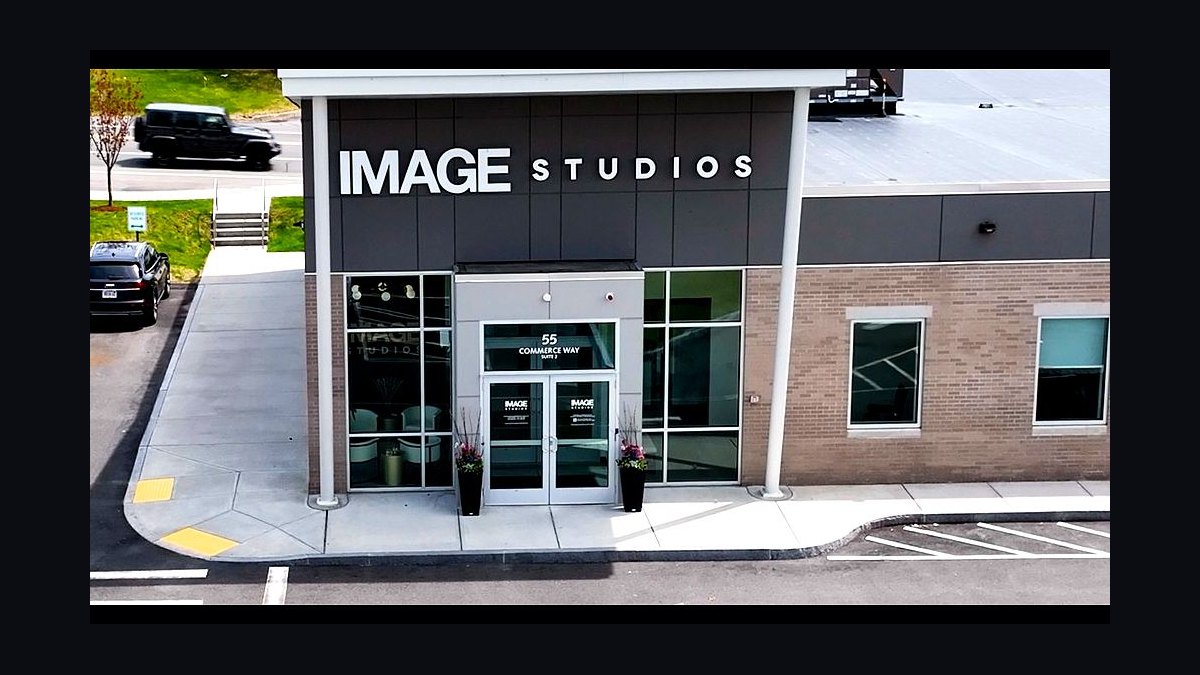
Only if you want to be a landlord, not a salon owner. Image Studios 360 rents private suites to independent beauty pros, so you collect recurring rent instead of managing stylists — but you sign a long, large commercial lease first. Budget roughly $600K–$1.5M and expect a 6–18 month occupancy ramp before real cash flow.
The night you sign the lease, before a single stylist has signed anything
Picture the moment that actually decides this deal. You are sitting in a conference room with a landlord's broker, a 7,200-square-foot end-cap in a suburban retail plaza on the table, and a proposed ten-year lease with two five-year options in front of you. The plaza has a Trader Joe's three doors down, a boutique gym, and a nail salon that has been there eleven years. Everything about it looks right. The rent is $28 per square foot triple-net, which pencils to roughly $16,800 a month in base rent before CAM, taxes, and insurance push the all-in number toward $21,000–$23,000. The landlord is offering $45 per square foot in tenant improvement allowance because the space has sat empty for fourteen months since a furniture retailer left.
Here is the part that matters: on the night you sign, you have zero tenants. Not one. You have a franchise agreement, a construction bid, a design package from the franchisor, and a personal guarantee on a lease that will obligate you for somewhere between $2.5 million and $3 million in total rent over its life. The beauty professionals who will eventually fill your suites do not yet know your building exists. Every dollar of the revenue model — the recurring, predictable, landlord-style rent that makes this franchise attractive in the first place — is a promise about a future you have not yet built.
That asymmetry is the whole business. Operated-service franchises let you open small and grow into demand; you hire two stylists, you add a third when the books fill. A salon-suite facility does not work that way. You build the entire box up front, at full cost, and then you fill it one professional at a time. The capital is committed before the demand is proven. That is not a flaw in the model — it is the structural reason the model produces landlord-like margins once it stabilizes — but it means the underwriting question is never "is the beauty industry growing?" It is "can I carry an empty building for twelve months if I am wrong about my market?"

The people who do well with this concept treat that conference room as the moment of maximum risk, not the moment of maximum excitement. They walk in having already talked to twenty-five local stylists. They have letters of intent, or at least warm verbal commitments, from four or five professionals who say they will move when the doors open. They have modeled the facility at 50 percent occupancy and confirmed it still services the debt. And they have negotiated the lease so that the free-rent period stretches past construction and into the first months of leasing, not just through the build.
The people who struggle do the opposite. They fall in love with the site, sign because the TI allowance is generous, and start recruiting after the drywall goes up. By the time they open, they are paying full rent on a facility that is 30 percent leased, burning working capital at $12,000 a month, and recruiting from a position of weakness — which shows up as rent concessions that permanently reset the building's income floor.
How a suite facility actually turns square footage into recurring revenue
Strip away the branding and this is a sub-leasing business with a service wrapper. You lease a large box at wholesale square-foot pricing and re-lease it in small increments at retail square-foot pricing. A 7,000-square-foot facility might yield 22 to 30 rentable suites once you account for the common corridor, reception area, restrooms, laundry, break room, and mechanical space. Usable-to-rentable efficiency in these builds typically lands somewhere in the 60–70 percent range, which is the single most important number nobody talks about in discovery day.

Run it forward. Suppose 24 suites at an average of $1,150 per month. That is $27,600 in gross monthly rent potential, roughly $331,000 a year at full occupancy, against an all-in occupancy cost of maybe $23,000 a month, or $276,000 a year. That spread alone does not work — and this is where new buyers get confused by the headline gross figures. The published ranges of $500,000 to $1.5 million in annual gross for mature locations reflect larger facilities, higher suite counts, higher-rent metros, and often multiple units under one owner. A single 24-suite suburban facility at $1,150 average rent is a different animal than a 40-suite urban facility at $2,000.
The margin comes from three levers stacked on top of base rent. First, suite mix: single-chair suites, double suites, and larger rooms for massage or med-spa tenants price differently, and a well-designed floor plan puts premium pricing on the corner and window suites. Second, ancillary income: laundry service, product vending, retail shelf space, extra storage, branded signage on the pylon, and in some facilities a shared color bar or dispensary that tenants pay to access. Third — and this is the one that separates good operators from average ones — rent escalation. Your tenants sign one-year or two-year suite licenses. A stylist who has built a book of 180 clients inside your building is extraordinarily unlikely to move over a 4 percent annual increase, because the switching cost is her entire client base learning a new address. Landlords in this niche have real pricing power on renewal that they routinely fail to exercise.
The operational load is genuinely lighter than an operated salon, and that is not marketing spin. You do not book appointments, you do not carry stylist payroll, you do not manage no-shows, you do not buy color inventory, and you do not carry the liability of the service itself — each professional carries her own or their own insurance and holds her own cosmetology license. What you do carry is facility management: HVAC calls, plumbing in twenty-four wet suites, keyless entry systems, 24/7 access security, common-area cleaning, wifi, laundry, dispute mediation between neighbors, and the constant, never-finished work of leasing. Most stabilized facilities run with one part-time or full-time manager at $38,000–$55,000 a year, and the owner spends five to fifteen hours a week on the business once it is full.

There is a second, quieter workflow that experienced operators build deliberately: a tenant-success function. Your rent roll is only as durable as your tenants' businesses. A stylist whose book collapses stops paying, and an eviction in a small suite facility is slow, awkward, and expensive in goodwill. Smart owners run onboarding sessions on booking software, pricing, and social marketing, not out of charity but because a tenant grossing $6,000 a month pays $1,200 in rent without blinking, while a tenant grossing $2,600 a month negotiates every renewal and eventually leaves. The same logic governs flexible-office landlords, gym-suite operators, commissary kitchens, and coworking — anywhere you sub-lease space to microbusinesses, tenant revenue health is your actual risk exposure.
What the numbers look like when you build the model honestly
Start with the investment. The published Item 7 range for this concept sits roughly between $600,000 and $1.5 million, and the spread is almost entirely construction. The franchise fee itself is a small slice — in the $45,000–$55,000 neighborhood per recent filings — with royalties around 5–6 percent of gross and a brand marketing fee on top of that in the low single digits. Verify all four numbers against the current FDD you are handed, because they move, and because your state addendum may modify terms.
Where the money actually goes: build-out and leasehold improvements dominate at $400,000–$900,000. Twenty-four suites means twenty-four sets of walls, doors, locks, dedicated lighting, electrical circuits sized for dryers and steamers, HVAC balancing, and — the expensive part — plumbing. Every suite that needs a shampoo bowl needs supply, drain, and often a dedicated water heater or a booster. Plumbing runs across a 7,000-square-foot slab are where budgets go to die, especially in a space with no prior wet build-out. A second-generation space that was previously a salon, a dental office, or a med-spa can cut your build cost by 20–30 percent for exactly this reason, and hunting for that kind of space is the single highest-leverage thing you can do before you sign anything.

Add furniture and fixtures at $80,000–$250,000 for suite mirrors, stations, chairs, common-area furnishings, and the reception build. Signage and brand decor run $25,000–$70,000, and if your site needs a pylon panel or a variance for illuminated signage, add time as well as money. Pre-opening marketing to recruit professionals runs $20,000–$50,000 and should be front-loaded — that spend is your ramp insurance, not a nice-to-have. Training and travel, $10,000–$30,000. Working capital, $60,000–$180,000, which in my read is the line most under-budgeted by first-time buyers.
Now the ramp, which is where the pro forma either survives or falls apart. Across salon-suite concepts generally, filling a facility takes six to eighteen months, with the first half-year often landing between 40 and 60 percent occupancy. Model it: 24 suites, $1,150 average, full potential of $27,600 a month. At 50 percent you are collecting about $13,800. Against $23,000 all-in occupancy cost plus roughly $4,000–$6,000 in utilities, wifi, cleaning, insurance, software, and supplies, you are underwater by $13,000–$15,000 a month before debt service. Multiply by six months and you have consumed $80,000–$90,000 of working capital in the ramp alone. That is why the $60,000–$180,000 working capital line should be read at its top end, not its bottom.
Debt service is the other pressure point. Most buyers finance through SBA 7(a), which historically supports 10-year terms on equipment and leasehold and up to 25 years when real estate is involved, with equity injections in the 10–20 percent range — meaningfully lighter than conventional commercial terms. But rates matter enormously at this loan size. On a $1 million facility loan, every 100 basis points of rate is roughly $600–$700 a month in additional payment depending on term. Move from a 5 percent environment to an 8 percent one and your break-even occupancy can shift from around 50 percent to 60–65 percent — a difference that translates directly into months of additional ramp you must fund. Run your model at a rate 150 basis points above whatever you are quoted, and confirm you still survive at 55 percent occupancy. If you do not, you are buying a business that only works in a benign scenario.
Stabilized economics are genuinely attractive when you get there. At 90 percent occupancy on that 24-suite model, gross is roughly $298,000 annually. Subtract occupancy cost of $276,000 and the math fails — which tells you something important: a 24-suite facility at $1,150 in a $28-per-foot market does not work. Either you need more suites in the same footprint, higher suite rents, cheaper rent per square foot, or ancillary income to close the gap. That is not a discouraging conclusion; it is the actual underwriting exercise. Facilities that clear $100,000–$350,000 in owner earnings are typically running 30–45 suites, average rents above $1,300, occupancy cost under 25 percent of gross revenue, and meaningful ancillary income. Reverse-engineer your specific site to those ratios before you get emotionally attached to it.

One more figure worth internalizing: occupancy cost as a percentage of gross revenue is the health metric for this business the way food cost is for a restaurant. Under 25 percent is strong. Between 25 and 32 percent is workable with tight expense control. Above 35 percent, the facility is structurally fragile and a single bad quarter of turnover puts you in a cash call.
Weighing this against the other ways to own the same square footage
The honest comparison set is broader than other salon-suite brands. You are choosing among several ways to convert capital into recurring income from microbusiness tenants.
Against competing suite brands — Sola Salons, MY SALON Suite, Salons by JC, and a handful of regional players — the differences are real but narrower than the sales decks suggest. Brand recognition among stylists in your specific metro matters more than national scale, because your tenant pipeline is local. Call fifteen independent stylists in your target trade area and ask which suite brand they would tour first. If one name dominates and it is not the one you are considering, that is a leasing headwind you will pay for every month. Compare territory protection carefully: a brand that will place another franchisee four miles away has effectively sold you a smaller market than the one you underwrote.
Against building an independent suite facility with no franchise at all, you trade roughly 7–8 percent of gross in royalty and marketing fees for a design package, a construction playbook, a leasing system, national marketing that stylists have heard of, and — the underrated one — a peer network of operators who have already made the mistakes you are about to make. On a facility grossing $400,000, that is $28,000–$32,000 a year. Whether it is worth it depends heavily on whether you have done commercial build-outs before. A first-timer building 24 wet suites without a playbook will burn more than $30,000 in change orders and schedule slippage. A seasoned developer with an in-house GC probably will not.

Against operated-salon franchises — the haircut-chain model — the comparison is a labor swap. Operated concepts open for a fraction of the capital, often in the low-to-mid six figures, and can be cash-flow positive faster. But you inherit the hardest problem in the beauty industry: recruiting, training, scheduling, and retaining licensed stylists in a market where the best of them increasingly want to work for themselves. Suite facilities are, in a sense, a bet that the labor problem gets worse — because every stylist who leaves a commission chair is a potential tenant.
Against adjacent flexible-space plays — coworking and flexible office, self-storage, commissary kitchens, med-spa suites, fitness studio suites — the mechanics rhyme almost exactly, and the diligence transfers. All of them are spread businesses on a long lease with a ramp. Self-storage has the lowest operating intensity and the most brutal competition for sites. Coworking has the highest churn and the most cyclical demand. Suite salons sit in an appealing middle: tenant switching costs are unusually high because clients follow a specific chair, which makes the rent roll stickier than almost any comparable format.
And against simply buying an existing location rather than building: this deserves more weight than most buyers give it. Acquiring a stabilized facility from a retiring or exiting owner eliminates the ramp entirely — the single largest risk in this concept — and you can underwrite from a real rent roll instead of a projection. You will pay a multiple for that certainty, and you will need to scrutinize the tenant list closely for concentration, lease expirations clustered in one quarter, and rents that have been held artificially low to keep occupancy cosmetically high. Seller financing is more common in these transactions than in new builds, sometimes at below-market rates with a lighter down payment, which can offset a higher purchase price. If your goal is recurring income rather than the developer's spread, buying stabilized is frequently the better trade.
The mistakes that show up over and over, and the cheap fixes for each

Recruiting after construction instead of before it. The most expensive error in this format. Leasing is a sales motion with a long cycle: a stylist has to give notice, tell clients, buy her own equipment, and often wait out a non-compete or a rebooking window. That is a 60-to-120-day decision, not a walk-in. Start recruiting the day you sign the lease, not the day you get the certificate of occupancy. Practical version: build a waitlist landing page immediately, run geo-targeted social ads to stylists within a ten-mile radius, walk into every commission salon within that radius, and attend local beauty-school graduations and distributor trade days. Four to six pre-committed tenants at open is the difference between a nine-month ramp and an eighteen-month one.
Underwriting at full occupancy. If your model only clears debt service at 90 percent, you have not built a model, you have built a hope. Stress it at 55 percent for twelve months and confirm you survive. If you cannot, either the site is too expensive, the suite count is too low, or you need more equity in the deal.
Signing a lease without construction-aligned free rent and a co-tenancy or kick-out clause. Free rent that starts at lease signing gets consumed by permitting delays before you ever open. Negotiate abatement that begins at certificate of occupancy, or a build-out period that is rent-free with the clock starting at delivery of the space in the agreed condition. Push for a personal-guarantee burn-off — a good-guy clause, or a guarantee that steps down after 24 or 36 months of on-time payment. That single negotiated term can be worth more than the entire tenant improvement allowance.
Botching the suite mix and the floor plan. Once the walls are up, you have frozen your revenue ceiling for a decade. Too many identical small suites and you cannot serve massage therapists, lash artists with reclining beds, or two-chair partnerships who will happily pay a premium. Too many large ones and you leave rent on the table. Get the franchisor's floor-plan data on which suite types lease fastest and hold the highest renewal rates, and ask specifically for facilities in markets demographically similar to yours, not the flagship.
Discounting rent to fill fast, without an expiration date on the discount. A three-months-free promotion is fine. A permanently discounted rate is a permanent haircut on the building's value, because facilities trade on the rent roll. Any concession you offer should be written as a temporary abatement with a stated snap-back rate, never as a lower base rent.

Ignoring utility structure at design time. Twenty-four suites running dryers, steamers, and LED lighting on a single meter means you eat the variable cost and have zero leverage over a tenant who leaves everything running. Sub-metering, or at minimum a clearly defined utility allowance in the license agreement with an overage mechanism, prevents a slow margin leak that compounds over a ten-year lease.
Treating turnover as failure rather than a planned cost. Even healthy facilities see annual tenant turnover in a meaningful band. Budget for it: a suite refresh between tenants runs a few hundred to a couple thousand dollars, plus lost rent during the gap. The fix is a permanent waitlist. Facilities that keep three to five interested professionals warm at all times refill a vacated suite in days rather than months, and that operational habit alone can be worth several percentage points of annual occupancy.
Skipping real Item 19 and franchisee-validation work. Read Item 19 for what it excludes as carefully as what it includes — whether it reports only mature units, only company-affiliated units, or a top quartile. Then call at least ten franchisees, weighted toward units that opened in the last three years, because those are the ones who lived the current construction-cost and interest-rate environment. Ask four questions specifically: how many months to 80 percent occupancy, what the build actually cost versus the Item 7 estimate, what the true monthly all-in occupancy cost is, and what they would negotiate differently in the lease. Also call two or three former franchisees from Item 20 — the exits tell you more than the successes.
Assuming semi-absentee means absentee during the ramp. The model is legitimately light once stabilized. It is not light while you are leasing. Plan for the first twelve months to demand real weekly hours on recruiting and construction oversight, and hire the facility manager before opening rather than after, so you are not doing HVAC calls and leasing tours in the same afternoon.
Related questions
How many suites do I need for this to work financially?

It depends entirely on your occupancy cost, but as a rule of thumb, aim for a facility where total occupancy cost stays under 30 percent of stabilized gross rent. In most suburban markets that means 25 to 40 suites, not 15 to 20.
Can I own multiple locations?
Yes, and multi-unit ownership is where the model's economics improve most. A shared manager, shared marketing spend, and a cross-facility waitlist reduce per-unit cost. Most owners wait until unit one is above 85 percent occupancy for two consecutive quarters before committing to unit two.
What happens if a tenant stops paying rent?
Suite licenses are typically shorter and simpler than commercial leases, and remedies are faster, but the practical answer is that you mediate first. Most non-payment stems from a tenant's book softening. Have a documented late-fee and cure process, and keep a waitlist ready.
Is it better to buy an existing location than to build one?
Often, yes. Buying stabilized eliminates the ramp — the largest single risk here — and lets you underwrite a real rent roll. You pay a premium for that certainty, and you must scrutinize tenant concentration and lease-expiration clustering, but the risk-adjusted trade frequently favors acquisition.
Do I need a cosmetology background to own one?
No. You are a landlord and facility operator, not a service provider. Commercial real estate, leasing, and small-business management experience are far more predictive of success here than any beauty-industry credential.
FAQ
What is the total investment to open an Image Studios 360 franchise?
Recent filings put the Item 7 range at roughly $600,000 to $1,500,000, driven almost entirely by build-out cost. The franchise fee is a comparatively small piece at approximately $45,000–$55,000. Your position within that range depends on square footage, suite count, local construction labor, and above all whether you inherit a second-generation space with existing plumbing.

How much can a stabilized location actually earn?
Mature facilities are generally described as grossing $500,000 to $1,500,000 in annual suite rent, with owner earnings commonly in the $100,000 to $350,000 band. Those figures assume high occupancy, a healthy suite count, and occupancy cost held to a reasonable share of revenue. Verify against the current Item 19 and franchisee interviews rather than treating the range as a forecast.
Do I manage the stylists or their clients?
No. Each professional is an independent business that holds its own license, books its own clients, sets its own prices, and buys its own product. You provide the space, the systems, the access control, and the common services. That is precisely why the model reads as semi-absentee once the building is full.
What is the single biggest risk?
The mismatch between a fully committed long-term lease and a rent roll that has to be built one tenant at a time. Everything else — construction overruns, interest rates, turnover — is manageable. A twelve-to-eighteen-month ramp against a ten-year personal guarantee is the risk that ends deals, and it is why working capital and pre-opening recruitment deserve more attention than any other line in the plan.
How long until the business is genuinely cash-flow positive?
Plan on twelve to twenty-four months to full occupancy and durable positive cash flow. Operators who pre-lease several suites before opening and market aggressively to local stylists compress that toward nine to twelve months. Operators who begin recruiting at the certificate of occupancy routinely land at the long end.
Should I use SBA financing?
For most buyers, yes. SBA 7(a) generally allows a lighter equity injection and longer amortization than conventional commercial debt, which materially improves early cash flow during the ramp. Model your payment at a rate well above your quote, confirm the deal still works at 55 percent occupancy, and get pre-qualified before you begin site selection so you negotiate from a position of certainty.
Sources
- https://www.ftc.gov/business-guidance/resources/franchise-rule-compliance-guide
- https://www.sba.gov/funding-programs/loans/7a-loans
- https://www.franchise.org/
- https://www.entrepreneur.com/franchises
- https://www.bls.gov/ooh/personal-care-and-service/barbers-hairstylists-and-cosmetologists.htm
- https://www.ibisworld.com/united-states/market-research-reports/hair-salons-industry/
- https://www.franchisebusinessreview.com/
- https://www.sba.gov/business-guide/manage-your-business/buy-assets-equipment
- https://www.ftc.gov/business-guidance/industry/franchises
Related on PULSE
This page will be disappearing soon. Save it to your device for $1 — or read it free while it is here.
@Kory-White- · if Venmo asks, the last 4 of my number are 2012
This page is gone.
This one is off the shelf now. $1 keeps it on your phone for good — the whole page, pictures and diagrams included.
 franchiseShould I open or buy a Domino's franchise in 2027?
 franchiseShould I open or buy a Massage Envy franchise in 2027?
 franchiseShould I open or buy a Take 5 Oil Change franchise in 2027?
 franchiseShould I open or buy a Sonic Drive-In franchise in 2027?
 franchiseShould I open or buy a Cook Out franchise in 2027?
 franchiseShould I open or buy an Orangetheory Fitness franchise in 2027?
 franchiseShould I open or buy a Mac Tools franchise in 2027?
 franchiseShould I open or buy a Cold Stone Creamery franchise in 2027?
 franchiseShould I open or buy a McAlister's Deli franchise in 2027?
 franchiseShould I open or buy a Merry Maids franchise in 2027?