


Should I open or buy a Golden Corral franchise in 2027?
Quality
Certified
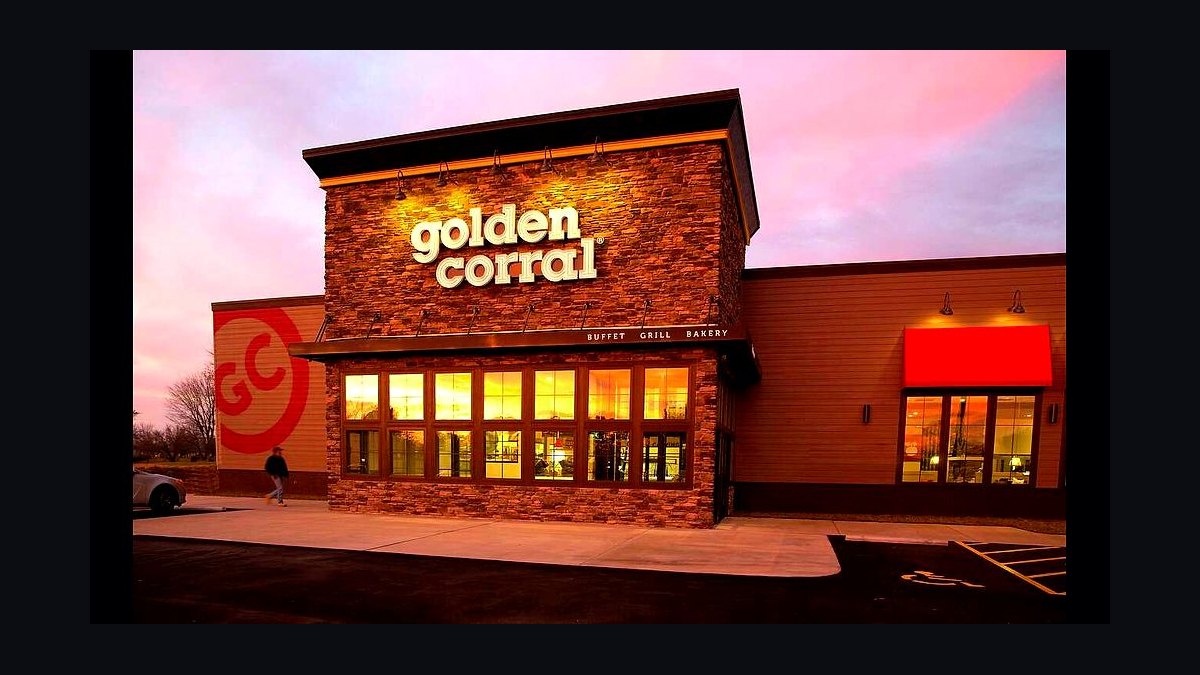
Only if you are a well-capitalized, experienced multi-unit restaurant operator in a genuinely buffet-friendly market. Golden Corral is America's largest grill-buffet brand with real recognition and $3M–$6M+ unit volumes, but the roughly $2.4M–$7.4M investment, heavy real estate, and thin buffet margins make it a specialist play, not a first-timer's franchise.
The moment the spreadsheet stops being theoretical
Picture a buyer who has run three fast-casual units for eight years, cleared a comfortable living, and now wants a bigger swing. He tours a Golden Corral on a Sunday at 1 p.m. The parking lot is full. Two church groups, four multi-generational families, a table of eight seniors who clearly come every week. The dining room is doing the kind of volume his 2,400-square-foot fast-casual box will never touch. He does napkin math: 400 covers on a Sunday at roughly $16 a head is $6,400 in one shift. He starts imagining a $4 million year.
Then the franchise development packet arrives, and the numbers change character entirely. The Item 7 range in the 2026 FDD runs from about $2.4 million to about $7.4 million. Not $240,000 — $2.4 million at the *floor*. His entire three-unit fast-casual portfolio, buildout and all, cost less than the low end of one Golden Corral. The liquidity requirement alone is north of a million dollars. The building he needs is 10,000 to 12,000+ square feet on a freestanding pad site, which in most metros means either buying land and building, or negotiating a build-to-suit with a developer who wants a fifteen-year lease and a personal guarantee.
This is the moment that separates the people who should pursue Golden Corral from the people who should walk. The Sunday lunch rush is real. So is the fact that the same dining room is nearly empty at 3 p.m. on a Tuesday, still fully staffed, still holding 150 hot items at temperature, still paying the mortgage or rent on 11,000 square feet. A buffet does not scale its cost structure down during slow periods the way a made-to-order concept does. You cannot send four cooks home and let the buffet run itself — the food has to be out, fresh, and replenished, or the value proposition collapses and the online reviews start describing "dried-out" and "picked over."
The honest framing is this: a Golden Corral is not primarily a restaurant purchase. It is a real-estate acquisition with a restaurant attached, in a food-service segment that has been contracting for a decade and lost a meaningful share of its national footprint through the pandemic years. Both halves of that sentence have to work for the deal to make sense. If you love the operating model but the real estate math is ugly, you don't have a deal. If you find a spectacular corner lot but your market's demographics have shifted away from all-you-can-eat family dining, you don't have a deal either — you have an expensive building with a very specific floor plan.

Compare that to how an operator evaluates a smaller franchise. A $500,000 fast-casual buildout is a five-year decision with a lease you can sublease or assign. A Golden Corral is a fifteen-to-twenty-five-year decision on a special-purpose building with a walk-in cooler system, a bakery, a grill line, and a buffet infrastructure that almost no other tenant wants as-is. The exit is the part most first-time large-format buyers never model, and it is the part that hurts.
How the economics actually work inside a buffet
The mechanism that makes a buffet profitable — or fatal — is fundamentally different from every other restaurant format, and understanding it is the single most valuable thing a prospective franchisee can do before signing anything.
In a made-to-order restaurant, food cost is *demand-driven*. You buy inventory, and it converts to cost only when a guest orders something. Waste exists, but it is bounded by spoilage and prep error. In a buffet, food cost is *supply-driven*. You must present 150-plus items at full presentation quality from open to close regardless of how many people walk through the door. The pans have to look full. The carving station has to have a roast on it. That means your food cost per guest is inversely correlated with traffic — the fewer guests, the worse your food cost percentage gets, and it gets worse *fast*.

Run the arithmetic. Suppose a location holds roughly $2,000 of prepared product on the line across a dinner service. At 300 covers, that spreads to about $6.67 of standing inventory per guest, and if guests consume $5 of that, waste is manageable. At 120 covers on a slow Tuesday, the same line spreads to $16.67 per guest and the waste percentage roughly triples. Industry practice puts buffet food waste in the range of 5–10% of food cost when well managed; a poorly managed line in a slow market blows well past that. This is why the buffet model punishes weak markets so severely and rewards strong ones so handsomely — the leverage cuts both directions with unusual violence.
Labor behaves the same way. A Golden Corral typically staffs 80 to 120 employees across all shifts — cooks, buffet attendants, bakers, cashiers, dishwashers, cleaners. A fast-casual unit runs 20 to 40. That is not a linear increase in complexity; it is a step change in management burden. You are running a small manufacturing operation with continuous production, hot-holding compliance, and a public-facing service floor. With state minimum wages sitting in the $15–$20/hour range across many markets in 2026–2027, labor can consume 35–45% of revenue if scheduling discipline slips. Combine 35% food and 40% labor and you have already spent 75 cents of every dollar before rent, royalty, marketing fee, utilities (which are enormous — you are heating, cooling, and holding a lot of food in a big building), insurance, and debt service.
Here is the flow of a dollar through a representative unit doing $4 million:
Read that diagram carefully, because the interesting fork is at the bottom. Two operators with identical sales and identical cost percentages can land in completely different places depending on how they structured the real estate. The one who holds the land and building in a separate entity and leases back to the operating company is paying rent to himself; his "occupancy cost" is building equity in an appreciating asset and generating depreciation deductions. The one who financed everything inside the operating company on a conventional restaurant loan is simply paying interest to a bank.

This is the single most consequential structural decision in a Golden Corral deal, and it is worth more than any menu-engineering or labor-scheduling improvement you will ever make. Most sophisticated large-format restaurant operators — across brands, not just this one — separate the property entity from the operating entity as a matter of course. It isolates the real-estate value from operating liability, it creates a cleaner story for a future sale (you can sell the operating business and keep the building, or sell the building to a net-lease investor and keep operating), and it means that even if the buffet segment's headwinds worsen, you still own a large, financeable commercial asset on a good pad site.
The upstream effect worth noting: this structure changes who your lender is. You are no longer one borrower — you are two, with a real-estate loan collateralized by land and structure (longer amortization, lower rate) and an operating loan or SBA-backed facility for equipment and working capital. Getting both underwritten simultaneously takes longer than most first-time buyers expect and is a common cause of the twelve-to-twenty-four-month timeline from signing to opening.
Real numbers, ranges, and what the FDD actually tells you
The 2026 Golden Corral FDD is where the romance ends and the arithmetic starts. The headline figures a prospective franchisee should have committed to memory:
Franchise fee: approximately $50,000. Standard, unremarkable, and functionally a rounding error against the total. Do not let a discussion of the franchise fee distract you — in most franchise systems the fee is the number people negotiate over and the least important line on the page. Here it is roughly 1–2% of your all-in cost.
Total Item 7 investment: roughly $2.4 million to $7.4 million. This is among the highest ranges in all of franchising, and the spread is almost entirely explained by real estate. The low end assumes favorable land cost, an existing suitable structure, or a developer absorbing significant build cost. The high end reflects buying expensive urban-adjacent land and constructing from dirt.
Building, land, and site work: roughly $1.5M–$5.0M. The dominant line. A 10,000–12,000+ square foot freestanding building on a pad site with parking for a restaurant that turns 300–500 covers on a peak day needs a genuinely large parcel. Parking count, not building footprint, is often the binding constraint in site selection.
Equipment and buffet build-out: roughly $500,000–$1.2M. Buffet lines with hot and cold holding, a grill station, a full bakery, walk-in refrigeration, dish systems, and hood/fire suppression sized for a large kitchen. Buffet equipment is not cheap and it is not optional — the line *is* the product.
Signage and decor: roughly $80,000–$250,000. Brand image standards on a building this size mean a lot of square footage to finish and a lot of exterior signage.
Initial inventory: roughly $60,000–$140,000. You are stocking a 150-item buffet plus grill and bakery. Opening inventory for a buffet is materially heavier than for a limited-menu concept.
Initial marketing: roughly $40,000–$120,000. Grand opening for a large-format family restaurant is a real campaign, not a banner and a balloon arch.
Training and travel: roughly $25,000–$70,000. You and your management team, for an extended period, at brand facilities.
Working capital: roughly $150,000–$500,000. Take the high end seriously. A buffet burns cash during ramp because the cost structure is fixed while the traffic is still building.
Ongoing: royalty near 4% of gross, plus a marketing fee (roughly 2%). Six points off the top before any operating cost. That is normal for the industry, but on thin buffet margins it lands harder than it does on a high-margin concept.
Revenue: mature units gross roughly $3 million to $6 million or more. These are impressive top-line numbers — multiples of what most franchise formats produce. But top line is not the point. A $5M Golden Corral and a $1.2M fast-casual unit can produce comparable owner earnings while the Golden Corral required five to ten times the capital. Return on invested capital, not revenue, is the metric that matters, and it is where the large-format buffet model looks least flattering relative to smaller concepts.
Two benchmarks worth constructing yourself before you sign anything. First, revenue per square foot: divide unit volume by building size. A $4M unit in 11,000 square feet is roughly $364/sq ft. Compare that to a fast-casual doing $1.5M in 2,400 square feet at $625/sq ft. The buffet needs enormous absolute volume to justify its footprint. Second, cash-on-cash return: earnings after debt service divided by your actual equity injection. This is the number that tells you whether the deal beats putting the same equity into three smaller units or into a net-lease property with a corporate tenant.
Item 19 deserves genuine scrutiny rather than a skim. Read exactly which units are included, whether the disclosure separates company-operated from franchised locations, whether it reports gross sales only or drops to a cost line, and how many units are in each reported cohort. Then — and this is the part buyers skip — call operators. Not three. Ten or more, across strong and weak markets, and specifically including anyone who has closed or sold a unit. Ask about food cost in slow months, GM turnover, remodel obligations, and what they'd do differently on the real estate.
Trade-offs, alternatives, and the honest comparison set
The competitive landscape around Golden Corral has an unusual shape: the brand won its segment, and the segment shrank. Old Country Buffet and Ryan's have largely disappeared. Hometown Buffet operates a small handful of units. Golden Corral stands as the dominant national grill-buffet operator with a footprint in the neighborhood of 360 locations — meaningful scale, and also meaningfully smaller than the chain was a decade ago.
Winning a shrinking category is a genuinely mixed blessing. On the positive side, competitive pressure within the buffet niche is low; a family that specifically wants all-you-can-eat with a carving station and a bakery has essentially one national option. Brand recognition is high, particularly with value-focused families, large groups, and older diners. The value proposition — one price, unlimited variety, no menu negotiation with four kids — is something fast-casual genuinely does not serve.

On the negative side, the pressure comes from *outside* the segment. Chipotle, Cava, Sweetgreen and their peers offer speed and customization at a lower ticket for a solo diner or a couple. Grocery hot bars and prepared-food sections have absorbed a real slice of the "feed the family without cooking" occasion. And a structural shift toward smaller, faster formats runs directly against a business that requires an 11,000 square foot building to function at all.
Here is how the decision actually branches:
The alternatives deserve fair treatment rather than a dismissal.
Lower-capital restaurant franchises — QSR and fast-casual — require a fraction of the capital, sit in better-trending segments, and are far easier to exit. Three units at $600,000 each diversifies market risk in a way one $4M box cannot. The trade-off is that you never touch the revenue ceiling a large buffet reaches, and you own no real estate.
Family-dining table-service brands in the Denny's/IHOP mold occupy adjacent territory: similar customer demographics, similar value positioning, meaningfully smaller footprint, and no buffet food-waste dynamic. If what attracts you is the family-dining customer rather than the buffet format specifically, this is the more capital-efficient way to serve that customer.
Other buffet concepts exist — Cicis and regional players among them — but validating the segment matters more than validating the brand. If you conclude buffets face structural headwinds, that conclusion applies to every buffet, not just this one.
An independent buffet or family restaurant gives full menu and pricing control with no royalty and no marketing fee — six points of revenue back in your pocket. What you give up is the brand recognition that fills a Golden Corral parking lot on Sunday, the supply-chain purchasing power, and the operating systems. For a genuinely experienced operator in a market with a strong local food identity, this is not a crazy trade.
Buying an existing Golden Corral rather than opening one is the alternative most buyers under-consider. A resale comes with actual P&Ls instead of projections, an established customer base, a trained staff, and no eighteen-month construction gauntlet. You pay a multiple for that certainty and you inherit whatever operational or reputational problems the seller is exiting. But in a high-capital, headwind-facing segment, buying proven cash flow at a known number is often smarter than betting $4 million on a projection. Insist on trailing-twelve financials, sit in the dining room across several dayparts, and price in any deferred maintenance and pending remodel requirements — a required refresh on a building this size is a six-figure surprise.
Where these deals go wrong, and how to keep yours from doing it

Treating the real-estate exit as a someday problem. The most expensive mistake. Model the exit *before* you close. Ask directly: if this unit underperforms in year six, what is this building worth to somebody else, and who is that somebody? A large freestanding building on a strong retail pad with good parking has real alternatives — other restaurant concepts, a fitness user, medical, retail. A large building on a secondary road in a soft trade area has almost none. Site selection is not just a sales-forecasting exercise; it is your downside insurance.
Under-capitalizing the working-capital line. Buyers stretch to fund construction and leave the ramp thin. A buffet's fixed cost structure means a slow first six months burns cash faster than a smaller concept would. Fund the high end of the working-capital range, not the low end, and hold a reserve beyond it.
Underestimating the general-manager problem. Franchisees consistently report that finding and keeping a GM capable of running a large buffet is the hardest recurring challenge — turnover in that seat can hobble a location for months. The complexity is real: continuous production, 80–120 employees, food-safety compliance across a large hot-holding operation, and a service floor. This is precisely why most successful Golden Corral franchisees are multi-unit groups running three to ten locations — they can move management talent between units, run a real training bench, and absorb a departure without a crisis. If you are contemplating a single unit with no management depth, you are exposed to one person's resignation letter.

Confusing revenue with return. $5 million in sales sounds like success and is often an average return on $5 million of invested capital. Compute cash-on-cash every time.
Reading Item 19 as a forecast. It is a disclosure of what some units did, under a specific definition, in a specific period. It is not a promise and it is not your pro forma. Build your own model from your own rent, your own wage rates, and a conservative traffic assumption, then check it against Item 19 rather than starting there.
Assuming the segment's trajectory won't touch you. Buffets contracted meaningfully through the pandemic era and continue to face labor cost, food cost, and changing-preference pressure. A well-run unit in a strong market can absolutely thrive against that backdrop — the segment leader in a category with few competitors has genuine defensive position. But underwriting the deal on an assumption of flat or growing segment demand is optimistic. Stress-test at 15% below your base-case traffic and see whether you still cover debt service.
Skipping the slow-daypart visits. Prospective buyers tour on Sunday at noon and see a full room. Go on a Tuesday at 2:45 p.m. and a Thursday at 8 p.m. That is where the food waste and idle labor live, and it is the honest picture of the operating model.
Timeline denial. From signed franchise agreement to open doors typically runs 12 to 24 months — site selection, entitlement, permitting, dual-track financing, construction, and training. Every month of that is carrying cost with zero revenue. Budget for the long end.
Related questions
Is it better to buy an existing Golden Corral or open a new one?
For most buyers, buying. A resale delivers real P&Ls, trained staff, an established customer base, and no 12–24 month construction window. You pay a multiple for that certainty. Insist on trailing-twelve financials and price in deferred maintenance and any pending remodel obligation.
How much liquid capital do I actually need?

Plan on $1,000,000+ liquid plus strong net worth and lender relationships, against a $2.4M–$7.4M total. Fund the high end of the working-capital range. Under-capitalized ramps are the most common preventable failure in large-format restaurant deals.
Can a first-time franchisee succeed with Golden Corral?
Rarely, and it isn't recommended. The capital, the 80–120 person staffing, the real-estate complexity, and the thin buffet margins all assume prior large-format experience. Build a track record with lower-capital units and management depth first, then revisit.
Why is the investment range so wide?
Almost entirely real estate. The low end assumes cheap land, an existing suitable structure, or a developer absorbing build cost; the high end reflects buying expensive land and constructing a 10,000–12,000+ square foot building from dirt on a large parcel.
What single metric best predicts whether the deal works?
Cash-on-cash return — earnings after debt service divided by your actual equity injection. Revenue per square foot is the useful companion. Top-line volume is the most quoted and least informative number in a large-format buffet deal.
FAQ
What is the total investment range to open a Golden Corral franchise?
Roughly $2.4 million to $7.4 million per the 2026 FDD, covering the approximately $50,000 franchise fee, real estate and construction, equipment and buffet build-out, signage, initial inventory, grand-opening marketing, training, and working capital. The range is wide primarily because of land and building cost, which varies enormously by market and by whether you buy, build, or take a build-to-suit.
How much can I expect to earn as a Golden Corral franchise owner?

Mature units commonly gross $3 million to $6 million or more, but owner earnings vary widely because buffet food and labor costs are high. After roughly 35% food, 30–40% labor, occupancy, a ~4% royalty plus marketing fee, and other operating expense, pre-debt earnings on a $4M unit land in the low-to-mid six figures before debt service. Your structure and your rent drive the outcome as much as your sales.
What are the biggest challenges of owning a Golden Corral franchise?
Very high capital, large real-estate commitment, an 80–120 person workforce, general-manager retention, buffet food waste in slow dayparts, and a buffet segment facing structural headwinds from labor cost, food cost, and shifting dining preferences. The exit is also harder than an asset-light franchise — you are eventually selling or repositioning a large special-purpose building, not just transferring a license.
Is Golden Corral a good franchise for first-time owners?
Generally no. The investment size, operational complexity, and management burden all favor experienced multi-unit restaurant operators. Most successful franchisees run three to ten locations and share management talent, purchasing leverage, and training infrastructure across units. A first-time owner is better served building experience and capital in a lower-cost, better-trending format.
How long does it take to open a Golden Corral franchise?
Typically 12 to 24 months from signing to opening. Site selection for a 10,000+ square foot freestanding building with adequate parking is often the long pole, followed by entitlement and permitting, dual-track financing for the real estate and the operating company, construction, and management training. Every month is carrying cost with no revenue, so budget the long end.
What ongoing fees does a Golden Corral franchise require?
A royalty of roughly 4% of gross sales plus a marketing fee in the neighborhood of 2%, along with the usual system charges. Six points off the top is unremarkable by industry standards, but it lands harder on thin buffet margins than it would on a higher-margin concept. Confirm exact current figures in Items 5 and 6 of the FDD.
Sources
- https://www.goldencorral.com/
- https://www.entrepreneur.com/franchises/directory
- https://www.ftc.gov/business-guidance/resources/consumers-guide-buying-franchise
- https://www.franchise.org/
- https://www.sba.gov/business-guide/plan-your-business/buy-existing-business-or-franchise
- https://www.restaurant.org/research-and-media/research/
- https://www.ibisworld.com/united-states/market-research-reports/single-location-full-service-restaurants-industry/
- https://www.bls.gov/oes/current/oes_nat.htm
- https://www.franchisebusinessreview.com/
Related on PULSE
This page will be disappearing soon. Save it to your device for $1 — or read it free while it is here.
@Kory-White- · if Venmo asks, the last 4 of my number are 2012
This page is gone.
This one is off the shelf now. $1 keeps it on your phone for good — the whole page, pictures and diagrams included.
 franchiseShould I open or buy a Hand and Stone Massage franchise in 2027?
 franchiseShould I open or buy a Goddard School franchise in 2027?
 franchiseShould I open or buy a Pizza Hut franchise in 2027?
 franchiseShould I open or buy a Matco Tools franchise in 2027?
 franchiseShould I open or buy an F45 Training franchise in 2027?
 franchiseShould I open or buy a Kona Ice franchise in 2027?
 franchiseShould I open or buy a Massage Envy franchise in 2027?
 franchiseShould I open or buy a Valvoline Instant Oil Change franchise in 2027?
 franchiseShould I open or buy a Dunkin' franchise in 2027?
 franchiseShould I open or buy a Bahama Breeze franchise in 2027?