


Should I open or buy a Dave's Hot Chicken franchise in 2027?
Quality
Certified
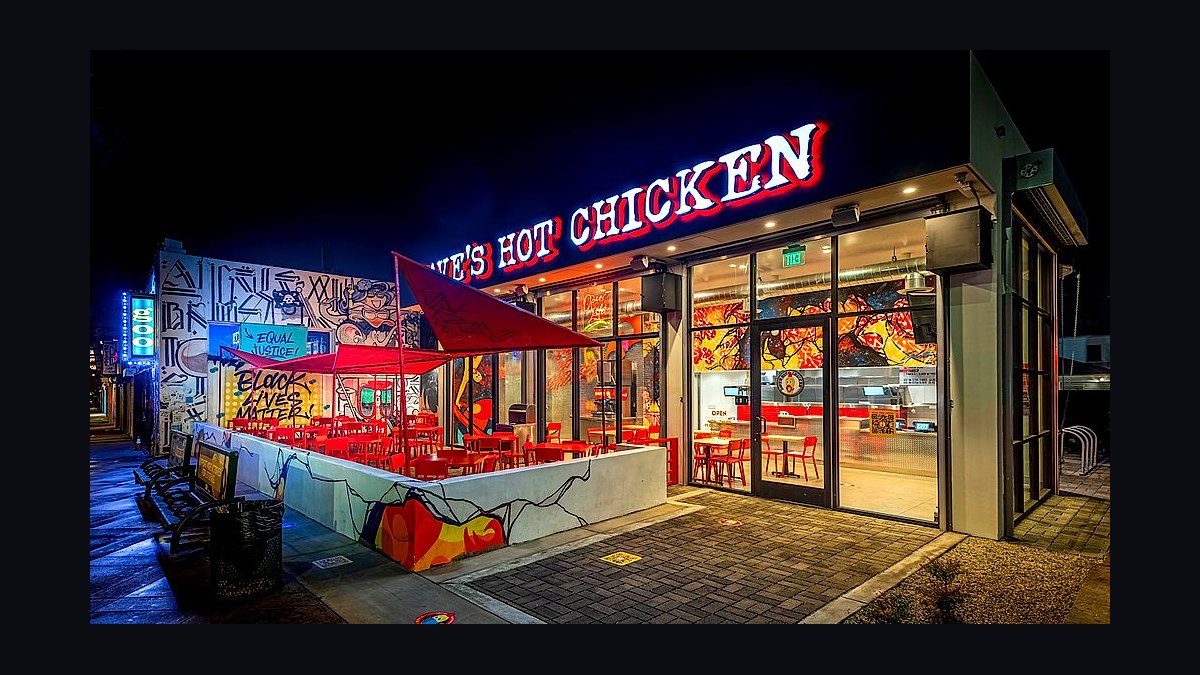
Yes, but only for an experienced, well-capitalized multi-unit restaurant operator who can win Dave's Hot Chicken's competitive franchise-award process. The 2026 FDD lists a $700,000–$1.9 million Item 7 investment per unit, a 5% royalty, and mature AUVs near $2 million. First-time or under-capitalized buyers, and anyone seeking a single unit, should look elsewhere.
What Dave's Hot Chicken Is and Why It's a 2027 Franchise Target
Dave's Hot Chicken started in 2017 as a folding-table pop-up in an East Hollywood parking lot and began franchising in earnest in 2019. By 2027 it has become one of the most sought-after fast-casual concepts in the country, built on a tight, high-throughput menu of Nashville-style hot chicken tenders and sliders served at heat levels running from "No Spice" up to "Reaper." The format is simple by design: a 2,000–3,000 square foot restaurant (with growing drive-thru and ghost-kitchen variants), a short build-to-order menu, and a heat-level gimmick that drives repeat visits and social-media word of mouth. Celebrity investors and a cult following have kept the brand culturally relevant well past the usual fast-casual hype cycle, and mature units are posting average unit volumes north of $2 million — a figure that puts Dave's near the top of the entire fast-casual category, chicken or otherwise.
That combination of AUV and buzz is exactly why the brand can afford to be selective. Franchise interest in 2027 vastly outstrips available territory in most major metros, so Dave's Hot Chicken does not run an open-door application process the way a struggling or newly-scaling brand might. It runs an award process: candidates apply, get interviewed, present financials, and compete against other well-capitalized groups for the right to develop a territory. The brand's growth strategy depends on multi-unit developers who can open several restaurants on a set schedule rather than a single operator opening one store and stopping. Understanding that structural reality — high demand, scarce territory, multi-unit-only awards — is the single most important thing a prospective buyer needs to internalize before spending any time or money pursuing this brand. This is not a "buy a franchise" decision in the conventional sense; it is a "win a competitive award, then fund a multi-unit build-out" decision, and treating it like the former is the most common reason candidates wash out early.

The Path From Application to Grand Opening
The process of actually opening a Dave's Hot Chicken franchise runs through a fairly consistent sequence, and skipping steps or under-preparing for any one of them is what knocks most applicants out. The sequence below reflects how the 2026 FDD and the brand's public franchise-development communications describe the process, and how it typically unfolds for candidates who make it through:
First comes disclosure review — a candidate requests and reads the full Franchise Disclosure Document, with particular attention to Item 19 (financial performance representations), Item 7 (investment ranges), and Item 20 (unit counts and turnover). This step alone should take several weeks, ideally with a franchise attorney and a CPA who has restaurant-industry experience reviewing the document line by line. Second comes the application and interview stage, where the candidate submits a formal application demonstrating liquidity, net worth, and relevant multi-unit restaurant experience, then goes through multiple rounds of interviews with the franchisor's development team. This is where the brand is actively screening out single-unit hopefuls and under-capitalized applicants — expect financial statements, references, and a real conversation about your operating history. Third is award and territory selection, where a successful candidate is offered a specific development territory and signs an area development agreement committing to a defined number of units on a defined schedule. Fourth comes site selection and lease negotiation for the first unit, followed by design, permitting, and construction — typically the longest calendar stretch in the whole process because it depends on landlords, municipal permitting offices, and contractor availability, none of which the franchisor controls. Fifth is training, which combines classroom and in-restaurant instruction for the operator and management team before opening. Sixth is the opening itself, followed immediately by the obligation to keep the development schedule moving toward unit two, three, and beyond.
Candidates who treat this as a linear, predictable timeline usually underestimate it. Site approval and construction in particular can slip by months depending on the market, and because the development agreement locks in a schedule, delays on unit one can compress the runway for unit two.
Costs, Timelines, and the Real Numbers
The 2026 FDD lists a franchise fee of roughly $40,000 to $60,000 per unit, though multi-unit development deals structure this differently — developers typically pay an upfront development fee that reserves the territory and is credited against each unit's franchise fee as it opens. Total Item 7 investment per restaurant runs approximately $700,000 to $1.9 million, broken out roughly as: buildout and leasehold improvements at $350,000 to $1,100,000 depending on format and market; equipment and kitchen infrastructure (fryers, line equipment, POS) at $200,000 to $450,000; signage and decor at $40,000 to $120,000; initial inventory at $15,000 to $40,000; grand-opening marketing at $20,000 to $60,000; training and travel at $15,000 to $45,000; and working capital reserves at $60,000 to $180,000 to cover the ramp period before a unit stabilizes. Ongoing fees include a royalty near 5% of gross sales and a marketing fund contribution generally in the 3%–5% range.

Because the brand awards territory through multi-unit development agreements, the real capital commitment is a multiple of these figures, not a single unit's worth. A typical three-to-five-unit development schedule at $700,000 to $1.9 million per restaurant implies a total build-out obligation well into the multi-millions, usually staged at a pace of one to two openings per year. On the revenue side, a mature unit generating close to $2 million in AUV, running disciplined food costs near 30% and labor near 28%, can generate unit-level earnings in the low-to-mid six figures before debt service, which typically puts payback on a single restaurant somewhere in the three-to-five-year range. The portfolio economics only really start compounding once several units are open and shared overhead (an area manager, centralized purchasing, regional marketing) gets spread across more locations. Most developers finance the build using a mix of conventional restaurant lending, equipment financing, and SBA-backed loans where they qualify, while keeping $500,000 or more in liquid reserves as a cushion in case the first unit ramps more slowly than projected — a real risk given that first-year margins are almost always thinner than mature-unit numbers suggest.
Where Franchisee Candidates Get It Wrong
The most common and costly mistake is underestimating the multi-unit commitment. Candidates frequently model the economics of a single restaurant, fall in love with the $2 million AUV headline number, and only later realize the development agreement obligates them to fund and staff three, four, or five locations on a fixed timeline — regardless of how the first unit performs. A slow-ramping first store can strain the capital and management bandwidth needed to open unit two on schedule, and falling behind on a development schedule can jeopardize the entire territory award.

A second frequent error is applying without the operational track record the brand is actually screening for. Because the award process is genuinely competitive, candidates with no prior multi-unit restaurant experience are routinely passed over in favor of applicants who have already run several locations of another concept — even if the newer candidate has more available capital. Treating this like a retail franchise application with a check-the-boxes approach, rather than a competitive pitch that needs to demonstrate real operating chops, wastes months.
A third mistake is underfunding working capital. The Item 7 range covers the buildout and opening costs, but candidates sometimes budget to the low end of that range and leave themselves without enough runway to absorb a slow ramp, a construction delay, or an unexpected repair — all of which are common in year one. A fourth mistake is ignoring site-level realities like drive-thru access, parking, and daytime versus evening traffic patterns; because the menu is narrow and throughput-dependent, a site that can't move volume quickly during peak windows will underperform the brand-wide AUV figures no matter how strong the brand is. Finally, some candidates skip a serious Item 19 review with a franchise attorney and CPA, then discover after signing that the financial performance representations reflect a mix of unit ages, formats, and markets that doesn't match their own situation.
Decision Framework: Who Should Actually Buy In
The clearest way to think about whether to pursue a Dave's Hot Chicken franchise is to separate the decision into two questions: can you win the award, and can you fund the full development schedule, not just the first unit. If the honest answer to either is no, the opportunity — however hot the brand — is not a fit right now.
Operators who fit the profile — proven multi-unit restaurant management, real estate relationships in target markets, and the balance sheet to fund several buildouts without depending entirely on unit-one cash flow — are positioned to benefit from one of the strongest AUV stories in fast casual. Operators who don't fit that profile are better served by a lower-capital, less-competitive franchise segment, a single-unit-friendly concept, or building a track record with a smaller brand before circling back to Dave's Hot Chicken once they can credibly compete for an award. The brand's growth is real and its unit economics are genuinely strong, but access to it in 2027 is gated almost entirely by capital and experience rather than by enthusiasm for the concept.
Related questions

How much does it cost to open a Dave's Hot Chicken franchise?
The 2026 FDD lists a total Item 7 investment of roughly $700,000 to $1.9 million per unit, including a $40,000–$60,000 franchise fee, buildout, equipment, signage, initial inventory, and working capital.
Does Dave's Hot Chicken require a multi-unit commitment?
Yes. The brand generally awards territory through area development agreements requiring three to five units on a set schedule; single-unit deals are uncommon.
What are typical average unit volumes for Dave's Hot Chicken?
Mature units report AUVs around $2 million or more, among the strongest figures in the fast-casual segment, though results vary by market and operational execution.
Is prior restaurant experience required to franchise with Dave's Hot Chicken?
It isn't strictly mandatory, but the brand's competitive award process strongly favors candidates with proven multi-unit restaurant operating experience over first-time owners.
What ongoing fees does a Dave's Hot Chicken franchisee pay?
Franchisees typically pay a royalty near 5% of gross sales plus a marketing fund contribution in the 3%–5% range, on top of normal operating costs.
FAQ
What is the total investment needed to open a Dave's Hot Chicken franchise?
The total investment typically runs from $700,000 to $1.9 million per unit, per the 2026 FDD, covering the franchise fee, buildout, equipment, signage, initial inventory, and working capital. Actual costs vary with location size, lease terms, and local construction pricing.
How much can I expect to earn from a Dave's Hot Chicken franchise? Mature units often post AUVs around $2 million or more, among the strongest in fast casual, but actual revenue and profitability depend heavily on market, site quality, and how tightly food and labor costs are managed. Not every unit reaches top-tier results.
Do I need prior restaurant experience to open a location? It isn't an absolute requirement, but the brand strongly favors experienced multi-unit restaurant operators in its selection process. Candidates without a food-service management background face significantly more scrutiny and lower odds of being awarded a territory.
How competitive is the Dave's Hot Chicken franchise application process? Very competitive. Demand for territory outstrips supply in most target markets, and applicants are evaluated on financial strength, operating experience, and the credibility of their development plan against other well-capitalized groups.
Can I open just one Dave's Hot Chicken location instead of multiple? Generally no. The brand's growth strategy relies on multi-unit development agreements covering several units on a defined timeline; single-unit awards are rare and reserved for unusual circumstances.
What happens if I fall behind on my development schedule? Falling behind on the agreed unit-opening timeline can put the territory award at risk, since the agreement is built around a defined multi-unit rollout rather than a single restaurant opening whenever convenient.
Sources
- https://www.daveshotchicken.com/franchising
- https://www.entrepreneur.com/franchises/daveshotchicken/476168
- https://www.franchisetimes.com
- https://www.qsrmagazine.com
- https://www.nrn.com
- https://www.franchisebusinessreview.com
- https://www.franchise.org
- https://www.technomic.com
Related on PULSE
- Should I open a Dave's Hot Chicken franchise in 2027?
- Should I open or buy a Hot Chicken Takeover franchise in 2027?
- Should I open or buy a Hot Head Burritos franchise in 2027?
- Should I open or buy a Famous Dave's franchise in 2027?
- Should I open or buy a Famous Dave's BBQ franchise in 2027?
- Should I open or buy a Dave & Buster's franchise in 2027?
This page will be disappearing soon. Save it to your device for $1 — or read it free while it is here.
@Kory-White- · if Venmo asks, the last 4 of my number are 2012
This page is gone.
This one is off the shelf now. $1 keeps it on your phone for good — the whole page, pictures and diagrams included.
 franchiseShould I open or buy a Bojangles franchise in 2027?
 franchiseShould I open or buy a Subway franchise in 2027?
 franchiseShould I open or buy a Sonic Drive-In franchise in 2027?
 franchiseShould I open or buy a Take 5 Oil Change franchise in 2027?
 franchiseShould I open or buy a Merry Maids franchise in 2027?
 franchiseShould I open or buy an Auntie Anne's franchise in 2027?
 franchiseShould I open or buy a Mac Tools franchise in 2027?
 franchiseShould I open or buy a Jimmy John's franchise in 2027?
 franchiseShould I open or buy a Papa John's franchise in 2027?
 franchiseShould I open or buy a Dairy Queen franchise in 2027?