

Should I open or buy a Holiday Inn Express franchise in 2027?
 Curated byKory White · Fractional CRO · Maryland
Quality
Certified

Published June 25, 2026 · Updated June 25, 2026
Open or buy a Holiday Inn Express only if you can fund an $8M–$20M+ ground-up build (or a multi-million-dollar acquisition) and you understand that you are buying a brand-and-distribution license, not a turnkey income stream. Holiday Inn Express is the flagship limited-service brand of IHG Hotels & Resorts and one of the most reliable mid-scale flags in North America. The economics are strong for well-capitalized operators: a $50,000 initial franchise fee (or $500 per room, whichever is greater), an ongoing royalty of roughly 5% of gross rooms revenue, and a system/services contribution of about 3% of gross rooms revenue that funds the loyalty program and global reservation system.
If you have hotel operating experience, access to SBA 504 or conventional CMBS financing, and a market with proven demand (interstate corridors, secondary business markets, medical/university hubs), Holiday Inn Express is one of the safest bets in franchised lodging. If you are a first-time operator looking for a passive small-business, this is not the right entry point — the capital intensity and operating complexity are an order of magnitude beyond a food or service franchise.
What You Are Actually Buying
A Holiday Inn Express franchise is a license to operate under IHG's brand standards and to plug into IHG's distribution engine. The value you receive is concrete and measurable:
- IHG One Rewards — one of the largest hotel loyalty programs in the world, with well over 100 million members, driving a large share of repeat, direct bookings.
- The IHG Concerto reservation and revenue-management platform, which feeds your property bookings from IHG.com, the IHG app, OTAs, and corporate travel channels.
- Brand-standard design, procurement, and the "Formula Blue" prototype that gives guests a consistent product across thousands of properties.
- National and regional sales teams that chase corporate and group business you could never reach alone.
What you are not buying is a building, a staff, or guaranteed occupancy. You bring the dirt, the debt, and the daily operation. IHG brings the sign on the roof and the reservations in the system.

The Real Numbers (FDD-Style)
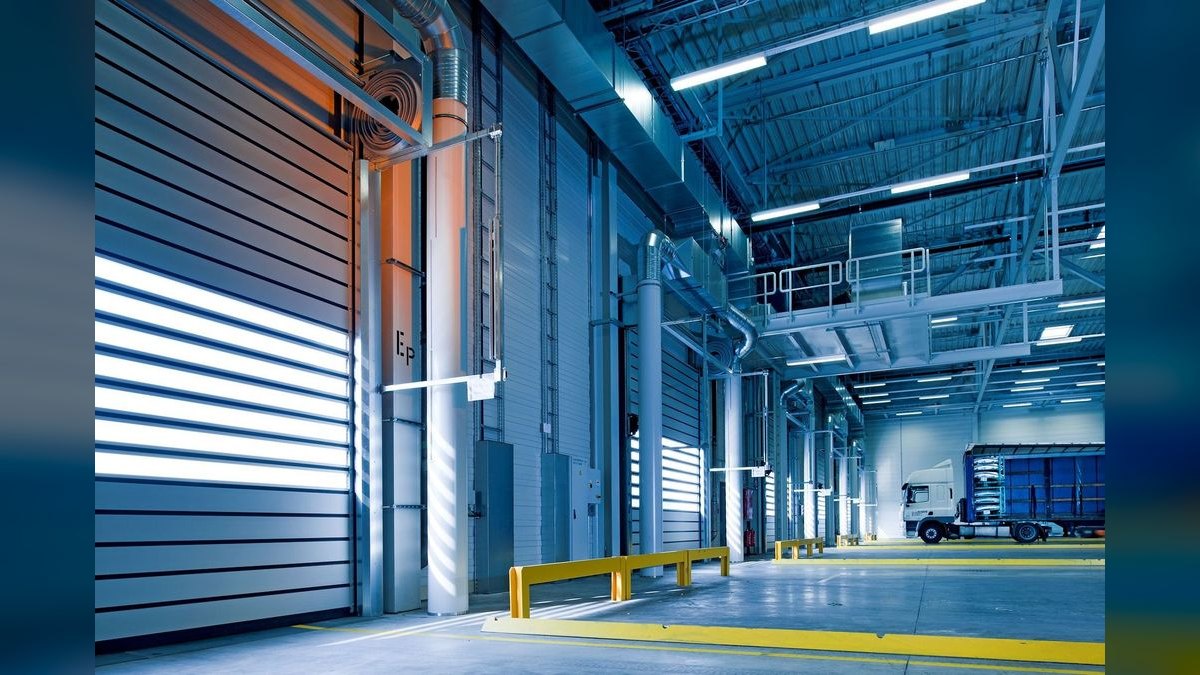
%20Should%20I%20open%20or%20buy%20a%20Holiday%20Inn%20Express%20franchis%2C%20realistic%20magazine%20style%2C%20warm%20light%2C%20no%20text%2C%20no%20watermark?width=1200&height=675&nologo=true&model=flux&seed=7757) Holiday Inn Express franchise economics, drawn from IHG's Franchise Disclosure Document and industry development data, look approximately like this for a typical 90-to-110-room new-build:
- Initial franchise fee: $50,000 or $500 per guest room, whichever is greater.
- Total project investment: $8 million to $20 million+ depending on land cost, market, and whether you build or convert. A conversion of an existing hotel can run materially less than ground-up.
- Royalty fee: 5% of gross rooms revenue.
- System fund / services contribution: ~3% of gross rooms revenue (funds marketing, loyalty, and the reservation platform).
- IHG One Rewards reimbursement: ~5% of eligible rooms revenue for points-based stays (a pass-through, not pure cost).
- Technology and other fees: several per-room or per-reservation charges for the reservation system, training, and required IT.
- Term: typically a 10-year license, often tied to a Property Improvement Plan (PIP) at renewal.
- System size: IHG operates roughly 3,000 Holiday Inn Express properties in the Americas, making it one of the densest mid-scale flags on the continent.
Net effective fees — royalty plus system fund plus loyalty reimbursement — commonly land in the 11%–13% of rooms revenue range. Underwrite to that, not to the headline 5%.
Should You Build, Convert, or Buy Existing?
Ground-up build gives you the newest product and the longest runway before a PIP, but it carries the highest cost and the longest path to stabilization (often 2–3 years to stabilized occupancy). Conversion of an existing limited-service hotel lets you enter at a lower basis, but you inherit an aging asset and a near-term PIP. Buying an existing Holiday Inn Express is the fastest path to cash flow and the easiest to finance because the trailing operating history de-risks the loan — but you pay for that stability in the cap rate.
The Application and Development Process
Expect the full timeline from application to opening to run 18–36 months for a new build, and 6–12 months for a conversion. IHG runs an impact study to assess whether your proposed hotel would cannibalize an existing franchisee in the same market — territory is not exclusive, but IHG does evaluate market saturation before approving new construction.
Who Should Open a Holiday Inn Express
This brand fits a specific operator profile:
- Experienced hoteliers expanding a portfolio who already have lender and management-company relationships.
- Real-estate developers with construction expertise who treat the hotel as an income-producing asset.
- Family ownership groups building generational hospitality wealth, often clustering several flags in one region for management efficiency.

It does not fit someone seeking a passive investment, a low six-figure entry, or a business they can run without lodging-specific expertise. The operating margins are thin and labor-intensive, and a single bad GM hire or a regional demand shock can wipe out a year of profit.
Risks You Must Underwrite
Capital intensity is the headline risk: you are deploying millions into an illiquid, cyclical real-estate asset. Demand cyclicality means RevPAR can swing hard with the economy, fuel prices, and local events. PIP exposure at renewal can demand $1M+ in mandatory renovations to keep the flag. Labor cost and availability pressure margins constantly. And brand-standard enforcement is strict — fail an IHG quality inspection and you risk fees, remediation orders, or ultimately loss of the flag. Treat the franchise agreement and the PIP schedule as the two documents that will determine your returns, and have a hospitality attorney review both.
Financial Realities: What the P&L Actually Looks Like
Beyond the headline fees, the day-to-day economics of a Holiday Inn Express franchise demand close attention. Industry benchmarks from 2024–2026 show an average RevPAR (revenue per available room) range of $85–$130 for comparable properties, depending on market and seasonality. Your gross operating profit (GOP) margin typically lands between 35% and 45% after accounting for labor (25–30% of revenue), utilities, maintenance, and property taxes. A realistic net operating income (NOI) yield on total project cost (land + construction + FF&E) is 8–12% in strong markets, but can dip to 5–7% in oversupplied or secondary locations. You should plan for annual capital reserves of 4–6% of gross revenue for renovations (every 5–7 years, IHG mandates a soft-goods refresh costing $3,000–$5,000 per room, and a full PIP every 10–12 years at $15,000–$25,000 per room). Cash-flow positive operations typically begin in year 2–3 after stabilization, assuming 65–75% average occupancy.

Buy versus. Build: The Acquisition Alternative
Buying an existing Holiday Inn Express can lower your capital entry to $5M–$12M for a 70–90 room property, versus $8M–$20M+ for new construction. However, acquisitions carry hidden risks: deferred maintenance (common in properties built 2005–2015), below-market franchise agreements (some legacy contracts have higher royalties or restrictive terms), and brand-mandated property improvement plans (PIPs) that can cost $500,000–$2M within 12–24 months of purchase. A thorough third-party inspection and franchise agreement review is non-negotiable. The advantage of buying is immediate cash flow — a stabilized property with 70%+ occupancy can generate $300,000–$700,000 in annual EBITDA for a 80-room hotel — but you inherit the previous owner’s staffing, reputation, and physical condition. New construction gives you a clean slate and a 15-year runway before major capital calls, but requires patience and deeper pockets.
The 2027 Market Context: Interest Rates and Demand Shifts
Opening or buying in 2027 carries specific timing considerations. As of mid-2026, commercial lending rates for hotel projects hover in the 7.5–9.5% range for conventional CMBS loans, while SBA 504 loans offer slightly lower fixed rates (6.5–8%) with 10–25% down payment requirements. The labor market remains tight — housekeeping wages in many markets have risen to $16–$22/hour, and finding a qualified general manager often requires a $65,000–$85,000 salary plus performance bonuses. On the demand side, limited-service hotels are benefiting from “bleisure” travel (business + leisure) and extended-stay trends, but new supply is also rising — particularly in Sun Belt and secondary markets. You should commission a market feasibility study (cost: $5,000–$15,000) to confirm that your proposed location has at least 18–24 months of supply absorption before a competing property opens. The window for strong returns in 2027 favors operators who can secure below-market land deals or distressed construction contracts, not those chasing peak-cycle pricing.
Bottom Line
Holiday Inn Express is a blue-chip flag for serious lodging investors. The brand delivers real, measurable value through IHG's reservation engine and the massive IHG One Rewards base, and its economics are predictable enough to underwrite with confidence. But it is fundamentally a multi-million-dollar real-estate development, not a small-business franchise. If you have the capital, the experience (or a management partner), and a market with proven demand, it belongs on your shortlist. If you do not, this is the wrong door — start with a service or food franchise and build toward lodging later.
FAQ
How much does it cost to open a Holiday Inn Express franchise in 2027? Plan for a total project investment of $8 million to $20 million or more for a ground-up build, plus a $50,000 initial franchise fee ($500/room minimum). Conversions of existing hotels can cost significantly less because they reuse the existing structure.
What is the royalty fee for Holiday Inn Express? The base royalty is about 5% of gross rooms revenue, plus a ~3% system fund contribution and ~5% loyalty reimbursement on points stays, putting effective fees around 11%–13% of rooms revenue.
Is Holiday Inn Express a good investment in 2027? For well-capitalized, experienced operators in proven markets, yes — it is one of the most bankable mid-scale flags, with strong direct-booking power through IHG One Rewards. For first-time or under-capitalized owners, the capital intensity makes it high-risk.
Do I need hotel experience to buy a Holiday Inn Express? Not strictly, but if you lack it you must hire a third-party hotel management company (such as Aimbridge or Highgate). IHG evaluates operator experience during the application, and lenders strongly prefer experienced sponsors.
How long does it take to open a Holiday Inn Express? A new build typically takes 18–36 months from application to opening; a conversion of an existing hotel runs 6–12 months, depending on the scope of the required Property Improvement Plan.
Is the territory exclusive? No. IHG does not grant exclusive territories, but it runs an impact study before approving new construction to limit cannibalization of nearby franchisees.
Sources
- IHG Hotels & Resorts — Development & Franchising
- IHG One Rewards — Loyalty Program
- U.S. Small Business Administration — 504 Loan Program
- American Hotel & Lodging Association — Industry Data
- STR / CoStar — Hotel Performance Benchmarks
- FTC — Franchise Rule & FDD Guidance
Related on PULSE
- Should I open a holiday decor business in 2027?
- Should I open or buy a Comfort Inn franchise in 2027?
- Should I open or buy a Days Inn franchise in 2027?
- Should I open or buy a Hampton Inn franchise in 2027?
- Should I open or buy a Pizza Inn franchise in 2027?
- Should I open or buy a RNR Tire Express franchise in 2027?
This page will be disappearing soon. Save it to your device for $1 — or read it free while it is here.
@Kory-White- · if Venmo asks, the last 4 of my number are 2012
This page is gone.
This one is off the shelf now. $1 keeps it on your phone for good — the whole page, pictures and diagrams included.
 pulse-franchisesShould I open or buy a Comfort Inn franchise in 2027?
 pulse-franchisesHow do franchise royalty and marketing fees work in 2027?
 pulse-franchisesShould I open or buy a Mad Science franchise in 2027?
 pulse-franchisesShould I open or buy a BluSky Restoration franchise in 2027?
 pulse-franchisesBest home-healthcare franchises to buy in 2027
 pulse-franchisesBest multi-unit franchise opportunities for empire builders in 2027
 pulse-franchisesShould I open or buy a Days Inn franchise in 2027?
 pulse-franchisesBest health and wellness franchises to buy in 2027
 pulse-franchisesMaster franchise vs. area developer agreements: which is right in 2027?
 pulse-franchisesBest landscaping and lawn-care franchises to buy in 2027