


Should I open or buy a First Watch franchise in 2027?
Quality
Certified
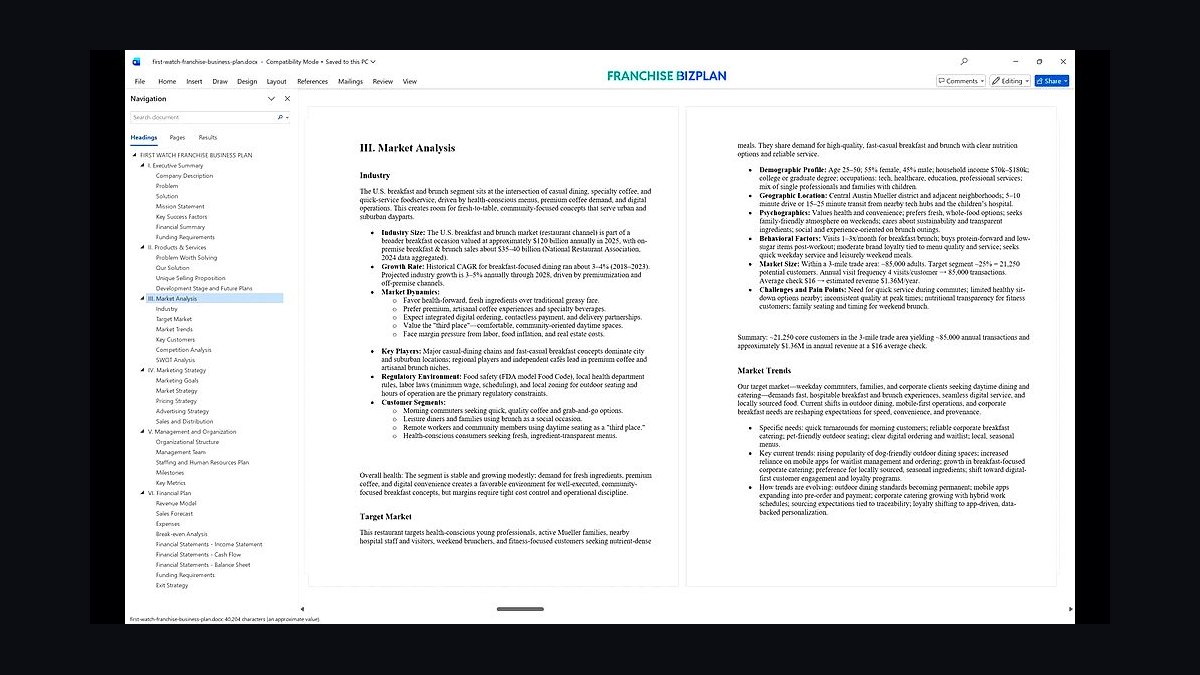
Don't count on a brand-new First Watch franchise in 2027 — the company has been buying franchised units back into its corporate base, not selling new single-unit rights, because its daytime-only model is too profitable to give away. Realistic paths are a First Watch resale (rare), a comparable daytime breakfast franchise like Another Broken Egg Cafe or Eggs Up Grill, or an independent concept.
First Watch resale, comparable brand, or independent build
Anyone asking "should I open a First Watch franchise" in 2027 is really choosing among three different transactions, and they are not interchangeable. The first is acquiring an existing First Watch franchise through a resale — buying a unit an existing franchisee already owns and operates, subject to First Watch's approval and any remaining franchise term. This is the only route that gets you the First Watch name itself, but it is scarce by design: First Watch Restaurant Group (NASDAQ: FWRG) now runs more than 570 company-owned locations and has spent several years systematically reacquiring its remaining franchised stores rather than growing the franchise base. A public applicant reaching out cold for a new single-unit deal is pursuing a program that, in practical terms, does not exist anymore.
The second path is opening a comparable daytime-only breakfast and brunch franchise — a brand that copies the structural advantage First Watch discovered (a single morning-through-early-afternoon daypart with no dinner shift) but is still actively awarding new territory. Another Broken Egg Cafe, The Broken Yolk Cafe, Eggs Up Grill, and Sunny Street Cafe all fall into this category. Each runs roughly the same operating window, roughly the same labor-cost logic, and roughly the same guest profile as First Watch, which is why they are the honest substitute rather than a downgrade. The trade-off is brand recognition: First Watch has a national public-company footprint and marketing scale that a regional concept like Eggs Up Grill or Sunny Street Cafe has not yet built, so a franchisee in a new market may need to do more local awareness-building in year one.
The third path is building an independent breakfast or brunch concept with no franchise agreement at all. This option maximizes upside — full equity, no royalty stream leaving the business every week, complete control over menu, hours, and branding — but it also removes the training systems, supplier relationships, real estate site-selection support, and proven operating playbook that a franchisor like Another Broken Egg or Eggs Up Grill provides on day one. An independent operator is underwriting both the restaurant and the brand simultaneously, which is a meaningfully different risk profile than buying into a system with hundreds of comparable units already reporting results.
Choosing among these three is less about which is "best" in the abstract and more about what the buyer actually values. Someone who wants the First Watch name specifically, and is willing to wait and network for a resale listing, is optimizing for brand equity. Someone who wants the economic model — no-dinner labor savings, strong weekend brunch draw, a defined training and supply system — without waiting on a scarce resale is better served going straight to Another Broken Egg, The Broken Yolk, Eggs Up Grill, or Sunny Street Cafe. Someone who wants maximum long-term equity and is comfortable building a brand from zero should weigh the independent route, understanding that the first 12-24 months will be harder without a franchisor's playbook.
How to decide which path fits you
The decision tree below is not about picking a "winner" — it is about matching the path to what is actually available and what the buyer is optimizing for. The First Watch branch only survives the first gate if a resale genuinely exists in the target market; otherwise the buyer needs to move immediately to the comparable-brand or independent branches rather than spending months chasing a franchise development team that is not adding new operators.
The gating question after any of the three branches is the same: does the projected owner cash flow clear a threshold that justifies the capital and the 45-55 hour work week this business demands? A First Watch resale priced too high against its remaining term fails that test just as easily as an underfunded independent buildout in a weak trade area. The mermaid above is a filter, not a recommendation — it forces the buyer to price out the real alternative (a comparable franchise) before falling in love with the idea of the First Watch name specifically.
A second layer worth building into this decision is timeline tolerance. Chasing a First Watch resale can take six to eighteen months of relationship-building with the franchisor and existing operators before a listing even surfaces, and there is no guarantee one appears in a target market at all. A buyer with a 2027 opening deadline — for example, someone leaving a corporate job with severance running out, or someone who has already secured a lease option on a strong site — usually cannot afford that open-ended wait and should default to the comparable-brand branch unless a resale is already on the table.
The numbers behind each option

The economics separate these three paths clearly once real numbers are attached. Where First Watch franchising still technically applies (existing resales), the 2026 FDD figures show total investment of $805,000 to roughly $2.0 million, a $40,000 franchise fee, a 4%-5% royalty, and a marketing contribution on top. Corporate-owned First Watch units are reporting average unit volumes near $2.4 million, driven almost entirely by the daytime-only structure: doors open around 7am and close by 2:30pm, seven days a week, with no dinner shift and no evening labor to staff.
The comparable franchised brands price in a lower band. Another Broken Egg Cafe runs $844,000 to $1.43 million in total investment with a 5% royalty, a $40,000 franchise fee, and reported AUVs of $1.8 million to $2.2 million — the closest premium match to First Watch's own numbers. The Broken Yolk Cafe sits at $682,000 to $1.27 million, also a 5% royalty and $40,000 fee, with AUVs of $1.4 million to $1.9 million and a strong West Coast and Sun Belt footprint. Eggs Up Grill is the lowest-entry option at $523,000 to $818,000, a $30,000 franchise fee, a 6% royalty, and AUVs of $1.1 million to $1.4 million — the trade-off for the lower buy-in is a higher royalty rate eating into margin every week. Sunny Street Cafe rounds out the group at $500,000 to $900,000, a $30,000 fee, a 5% royalty, and a value positioning below the premium tier.

Translate those figures into owner cash flow and the daytime-only thesis becomes concrete. A comparable unit running at a $1.6 million AUV, a 5% royalty, and disciplined labor held near 28%-30% of sales (achievable specifically because there is no dinner shift to staff) typically produces owner cash flow of 12%-16%, or roughly $190,000 to $256,000 per unit before debt service. That is the number every buyer should be underwriting against, regardless of which brand they choose, because it is the number that determines whether the capital outlay makes sense.
Capital requirements track a similar pattern across all four comparable brands: buyers are typically bringing $150,000 to $350,000 in liquid capital and layering SBA-backed debt of $350,000 to $700,000 on top, with underwriting built around roughly 25% equity and a 1.3x debt-service coverage ratio — favorable terms that lenders extend specifically because the labor model de-risks the cash flow. An independent concept changes this math again: buildout typically runs $400,000 to $750,000 with no franchise fee and no ongoing royalty, but also no Item 19 earnings claim to show a lender, which often means a smaller loan-to-value ratio and a larger personal capital requirement to get financed at all.
Sequencing the decision over 90 days
However a buyer chooses to open — First Watch resale, comparable brand, or independent — the sequencing that gets from "interested" to "signed" is the same discipline applied to whichever path survived the earlier filter. The steps below assume the buyer has already run the decision tree above and picked a lane; this is about executing that choice without losing months to an option that was never realistically open.
The first fifteen days matter most because they eliminate wasted effort: contacting First Watch's franchise development team in writing and getting a documented answer on resale availability closes off the branch that consumes the most time if left open-ended. From day sixteen onward, the buyer should be requesting FDDs from Another Broken Egg, The Broken Yolk, Eggs Up Grill, and Sunny Street Cafe in parallel, reading Items 5 (initial fees), 6 (recurring fees), 7 (initial investment range), and 19 (financial performance representations) side by side rather than sequentially.

Days thirty-one through forty-five are the validation window: calling at least five existing franchisees per brand from the Item 20 outlet list and asking direct questions about weekend-versus-weekday revenue split, current food cost given egg and dairy price volatility, and actual owner take-home — not the FDD's stated range, but what operators are really clearing. Site selection in the following two weeks should prioritize suburban lifestyle centers or family-dense corridors with median household income above roughly $65,000, since brunch revenue concentrates heavily on Saturday and Sunday and a location without strong weekend draw can run 20%-25% below AUV targets regardless of brand.
Financing and legal review occupy the back third of the ninety days. SBA 7(a) financing underwrites well for this category specifically because the daytime-only labor model produces the debt-service coverage lenders want to see, but the buyer still needs $5,000-$8,000 budgeted for an attorney to review territory rights, remodel obligations, and renewal terms before signing anything. The final decision point — day eighty-six to ninety — is where the earlier cash-flow threshold from the decision tree gets applied for real: if a First Watch resale is on the table, its remaining term and price get compared directly against opening a fresh comparable-brand unit, and the higher risk-adjusted cash flow wins the decision.
Related questions
How long does it take to open a franchise and break even?
Most full-service breakfast franchises take four to nine months from signing to opening, then twelve to twenty-four months to reach a stabilized AUV and break even on initial investment, depending on site strength and how quickly weekend traffic builds.
Is a First Watch franchise resale a good deal if one becomes available?
It depends entirely on remaining term and price relative to a fresh comparable-brand unit. A resale priced above what a new Another Broken Egg or Eggs Up Grill unit would cost, with a short remaining term, is often the worse deal.
What makes daytime-only restaurant models more profitable than full-day concepts?
Eliminating the dinner shift removes evening labor, utilities, and staffing complexity while keeping the highest-margin daypart (breakfast/brunch). Labor typically holds near 28%-30% of sales versus higher ratios at full-day full-service restaurants.
Which comparable franchise has the lowest cost to enter?
Eggs Up Grill, at $523,000 to $818,000 total investment with a $30,000 franchise fee, has the lowest entry point among the comparable daytime brands, though its 6% royalty is the highest of the group.
FAQ
Can I open a brand-new First Watch franchise in 2027? No. First Watch is not offering new single-unit franchise development to the public. The company has spent years buying back franchised locations and now operates over 570 company-owned units with no active new-franchise program.
How much does an existing First Watch franchise resale typically cost?
Where a resale exists, total investment runs $805,000 to roughly $2.0 million with a 4%-5% royalty and a $40,000 franchise fee, but listings are rare since First Watch is actively reacquiring franchised stores rather than releasing them.
What is the closest franchise alternative to First Watch? Another Broken Egg Cafe is the closest premium match, with total investment of $844,000-$1.43 million, a 5% royalty, and AUVs of $1.8-$2.2 million — figures close to First Watch's own corporate-store performance.
Why is First Watch's model more profitable than typical full-service restaurants? The daytime-only structure (roughly 7am-2:30pm, no dinner shift) eliminates evening labor and lets the company post AUVs near $2.4 million on a single daypart, which is also why the company chose to keep growth corporate rather than franchised.
Is an independent breakfast concept a better choice than franchising in 2027? It depends on priorities. Independent ownership offers full equity and no royalty but lacks a franchisor's training, supply chain, and site-selection support. Franchised comparable brands trade some equity and a royalty for a proven system and faster ramp.
What should I ask existing franchisees before buying into a comparable brand? Ask about the weekend-versus-weekday revenue split, current food cost given egg and dairy price volatility, actual owner take-home versus the FDD's stated range, and how long it took their unit to reach a stabilized AUV.
Sources
- https://www.sec.gov
- https://firstwatch.com
- https://www.franchisedirect.com
- https://www.franchisetimes.com
- https://www.qsrmagazine.com
- https://www.restaurantbusinessonline.com
- https://www.technomic.com
- https://www.franchise.org
- https://www.usda.gov
- https://www.ibisworld.com
Related on PULSE
This page will be disappearing soon. Save it to your device for $1 — or read it free while it is here.
@Kory-White- · if Venmo asks, the last 4 of my number are 2012
This page is gone.
This one is off the shelf now. $1 keeps it on your phone for good — the whole page, pictures and diagrams included.
 pulse-franchisesBest franchises for veterans in 2027
 pulse-franchisesIs Franchises worth it in 2027?
 pulse-franchisesShould I open or buy a Days Inn franchise in 2027?
 pulse-franchisesHow much does it really cost to open a franchise in 2027?
 pulse-franchisesBest fitness and gym franchises to buy in 2027
 pulse-franchisesBest handyman and home-repair franchises to buy in 2027
 pulse-franchisesWhat are the best sushi franchise opportunities to buy in 2027?
 pulse-franchisesBest franchises to buy with SBA financing in 2027
 pulse-franchisesBest tax-preparation and financial-services franchises to buy in 2027
 pulse-franchisesHow do I franchise my own business in 2027?