
Should I open or buy a Mad Science franchise in 2027?
 Curated byKory White · Fractional CRO · Maryland
 PULSEKNOWLEDGE LIBRARY
Yes for a relationship-and-operations-driven owner — Mad Science is a low-overhead, home-based STEM-enrichment franchise with strong margins and no real estate, but it is a B2B sales and instructor-staffing business that depends on landing school and after-care contracts, not a passive investment. Mad Science's 2026 FDD lists a franchise fee of roughly $23,500 to $40,000+ (territory-population-dependent), total investment of approximately $80,000 to $185,000, a royalty of ~8% of gross revenue, plus an ad-fund contribution of ~2%, across roughly 130-150 North American territories (part of the Mad Science Group with sister brands like Crayola Imagine Arts Academy). Because it runs mobile/home-based with no storefront, a mature territory generates $200,000-$700,000+ in revenue with owner cash flow of $60,000-$200,000, driven by after-school programs, in-school workshops, birthday parties, camps, and special events — all dependent on the owner's B2B sales to schools and parks departments.
The Real Numbers
Mad Science delivers hands-on science-enrichment programming to kids — after-school clubs, in-class workshops, summer camps, birthday parties, scout events, and library/community shows. It is mobile and home-based: no retail buildout, no fixed location. The investment is in the franchise fee, science kits and equipment, a vehicle, marketing, and working capital. Revenue is delivered by part-time, trained instructors the owner recruits, while the owner focuses on selling programs to schools, parks-and-rec departments, and parents.
| Line Item | Low | High | Notes |
|---|---|---|---|
| Initial franchise fee | $23,500 | $40,000+ | Scales with territory population |
| Science kits & equipment | $10,000 | $30,000 | Demonstration + activity materials |
| Vehicle / transport | $5,000 | $25,000 | Often a used van; can lease |
| Marketing & launch | $10,000 | $30,000 | School outreach, website, brochures |
| Software & systems | $2,000 | $6,000 | Scheduling, CRM, registration |
| Insurance & licensing | $3,000 | $10,000 | Liability, background checks |
| Working capital | $20,000 | $45,000 | Pre-revenue ramp + payroll float |
| Training & travel | $5,000 | $12,000 | Mad Science HQ training |
| Total Item 7 | ~$80,000 | ~$185,000 | Per 2026 FDD range |
| Ongoing royalty | ~8% | Of gross revenue | |
| Ad fund | ~2% | National + local |
Revenue reality: programs price across multiple streams — after-school clubs at $100-$200 per child per session-block, in-school workshops at several hundred dollars per class, birthday parties at $250-$450, and camps at $200-$400 per camper-week. A mature territory landing steady school and parks contracts generates $200,000-$700,000+ annually. Because there is no rent and instructors are part-time, owner cash flow lands at 20%-35%, or $60,000-$200,000 — strong margins relative to capital. The constraint is B2B sales volume: the owner must continuously win and renew school/after-care contracts, which is the entire growth engine.

Who Wins With This Business
The winning Mad Science owner is a B2B salesperson and operations manager who can land school and parks contracts and run a team of part-time instructors — often a former educator, sales professional, or community-connected parent.

- Capital required: $50,000-$90,000 liquid; this is a low-capital, home-based franchise with no real estate.
- Time commitment: 40-50 hours per week early on, concentrated on B2B sales to schools, parks-and-rec, and after-care providers, plus instructor recruiting and scheduling.
- Skills: B2B/relationship sales and team scheduling. The profit lever is contract acquisition and renewal with schools and recreation departments; the owner who sells well scales, the one who waits for inbound stalls.
- Geographic fit: territories with high elementary-school density, active parks-and-rec programming, and family-dense suburbs that fund enrichment.
- Lifestyle fit: owners energized by youth STEM education and community programming who enjoy networking with school administrators and PTAs.
The typical operator who succeeds is 35-55, often with education, sales, or program-management background, $50,000+ liquid, and comfort cold-calling schools and parks directors.
Who Loses With This Business
Anyone expecting inbound demand or a passive role loses — this is an outbound B2B sales business.

- The sales-averse owner. Revenue comes from landing school and after-care contracts; owners who won't proactively sell to administrators and PTAs never build a program calendar.
- The instructor-short owner. Every program is delivered by a part-time instructor; owners who can't recruit and retain reliable, background-checked instructors can't fulfill contracts.
- The seasonal-cashflow-naive owner. Revenue is school-calendar-driven — strong during the school year and camp season, thin in summer gaps and holidays; owners who don't manage cash across the calendar get squeezed.
- The thin-territory entrant. A territory with few elementary schools or weak parks programming caps revenue regardless of effort.
- The renewal-careless owner. School contracts turn over annually; owners who don't nurture relationships and re-sign programs see revenue churn every fall.
2027 Market Conditions
STEM enrichment for children is a resilient, policy-supported category entering 2027, riding sustained parental and institutional demand for science education.

- Demand: the US youth-enrichment market exceeds $20B, with STEM education a priority segment as schools and parents emphasize science/coding skills. Mad Science benefits from schools outsourcing enrichment and after-care programming.
- Institutional buyers: public schools, charter schools, parks-and-rec departments, and after-care providers are stable B2B customers; some programs are funded by school enrichment budgets, PTA fundraising, or grants, smoothing demand.
- Labor: part-time instructor supply (often college students, teachers, and gig workers) is the capacity input; wage competition for part-time educators rose modestly in 2025.
- Competitive: Mad Science, Bricks 4 Kidz, Snapology, Code Ninjas, and Engineering For Kids compete in mobile/STEM enrichment; Mad Science's longevity (since 1985) and brand recognition with schools is a meaningful edge in B2B contracting.
- Funding tailwinds: continued emphasis on STEM in K-12 policy and after-school programming (including federal/state enrichment funding in some districts) support institutional demand.
- Technology: scheduling/CRM tools and digital registration improve owner efficiency; the in-person, hands-on experiential model is the differentiator versus screen-based learning.
The 90-Day Decision Tree
- Day 1-15: Pull the Mad Science 2026 FDD. Read Items 5, 6, 7, 19, and 20. Confirm the franchise fee, 8% royalty, and territory definition (population/school count).
- Day 16-30: Count your buyers. Tally elementary schools, charter schools, parks-and-rec programs, and after-care providers in your territory — these are your B2B customers.
- Day 31-45: Call 5+ current franchisees. Ask: "How long to land your first school contracts? What is your revenue mix across after-school, workshops, parties, and camps? Owner take-home in Year 1, 2, 3?"
- Day 46-60: Test the sales motion. Make introductory calls to a few school administrators to gauge receptivity to outsourced STEM enrichment in your market.
- Day 61-75: Plan instructor recruiting. Identify the part-time instructor pool (teachers, college students) and confirm you can staff programs.
- Day 76-85: Secure financing. Budget $40,000-$45,000 of ramp runway beyond startup costs. Low-capital home-based franchises often qualify for SBA microloans or 7(a).
- Day 86-90: FDD legal review and decision. Budget $4,000-$6,000. Flag territory protection, royalty, and brand-program obligations. Proceed only if your territory has dense school/parks demand and you're willing to sell B2B.

Alternative Plays
If Mad Science isn't the fit — thin territory or sales aversion — these adjacent youth-enrichment plays match the operator profile:
- Bricks 4 Kidz — $40,000-$140,000, LEGO-based STEM enrichment, mobile/home-based model.
- Snapology — $60,000-$160,000, STEAM education with school and party programming.
- Code Ninjas — $150,000-$330,000, kids' coding with recurring membership (higher capital, brick-and-mortar).
- Engineering For Kids — $40,000-$120,000, mobile engineering/STEM enrichment.
- Kidokinetics / Soccer Shots — $40,000-$90,000, mobile children's-sports enrichment with the same B2B-to-schools sales motion.
- Independent STEM-enrichment company — $30,000-$80,000, full equity, no royalty, but no brand, no curriculum library, and no school-contracting credibility — harder to win institutional trust.
FAQ
How much money can I realistically make from a Mad Science franchise? A mature territory typically generates $200,000 to $700,000+ in annual revenue, with owner cash flow ranging from $60,000 to $200,000. Actual results depend heavily on your ability to secure school contracts and manage instructor staffing, and many new franchises take 2–3 years to reach these levels.
What is the total investment needed to start? Total investment ranges from roughly $80,000 to $185,000, including a franchise fee of $23,500 to $40,000+ based on territory population. This covers equipment, initial marketing, training, and working capital, with no real estate costs since the business is home-based.
Do I need a science background to run this franchise? No, a science background is not required. The franchise provides curriculum, training, and support, but you do need strong B2B sales skills to pitch schools and after-care centers, plus the ability to recruit and manage part-time instructors.
How long does it take to break even or become profitable? Many owners report breaking even within 12 to 24 months, but this varies by territory and how quickly you land contracts. Profitability accelerates as you renew school relationships and build a base of recurring after-school programs and camps.
What are the biggest ongoing costs beyond the franchise fee? You pay an 8% royalty on gross revenue and a 2% ad-fund contribution. Other major costs include instructor wages, equipment replacement, marketing materials, and insurance, which together can eat 60–70% of revenue before your cash flow.
Can I run this franchise part-time or as a passive investment? No, Mad Science is an active, owner-operated business. You must personally handle B2B sales, staff training, and contract management, especially in the first few years. It is not a passive investment and typically requires 30–40 hours per week.
Bottom Line
Open a Mad Science franchise if you are a proactive B2B salesperson who can land school and parks contracts and manage a team of part-time instructors — it is a low-capital, high-margin, home-based STEM-enrichment franchise with no real estate. The category has durable demand from schools and parents prioritizing science education, and the mobile model keeps overhead low, producing strong 20%-35% margins and $60,000-$200,000 in owner cash flow at maturity. But it is not passive: success depends entirely on selling and renewing enrichment contracts and recruiting reliable instructors, and you must manage seasonal, school-calendar-driven cash flow. If you'll sell B2B to schools and your territory has dense elementary-school demand, Mad Science is one of the better low-capital franchise entries available. If you won't sell, it won't work.
Sources
- Mad Science Franchise Disclosure Document (2026 filing) — Items 5, 6, 7, 19, 20
- Mad Science Group franchise overview (madscience.org / franchisedirect.com)
- IBISWorld — Educational Services & Youth Enrichment in the US, 2026 industry report
- Afterschool Alliance — demand for STEM and after-school enrichment, 2025-2026
- Franchise Business Review — children's enrichment franchise satisfaction and earnings data
- Bricks 4 Kidz / Snapology FDD summaries (comparable cost benchmarks)
- NAEYC / K-12 STEM-education policy and funding trends, 2026
- International Franchise Association (IFA) — 2027 Franchise Economic Outlook
- Entrepreneur Franchise 500 — Mad Science profile
- US Census Bureau — school-age population and household income demographics
Related on PULSE
This page will be disappearing soon. Save it to your device for $1 — or read it free while it is here.
@Kory-White- · if Venmo asks, the last 4 of my number are 2012
This page is gone.
This one is off the shelf now. $1 keeps it on your phone for good — the whole page, pictures and diagrams included.
 pulse-franchisesShould I open or buy a BluSky Restoration franchise in 2027?
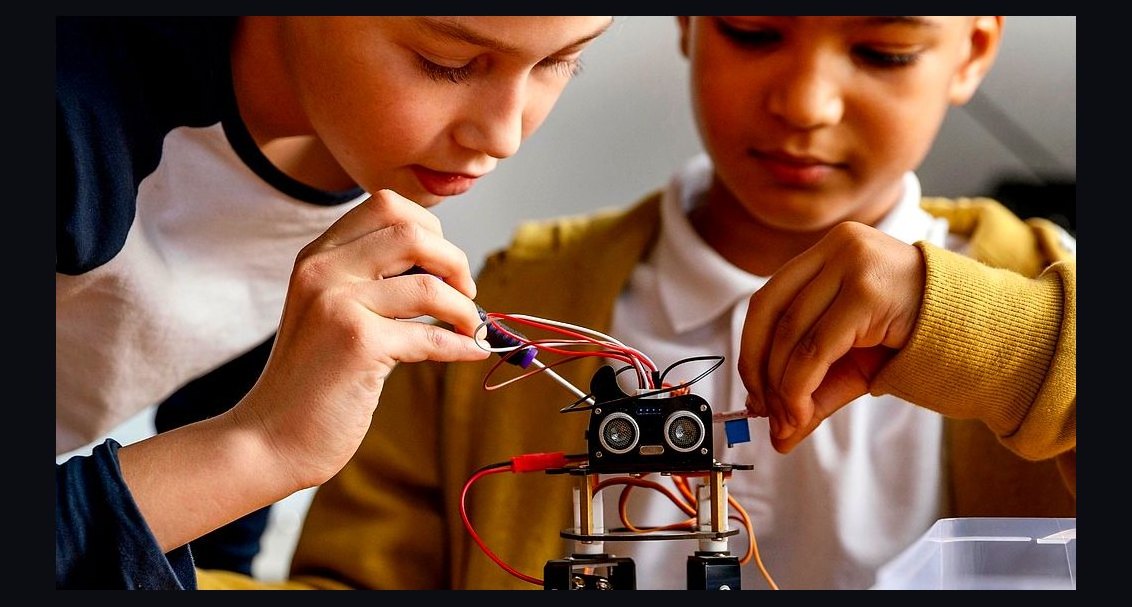 pulse-franchisesBest children's STEM and enrichment franchises to buy in 2027
 pulse-franchisesShould I open or buy an AFC Urgent Care franchise in 2027?
 pulse-franchisesShould I open or buy a Hilton franchise in 2027?
 pulse-franchisesHow long does it take to open a franchise and break even in 2027?
 pulse-franchisesFranchise vs. independent business: which should I start in 2027?
 pulse-franchisesShould I open or buy a Plato's Closet franchise in 2027?
 pulse-franchisesBest health and wellness franchises to buy in 2027
 pulse-franchisesShould I open or buy a CAVA franchise in 2027?
 pulse-franchisesWhat is the best way to approach Franchises in 2027?