


Should I open or buy an Office Pride franchise in 2027?
Quality
Certified
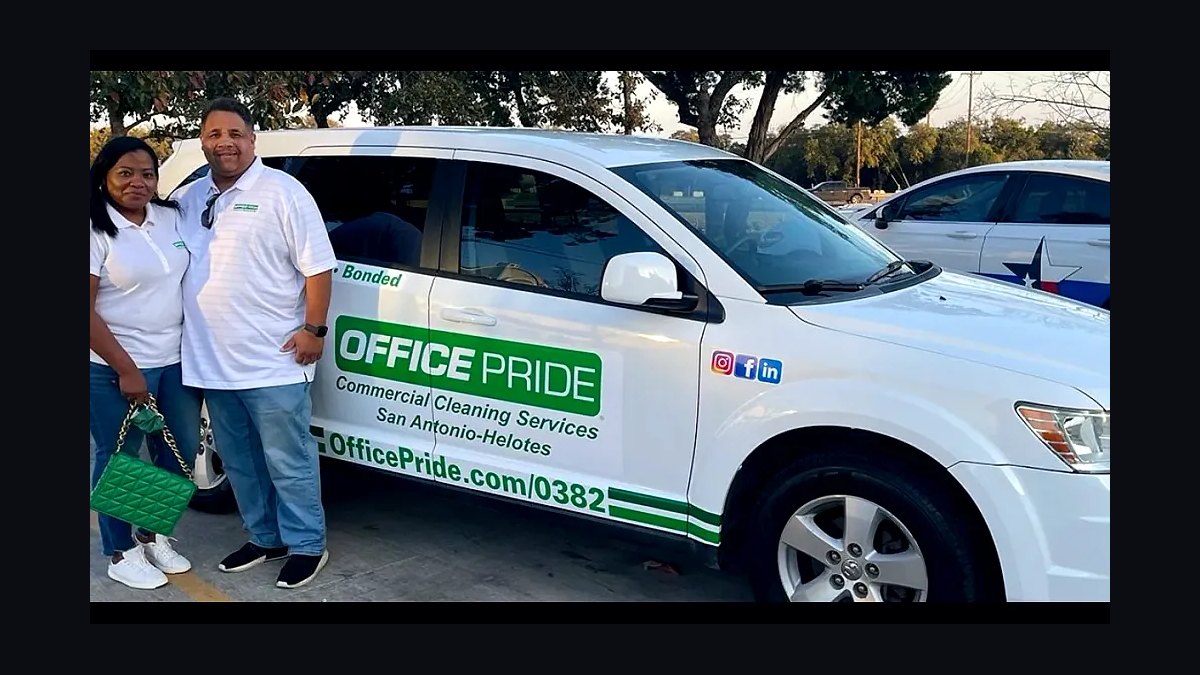
Buy an Office Pride franchise in 2027 if you want to build an employee-based commercial cleaning company in a protected territory — not if you want a passive route or a faith-neutral brand. The total investment runs roughly $80,000 to $200,000+, with no accounts handed to you; you sell and staff the territory yourself. Owners with strong B2B sales skills and enough working capital to float payroll can realistically build a $250,000 to $1M+ revenue business over several years.
The outcome you should expect
If you open an Office Pride franchise in 2027, expect a slow first year followed by a compounding buildout, not an immediate income stream. Because Office Pride does not transfer any existing accounts to a new franchisee, your first 90 to 180 days are almost entirely sales and hiring work: cold outreach and referral development to commercial property managers, medical offices, churches, and light-industrial tenants, combined with recruiting and training your initial cleaning crew. Most new owners land their first handful of contracts in month two or three, and Year 1 gross revenue commonly lands between $80,000 and $200,000 — enough to prove the model but rarely enough to pay the owner a full salary on top of covering labor and overhead.
The outcome diverges sharply by Year 3. Owners who treat sales as their primary job function — not an occasional task squeezed between operational firefighting — typically scale into the $300,000 to $600,000 revenue range by the third year, with 10 to 20 part-time and full-time cleaners on staff. Owners who instead default into doing supervisory or even hands-on cleaning work themselves, rather than delegating and selling, tend to plateau in the $100,000 to $200,000 range indefinitely, because there are only so many hours in a week and cleaning labor does not scale an owner's time the way a sales pipeline does.

By Year 5, the split becomes stark. Top-performing territories — usually ones with dense commercial real estate, low vacancy, and an owner who never stopped prospecting — report $1M+ in annual revenue with staffs of 10 to 30 employees. The bottom half of the franchise system, by contrast, often sits under $400,000 in revenue, constrained not by market size but by the owner's unwillingness or inability to keep selling once the business feels "established." The single best predictor of which outcome you get is not the territory you're assigned — it's whether you can consistently win and retain B2B service contracts. Office Pride's training and operational systems can teach you how to run a clean crew; they cannot install sales ability that isn't there.
Expect owner net margins, once the business is past ramp-up, to land in the 10% to 20% range of revenue after labor, royalty, insurance, and overhead are paid. On a mature $600,000-revenue franchise, that translates to roughly $60,000 to $120,000 in owner pre-tax earnings; on a $1M franchise, $100,000 to $200,000+. Those figures assume the owner is functioning as manager and closer, not as a laborer — the franchise model simply does not pencil out if the owner is also cleaning offices at night.
What drives that outcome

Three variables do almost all the work in determining whether a given Office Pride territory becomes a $150,000 lifestyle business or a $1M enterprise: sales velocity, labor retention, and working-capital discipline.
Sales velocity is the dominant variable because Office Pride's model is territory development, not route acquisition. Every dollar of revenue above your first few accounts has to be sold — there's no franchisor-assigned book of business cushioning a slow owner the way there sometimes is in lower-cost janitorial franchise concepts. An owner who commits to structured weekly prospecting (a target number of new commercial-property outreach calls, consistent proposal follow-up, and a referral-generation habit with existing clients) builds a compounding pipeline. An owner who prospects only when revenue dips sees the business stall every time a client is lost, because there's nothing in the pipeline to replace it.

Labor retention drives margin as much as sales drives top-line revenue. Commercial cleaning is a high-turnover labor category — annual turnover in the 50% to 100% range is common industry-wide — and every departure costs money twice: once in lost productivity and re-training, and again in the risk of a missed cleaning night damaging a client relationship you spent months building. Franchisees who invest in a real onboarding process, consistent scheduling, and even modest above-market hourly pay tend to run tighter margins than those who treat crew as fully disposable and re-hire constantly.
Working-capital discipline is the variable most likely to sink an otherwise well-run territory. Cleaning payroll is due weekly or biweekly regardless of when commercial clients actually pay their invoices, which for many B2B accounts is net-30 or slower. An owner who underfunds the 3-to-6-month working-capital reserve recommended in the initial investment range can find themselves unable to make payroll even while the business is "growing" on paper — a cash crunch, not a demand problem, is one of the more common reasons a promising territory fails in its first 18 months.
Benchmarks and realistic ranges
Use these ranges to sanity-check any pitch or projection you're given during due diligence — and confirm every figure against the current Franchise Disclosure Document (FDD) before signing, since Office Pride updates its Item 7 and Item 19 figures periodically.

Initial investment (Item 7 range): roughly $80,000 to $200,000+ total, broken down approximately as: a $50,000 initial franchise fee (fixed, non-negotiable in most territory deals); $5,000 to $30,000 for equipment, supplies, and branded vehicles or vehicle wraps; $2,000 to $15,000 for office/administrative setup, which can be a home office initially; $2,000 to $8,000 for initial insurance and bonding; $3,000 to $20,000 for initial marketing and account-acquisition spend; and — critically — $15,000 to $70,000 held as working capital to float 3 to 6 months of payroll before the account base generates enough cash flow to self-sustain.
Ongoing fees: royalty in the high-single-digit percentage of gross revenue, plus a separate, smaller brand/marketing fund contribution. These compound against revenue, not profit, so a slow-collections month still carries the same royalty obligation — another reason working capital matters.
Revenue benchmarks: Year 1, $80,000 to $200,000 as accounts ramp from zero. Year 3, $300,000 to $600,000 for an actively-selling owner. Year 5+, $500,000 to over $1,000,000 for top-tier territories with 10 to 30 employees on staff. Owner net earnings on a mature, well-run operation fall in the $50,000 to $200,000+ range, reflecting the 10% to 20% net margin after labor (commonly the largest single cost line, often approaching half of revenue), supplies, royalty and brand fund, insurance, vehicles, and administrative overhead.

Labor cost benchmarks for 2027 planning: cleaner wages of roughly $12 to $18 per hour depending on local minimum wage and market tightness; employer-side payroll tax burden around 7.65% of wages for FICA; workers' compensation running roughly 3% to 6% of payroll for janitorial classifications; and general liability coverage in the $1M to $2M range costing $2,000 to $5,000 annually for a small operation. Many franchisees add a part-time office manager once revenue crosses roughly $300,000, to absorb scheduling and payroll administration that otherwise eats into the owner's selling time.
Resale benchmarks: if you plan to exit, expect the process to take 6 to 18 months to find a buyer, with sale prices typically running 1.5 to 2.5 times annual net profit (not revenue) — meaning a franchise clearing $100,000 in net profit might sell in the $150,000 to $250,000 range. The franchisor must approve any buyer and typically charges a transfer fee in the $5,000 to $15,000 range.
Risks, edge cases, and failure modes

The most common and most damaging misunderstanding among prospective Office Pride buyers is assuming the franchise functions like the cheapest tier of janitorial franchise concepts, where a starter book of accounts is assigned at signing. Office Pride does not do this. Buyers who go into due diligence expecting handed-over accounts and only discover otherwise mid-process, or worse, after signing, are set up for early disappointment and a rockier ramp-up than they budgeted for emotionally and financially.
Weak sales execution is the single largest driver of underperformance. A franchisee who is a capable operator but an uncomfortable or inconsistent seller will typically win just enough accounts to stay busy without ever building the referral and pipeline momentum that produces real growth. Because there's no franchisor-supplied demand engine beyond brand marketing support, this gap doesn't self-correct — it compounds, since a stalled pipeline also means no cushion when an existing account churns.
Underfunding working capital is the second major failure mode, and it's often invisible until it's acute. A franchisee who invests the minimum toward the $80,000 end of the range, skimping on the working-capital line specifically, can find that a normal, unremarkable delay in a couple of commercial clients' net-30 payments creates a real payroll shortfall. This is a cash-timing problem, not a demand problem, but it can force an owner to personally clean accounts to avoid paying a second crew — reintroducing the owner-operator trap the franchise model is explicitly designed to avoid.

Labor turnover compounds quietly. With industry turnover commonly cited in the 50% to 100% annual range for commercial cleaning staff, an owner who doesn't build a deliberate recruiting-and-retention system (consistent scheduling, fair and predictable pay, basic recognition) will spend disproportionate time re-hiring and re-training instead of selling — and every service lapse caused by an under-trained substitute cleaner risks the account itself.
Culture mismatch is a real, if less financially direct, risk. Office Pride is explicitly built on a Christian-faith foundation that shapes its stated values, franchisee community, and some marketing language. An owner who is indifferent or opposed to that culture may find themselves disengaged from franchisor support calls, regional owner gatherings, and peer mentoring that other franchisees rely on heavily during the difficult early ramp-up period — support that is harder to access if you're not participating in the community built around it.
Finally, territory quality is an edge case worth stress-testing before signing rather than after. A protected territory is only as valuable as the commercial building density inside it. A geographically large but commercially sparse territory (low office/medical/industrial density, high vacancy) can leave even a strong salesperson with too few realistic prospects to hit the benchmark revenue ranges above, regardless of effort.
Related questions
Does Office Pride provide starter accounts to new franchisees?

No. Unlike some lower-cost janitorial franchise concepts, Office Pride does not hand new franchisees an existing book of business. You build your client base from zero within your protected territory through direct sales and marketing from day one.
How much cash do I need beyond the franchise fee to open an Office Pride?
Beyond the roughly $50,000 franchise fee, budget for equipment, initial marketing, insurance setup, and — most importantly — 3 to 6 months of payroll working capital, bringing total initial investment to roughly $80,000 to $200,000+.
What makes Office Pride different from Jan-Pro, Coverall, or Jani-King?
Office Pride emphasizes an employee-based crew model rather than a subcontractor/unit-franchise structure, along with an explicitly values-driven, Christian-faith brand identity — trade-offs in control, culture, and cost structure versus the lower-entry-cost route franchises.
Can I run an Office Pride franchise part-time?
It's not designed for that. The owner role is full-time manager and salesperson — selling contracts, hiring and supervising crews, and handling quality control — which is difficult to do effectively on a part-time basis, especially during the account-building ramp-up phase.
How long until an Office Pride franchise breaks even?

Most franchisees see meaningful account traction by month two or three, with Year 1 revenue commonly in the $80,000 to $200,000 range; true owner profitability, after labor, royalty, and overhead, typically develops over the first 12 to 24 months as the account base compounds.
FAQ
What is the total investment range for an Office Pride franchise? The total initial investment typically falls between $80,000 and $200,000 or more, including the roughly $50,000 franchise fee, equipment, insurance, initial marketing, and — critically — working capital to cover payroll during the ramp-up period. Exact costs depend on territory size and local labor and real estate conditions.
Does Office Pride guarantee a book of accounts or contracts? No. Office Pride does not provide a guaranteed book of accounts. Franchisees build their own client base through sales and marketing within a protected territory, which is a meaningful structural difference from some lower-cost janitorial franchise brands.
What is the ongoing royalty and fee structure?

Royalties fall in the high-single-digit percentage range of gross revenue, plus a separate, smaller brand or marketing fund fee. Confirm exact current percentages in the Franchise Disclosure Document before signing, since these figures are periodically updated.
Is Office Pride a faith-based franchise, and does that affect day-to-day operations? Yes. Office Pride is explicitly built on a stated Christian-faith foundation that shapes company culture, franchisee community events, and some marketing language. This can be a strong fit for owners who share those values and a friction point for owners who prefer a faith-neutral brand.
How much revenue can an Office Pride franchise realistically generate? Established, actively-managed franchises commonly range from roughly $250,000 to over $1,000,000 in annual revenue, with Year 1 typically in the $80,000 to $200,000 range and Year 3 in the $300,000 to $600,000 range for owners who prioritize sales. Results vary widely based on territory density and owner sales execution.
Do I clean the offices myself as the franchise owner? No — the intended owner role is manager and salesperson, not hands-on cleaner. You hire, train, and supervise cleaning employees and sell/retain commercial contracts; owners who end up personally cleaning accounts regularly are usually a sign the business hasn't been staffed or sold into properly.
Sources
- https://www.officepridefranchise.com
- https://www.franchisedirect.com
- https://www.entrepreneur.com/franchises
- https://www.franchisechatter.com
- https://www.ibisworld.com
- https://www.franchise.org
- https://www.ftc.gov/business-guidance/resources/franchise-rule
Related on PULSE
- Should I open or buy an Office Evolution franchise in 2027?
- How long does it take to open a franchise and break even in 2027?
- Should I open or buy a Tommy Gun's Original Barbershop franchise in 2027?
- What's the realistic owner income from a service-based franchise in 2027?
- How much working capital do I need to open a franchise in 2027?
This page will be disappearing soon. Save it to your device for $1 — or read it free while it is here.
@Kory-White- · if Venmo asks, the last 4 of my number are 2012
This page is gone.
This one is off the shelf now. $1 keeps it on your phone for good — the whole page, pictures and diagrams included.
 pulse-franchisesShould I open or buy a Jan-Pro franchise in 2027?
 pulse-franchisesWhat are the best sushi franchise opportunities to buy in 2027?
 pulse-franchisesBest master franchise and area development opportunities in 2027
 pulse-franchisesBest home-based franchises to start in 2027
 pulse-franchisesBest coffee and beverage franchises to buy in 2027
 pulse-franchisesIs Franchises worth it in 2027?
 pulse-franchisesWhat does Item 19 of an FDD really tell you about franchise earnings in 2027?
 pulse-franchisesShould I open or buy a Best Western franchise in 2027?
 pulse-franchisesBest handyman and home-repair franchises to buy in 2027
 pulse-franchisesBest cleaning and janitorial franchises to start in 2027